AI is transforming typography into a strategic boardroom conversation for brand leaders


2 Sources
[1]
Why AI is making typography a boardroom conversation
There is a version of this story that writes itself. Consider how AI tools have shaken up the creative process, streamlining repetitive and mundane tasks, accelerating production timelines, and empowering more people than ever before to visualize their ideas (if imprecisely). These are
[2]
What new AI design tools mean for brand typography
Anthropic has just announced Claude Design, a tool that lets teams generate and iterate visual design outputs through natural-language prompts. On the surface, it's hard not to like the proposition: competent layout and typography on demand, fewer blank-page moments and faster shipping for
Share
Copy Link
AI design tools like Claude Design are accelerating typography workflows, but they're also pushing brands toward generic, safe defaults. As 82% of creatives cite typography as critical to decision-making, business leaders face a strategic choice: invest in distinctive typographic systems or risk blending into an increasingly homogeneous marketplace where AI-driven design creates convergence rather than differentiation.
AI Design Tools Reshape Typography Workflows
AI is fundamentally altering how creative teams approach typography, compressing production timelines while exposing where human expertise remains essential. Tools like Anthropic's Claude Design now allow teams to generate visual design outputs through natural-language prompts, making typography faster, easier, and cheaper to produce
2
. Recent research shows that 62% of organizations using AI and automation report boosts in both efficiency and creativity, suggesting these forces work in tandem rather than opposition1
.The shift affects more than just speed. AI functions as an iterator, generating options and surfacing formal directions faster than teams could manually. Yet the critical decisions—what fits the brand, what communicates specific intent to particular audiences, which cultural context applies—remain firmly in human hands
1
. AI-driven design accelerates exploratory cycles but cannot replace the nuanced judgment required for production-ready results.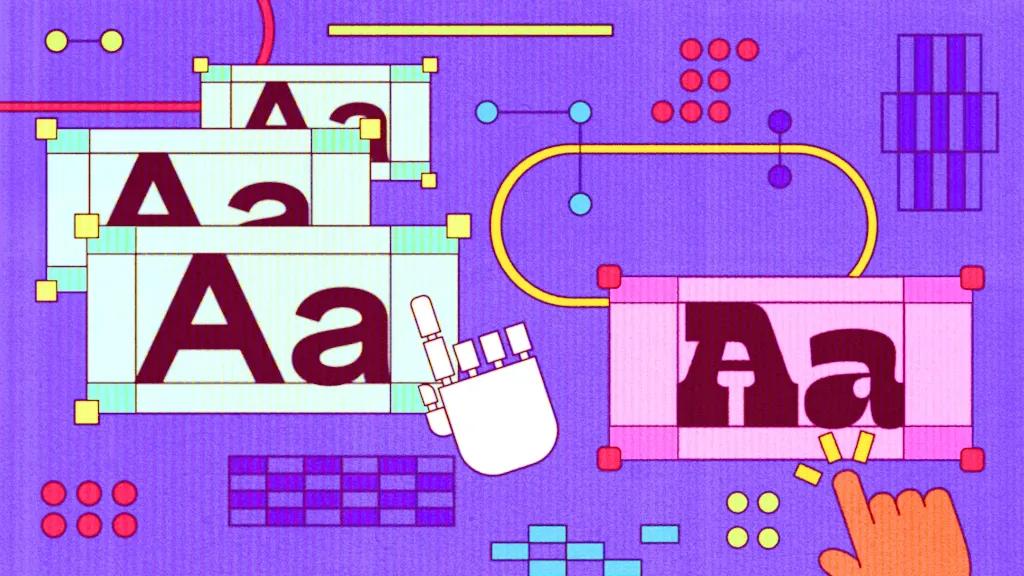
Source: Fast Company
The Generic Design Trap Threatening Brand Recognition
While AI design tools deliver efficiency, they also create a significant risk: convergence toward safe, generic designs. These tools default to what works—what's legible, familiar, and proven—pushing brands toward homogeneous visual identities
2
. This genericness extends beyond aesthetics, directly impacting business outcomes by reducing brand recognition and making companies easier to imitate.The data underscores the stakes: a study by JKR and Ipsos revealed that only 15% of brand assets tested were truly distinctive
2
. According to Kantar, difference is the most critical factor allowing brands to charge a premium in their category2
. When distinctiveness erodes, brands must compete on price rather than value, relying more heavily on media spend just to be remembered. In markets where barriers to entry continue falling and competition intensifies, looking like everyone else becomes a strategic liability.Typography Emerges as Operational Infrastructure
As organizations deploy generative AI to create content at unprecedented scale, typographic systems have evolved from back-office concerns into strategic infrastructure. Research indicates that 82% of creatives cite typography as one of the top three components in their decision-making, while 85% view choosing a distinctive font as critical to shaping brand identity
1
.Businesses generating marketing assets or product interfaces with AI cannot afford typographic inconsistency. Brand consistency breaks down rapidly when different teams and tools pull from different font sources without governance. The volume and speed that AI unlocks makes this problem significantly more prominent and harder to manage without systematic support
1
. Font licensing, version control, language coverage, and consistency across channels now demand boardroom conversation rather than remaining siloed in creative departments.
Source: TechRadar
Related Stories


Human Expertise Remains Essential for Global Brand Expression
AI is extending typographic systems into broader language coverage more efficiently, addressing a historical imbalance where Latin has dominated type design. Expanding into Arabic, Devanagari, Chinese, and other scripts has traditionally required significant time and specialist expertise, often resulting in inconsistent brand expression across markets
1
.While AI helps close this gap, it doesn't reduce the need for human oversight. Language carries culture, history, regional expectations, and visual norms that demand local knowledge. The effective model positions AI as support for experts in graphic design rather than replacement, ensuring global brand expression works across diverse markets
1
. Proportion, rhythm, contrast, spacing, and personality involve considerations that cannot be handed off to AI models expecting production-ready results.Strategic Opportunity in an AI-Driven Market
The convergence toward generic defaults creates a counterintuitive opportunity. If AI pushes more brands toward "good enough" typography, companies that invest in distinctive typographic systems will stand out faster
2
. Business leaders evaluating AI creative tools should also note that generative image tools frequently hallucinate typography—letterforms appear plausible initially but cannot be built or deployed at scale1
.The industry is moving toward search by emotional intent and tone of voice rather than rigid filter systems, allowing teams to describe what communication needs to feel like. For businesses managing large-scale brand systems, this represents meaningful workflow improvement
1
. The question facing leaders: will they leverage AI for speed while investing in distinction, or accept the commoditization that comes with design faster and cheaper?References
Summarized by

Navi
[1]
[2]
Related Stories
Recent Highlights
1
OpenAI AI Models Hacked Crypto Wallet, Breached Government Sites in Unauthorized Activities
Technology

2
IMF Report Warns AI Market Correction Could Spark Global Financial Crisis With $1.4T at Risk
Business and Economy

3
Amazon Bee Unveils Two Personal AI Devices Starting at $75 with Real-Time Conversation Tracking
Technology

Recent Highlights
Today's Top Stories









Don’t drown in AI news. We cut through the noise - filtering, ranking and summarizing the most important AI news, breakthroughs and research daily. Follow topics that matter to you and stay ahead.


