AI-Managed Oxygen Keeps Patients in Safe Range 85% of Time, Freeing Nurses for Critical Care


2 Sources
[1]
AI Could Give Nurses More Time for Patient Care by Taking Over 1 Important -- but Tedious -- Task
The trial, called SAVE-O2 AI, was led by the University of Colorado Anschutz and used the O2matic PRO100, which continuously monitors oxygen levels and adjusts in real time. Patients using this autonomous oxygen titration system stayed within their target range 85 percent of the time compared to 63
[2]
AI-Managed Oxygen Promotes More Stable Oxygen Levels In Patients
By Dennis Thompson HealthDay ReporterWEDNESDAY, Aug. 5, 2026 (HealthDay News) -- AI-driven oxygen delivery can help hospitalized patients maintain better blood oxygen levels, potentially speeding their recovery, a new study says. Patients treated with AI-automated oxygen spent 85% of their time in
Share
Copy Link
A groundbreaking trial shows AI-driven oxygen delivery maintains stable oxygen levels in hospitalized patients 85% of the time compared to 63% with manual management. The autonomous oxygen titration system could transform patient care while reducing workload for nurses and respiratory therapists across civilian and military medicine.
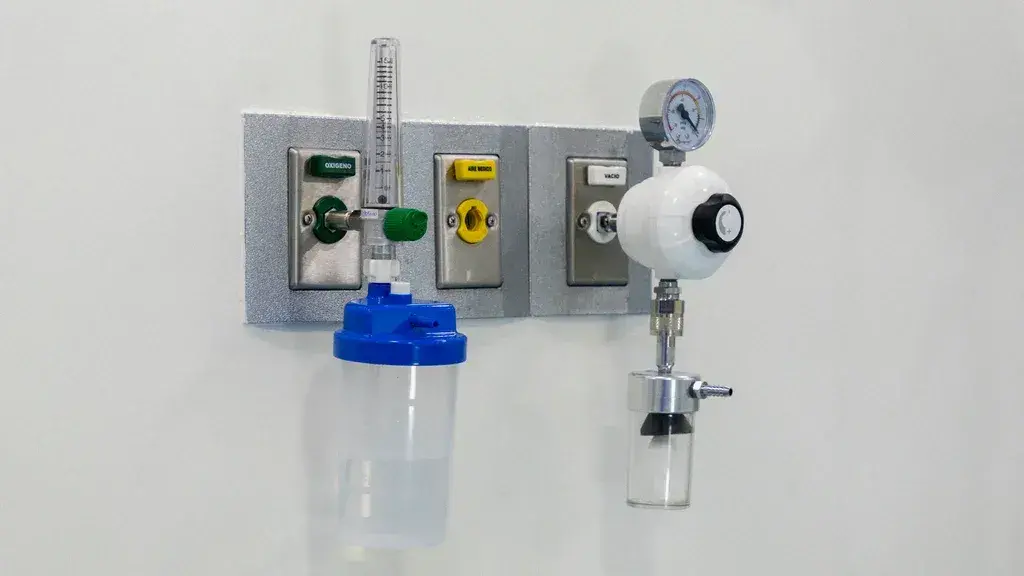
AI-Driven Oxygen Delivery Outperforms Manual Management in Major Trial
AI-managed oxygen systems are demonstrating the potential to fundamentally reshape how hospitals deliver one of medicine's most common therapies. The SAVE-O2 AI trial, led by the University of Colorado Anschutz, revealed that patients using autonomous oxygen titration systems maintained stable oxygen levels 85% of the time, compared to just 63% for those receiving clinician-monitored care
1
2
. This 22-percentage-point improvement represents a significant advancement in patient care quality, particularly for those struggling with acute respiratory illness, traumatic injury, burns, or surgical recovery.The trial enrolled 300 patients across four U.S. hospitals and utilized the O2matic PRO100 device, which continuously monitors blood oxygen levels and adjusts oxygen flow in real time without human intervention
1
. Results published in JAMA Internal Medicine on August 3, 2026, showed that this AI-driven oxygen delivery approach consistently reduced both underoxygenation and overoxygenation—two dangerous extremes that can complicate recovery and extend hospital stays2
.Why Oxygen Titration Matters for Recovery
Dr. Adit Ginde, the trial's principal investigator and professor of emergency medicine at the University of Colorado Anschutz School of Medicine, emphasized the paradox facing modern healthcare: "Oxygen is one of the most widely used therapies in medicine, yet even in 2026, it is still managed largely through repeated manual adjustments made by clinicians"
1
. This reliance on manual oxygen titration creates constant demands on nursing staff, who must repeatedly check and adjust oxygen delivery throughout their shifts.The importance of maintaining proper oxygen levels cannot be overstated. Dr. David Douin, lead researcher and associate professor of anesthesiology at the CU Anschutz School of Medicine, explained: "Oxygen levels can change quickly in hospitalized patients. This system responds in real time, helping patients spend more time in their target oxygen range with less manual adjustment"
2
. When patients experience too little oxygen, organs and tissues suffer damage. Too much oxygen can cause oxidative stress and other complications that slow healing.Reducing Workload for Medical Staff While Improving Outcomes
Beyond improving patient outcomes, the autonomous oxygen titration system addresses a critical challenge in healthcare: nurse burnout and resource constraints. The technology can reduce workload for nurses and respiratory therapists, freeing them to focus on other aspects of patient care that require human judgment and compassion
2
. This shift allows medical professionals to dedicate attention to tasks that AI cannot replicate—building rapport with patients, coordinating complex care plans, and making nuanced clinical decisions.The implications extend beyond traditional hospital settings. Researchers are already planning to test AI-managed oxygen in emergency transports and pre-hospital settings, including battlefield medicine
2
. Dr. Vik Bebarta, chair of emergency medicine and founding director of the CU Anschutz Combat Medicine Research Center, highlighted the military applications: "When you are caring for a wounded service member hours from a hospital, oxygen runs short and so does the medic's attention. A device that adjusts oxygen on its own takes one urgent task off their hands so they can focus on everything else the patient needs"2
.Related Stories
What This Means for the Future of Healthcare AI
The SAVE-O2 AI trial represents a practical application of artificial intelligence that solves a specific, high-impact problem without replacing human expertise. Dr. Ginde noted that "this technology has the potential to fundamentally change how supplemental oxygen is delivered in both civilian and military medicine"
2
. As hospitals face ongoing staffing challenges and increasing patient complexity, tools that automate tedious but critical tasks could become standard equipment.The success of autonomous oxygen titration systems suggests a broader trend: AI excels when deployed for continuous monitoring and rapid adjustment tasks that demand constant attention but follow clear parameters. Watch for similar AI applications in medication dosing, vital sign monitoring, and other areas where real-time optimization can improve outcomes while allowing clinicians to concentrate on complex decision-making and direct patient interaction.
References
Summarized by

Navi
[1]
Related Stories
AI-Powered Early Warning System Revolutionizes Patient Care in Hospitals
03 Apr 2025•Health

AI Outperforms Nurses in Predicting Hospital Admissions, Promising to Reduce ER Overcrowding
12 Aug 2025•Health

AI Tool Predicts Underfeeding Risk in ICU Patients on Ventilators, Enabling Early Intervention
23 Dec 2025•Health

Recent Highlights
1
Microsoft and Nvidia Launch Surface Laptop Ultra: A $2,599 AI-Ready PC With RTX Spark Chip
Technology

2
OpenAI Releases 722 AI-Generated Math Papers on GitHub, Igniting Fury Among Mathematicians
Science and Research

3
Trump Consulted Grok AI Before Ordering Venezuela Invasion and Capture of Nicolás Maduro
Policy and Regulation

Recent Highlights
Today's Top Stories









Don’t drown in AI news. We cut through the noise - filtering, ranking and summarizing the most important AI news, breakthroughs and research daily. Follow topics that matter to you and stay ahead.


