AI Decodes Hidden DNA Sequence Controlling Gene Activation in 60% of Human Genes


3 Sources
[1]
A hidden "on switch" in human DNA has finally been decoded
Healthy growth and development depend on tens of thousands of genes being switched on at the right time and in the right place. Specific regions of DNA help coordinate this process, guiding the production of enzymes, hormones, proteins, and other molecules that cells need to function properly. When
[2]
New AI model reveals hidden code behind gene activation
University of California - San DiegoAug 21 2026Reviewed Precise activation of tens of thousands of genes is critical for healthy development and growth. Specialized segments of our DNA are responsible for carefully orchestrating genetic sequences that result in the production of enzymes, hormones,
[3]
Researchers Use AI to Decode Key DNA Sequence in Gene Activation | Newswise
* Scientists have revealed the DNA sequence code of the "initiator," a crucial sequence that kick-starts gene activation. * A machine learning analysis of a half million experimental data points yielded an AI model that has deciphered the identity of the initiator. * With the initiator's sequence
Share
Copy Link
Researchers at University of California San Diego used machine learning to decode the initiator, a crucial DNA sequence that controls gene activation. By analyzing 500,000 initiator variants, the AI model identified this hidden code in 60% of human genes, enabling scientists to predict the effects of DNA mutations linked to cancer and other disorders.
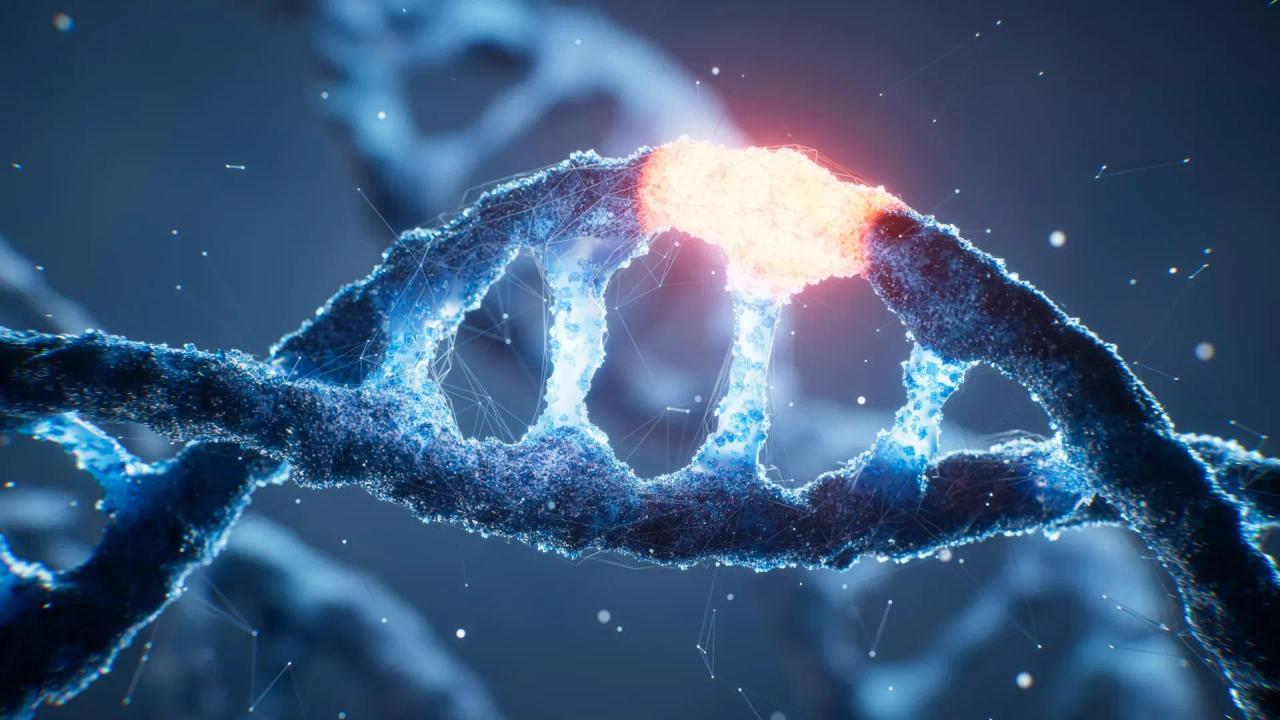
AI Model Deciphers the Initiator's DNA Pattern
Researchers at University of California San Diego have successfully used AI to decode key DNA sequence patterns that control gene activation, marking a significant advance in understanding how our genetic code functions
1
. Led by graduate student researcher Torrey Rhyne-Carrigg in Professor James T. Kadonaga's laboratory, the team focused on decoding the initiator, a critical DNA element that marks where genes begin converting their encoded information into functional products2
. The breakthrough enables scientists to predict the effects of DNA mutations that may lead to genetic disorders, including cancer.The study employed high-throughput DNA sequencing to measure gene expression activity across approximately 500,000 different versions of the initiator
3
. This massive dataset provided the foundation for training a machine learning model capable of identifying the characteristic DNA pattern associated with the initiator. Once trained, the AI model successfully decoded the initiator's signature and revealed that about 60% of human genes contain this sequence1
.Understanding Gene Activation and Its Role in Health
Healthy development depends on tens of thousands of genes being switched on at the right time and in the right place. Specific regions of DNA help coordinate this process, guiding the production of enzymes, hormones, proteins, and other molecules that cells need to function properly
1
. When gene activation goes wrong, cells can malfunction and contribute to diseases. The initiator serves as the site where instructions coded in genes are first converted, or expressed, into functional products2
.According to Kadonaga, a professor in the UC San Diego Department of Molecular Biology, School of Biological Sciences, "These AI models were found to provide, for the first time, strong predictions of the presence or absence of the initiator in human genes, and were thus able to decode the DNA base sequence pattern of the initiator"
3
. This capability represents a fundamental breakthrough in understanding the hidden code behind gene activation.Implications for Predicting DNA Mutations and Disease
The newly uncovered information gives researchers the ability to predict the effects of DNA mutations that can lead to various disorders tied to the initiator
2
. When mutations affect the initiator, they may alter gene activity and contribute to a range of disorders. The study's data and AI models may also support designing synthetic promoters, sequences that can switch genes on or off, with functions tailored for specific purposes in synthetic biology applications1
.This advancement holds particular promise for personalized medicine. By understanding how different initiator variants function across individuals, researchers move closer to predicting how genetic variations affect disease risk and treatment response.
Related Stories

The Path Toward Decoding the Complete Human Gene Expression Code
Kadonaga emphasized the broader implications of this work: "Within the six billion bases of DNA in each of our cells, there is a human gene expression code that specifies when, where and to what extent each of our genes should be turned on or off"
1
. If scientists had an AI model for the entire gene expression code, they would be able to predict the activity of each of the different variants of genes in different people. The new AI model for the initiator represents a small but important part of this gene expression code.The research demonstrates how laboratory experiments and artificial intelligence can be combined to decipher information embedded in the sequence of DNA bases in humans
3
. Kadonaga expressed optimism about expanding AI models of the human gene expression code in the not-too-distant future, suggesting this breakthrough is just the beginning of a larger effort to decode our genetic blueprint.The study, published in Genes and Development, used computational resources from the Expanse supercomputer at the San Diego Supercomputer Center and received support from the National Institutes of Health and National Science Foundation
3
. Watch for continued developments as researchers work to expand these machine learning models to decode additional components of the gene expression code, potentially transforming our understanding of genetic disorders and enabling new therapeutic approaches.References
Summarized by

Navi
[1]
[2]
Related Stories
AI Breakthrough: Designing Synthetic DNA Switches for Precise Gene Control
24 Oct 2024•Science and Research

AI Sheds Light on Gene Regulation: Enhancer Mutations and Their Far-Reaching Effects
19 Jun 2025•Science and Research

AI Designs DNA to Control Gene Expression in Healthy Mammalian Cells
09 May 2025•Science and Research

Recent Highlights
1
Microsoft and Nvidia Launch Surface Laptop Ultra: A $2,599 AI-Ready PC With RTX Spark Chip
Technology

2
OpenAI Releases 722 AI-Generated Math Papers on GitHub, Igniting Fury Among Mathematicians
Science and Research

3
Trump Consulted Grok AI Before Ordering Venezuela Invasion and Capture of Nicolás Maduro
Policy and Regulation

Recent Highlights
Today's Top Stories












Don’t drown in AI news. We cut through the noise - filtering, ranking and summarizing the most important AI news, breakthroughs and research daily. Follow topics that matter to you and stay ahead.


