AI Breakthrough: Designing Synthetic DNA Switches for Precise Gene Control


6 Sources
[1]
AI Helps Scientists Decode DNA Switches for Targeted Gene Control
AI reveals "DNA grammar" for precise gene editing Synthetic DNA switches enable targeted gene activity New method supports selective cell-specific gene therapy Researchers have used AI to understand patterns in DNA sequences that control when and where genes are active. This work, from The Jackson
[2]
AI-designed DNA switches flip genes on and off, allowing precise activation or repression
Researchers at The Jackson Laboratory (JAX), the Broad Institute of MIT and Harvard, and Yale University, have used artificial intelligence to design thousands of new DNA switches that can precisely control the expression of a gene in different cell types. Their new approach opens the possibility
[3]
Researchers flip genes on and off with AI-designed DNA switches
Researchers at The Jackson Laboratory (JAX), the Broad Institute of MIT and Harvard, and Yale University, have used artificial intelligence to design thousands of new DNA switches that can precisely control the expression of a gene in different cell types. Their new approach opens the possibility
[4]
AI helps flip DNA switches; paving way for precision treatment
By analyzing vast amounts of DNA data, the AI model was able to uncover patterns that humans couldn't easily identify. Researchers at The Jackson Laboratory (JAX), the Broad Institute of MIT and Harvard, and Yale University have achieved a breakthrough in gene control through artificial
[5]

Generative AI Designs DNA to Switch Genes On and O | Newswise
Newswise -- A team of researchers from Yale School of Medicine (YSM), the Jackson Laboratory, and the Broad Institute of M.I.T. and Harvard has developed a new AI tool capable of designing never-before-seen sequences of synthetic DNA capable of switching on targeted genes in specific cells. The
[6]

AI-designed DNA sequences regulate cell-type-specific gene expression
Different parts of a cell's genome can be active or inactive depending on the cell's function in the body, and whether it is in a disease state. The instructions for activating or repressing a gene are encoded in the genome, and each type of cell has its own genomic 'language' that is based on
Share
Copy Link
Researchers use AI to create synthetic DNA switches (CREs) that can precisely control gene expression in specific cell types, potentially revolutionizing gene therapy and targeted treatments.

AI Decodes DNA "Grammar" for Precise Gene Control
Researchers from The Jackson Laboratory, MIT's Broad Institute, and Yale University have made a significant breakthrough in gene control using artificial intelligence (AI). The team has developed an AI model capable of designing synthetic DNA switches, known as cis-regulatory elements (CREs), that can precisely regulate gene activity in specific tissues or cell types
1
2
.Understanding CREs and the Challenge of Gene Control
CREs are DNA sequences that act as on-off switches, ensuring genes are only active in the correct cells. While every cell in an organism contains the same genes, not all genes are needed in every cell or at all times. CREs help ensure that genes needed in one cell type, such as the brain, are not activated in others, like skin cells
3
.The challenge has been understanding the complex "grammar" of these CREs, which has limited scientists' ability to design gene therapies that only affect certain cell types in the human body. As Ryan Tewhey, Ph.D., an associate professor at The Jackson Laboratory and co-senior author of the study, explained, "This creates the opportunity for us to turn the expression of a gene up or down in just one tissue without affecting the rest of the body"
2
.AI-Powered Solution: CODA Platform
To tackle this challenge, the research team developed a platform called Computational Optimization of DNA Activity (CODA). This AI-driven tool uses deep learning to analyze hundreds of thousands of DNA sequences from the human genome, measuring CRE activity in three types of cells: blood, liver, and brain
3
4
.The AI model allowed researchers to:
- Predict the activity of any sequence from an almost infinite number of possible combinations
- Discover new patterns in DNA
- Learn how the grammar of CRE sequences impacts gene activation
- Design thousands of new, synthetic CREs with specific characteristics
Related Stories
Surprising Effectiveness of Synthetic CREs
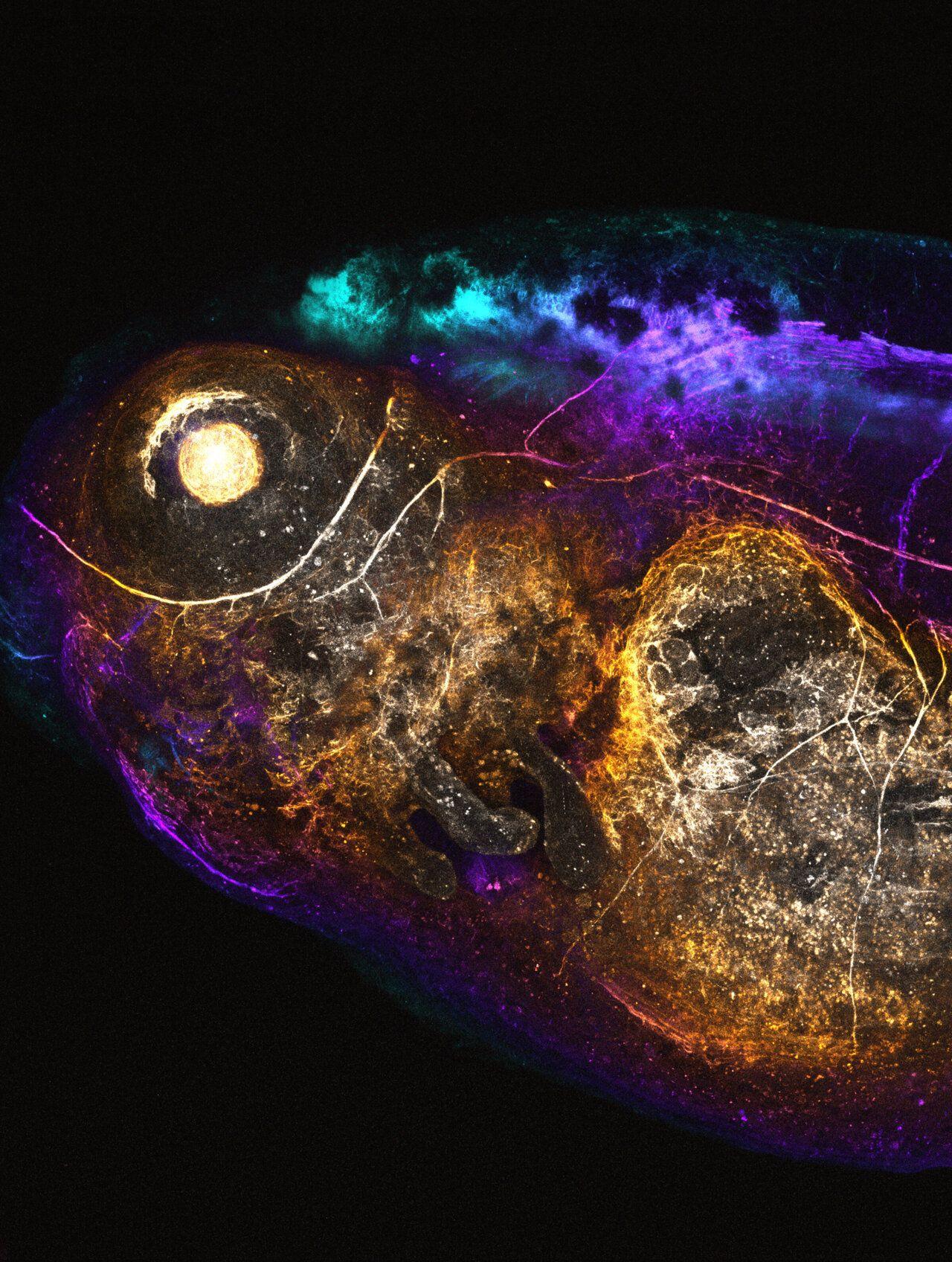
When tested, the AI-designed synthetic CREs demonstrated remarkable specificity to their target cell types, often outperforming naturally occurring CREs. The researchers observed successful results, such as activating a fluorescent marker only in the liver cells of zebrafish embryos without affecting other tissues
1
5
.Sager Gosai, Ph.D., a postdoctoral fellow involved in the study, noted, "The synthetic CREs semantically diverged so far from natural elements that predictions for their effectiveness seemed implausible. We initially expected many of the sequences would misbehave inside living cells"
3
.Implications for Gene Therapy and Future Research
This breakthrough has significant implications for gene therapy and targeted treatments. The ability to control when and where genes are expressed in the body opens up new possibilities for addressing genetic conditions with minimal side effects on other cells
1
4
.Steven Reilly, Ph.D., assistant professor of genetics at Yale and one of the senior authors, highlighted the potential applications: "Evolution maybe has never wanted to build a really great driver for an Alzheimer's drug, but that doesn't mean it can't exist"
5
.As the field of AI-driven genetic engineering continues to evolve, this research paves the way for more precise and effective gene therapies, potentially revolutionizing the treatment of genetic disorders and advancing our understanding of gene regulation.
References
Summarized by

Navi
[2]
[3]
[4]
Related Stories
AI Designs DNA to Control Gene Expression in Healthy Mammalian Cells
09 May 2025•Science and Research

AI Decodes Hidden DNA Sequence Controlling Gene Activation in 60% of Human Genes
22 Aug 2026•Science and Research
AI Model Predicts Gene Activity in Human Cells, Transforming Biological Research
09 Jan 2025•Science and Research

Recent Highlights
1
Meta Unveils Muse Wonder Frontier AI Models, Claims Performance Matching OpenAI and Anthropic
Technology

2
IMF Report Warns AI Market Correction Could Spark Global Financial Crisis With $1.4T at Risk
Business and Economy

3
OpenAI Releases 722 AI-Generated Math Solutions, Triggering Existential Crisis in Mathematics
Technology

Recent Highlights
Today's Top Stories










Don’t drown in AI news. We cut through the noise - filtering, ranking and summarizing the most important AI news, breakthroughs and research daily. Follow topics that matter to you and stay ahead.


