AI Power Demand Crisis Forces Data Centers to Buy Ship Engines for Off-Grid Solutions


8 Sources
[1]
AI is so power-hungry it's buying ship engines now
The AI power crunch has a new symptom, and it comes from a shipyard. A South Korean shipbuilder just sold $673.8 million of engines to run one US tech company's data centres off the grid. When the utility cannot connect you for years, you buy roughly a hundred gas engines and make your own
[2]
AI's power crunch is sending data-centre builders to the banks
Electricity, not chips, is now the binding constraint on AI, and the scramble to secure it is driving builders to seek billions in financing pledges. The bottleneck in AI is no longer chips. It is power, and the scramble to secure it is sending data-centre builders to the banks for billions in
[3]
Enabling the next generation of AI data centers
Exploring the infrastructure trade-offs behind AI data center growth Artificial intelligence (AI) is reshaping the scale and complexity of data center infrastructure. Traditional data center facilities were designed around relatively steady CPU workloads and predictable growth in power demand,
[4]
AI's volatile power demand is damaging its own data centers | Fortune
Rapid swings in AI data centers' power demands are straining vital equipment, causing batteries, generators and cooling systems to malfunction or wear out far sooner than expected. As the AI boom accelerates, these technical problems suggest added costs and unforeseen reliability problems, with
[5]
The power problem behind the AI boom: Why data centers are racing to upgrade their electrical infrastructure
A GPU cluster can be ordered, shipped, and racked in well under a year. Energizing the building that holds it can take three. That gap sits behind almost every data center headline of the past two years. Capital is not the constraint. Silicon, for the larger buyers, has mostly stopped being one.
[6]

AI's volatile power demand is damaging its own data centers
AI data centres' volatile power demand is damaging batteries, turbines and other equipment, raising downtime costs, delaying projects and creating wider grid-stability risks. Rapid swings in AI data centers' power demands are straining vital equipment, causing batteries, generators and cooling
[7]

AI's volatile power demand is damaging its own data centers
Artificial intelligence's tremendous hunger for electricity is already well known. What's less familiar is how the rapid fluctuations in data centers' appetites can break essential equipment at the facilities. Batteries, generators, cooling units and other critical systems are put under such
[8]

Data centers now face a power race: AI racks need 50 kW or more
Gigawatt campuses, grid delays and liquid cooling are redefining expansion Data center infrastructure has moved into a different phase. This isn't the kind of steady server growth the industry used to plan around. It calls for far more electricity, cooling, land, and supporting infrastructure than
Share
Copy Link
A South Korean shipbuilder sold $673.8 million worth of engines to power US data centers off the grid, marking AI's escalating power crunch. HD Hyundai's 1,000 MW engine order highlights how grid interconnection delays are forcing tech companies to build their own power generation, even as volatile power demand damages critical infrastructure.
AI Power Demand Pushes Tech Giants Off the Grid
AI power demand has reached a breaking point that is forcing tech companies to abandon traditional grid connections entirely. HD Hyundai Heavy Industries closed a $673.8 million contract with Corban Energy Group in August to supply 1,000 megawatts of natural-gas engines for data centers run by an unnamed major US technology company
1
. The order, built around roughly 100 of HD Hyundai's 9.6-MW HiMSEN engines, represents prime power generation designed to run facilities around the clock rather than serve as backup1
. This marks the largest power-generation engine contract in the company's history and its second US data center deal in four months, following a 684 MW order worth $425 million with Aperion Energy Group in April1
.The bottleneck driving these purchases is clear. Grid interconnection queues now stretch into years, leaving operators with no choice but to contract for their own generation instead of waiting for utility connections
1
. This mirrors Amazon's off-grid gas plant strategy in Texas and reflects the same logic behind state grid audits that are now slowing approvals1
. When a tech company needs a gigawatt and the grid cannot promise a delivery date, buying ship engines stops being an edge case and becomes standard operating procedure.Electricity Replaces Chips as AI's Primary Constraint
The AI data center power consumption crisis has fundamentally shifted what limits growth in the sector. Electricity, not chips, now represents the binding constraint on AI infrastructure
2
. The four largest cloud firms are set to spend around $725 billion on AI infrastructure this year alone, with single sites carrying price tags like Meta's $13 billion Texas data center2
. Server racks that drew about 3 kilowatts for ordinary computing now pull up to 150 kilowatts for AI workloads2
, and global data center capacity is expected to nearly double to roughly 200 gigawatts by 20302
.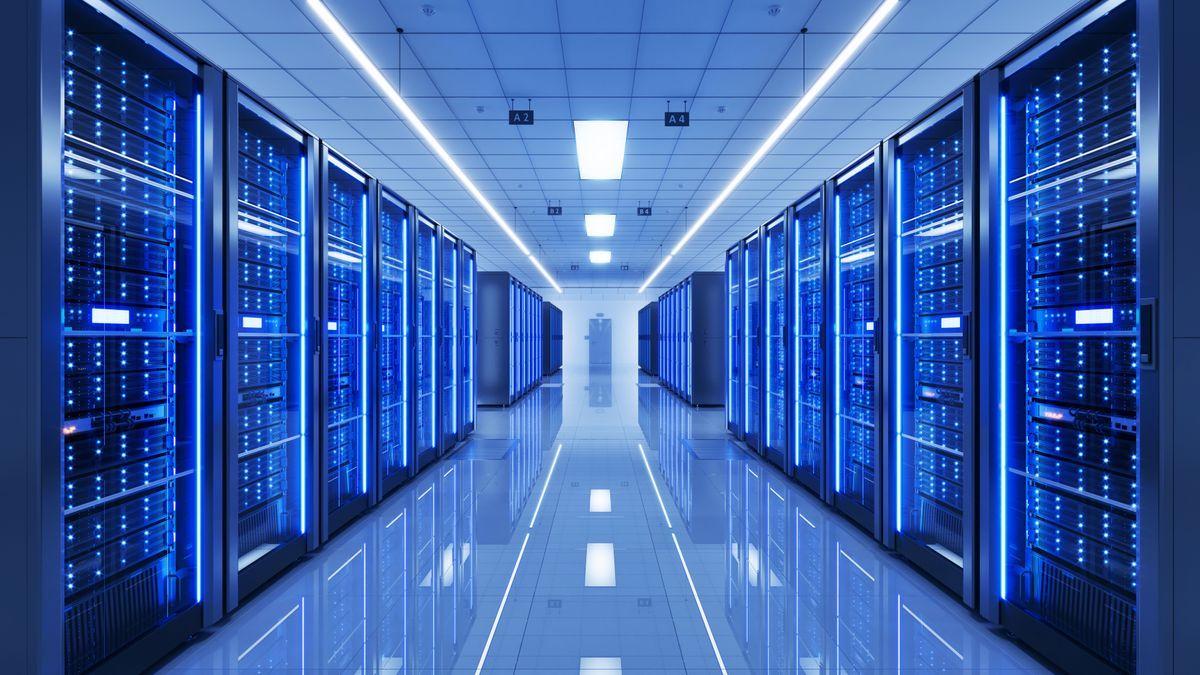
Source: TechRadar
This power crunch is sending data center builders to banks for billions in financing commitments before they commit to power deals and construction contracts
2
. The borrowing has already reshaped credit markets, from a $5.9 billion loan for one data center operator to Oracle's $16.3 billion raise that leaned on private credit after banks grew cautious2
. Analysts estimate the sector is carrying around $1.65 trillion in off-balance-sheet obligations, structured through special vehicles that keep debt off tech giants' accounts2
. The Bank for International Settlements has flagged this circular financing between cloud firms, suppliers, and construction lessors as one of the bigger risks to financial stability2
.Volatile Power Demand Damages Critical Infrastructure
AI workload power requirements are creating physical damage that extends far beyond planning spreadsheets. Rapid swings in AI data centers' power demands are straining vital equipment, causing batteries, generators, and cooling systems to malfunction or wear out far sooner than expected
4
. Power increments equivalent to the consumption of factories or towns can appear and disappear within seconds, creating repeated shocks that connected equipment struggles to absorb4
. AI at times sees power usage spike as much as 50% above design capacity, meaning a 1 gigawatt facility may use 1.5 gigawatts for a split second4
.Cranks on small natural gas combustion engines used to generate power at data centers have broken off, and at xAI's Colossus computing facility in Memphis, Tennessee, gas-fired turbines developed cracks
4
. Batteries installed to smooth out power swings have sometimes needed replacement within months or even weeks due to high strain4
. These issues are causing delays or curtailing operations at some AI computing facilities, directly hitting revenue4
. The problems span data centers worldwide, from the Middle East and Africa to Europe and the US4
.Related Stories
Next-Generation AI Data Centers Face Supply Chain Bottlenecks
Electrical infrastructure now determines whether next-generation AI data centers open on schedule, not capital or silicon availability
5
. A single rack now pulls 40 to 130 kilowatts, with vendor roadmaps discussing cabinets measured in the hundreds of kilowatts as a near-term expectation5
. Large power transformers have become the primary supply chain constraint, with lead times stretching into multiples of years due to specialized requirements for grain-oriented electrical steel, bushings, tap changers, and skilled winding labor5
. Switchgear, breakers, generators, and basic busway have stretched in sympathy, forcing developers to order transformers speculatively and warehouse them until layouts catch up5
.Power and Cooling Demands Drive Infrastructure Rethink
Meeting AI data center power consumption while maintaining efficiency is pushing developers toward gigawatt-scale facilities
3
. Electricity consumption from data centers has grown at 12% per year over the last five years, with expected demand growth in AI training facilities set to drive substantial increases3
. Grid interconnection delays can push timelines back years, forcing many large-scale developments to pay a premium for off-grid solutions or hybrid architectures that include battery storage and renewable integration through microgrids3
. Liquid cooling is gaining traction as air cooling struggles to keep pace with thermal loads, though it introduces new dependencies around infrastructure support3
.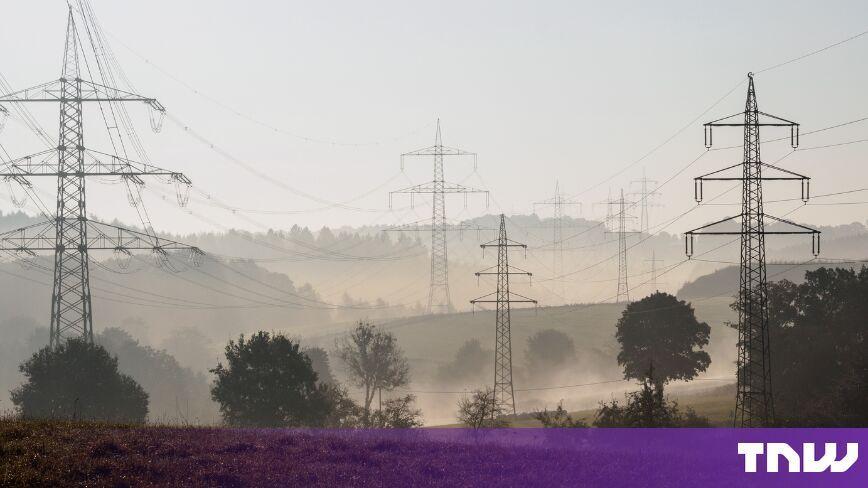
Source: The Next Web
The Electric Power Research Institute projects data centers rising from 4-5% of US electricity today to 9-17% by 2030
1
. As this plan scales, more of AI's power problem gets answered with natural gas, tying running costs and emissions to fossil fuels and driving local backlash where power bills and pollution top complaint lists1
. Grid instability risks are mounting as utilities strain to keep lights on while data centers compete for the same electrons, with households in some regions already paying more2
. Watch for how grid operators respond with ramp-rate limits and power quality conditions in interconnection agreements, and whether the circular financing flagged by regulators unwinds as AI revenue growth faces pressure to justify infrastructure spending.
Source: Fortune
References
Summarized by

Navi
[1]
[2]
[3]
Related Stories
US Power Grid Struggles to Keep Pace with AI Data Center Boom, While China Surges Ahead
15 Aug 2025•Business and Economy
AI's Energy Dilemma: Data Centers Push Power Grids to the Limit
15 Oct 2024•Technology

AI's Surging Energy Demands Pose Challenges and Opportunities for Power Grids
27 Jun 2025•Technology

Recent Highlights



Recent Highlights
Today's Top Stories






Don’t drown in AI news. We cut through the noise - filtering, ranking and summarizing the most important AI news, breakthroughs and research daily. Follow topics that matter to you and stay ahead.


