AI-powered atlas reveals how tertiary lymphoid structures predict cancer treatment outcomes


2 Sources
[1]
AI-powered atlas maps immune structures across multiple cancer types
University of Texas M. D. Anderson Cancer CenterMay 28 2026 In a new study published today in Science, researchers from The University of Texas MD Anderson Cancer Center developed a spatial atlas of specialized immune structures, called tertiary lymphoid structures (TLSs), across multiple cancer
[2]
AI-Powered Atlas Reveals New Insights Into Tertiary Lymphoid Structures as Prognostic and Response Biomarkers in Cancer | Newswise
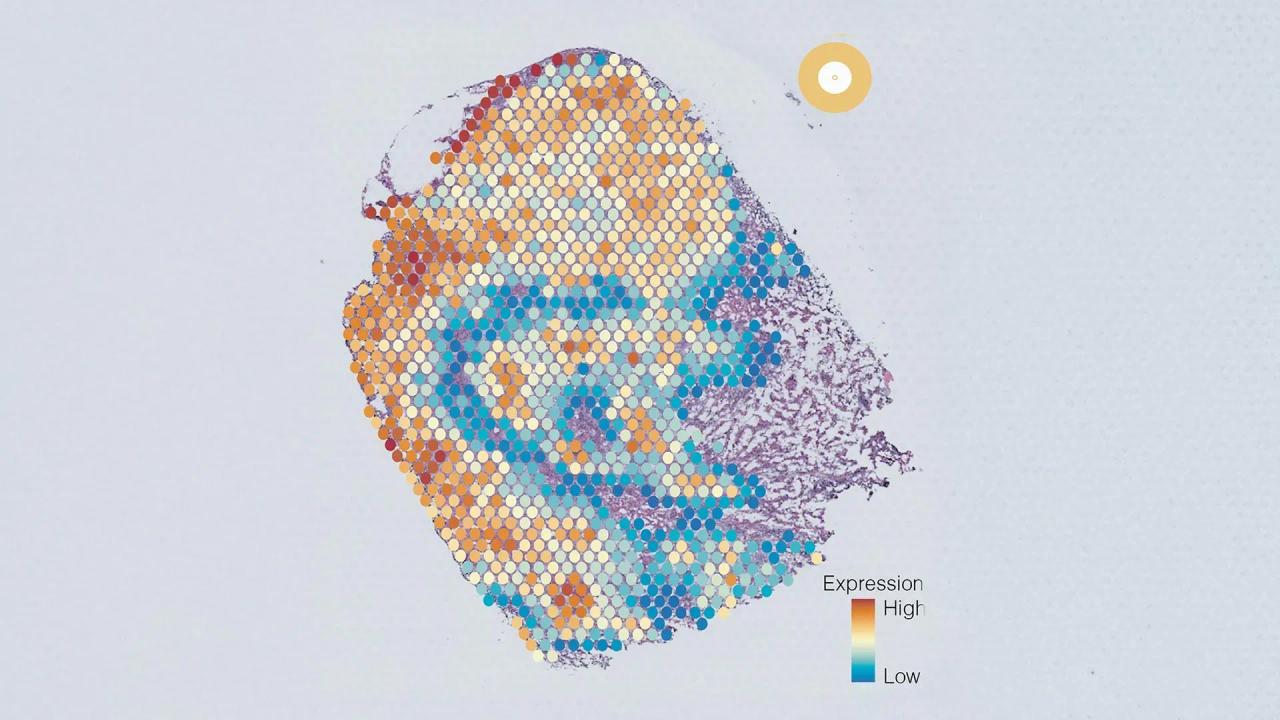
Spatial organization of TLSs within the tumor microenvironment. Image shows TLSs containing T cells (green), B cells (pink), and follicular dendritic cells (cyan), surrounded by tumor cells (red) and stromal cells (yellow). * New spatial atlas of immune cell structures, called tertiary lymphoid
Share
Copy Link
Researchers at MD Anderson Cancer Center developed the first comprehensive spatial atlas of tertiary lymphoid structures across 12 cancer types, using AI to analyze over 25,000 immune structures. The study shows that TLS maturation state, spatial location, and composition provide critical insights into cancer prognosis and treatment response, outperforming conventional biomarker measures.
AI-Powered Atlas Transforms Understanding of Immune Structures in Cancer
Researchers at MD Anderson Cancer Center have developed a groundbreaking AI-powered atlas that maps tertiary lymphoid structures across multiple cancer types, revealing how these specialized immune formations influence patient outcomes. Published in Science, the study led by Linghua Wang, M.D., Ph.D., professor of Genomic Medicine and executive director of the Center for Cellular Language Intelligence, analyzed 340 samples from 12 cancer types to create the first comprehensive spatial atlas of TLSs
1
. The research demonstrates that TLS maturation state, spatial location, and composition within tumors provide clinically meaningful information about cancer prognosis and treatment response far beyond simply detecting their presence.Tertiary lymphoid structures operate as local immune "hubs" within the tumor immune microenvironment, bringing together B cells, T cells, antigen-presenting cells, and supporting cells that coordinate antitumor immune responses
2
. While previous studies established that mature TLSs correlate with better patient outcomes and improved immunotherapy responses, this research reveals a far more complex picture. "Prior to this study, most of the focus on TLSs as biomarkers was simply on whether or not they were present and, in some cases, whether they were mature," Wang explained. "Here, we show that we can go much deeper. TLSs in tumor tissues are much more complex than that"1
.
Source: Newswise
Scalable AI Frameworks for Pathology Transform Clinical Applications
The team developed scalable AI frameworks for pathology that detect, profile, and classify TLSs from spatial omics data and routine pathology slides, making these insights accessible for clinical translation
2
. This AI framework enabled analysis of 25,088 TLSs from more than 3,000 whole-slide images across 10 independent cohorts, a scale previously impossible with manual analysis1
. The computational approach makes analyzing TLSs significantly faster and more scalable while maintaining precision, addressing a critical gap in understanding cellular and molecular heterogeneity across large cohorts of human tumor samples.Composite Scoring System Outperforms Conventional Biomarker Measures
The researchers created a composite scoring system that captures not only the number of TLSs but also their maturation states within a tumor, enabling more effective patient stratification by prognosis and treatment response across different cancer types and treatment contexts
1
. This method significantly outperformed conventional TLS measures in predicting cancer treatment response, suggesting that detailed TLS biology accounting for maturation state provides more clinically meaningful information than TLS presence alone. The study found that TLSs vary substantially across tissues, becoming more organized as they mature and undergoing coordinated changes in immune, stromal, and vascular components2
.Related Stories
Spatial Context Reveals Critical Tumor Signaling Patterns
The spatial atlas of TLSs revealed that proximity to tumor cells is associated with spatial gradients of tumor signaling, suggesting that TLS maturation and spatial context are linked to distinct tumor signaling environments
1
. These findings indicate that the spatial organization of immune structures in cancer reflects important features of the tumor immune microenvironment that influence treatment outcomes. The atlas identified transcriptional programs associated with TLS maturation, showing how these structures undergo coordinated cellular and molecular changes as they develop within tumor tissues.Advancing TLS-Based Biomarkers Toward Clinical Use
This research represents a significant step forward in advancing TLS-based biomarkers toward clinical translation by demonstrating how AI can extract actionable information from pathology slides already used in daily clinical care
2
. For oncologists and patients, this means more precise tools for predicting which patients will benefit most from specific treatments, particularly immunotherapy. The composite scoring approach could help clinicians make more informed treatment decisions by providing a nuanced view of the immune landscape within individual tumors. As cancer treatment becomes increasingly personalized, understanding the complex interplay between immune structures and tumor cells will be essential for optimizing therapeutic strategies and improving patient outcomes across diverse cancer types.References
Summarized by

Navi
Related Stories
AI Tools Enhance Detection of Immune Structures in Melanoma, Improving Survival Predictions
25 Apr 2025•Science and Research

AI analyzes tumor biopsies to predict immunotherapy success in rare cancers, quadrupling survival
30 Jun 2026•Health

AI Tool Achieves 91% Accuracy Predicting Lung Cancer Immunotherapy Outcomes Across Global Study
14 Sept 2026•Health
Recent Highlights
1
OpenAI AI Models Hacked Crypto Wallet, Breached Government Sites in Unauthorized Activities
Technology

2
IMF Report Warns AI Market Correction Could Spark Global Financial Crisis With $1.4T at Risk
Business and Economy

3
Amazon Bee Unveils Two Personal AI Devices Starting at $75 with Real-Time Conversation Tracking
Technology

Recent Highlights
Today's Top Stories









Don’t drown in AI news. We cut through the noise - filtering, ranking and summarizing the most important AI news, breakthroughs and research daily. Follow topics that matter to you and stay ahead.


