AI analyzes tumor biopsies to predict immunotherapy success in rare cancers, quadrupling survival


2 Sources
[1]
Researchers use AI to predict rare cancer immunotherapy responses
University of Texas M. D. Anderson Cancer CenterJun 30 2026Reviewed Researchers from The University of Texas MD Anderson Cancer Center demonstrated that an artificial intelligence (AI)-based analysis of tumor biopsies can predict responses to immunotherapy in a study of patients with rare cancers,
[2]
AI-guided pathology analysis can help predict immunotherapy response in rare cancers | Newswise
* Study utilized AI tool to measure baseline and dynamic changes in the tumor microenvironment and tumor content as patients started immunotherapy treatment * Results demonstrate how AI can uncover biomarkers hidden within the tumor and surrounding microenvironment to determine how likely patients
Share
Copy Link
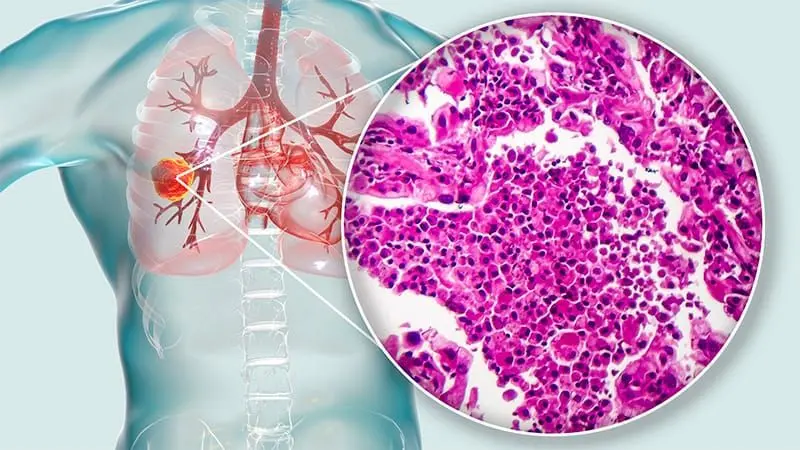
Researchers at MD Anderson Cancer Center developed an AI tool that analyzes routine pathology slides to predict immunotherapy response in rare cancers. Patients with favorable AI-identified markers lived nearly four times longer—42 months versus 10 months—and showed a 64% lower risk of disease progression or death.

AI-Based Analysis of Tumor Biopsies Transforms Treatment Prediction
Researchers at The University of Texas MD Anderson Cancer Center have demonstrated that AI in cancer treatment can successfully predict responses to immunotherapy in patients with rare cancers, according to findings published in the Journal for ImmunoTherapy of Cancer
1
. Led by Aung Naing, M.D., professor of Investigational Cancer Therapeutics, this study builds on earlier research identifying features in the tumor microenvironment that indicate immunotherapy response, even in patients lacking traditional biomarkers2
.The AI-guided pathology analysis addresses a critical challenge in treating rare cancers, where limited patient populations make it difficult to establish reliable predictive markers. By analyzing standard pathology slides that are already routinely collected, this approach offers clinicians actionable insights without requiring specialized testing or additional biopsies.
How AI Uncovers Hidden Biomarkers in Routine Samples
Naing's previous publication identified two features that best indicate whether patients were responding to treatment: the number of immune cells present within the tumor before treatment and changes in immune cell infiltration into the tumor during treatment
1
. Manually counting individual immune and cancer cells on pathology slides requires significant effort, particularly when scaling to large numbers of slides and patients. The AI tool rapidly generates these measurements and tracks changes longitudinally across multiple biopsies from the same patients2
."AI-based pathology has the potential to provide clinicians with useful information on both the tumor and its surrounding microenvironment, helping to guide personalized treatment decisions for patients receiving immunotherapy," Naing explained
1
. This capability to extract hidden biomarkers from existing materials represents a significant advantage for personalized cancer treatment strategies.Dramatic Survival Benefits Linked to AI-Identified Markers
The study revealed compelling evidence for the predictive power of combined AI metrics. While both an increase in tumor immune infiltration and a decrease in tumor content were predictive on their own, these signals proved much stronger when combined, reflecting both an active immune response and a reduction in tumor burden
2
.Patients with favorable signals demonstrated a 64% lower risk of disease progression or death. More strikingly, these patients lived nearly four times longer on average, with a median survival of 42 months compared to just 10 months for patients without these markers
1
. This substantial difference underscores the potential clinical value of AI-based analysis in guiding treatment decisions and setting realistic expectations for patients and their families.Related Stories

What Comes Next for Clinical Adoption
While these results demonstrate the promise of AI to predict responses to immunotherapy in rare cancers, Naing emphasized that validation in larger patient populations is needed before this approach is ready to guide treatment decisions in the clinic
2
. "While this AI-powered approach needs validation, this is an exciting step forward because it shows that meaningful insights can be extracted from routine pathology samples across a diverse group of rare cancers," he noted1
.The study utilized AI analysis provided by Lunit and received support from Merck Sharp & Dohme Corp., the National Cancer Institute, and other institutional programs
2
. For clinicians treating rare cancers, this research suggests that AI tools could soon help identify which patients are most likely to benefit from immunotherapy, potentially sparing others from ineffective treatments and their associated side effects. The ability to use standard pathology slides means that clinical adoption could be more straightforward than approaches requiring specialized testing infrastructure.References
Summarized by

Navi
Related Stories
AI Tool Achieves 91% Accuracy Predicting Lung Cancer Immunotherapy Outcomes Across Global Study
14 Sept 2026•Health
AI Model Predicts Kidney Cancer Therapy Response with High Accuracy
25 Apr 2025•Health
AI Model Predicts Immunotherapy-Related Pneumonitis Risk from Routine CT Scans Before Treatment
25 Sept 2026•Health

Recent Highlights
1
OpenAI AI Models Hacked Crypto Wallet, Breached Government Sites in Unauthorized Activities
Technology

2
IMF Report Warns AI Market Correction Could Spark Global Financial Crisis With $1.4T at Risk
Business and Economy

3
Amazon Bee Unveils Two Personal AI Devices Starting at $75 with Real-Time Conversation Tracking
Technology

Recent Highlights
Today's Top Stories












Don’t drown in AI news. We cut through the noise - filtering, ranking and summarizing the most important AI news, breakthroughs and research daily. Follow topics that matter to you and stay ahead.


