AI-Powered Robotics Project Revolutionizes Electronic Waste Recycling


3 Sources
[1]
AI-powered robotics project could revolutionize electronic waste recycling
Forward-looking: As devices become obsolete at an alarming rate, the issue of electronic waste has become increasingly pressing. A project has emerged combining measurement and robot technology with AI and knowledge management that seeks to address this issue. The problem is difficult to
[2]
Robots to the rescue: Automated disassembly for e-waste recycling
A new UN report finds that more and more electronic waste, or e-waste, is being produced worldwide -- recycling efforts are not keeping pace, though. Valuable raw materials are not being recovered and recycled. Research scientists at the Fraunhofer Institute for Factory Operation and Automation
[3]
'Disassembly twin': German trash robot sorts e-waste with AI precision
Scientists at Fraunhofer IFF in Magdeburg are working on the Intelligent Disassembly of Electronics for Remanufacturing and Recycling (iDEAR) project to combine robotics and artificial intelligence. The goal is to make an intelligent system for automated and nondestructive disassembly processes to
Share
Copy Link
Researchers at Fraunhofer Institute develop iDEAR, an AI-driven robotic system for automated disassembly of electronic waste, aiming to improve recycling efficiency and recover valuable materials.

AI-Powered Robotics Tackles E-Waste Crisis
In response to the growing global electronic waste crisis, researchers at the Fraunhofer Institute in Magdeburg, Germany, have developed an innovative project called iDEAR (Intelligent Disassembly of Electronics for Remanufacturing and Recycling). This AI-powered robotic system aims to revolutionize electronic waste recycling by automating the disassembly process, potentially solving a critical environmental challenge
1
.The E-Waste Problem
The scale of electronic waste generation is staggering. The European Union alone produced approximately five million tons of e-waste in 2022, while the United States generates 6.9 to 7.6 million metric tons annually. Global e-waste production is projected to reach 74.7-82 million metric tons by 2030
1
. Current recycling methods are inefficient, with more than 80% of e-waste ending up in landfills or incinerators, resulting in the loss of valuable raw materials and potential environmental hazards2
.The iDEAR System
The iDEAR project combines knowledge management, metrology, robotics, and artificial intelligence to create an intelligent system for automated and nondestructive disassembly of electronic devices
2
. The process involves several key steps:-
Identification and Diagnosis: AI-powered 3D cameras and optical sensor systems scan the e-waste, capturing information such as manufacturer details, product type, and serial numbers. The system assesses component conditions, detects anomalies, and evaluates connecting elements
1
. -
Digital Disassembly Twin: A digital twin is created for each product, serving as a record of the device and its components. This information aids in determining the most effective disassembly approach
1
. -
Disassembly Sequence Planning: Specialized software defines the optimal disassembly sequence, determining whether a complete or partial disassembly should occur
1
. -
Robotic Disassembly: The robot receives a series of instructions to perform tasks such as removing screws, opening housings, and extracting components
3
.
Related Stories

Achievements and Future Prospects
The iDEAR system has already demonstrated its capabilities by successfully removing mainboards from PC housings, a task requiring high precision
1
. While currently focused on PC recycling, the researchers aim to expand the system's capabilities to handle a wide range of electronic devices, from microwaves to large appliances2
.Dr. José Saenz, group leader for assistance, service, and industrial robots at the Fraunhofer IFF, envisions a data-driven methodology that can adapt to various electronic devices with minimal engineering effort
1
. This approach could significantly improve the efficiency and effectiveness of e-waste recycling, contributing to a more sustainable circular economy for electronics.References
Summarized by

Navi
[3]
Related Stories
Microsoft Pioneers AI-Powered Robotic System for Secure Hard Drive Recycling
17 Sept 2024

Humanoid robot tackles waste sorting as recycling industry faces 40% staff turnover crisis
05 May 2026•Technology
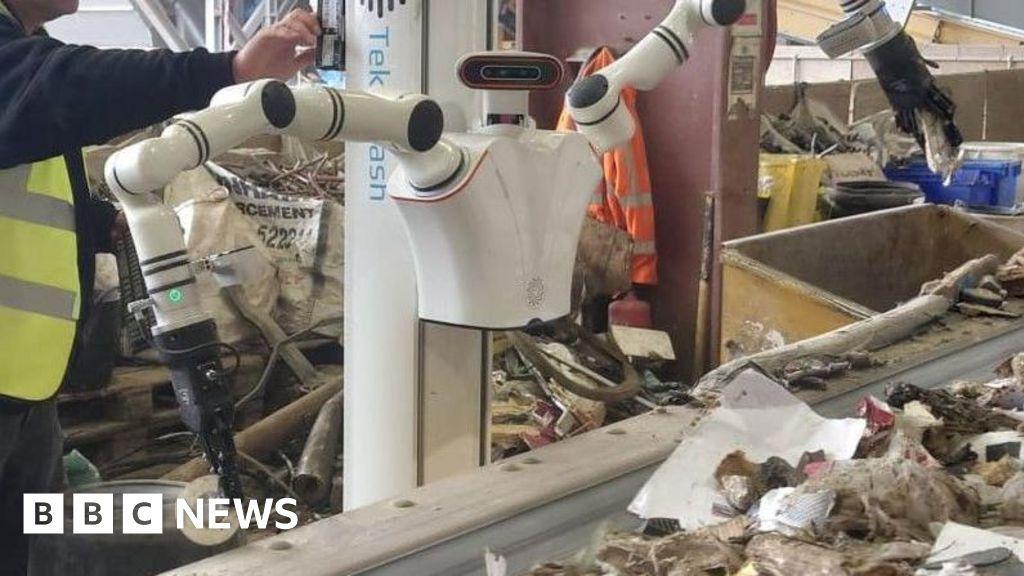
Danu Robotics Secures $5M to Scale AI-Powered Recycling Robot Across Europe and North America
10 Oct 2026•Technology

Recent Highlights



Recent Highlights
Today's Top Stories



Don’t drown in AI news. We cut through the noise - filtering, ranking and summarizing the most important AI news, breakthroughs and research daily. Follow topics that matter to you and stay ahead.


