Yale Researchers Develop AI Algorithm to Detect Structural Heart Disease Using Smartwatch ECG Data


5 Sources
[1]
App Turns Smartwatch Into Detector of Structural Heart Disease
An app that uses an AI model to read a single-lead ECG from a smartwatch can detect structural heart disease, researchers reported at the 2025 Scientific Sessions of the American Heart Association. Although the technology requires further validation, the researchers said it could help improve the
[2]
Scientists use smartwatch data and AI to detect heart damage
Scientists have uncovered structural heart problems by using an artificial intelligence tool to vet smartwatch data, in the latest advance in the fast-evolving field of cardiology diagnostics. The new technique found conditions including weakened pumping ability, damaged valves and thickened
[3]
AI algorithm paired with ECG sensors can accurately detect structural heart diseases
American Heart AssociationNov 3 2025 An artificial intelligence (AI) algorithm paired with the single-lead electrocardiogram (ECG) sensors on a smartwatch accurately diagnosed structural heart diseases, such as weakened pumping ability, damaged valves or thickened heart muscle, according to a
[4]
Your next Apple Watch may feature AI to predict structural heart diseases
What Happened: That smartwatch on your wrist might be getting a serious health upgrade. Researchers at Yale just figured out a way to use AI to scan your watch's ECG (heart rhythm) data and spot signs of "structural heart disease." We're talking about the big problems, like a weakened heart
[5]

AI-Powered Smartwatch Can Detect Heart Disease
By Dennis Thompson HealthDay ReporterTUESDAY, Nov. 4, 2025 (HealthDay News) -- Artificial intelligence (AI) can use smartwatch data to detect heart disease, a new study says. AI fed heart sensor data from an Apple Watch accurately detected heart problems like weakened pumping ability, damaged
Share
Copy Link
Yale scientists have created an AI algorithm that can detect structural heart diseases like heart failure, valve problems, and left ventricular hypertrophy using single-lead ECG data from smartwatches. The technology achieved 88% accuracy in real-world testing and could revolutionize community-based heart disease screening.
Breakthrough in Wearable Heart Disease Detection
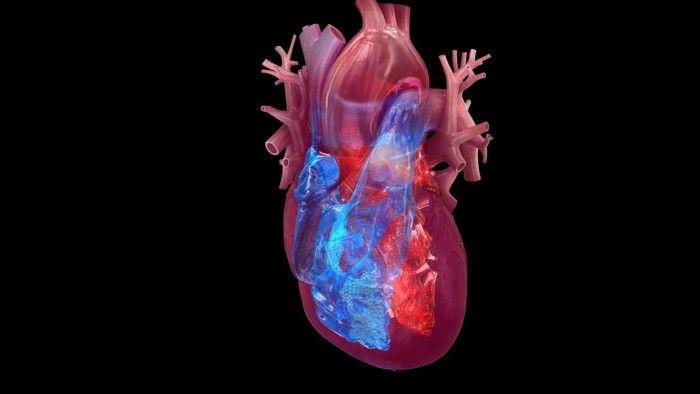
Researchers at Yale University have developed a groundbreaking artificial intelligence algorithm that can detect structural heart diseases using single-lead electrocardiogram (ECG) data from smartwatches. The innovation, presented at the American Heart Association's 2025 Scientific Sessions in New Orleans, represents the first prospective study demonstrating AI's ability to identify multiple structural heart conditions from consumer wearable devices
1
.The technology addresses a critical gap in cardiovascular care, where structural heart diseases—including heart failure, valvular conditions, and left ventricular hypertrophy—typically remain undetected for years until patients become symptomatic. "We are missing the asymptomatic window of these diseases where we could intervene earlier, potentially changing the trajectory of the disease and improving outcomes," said Dr. Arya Aminorroaya, the study's lead author and internal medicine resident at Yale New Haven Hospital
1
.
Source: FT
AI Model Development and Training
The research team at Yale's Cardiovascular Data Science Lab built their AI algorithm using an extensive dataset of 266,054 ECGs from 110,006 patients, paired with echocardiograms performed within 30 days. This comprehensive approach allowed researchers to accurately correlate each ECG reading with the actual presence or absence of structural heart disease
2
.
Source: News-Medical
To prepare the model for real-world application, researchers introduced "noise" during training to simulate the imperfect signals commonly encountered with smartwatch sensors due to movement, muscle twitches, or sensor interference. This enhancement made the algorithm more resilient and reliable when processing data from consumer devices
3
.The AI model underwent external validation using data from 44,591 patients across four community hospitals and 3,014 participants from the population-based ELSA-Brasil study, demonstrating its effectiveness across diverse populations and healthcare settings
1
.Real-World Performance Results
In the prospective validation study, 600 participants used Apple Watches to record 30-second single-lead ECGs on the same day they received echocardiograms. The AI algorithm demonstrated impressive performance metrics, achieving an area under the receiver operating curve of 0.88
1
.
Source: Digital Trends
The system showed 86% sensitivity in identifying patients with structural heart disease and 87% specificity in correctly ruling out the condition. Perhaps most significantly, the algorithm achieved a 99% negative predictive value, meaning it correctly identified healthy individuals 99% of the time, while maintaining a 27% positive predictive value
5
.Among the 600 test participants, 21 individuals (5.3%) were found to have structural heart disease on echocardiogram, providing a realistic representation of disease prevalence in the general population
1
.Related Stories


Clinical Applications and Future Implications
The technology could transform community-based screening for structural heart disease by leveraging devices millions of people already own. "This could make early screening for structural heart disease possible on a large scale, using devices many people already own," said Dr. Rohan Khera, senior author and director of the Cardiovascular Data Science Lab at Yale School of Medicine
2
.The researchers envision applications beyond individual use, suggesting implementation in community settings such as churches, grocery stores, and barbershops, ensuring that smartwatch ownership is not a prerequisite for access to this screening technology
1
.Currently, the app can identify heart failure, vascular diseases, and left ventricular hypertrophy, though it has not been programmed to detect cardiomyopathy. However, researchers are developing additional models to address this limitation
1
.Expert Perspectives and Limitations
While experts acknowledge the technology's promise, some caution remains regarding its clinical implementation. Dr. Pradeep Natarajan from Massachusetts General Hospital noted that while the technology appears promising for excluding structural cardiovascular disease, the 86% sensitivity means some individuals with heart disease could be missed
1
.The researchers acknowledge the need to balance sensitivity for detecting structural heart disease while minimizing false-positive readings that could overwhelm healthcare systems. "We need to find a spot that improves the detection of structural heart disease but doesn't overburden the health system," Aminorroaya explained
1
.The study represents part of a growing effort to expand AI analysis of ECGs beyond clinical settings into general population screening, with similar research initiatives underway at institutions like Imperial College London
2
.References
Summarized by

Navi
[3]
[5]
Related Stories
Recent Highlights
1
Microsoft and Nvidia Launch Surface Laptop Ultra: A $2,599 AI-Ready PC With RTX Spark Chip
Technology

2
Trump Consulted Grok AI Before Ordering Venezuela Invasion and Capture of Nicolás Maduro
Policy and Regulation

3
Scientists Build AI Model That Reconstructs Images From Brain Scans in Record Time
Science and Research

Recent Highlights
Today's Top Stories







Don’t drown in AI news. We cut through the noise - filtering, ranking and summarizing the most important AI news, breakthroughs and research daily. Follow topics that matter to you and stay ahead.


