AI reads a single heat image to predict whether a diabetic foot ulcer will heal


3 Sources
[1]
Can a smartphone image reveal if a diabetic foot ulcer will heal?
By Dr. Liji Thomas, MDReviewed by Lauren HardakerNov 19 2026 Instead of waiting four weeks to assess wound healing progress, clinicians could one day use a single smartphone thermal image to identify diabetic foot ulcers at risk of non-healing and intervene sooner. Study: Automated Prediction of
[2]
New tool enables early intervention for diabetic foot ulcers
Australian researchers and clinicians have developed an AI-powered thermal imaging tool to predict if diabetes-related foot ulcers are likely to heal, potentially reducing hospitalizations and amputations. Diabetes affects over 500 million people globally and about a third will develop a foot
[3]
AI-powered thermal imaging tool predicts diabetes foot ulcer healing
Australian researchers and clinicians have developed an AI-powered thermal imaging tool to predict if diabetes-related foot ulcers are likely to heal, potentially reducing hospitalizations and amputations. Diabetes affects over 500 million people globally and about a third will develop a foot
Share
Copy Link
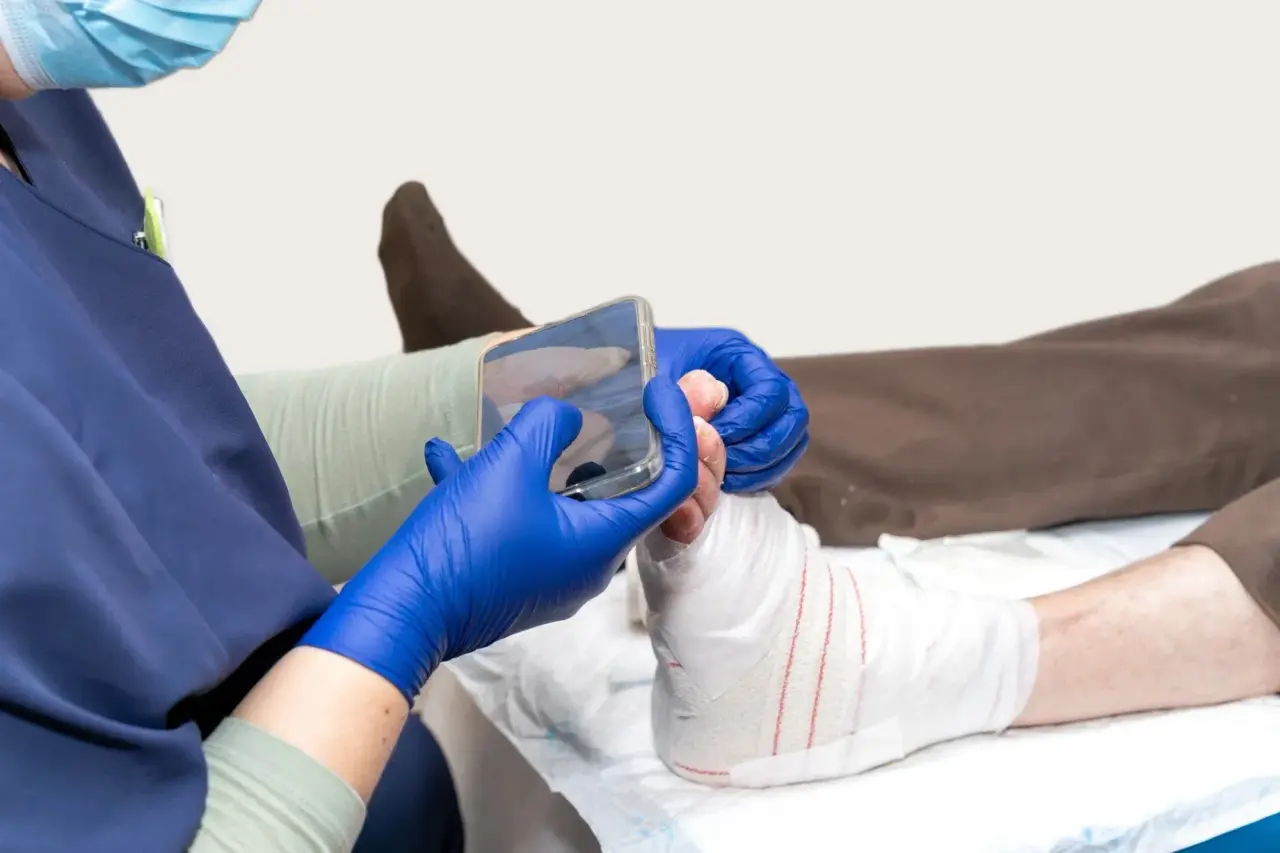
Australian researchers have built a smartphone-based AI tool that predicts whether a diabetes-related foot ulcer will heal within 12 weeks, using a single heat image taken at a patient's first clinic visit
3
. The tool, called THERMUL, is a feasibility study, not an approved clinical technology3
.
Source: News-Medical
Why speed matters
The researchers say speed is the aim. Spotting heat patterns tied to healing outcomes early would let clinicians intervene or escalate care sooner instead of waiting a month
3
. The current standard is slow. Guidelines judge healing by how much the wound has shrunk after four weeks of treatment, so a reliable signal arrives a month after the first visit2
.The stakes are large. Diabetes affects more than 500 million people worldwide, and about a third of them will develop a foot ulcer at some point, one that can lead to infection, hospital admission or amputation
3
. "Diabetes-related foot disease places a significant burden on individuals and the Australian health system, costing an estimated $875 million every year," said endocrinologist Professor Elif Ekinci, who heads the University of Melbourne's Department of Medicine and co-led the work3
.How it reads a wound
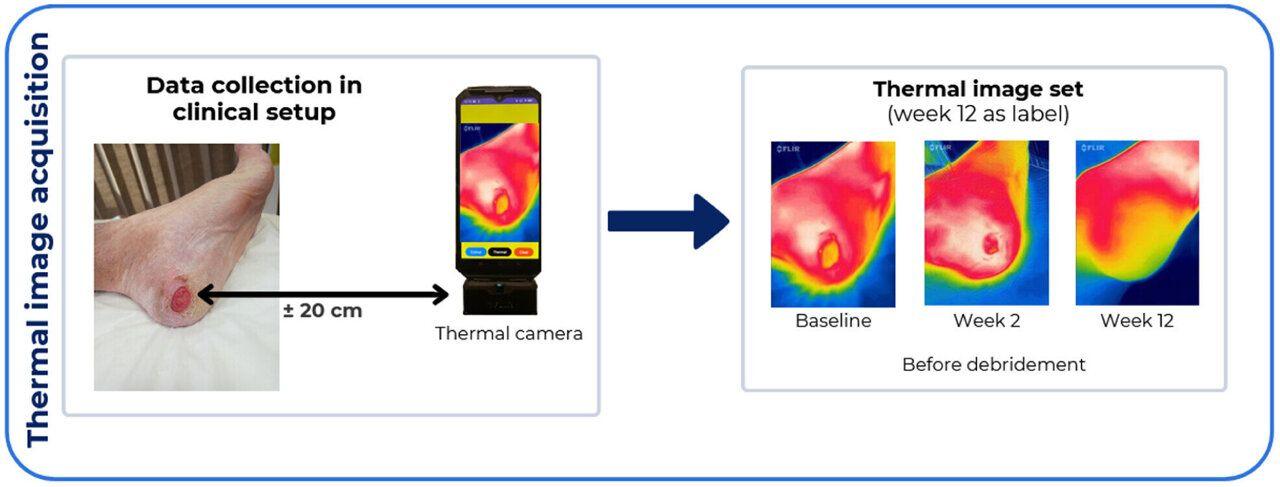
Earlier thermal tools compared the affected foot with the healthy one, or tracked temperature across several visits, which fails when both feet are affected or the room is warm. THERMUL instead analyzes the texture of the temperature pattern inside the wound itself, looking at how smooth or patchy the heat is
1
. The authors link uneven patterns to possible inflammation, infection or poor blood supply1
. "These patterns may provide an early indication of a wound's likely healing trajectory, potentially allowing clinicians to identify people who might benefit from earlier intervention or escalation of care," said Professor Dinesh Kumar of RMIT University, who led the tool's development3
.
Source: Medical Xpress
The study followed 110 patients at two Melbourne foot clinics, with the model trained on 68 ulcers from 56 of those participants
1
. The findings appear in the Journal of Diabetes Science and Technology3
.The numbers behind the promise
The performance numbers temper the promise. On test folds the model's accuracy was moderate, and it misclassified close to half of the ulcers that went on to heal. The tool is better at flagging ulcers that will not heal than at confirming ones that will: it caught about three quarters of non-healers but correctly cleared only about half of the ulcers that did heal. A separate check on seven unseen ulcers got five right
1
.The evidence base is small, and the study ran in controlled clinic rooms. Only straightforward ulcers were included, and no external validation has been done. It is unclear whether care guided by the model actually improves outcomes
1
.Related Stories

Who it could help
"A portable, non-contact tool like THERMUL has the potential to bring specialist-level decision support closer to where people live and receive care," said Dr Rajna Ogrin of Bolton Clarke, a co-author
3
. For remote patients, that burden often means repeated trips to specialist foot centers, at real cost and distress1
. Because the tool is not yet validated for healthcare settings, those access and equity benefits remain potential rather than demonstrated3
.The authors present THERMUL as a complement to clinician judgment
1
. Future versions, they propose, would combine thermal readings with routine details: age, how long someone has had diabetes, whether they smoke and the state of their nerves. Wounds would also be sorted into expert-checked low, moderate and high risk grades1
. The tool still needs further validation before any use in healthcare settings3
. The team is calling for larger, more diverse datasets, testing outside the original clinics, and studies of whether model-guided decisions actually help patients3
.References
Summarized by

Navi
[2]
Related Stories
AI-Powered Smart Bandage Revolutionizes Wound Healing with 25% Faster Results
24 Sept 2025•Health

AI-Powered Foot Scanner Detects Early Signs of Heart Failure, Potentially Reducing Hospital Admissions
04 Jun 2025•Health
AI-Powered Retina Tracker Revolutionizes Diabetic Eye Disease Screening
15 Jul 2025•Health

Recent Highlights


Recent Highlights
Today's Top Stories








Don’t drown in AI news. We cut through the noise - filtering, ranking and summarizing the most important AI news, breakthroughs and research daily. Follow topics that matter to you and stay ahead.


