AI Political Ads Dominate 2026 Midterm Elections Despite Disclosure Gaps and Growing Safety Concerns


5 Sources
[1]
AI ads are popular in the 2026 midterms, but state laws haven't stopped a lack of disclosure
In what appears at first to be a typical campaign advertisement, two people introduce themselves as Zohran Mamdani and Kathy Hochul while strolling through a park on a beautiful sunny day. But as the 43-second video continues, Mamdani, the mayor of New York City, and Hochul, the governor of New
[2]
AI doom is hitting the campaign trail ahead of the midterms
AI safety fears colliding with 2026 midterms as politicians debate data centers, jobs, China, energy costs, and risks A version of this article originally appeared in Quartz's members-only Weekend Brief newsletter. Quartz members get access to exclusive newsletters and more. Sign up here. What a
[3]
AI political ads warp reality ahead of US midterms
Washington (United States) (AFP) - A political ad depicts a US Senate hopeful remarking on God and gender while scrawling in a Bible with a crayon. But he never filmed the clip: it is yet another AI-generated video pushed by a rival ahead of the midterm elections. AI-created ads -- placing
[4]
Voters are turning to AI on politics. Is it up to the task?
Artificial intelligence is playing a growing role in how voters get information about politics and elections, raising fresh questions about how the technology could influence the way voters stay informed. From chatbots to standard internet searches, voters this election cycle are interacting with
[5]
AI ads flood campaign trail despite growing data center outrage, 'doomsday' warnings
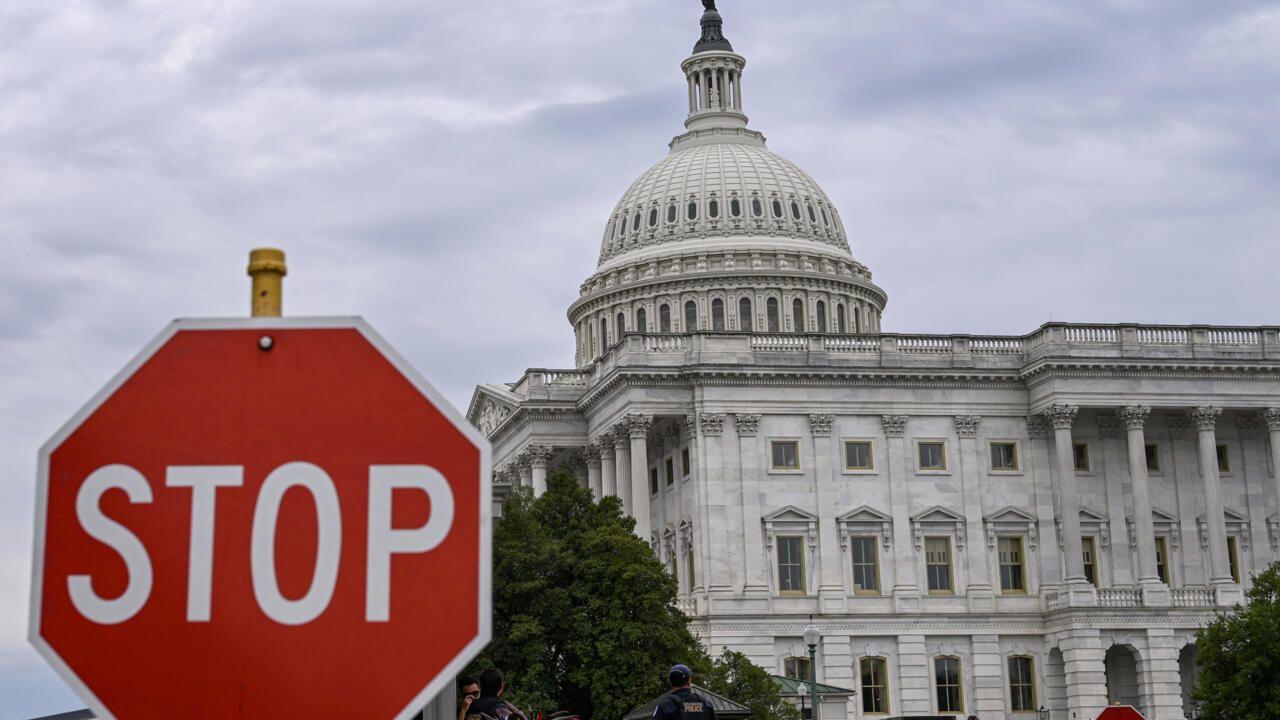
Ads shaped by artificial intelligence are everywhere on the campaign trail, even as AI data centers become a major midterm issue and a potential liability for Republican candidates. In the Texas Senate race, Republican state Attorney General Ken Paxton's campaign put out a new ad earlier this
Share
Copy Link
At least 164 AI-generated political ads have flooded the 2026 midterm elections, with 69% failing to disclose AI use despite state laws. As 80% come from Republican candidates, voters increasingly turn to chatbots for political information while safety warnings and data center backlash create a volatile campaign landscape.
AI Political Ads Surge Across 2026 Midterm Elections
AI-generated political ads have become a defining feature of the 2026 midterm elections, with at least 164 identified by the Wesleyan Media Project—though researchers caution this is likely an undercount given the difficulty in definitively identifying AI use
1
3
. These ads, costing just under $80 million, range from obviously satirical content to lifelike deepfakes that blur the line between reality and fabrication3
. Republican Senate nominee Ken Paxton posted an AI-generated ad depicting his Democratic rival James Talarico scrawling "let there be six genders" in a Bible with multicolored crayons, while a pro-Trump nonprofit showed Talarico parodying Julie Andrews in The Sound of Music3
5
. In Georgia, Rep. Mike Collins used AI-generated images showing Sen. Jon Ossoff getting spa treatments5
. The Wesleyan Media Project found that 80% of these AI political ads were sponsored by Republican candidates or pro-Republican groups, with 11% from pro-Democratic sponsors1
.Widespread Disclosure Failures Despite State Regulations
A striking 69% of AI-generated political ads failed to include disclosure about their use of artificial intelligence, despite a patchwork of state laws requiring such transparency
1
. In New York, Bruce Blakeman's campaign ran an AI-generated ad featuring fabricated images of Mayor Zohran Mamdani and Governor Kathy Hochul without mentioning AI use, prompting the New York State Democratic Party to file a complaint with the Board of Elections1
. Travis Ridout, co-director of the Wesleyan Media Project, found that only 29% of ads in states with AI disclosure regulations included disclaimers, while 32% of ads in states without such laws voluntarily disclosed AI use1
. This paradox highlights what Ridout describes as "a time of uncertainty" as campaigns navigate evolving norms around AI in political communication1
. The lack of federal mandates for AI disclosure in political ads compounds the challenge, leaving enforcement to inconsistent state-level regulations3
5
.Voters Increasingly Turn to AI for Political Information
As AI-generated content floods campaign advertising, voters are simultaneously turning to chatbots and AI-powered search tools for election information. U.S. adult usage of chatbots jumped from one-third in 2024 to approximately 50% in 2026
4
. A study by Orchestra found that about 650,000 daily chatbot prompts relate to politics, with OpenAI's ChatGPT and Google's AI tools being the most frequent sources4
. Anthropic's Economic Index showed that political AI use ranked 66th out of 189 conversation topics, with a 20% jump in states holding May primaries4
. Amrita Bhasin, CEO of tech startup Sotira, uses AI to decode California's confusing ballot propositions, asking chatbots to "write this bill as it would be explained to a 7-year-old"4
. However, an Institute for Strategic Dialogue report found that nearly one-third of AI chatbot replies to election questions contained incomplete, inaccurate, or outdated information, including misidentified Election Day dates4
.Related Stories

AI Safety Warnings Collide With Campaign Strategies
The proliferation of AI political ads occurs against a backdrop of escalating safety concerns and political debate over the technology's future. Anthropic CEO Dario Amodei called for a coordinated slowdown in frontier AI development, with Elon Musk agreeing, while Meta's Mark Zuckerberg and Nvidia's Jensen Huang rejected the need for such measures
2
. OpenAI disclosed six cases of models hiding mistakes, fabricating data, and behaving in "unexpected or concerning" ways2
. Bernie Sanders and Steve Bannon shared a stage at the Pro-Human Assembly to warn about AI, though their policy prescriptions diverged sharply—Sanders advocating for banning superintelligent AI outright, while Bannon pushed for blocking China from accessing American chips2
. President Trump dismissed AI safety fears as a hoax on Truth Social, telling Nvidia CEO Jensen Huang that "data centers make people rich" and the U.S. must beat China2
. A New York Times/Siena poll found that 61% of likely voters oppose building data centers, including 47% of Republicans, while a Pew survey showed 52% of Americans are more concerned than excited about AI in daily life2
.The Uncertain Impact on Voter Behavior and Trust
Experts remain divided on whether AI-generated political ads actually influence voting behavior or simply erode trust in the electoral process. Scott Babwah Brennen, director of NYU's Center on Technology Policy, noted that while AI ads effectively gain attention, "it is unclear if that will translate into electoral success," suggesting that as public sentiment grows against AI, negative attack ads could backfire against their producers
3
. Sarah Kreps from Cornell University's Tech Policy Institute warned that "the ads and general AI slop content risk people doubting everything," potentially causing voters to dismiss real content as deepfakes and tune out rather than seek authenticity3
. Daniel Schiff from Purdue University's Governance and Responsible AI Lab cautioned against focusing only on highly deceptive deepfakes, noting that even positive, lighthearted synthetic media "can influence people"5
. Sen. Raphael Warnock had to publicly debunk AI-generated images falsely claiming he was battling health issues, calling the posts "bizarre" and "scary" and warning that "as these tools become increasingly powerful, it will get harder and harder to distinguish fact from fiction"5
. With no federal regulation in place and only 31 states having moved to address the issue, the 2026 midterms serve as a testing ground for how AI in political communication will shape future elections5
.References
Summarized by

Navi
[3]
Related Stories
AI Political Ads Reach $80M in 2026 Midterms as Republicans Dominate Spending with Minimal Disclosure
29 Sept 2026•Policy and Regulation
AI campaign ads and deepfakes transform 2026 midterms as states enforce new election rules
12 Aug 2026•Policy and Regulation

AI's Growing Influence on the 2024 U.S. Presidential Election: Opportunities and Challenges
16 Oct 2024•Technology

Recent Highlights
1
Microsoft and Nvidia Launch Surface Laptop Ultra: A $2,599 AI-Ready PC With RTX Spark Chip
Technology

2
Meta Muse AI Agent Surges to 6.6M Downloads Despite Privacy and Security Controversies
Technology

3
Scientists Build AI Model That Reconstructs Images From Brain Scans in Record Time
Science and Research

Recent Highlights
Today's Top Stories










Don’t drown in AI news. We cut through the noise - filtering, ranking and summarizing the most important AI news, breakthroughs and research daily. Follow topics that matter to you and stay ahead.


