AI's Role in End-of-Life Decisions: Balancing Technology and Human Touch

2 Sources
[1]
The Download: making tough decisions with AI, and the significance of toys
A personalized AI tool might help some reach end-of-life decisions -- but it won't suit everyone This week, I've been working on a piece about an AI-based tool that could help guide end-of-life care. We're talking about the kinds of life-and-death decisions that come up for very unwell
[2]
A personalized AI tool might help some reach end-of-life decisions -- but it won't suit everyone
Often, the patient isn't able to make these decisions -- instead, the task falls to a surrogate, usually a family member, who is asked to try to imagine what the patient might choose if able. It can be an extremely difficult and distressing experience. A group of ethicists have an idea for an AI
Share
Copy Link
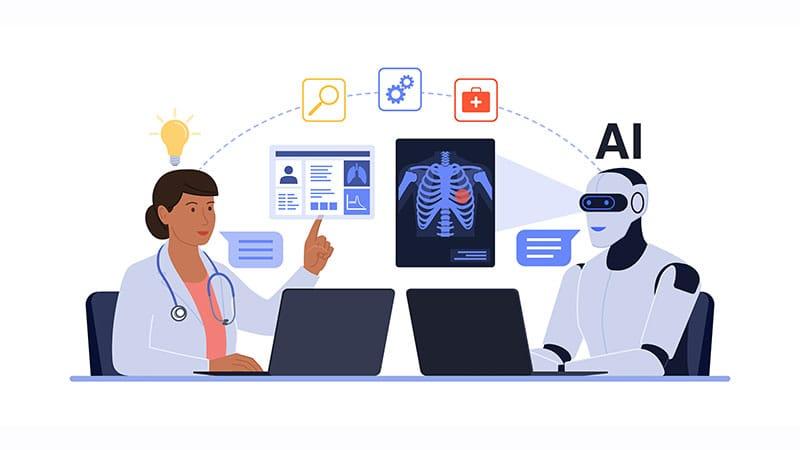
A new AI system designed to assist with end-of-life decisions sparks debate on the role of technology in healthcare. While it shows promise in reducing decision fatigue, concerns arise about the ethical implications and the importance of human judgment in such sensitive matters.

AI System Developed for End-of-Life Decision Support
Researchers have unveiled a new artificial intelligence system designed to assist healthcare professionals and patients in making challenging end-of-life decisions. The AI, developed by a team of computer scientists and medical ethicists, aims to provide data-driven insights to supplement human judgment in these sensitive situations
1
.Potential Benefits of AI in Healthcare Decision-Making
The AI system offers several potential advantages in the healthcare decision-making process:
-
Reduced decision fatigue: By processing vast amounts of medical data and presenting clear options, the AI could help alleviate the mental strain on healthcare professionals and families.
-
Consistency in care: The system may help ensure more consistent decision-making across different healthcare settings and providers.
-
Personalized recommendations: By analyzing patient-specific data, the AI could offer tailored suggestions that consider individual circumstances and preferences
2
.
Ethical Concerns and Limitations
Despite its potential benefits, the introduction of AI in end-of-life decision-making has raised several concerns:
-
Lack of human touch: Critics argue that such sensitive decisions require empathy and emotional intelligence that AI systems currently lack.
-
Potential for bias: There are worries about inherent biases in the AI's training data, which could lead to unfair or discriminatory recommendations.
-
Overreliance on technology: Some fear that healthcare providers might become overly dependent on AI suggestions, potentially diminishing their own critical thinking and judgment
2
.
Related Stories
The Importance of Human Judgment
While the AI system shows promise, experts emphasize that it should be viewed as a tool to support, not replace, human decision-making. Dr. Emily Chen, a bioethicist involved in the project, states, "The AI can provide valuable insights, but the final decision should always involve human judgment, compassion, and an understanding of the patient's values and wishes"
1
.Future Implications and Research
As AI continues to evolve, its role in healthcare decision-making is likely to expand. Researchers are calling for:
- Ongoing ethical evaluations of AI systems in healthcare.
- Improved transparency in AI decision-making processes.
- Enhanced training for healthcare professionals on how to effectively integrate AI insights into their practice while maintaining a human-centered approach
2
.
The development of this AI system marks a significant step in the integration of technology in healthcare decision-making. As the debate continues, finding the right balance between technological assistance and human judgment remains a critical challenge in the evolving landscape of medical ethics and patient care.
References
Summarized by

Navi
[1]
Related Stories
Suicide Pod Creator Philip Nitschke Adds AI Mental Fitness Test to Controversial Device
20 Jan 2026•Technology

AI Afterlife: How Digital Grief Tech is Reshaping Mourning
13 Sept 2025•Technology

AI Chatbots Make Life-or-Death Choices Differently Than Humans in Kidney Transplant Scenarios
16 Sept 2026•Science and Research

Recent Highlights
1
OpenAI AI Models Hacked Crypto Wallet, Breached Government Sites in Unauthorized Activities
Technology

2
IMF Report Warns AI Market Correction Could Spark Global Financial Crisis With $1.4T at Risk
Business and Economy

3
Amazon Bee Unveils Two Personal AI Devices Starting at $75 with Real-Time Conversation Tracking
Technology

Recent Highlights
Today's Top Stories









Don’t drown in AI news. We cut through the noise - filtering, ranking and summarizing the most important AI news, breakthroughs and research daily. Follow topics that matter to you and stay ahead.


