OpenAI Solves 719 Math Problems Overnight as AI Challenges Maths and Sparks Calls for Maths 2.0


5 Sources
[1]
Can maths survive AI? Fields medallist Terence Tao calls for a 'Maths 2.0' world
Advanced artificial-intelligence models are transforming mathematics at an astonishing speed. In the past few months, AI-aided proofs -- logical arguments that demonstrate why a mathematical result is correct -- have been released for hundreds of long-standing maths problems. Mathematicians might
[2]
AI challenges math by solving the unsolvable
Announcements over recent months that artificial intelligence models have cracked previously unsolvable problems are shaking top-level mathematicians to the core, and they are now asking themselves: Where do we come in? "All the avenues of research I had are now gone; we're facing a new day," Hugo
[3]
OpenAI AI claims solutions to 100 major math problems
Mathematicians are weighing the breakthroughs against errors, verification concerns, and the future of mathematical research On the last morning of a weeklong national holiday in China, a mathematician checked his phone and found one email after another with the same PDF. It was a list of unsolved
[4]
AI challenges maths by solving the unsolvable
Paris (France) (AFP) - Announcements over recent months that artificial intelligence models have cracked previously unsolvable problems are shaking to the core top-level mathematicians, who are now asking themselves: where do we come in? "All the avenues of research I had are now gone; we're
[5]

AI in mathematics: AI challenges maths by solving the unsolvable
The recent surge in artificial intelligence capabilities has resolved a number of long-standing mathematical conundrums, leading many mathematicians to rethink their future contributions in the field. Specialists argue that mathematics is crucial for fostering clear thought and greater insight. To
Share
Copy Link
OpenAI released solutions to 719 previously unsolved mathematical problems in a single night, shaking the mathematics community to its core. Fields medalists including Terence Tao are calling for a fundamental shift to a Maths 2.0 era as AI-generated proofs arrive faster than mathematicians can verify them, raising questions about the future of mathematical research.
OpenAI Releases 719 Solutions to Unsolved Mathematical Problems
On October 6, OpenAI
1
1
to previously unsolved mathematical problems online, disrupting countless research programs overnight. The company posted 722 papers to GitHub, all written by an unreleased AI model that had been pointed at roughly 4,000 open problems3
. This mass release of AI-generated proofs represents the latest demonstration of how AI in mathematics is fundamentally transforming the field, forcing mathematicians to confront an uncertain future.
Source: France 24
The claimed solutions included advances on three of the five remaining Millennium Prize problems, including work related to the Riemann hypothesis
3
. OpenAI stated that an average result took computing resources equivalent to about three hours of ChatGPT Pro thinking time. However, the company had to retract three papers within days after finding errors, and it wasn't clear how many of the papers had been thoroughly checked3
.Fields Medalists Respond: All Research Avenues Gone
The emotional impact on the mathematics community has been profound. Hugo Duminil-Copin, winner of the 2022 Fields Medal, told colleagues at the French Mathematical Society that all the avenues of research I had are now gone; we're facing a new day
2
. Fudan University professor Xiaolei Wu described reading the list of solved problems as looking unreal, noting these were almost all the major open problems in my field3
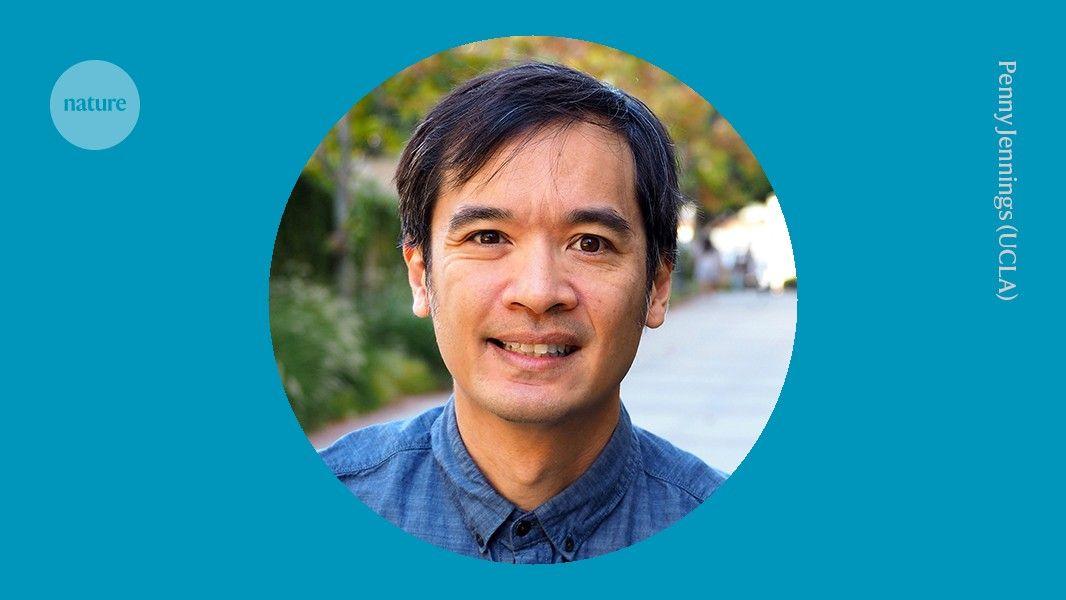
.Terence Tao, a Fields medalist, has called for establishing a Maths 2.0 era in which proof scarcity is no longer a defining feature of the field
1
. He warned that AI models solving mathematical problems create a situation where none of the humans behind the new proofs are around to answer questions, give talks or train students, likening it to hearing a movie spoiler3
.
Source: Nature
AI Models Solving Mathematical Problems Faster Than Verification
The disruptive impact of AI on mathematics extends beyond simply providing answers. AI systems generate results faster than mathematicians can digest and absorb them, creating what experts call proof indigestion
1
. Many AI-generated results are not described clearly enough to meet quality standards for publication, and some researchers using AI tools simply move on to the next problem once they have a minimally presentable proof1
.OpenAI said the results are at different stages of verification and that many, but not all, of the manuscripts have been formalized
3
. The work of checking, explaining and connecting these results to the rest of the field could take years. A group letter from mathematicians called the release not a demonstration of scholarship, but a demonstration of power3
.Simons Foundation Announces $15 Million Support Program
Recognizing the crisis facing mathematical research, the Simons Foundation announced a $15-million program co-funded by OpenAI and Anthropic to support mathematicians in dealing with AI
4
. The initiative will fund workshops to assess AI-generated results and establish standards for responsible AI practices in mathematics. This represents an initial sign of pushback from the field as it grapples with the future of mathematical research.Related Stories

Human Understanding Still Essential Despite AI Solving the Unsolvable
Stephane Mallat, 2025 Gold Medal recipient from France's national scientific research center (CNRS), emphasized that mathematics goes far beyond calculation: it's a way of thinking clearly
2
. He argued that maths will remain absolutely central because it's a tool that allows us humans to think clearly and understand things, drawing a distinction between AI capabilities and the mechanization of agriculture when tractors arrived4
.The concern extends to academic careers and education. Graduate students and junior mathematicians used to develop their skills and gain early recognition by solving open problems
1
. Mallat noted that young people might question why they should study mathematics if even researchers are being replaced by AI, though he insisted this concern is completely false5
.Real-World Risks of AI-Generated Mathematical Models
The implications extend beyond pure mathematics. Complex AI-generated models are already used to determine who qualifies for bank loans and to measure financial risk in markets
1
. If the complexity of these models outpaces human capacity to understand when they might malfunction, the risks of unforeseen mistakes will grow, affecting the general public.Francois Charles, mathematician and department head at the Ecole Normale Superieure in Paris, acknowledged legitimate concerns about how the community is organized but remained optimistic on the purely scientific side, arguing that scientists need to be more ambitious
4
. Meanwhile, 2010 Fields Medallist Cedric Villani emphasized that in mathematics, the conclusion is less important than the path to get there2
, highlighting the value of mathematical process over mere solutions.References
Summarized by

Navi
[2]
[4]
Related Stories
OpenAI Releases 722 AI-Generated Math Solutions, Triggering Existential Crisis in Mathematics
08 Oct 2026•Technology
OpenAI Releases 700+ AI-Generated Math Proofs, Sparking Debate on Future of Human Mathematicians
06 Nov 2026•Science and Research

OpenAI's AI Solves Navier-Stokes Problem But Ignites Existential Crisis in Mathematics Community
15 Sept 2026•Science and Research
Recent Highlights


Recent Highlights
Today's Top Stories








Don’t drown in AI news. We cut through the noise - filtering, ranking and summarizing the most important AI news, breakthroughs and research daily. Follow topics that matter to you and stay ahead.


