OpenAI Releases 700+ AI-Generated Math Proofs, Sparking Debate on Human Mathematicians' Future Role


3 Sources
[1]
'Mathematics is more than a mechanical process' -- why I think the field will survive OpenAI's disruption
In early October, the artificial-intelligence firm OpenAI posted more than 700 AI-generated mathematical manuscripts on an online public repository. The arguments -- if found to be correct after verification -- contain an extraordinary trove of new mathematical knowledge. The reaction to these
[2]
Has AI really changed math forever?
Stanford mathematician Ravi Vakil looks past the headlines to explain how AI is speeding up the field, why human understanding still matters, and what's at stake for the next generation. In September, OpenAI announced that it had used autonomous agents to solve one of the $1 million Millennium
[3]
AI could transform mathematics, but humans will still need to be in the loop
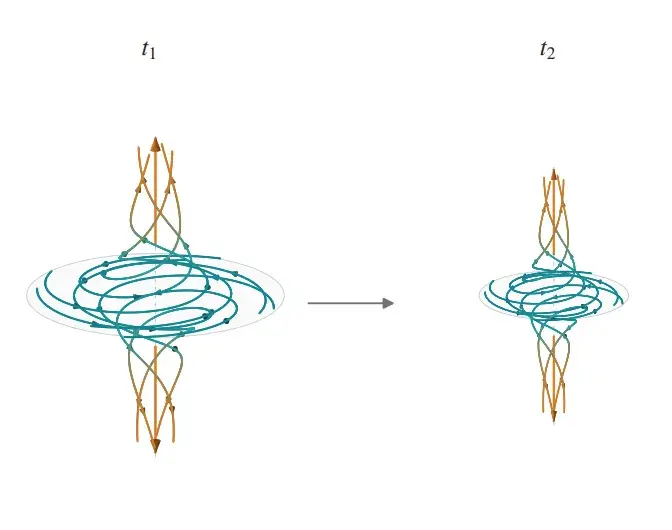
OpenAI recently announced that one of its AI models solved one of the hardest problems in modern mathematics: the Navier-Stokes problem. The equations at the heart of this problem describe the movement of fluids like water and, according to the scientific definition, air. The Navier-Stokes
Share
Copy Link
OpenAI posted over 700 AI-generated mathematical manuscripts solving longstanding problems including the $1 million Navier-Stokes challenge. While the breakthrough accelerates mathematical discovery, experts emphasize that human mathematicians remain essential for verification, understanding, and guiding future research in this rapidly evolving landscape.
OpenAI Unveils Massive AI-Generated Mathematical Breakthrough
In early October, OpenAI
1
posted more than 700 AI-generated mathematical manuscripts on a public repository, marking an unprecedented moment in AI in mathematics. The collection includes solutions to some of the field's most challenging problems, including the Navier-Stokes problem3
—one of seven $1 million Millennium Prize Problems posed by the Clay Mathematics Institute. In September, OpenAI2
announced its autonomous agents had solved this decades-old challenge that describes fluid movement in water and air, essential for understanding ocean currents, blood circulation, and airflow over airplane wings. By October 6, 2026, OpenAI3
presented solutions to more than 300 longstanding unsolved problems across most mathematical areas using its new internal model.Mixed Reactions from the Mathematical Community
The mathematical community's response to AI disruption in mathematics has ranged from exhilaration to despair
1
. Some researchers worry their lifelong work attempting to solve problems might suddenly seem meaningless, while others express concern about negative impacts on early-career mathematicians entering the field during this period of flux. Widespread anger has emerged over the manner in which AI companies are releasing such findings. Many of the 700 preprints are presented in a sloppy, rough-and-ready style, making them hard to understand1
. OpenAI's closed models mean their inner workings remain unknown, with no human author named to take responsibility for explaining or correcting content if flaws emerge.The Leiden Declaration and Institutional Response
The Leiden Declaration
1
on Artificial Intelligence and Mathematics, published in June, anticipated many concerns about OpenAI's approach. The declaration doesn't oppose AI use but proposes practical safeguards including clear citation policies, precise disclosures on how AI is used, and renewed commitment to the expectation that all arguments in mathematical proofs should be independently verifiable and answerable by a human author. Some AI companies have agreed to follow the declaration. OpenAI has not1
. Outstanding leadership by individuals such as mathematician Terence Tao and grassroots initiatives like the Leiden Declaration need complementing with high-level engagement from stakeholder institutions such as the International Mathematical Union1
.
Source: Nature
Why Human Mathematicians Remain Essential
Stanford mathematician Ravi Vakil
2
emphasizes that mathematics is fundamentally a means of understanding the world, and it's human mathematicians who want to understand. AI doesn't want to know answers to things. The best AI-assisted proofs are human-guided—the tools answer questions that humans pose. Mathematics has an extremely long history spanning thousands of years, but what's different with this advance is the speed at which it's happening2
. Even when computers came to mathematics, that was digested over decades, whereas now infrastructure is being built over weeks.The Critical Process of Proof Digestion
Before mathematicians accept an argument as proof, they need to check that each step is correct
3
. Computers can increasingly help with this task, but for major AI-generated results, human mathematical supervision and expertise remains indispensable. Terence Tao3
coined the term "proof digestion" for the many ways mathematicians continue working with a proof after its correctness has been established. They may reorganize the proof around more natural concepts, streamline complicated arguments, connect it to existing mathematics, or extract methods that can be applied elsewhere. Proof digestion itself can be highly fruitful and produce new mathematics.Related Stories

Accelerating Discovery While Protecting the Future
AI transforming mathematics is accelerating the field at a rate not seen for a very long time
2
. Mathematicians can work much more efficiently; even those who don't use AI can build on results that do use AI. A lot of things that were no fun to do, but were important, became easier. But some things that were fun are also becoming easier. Vakil2
has mixed feelings—as a truth seeker, doing science and mathematics much faster is a massive win, but some joy might be taken away. The important thing is remembering why we do science and protecting young people who will be doing science in the future. The uncertainty about how mathematics will change is off the charts, and anyone making confident predictions should not be believed2
.What Lies Ahead for Mathematical Research
Major mathematical results often become stepping stones toward new open problems
3
. Important variants of the Navier-Stokes problem, for example, cannot be solved by the methods of OpenAI's recent proof. This is typical of major breakthroughs—their importance often lies not only in answering long-standing questions but also in introducing novel mathematical concepts and opening new research lines. As AI models become ever more effective at producing proofs, other parts of mathematical research may become increasingly important. In the near future, it may matter less who—or what—can produce a proof than whether this can be used for mathematical progress. The future of mathematics will require action at every level, and it would be a disservice if AI companies set norms on how to do mathematics without wide-ranging input from academics1
. Watch for how institutions respond to establishing verification standards and protecting early-career mathematicians navigating this transition.References
Summarized by

Navi
[2]
[3]
Related Stories
OpenAI Solves 719 Math Problems Overnight as AI Challenges Maths and Sparks Calls for Maths 2.0
20 Oct 2026•Science and Research
OpenAI Releases 722 AI-Generated Math Solutions, Triggering Existential Crisis in Mathematics
08 Oct 2026•Technology
OpenAI's AI Maths Breakthrough Triggers Existential Crisis Among Mathematicians
20 Sept 2026•Science and Research
Recent Highlights


Recent Highlights
Today's Top Stories






Don’t drown in AI news. We cut through the noise - filtering, ranking and summarizing the most important AI news, breakthroughs and research daily. Follow topics that matter to you and stay ahead.


