Alibaba files Hong Kong IPO for T-Head AI chip unit, potentially valued at $85 billion


5 Sources
[1]
Alibaba proposes to spin off AI chip unit T-Head in Hong Kong
The Hong Kong exchange has cleared Alibaba to proceed; the size and structure of the offering have not been finalized Alibaba Group Holding announced in an exchange filing on Tuesday that T-Head, its in-house chip design unit, has applied to list in Hong Kong, advancing a planned spin-off,
[2]
Alibaba Prepares Hong Kong IPO For Chip Unit T-Head as China Ramps Up AI Chip Ambitions to Challenge Nvid
Alibaba Group Holding Ltd. (NYSE:BABA) is preparing to spin off its semiconductor subsidiary, T-Head, through a proposed public offering in Hong Kong, adding a potential listed vehicle for its chip ambitions. The Hong Kong Stock Exchange approved Alibaba's pursuit of a T-Head spinoff, according to
[3]
Alibaba Plans Separate Listing for AI Chip Business T-Head
Alibaba's semiconductor subsidiary T-Head has confidentially filed for a Hong Kong IPO. The proposed listing could give the AI chipmaker independent access to capital and a separate market valuation as China strengthens its domestic semiconductor industry. Alibaba Group is moving ahead with plans
[4]
Alibaba's Chip Unit Files for Hong Kong Listing -- Update
By Tracy Qu and P.R. Venkat Alibaba Group is preparing to list its chip unit in Hong Kong, setting up a pivotal moment in its multibillion-dollar push into artificial intelligence. Alibaba said late Tuesday that the Hong Kong stock exchange confirmed it can proceed with an initial public offering
[5]
Alibaba AI chip unit T-Head files for Hong Kong IPO
Nov 10 (Reuters) - China's Alibaba Group said on Tuesday its chip unit T-Head had confidentially filed an application for a Hong Kong initial public offering after the stock exchange cleared the Chinese e-commerce giant to proceed with the proposed spin-off. T-Head submitted a confidential Form A1
Share
Copy Link
Alibaba has received Hong Kong Stock Exchange approval to spin off its AI chip unit T-Head through a public offering. The semiconductor subsidiary, which confidentially filed its listing application in September, could be valued at $85 billion according to Nomura estimates. This move marks a significant step in China's push for self-reliance in critical chip technology.
Alibaba Advances T-Head Hong Kong IPO Plans
Alibaba Group announced that its semiconductor subsidiary T-Head has confidentially filed for a Hong Kong listing after receiving clearance from the Hong Kong Stock Exchange to proceed with the proposed spin-off
1
2
. The Alibaba AI chip unit submitted its Form A1 listing application on September 11 for a proposed offering comprising a Hong Kong public share sale and an institutional placement5
. While the size of the deal, offering structure, and Alibaba's post-listing stake remain undetermined, Nomura estimates suggest the T-Head Hong Kong IPO could value the chip unit at $85 billion4
. The proposed listing still requires approval from the Hong Kong Stock Exchange's Listing Committee and China's securities regulator3
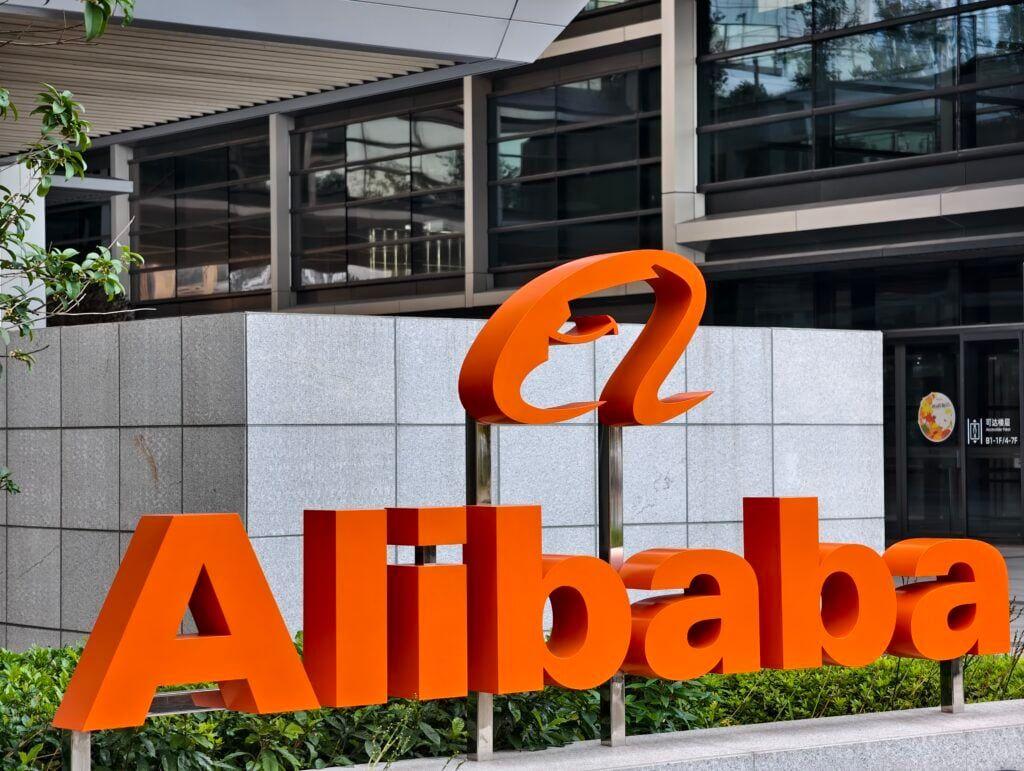
.
Source: Benzinga
Strategic Rationale Behind the Alibaba Spin Off
The Alibaba spin off aims to unlock value from its AI chip operations by allowing investors to value T-Head separately from the rest of the group
1
. According to Alibaba, the standalone listing would enable T-Head to access capital markets directly for both equity and debt financing, while also making it easier for the unit to obtain bank loans1
. The company stated that the spin-off could attract investors seeking a pure-play stake in the chip business and enhance T-Head's profile with customers, suppliers, and strategic partners5
. T-Head is expected to remain within the group as a standalone subsidiary once listed1
. This move comes as Alibaba faces slowing growth in its core e-commerce business and must develop an edge in AI to stay competitive4
.T-Head's AI Chip Portfolio and Market Position
Founded in 2018, T-Head develops processors across the full chip design stack, ranging from data centers and AI chip technology to Internet-of-Things products
5
. At Alibaba's annual Apsara Conference in September, CEO Eddie Wu unveiled the Zhenwu V900, describing it as delivering three times the performance of the previous Zhenwu M890, with mass production and commercial release targeted for the first quarter of 20271
. The Zhenwu V900 supports clusters of up to 500,000 chips, though no international benchmark is currently available2
. Chinese analysts have compared the M890 to Nvidia's H200 chip2
. Alibaba released the Zhenwu M890 in May, and its Zhenwu chips were already serving more than 650 customers across automotive, finance, energy, and manufacturing sectors1
.
Source: Market Screener
Related Stories
China's Push for Domestic Semiconductor Industry Self-Reliance
The T-Head listing represents a pivotal moment in China's efforts to achieve self-reliance in critical technological areas like cutting-edge chips that the U.S. currently dominates
4
. U.S. export controls that have cut off Chinese companies from Nvidia's top-tier chips have accelerated efforts by firms such as Alibaba to build their own semiconductor capabilities1
. Despite these restrictions, ByteDance, Alibaba, and Tencent reportedly placed more than $35 billion in orders for Nvidia graphics cards, highlighting the intense demand for advanced computing hardware across China's technology sector2
. Alibaba has committed to spending more than $53 billion over three years on cloud infrastructure and AI infrastructure to make AI an engine of growth1
4
.Competitive Landscape and Market Challenges
T-Head faces intense competition in China's AI chip ambitions landscape. Nomura analysts noted that "we regard T-Head as one of China's top-tier domestic chip designers," adding that Alibaba's ability to partially self-supply AI chips could enhance its competitiveness amid a severe semiconductor shortage
4
. However, even with U.S. restrictions curbing supply to China, Nvidia's chips still command a considerable share of the local market4
. T-Head must compete with domestic rivals including Huawei, whose chips are widely recognized as one of the most promising alternatives to Nvidia in China, and Baidu's Kunlunxin unit, which also ranks highly4
. Baidu is also planning to spin off and list its chip business, intensifying competition in the domestic semiconductor industry4
. Alibaba shares traded 0.8% lower following the announcement, and the company has declined 7.28% over the past month2
4
.References
Summarized by

Navi
[2]
[3]
[4]
[5]
Related Stories
Alibaba plans IPO for chip unit T-Head to bankroll $53B AI infrastructure push
22 Jan 2026•Business and Economy
Baidu files for Kunlunxin spin-off in Hong Kong as China's AI chip race intensifies
02 Jan 2026•Business and Economy

Alibaba's AI Ambitions Fuel Stock Surge and Reshape China's Tech Landscape
12 Sept 2025•Technology

Recent Highlights
1
Google's AI Policy Forces Schools to Accept AI Overviews or Lose Search Access Entirely
Technology

2
Jensen Huang's Affair with Suspected Chinese Spy Exposes $7 Billion AI Chip Smuggling Network
Policy and Regulation

3
Anthropic launches Fable 5.2 and Mythos 5.2 with 20% price cut and 30% faster output
Technology

Recent Highlights
Today's Top Stories








Don’t drown in AI news. We cut through the noise - filtering, ranking and summarizing the most important AI news, breakthroughs and research daily. Follow topics that matter to you and stay ahead.


