Amazon backs Mill's AI food waste system to transform Whole Foods operations by 2027


2 Sources
[1]
Exclusive: Whole Foods to launch new AI food recycle technology. Here's what it does
Why it matters: The technology can shrink waste volumes by up to 80%, according to its maker, startup Mill, cutting greenhouse gas emissions from food waste and saving Whole Foods money. * "Waste is one of the largest sectors of the economy that most folks in our industry overlook," Mill
[2]
Amazon, Mill Unveil AI-Powered Food Waste Fix For Grocers - Amazon.com (NASDAQ:AMZN)
Amazon.com, Inc. (NASDAQ:AMZN) on Tuesday disclosed a partnership with Mill Industries Inc. to introduce a first-of-its-kind solution at Whole Foods Market stores aimed at reducing in-store food waste. Details Whole Foods will be the initial adopter of Mill Commercial, Mill's automated,
Share
Copy Link
Amazon is investing in Mill, a startup founded in 2020, to deploy AI-powered food recycling bins across Whole Foods stores by 2027. The technology can shrink waste volumes by up to 80% while converting scraps into chicken feed, creating a closed-loop solution that addresses both environmental impact and operational costs in the grocery sector.
Amazon and Mill Partner on Commercial-Scale Food Waste Solution
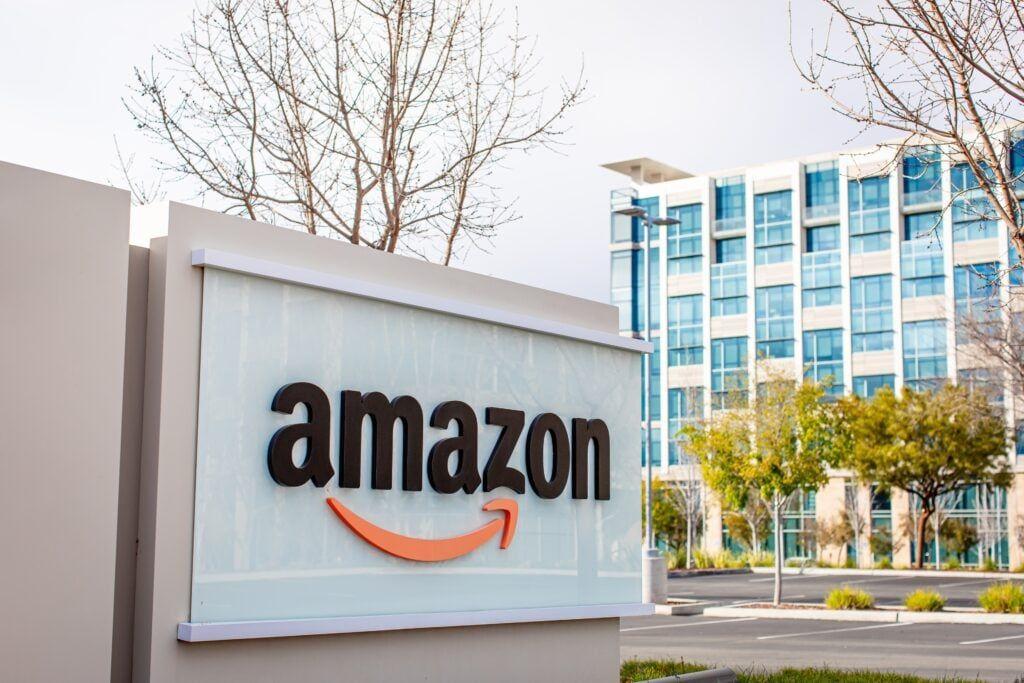
Amazon has announced a partnership with Mill, a startup specializing in AI technology for food waste reduction, to roll out advanced recycling systems across Whole Foods stores by 2027
1
. The e-commerce giant is also investing an undisclosed amount through its Climate Pledge Fund to support the development and deployment of this first-of-its-kind food waste conversion system in the grocery sector2
. Mill has raised a total of $250 million since its founding in 2020, with backing from investors including Breakthrough Energy Ventures, Google Ventures, Lower Carbon Capital, and Energy Impact Partners1
.
Source: Benzinga
How AI-Powered Food Recycling Technology Works
Mill Commercial represents a significant leap from the company's existing home and workplace devices. The AI-equipped bins dehydrate and grind food scraps from back-of-house operations into coffee-ground-like material that serves as nutrient-rich chicken feed for Whole Foods' private-label egg suppliers
2
. This closed-loop solution creates a circular pathway where food waste becomes animal feed, which then produces eggs sold in the same stores. Matt Rogers, Mill's co-founder and CEO who previously co-founded Nest, explained: "This is something we've envisioned from the start: building a circular loop. We pioneered this food waste -- to animal feed -- to egg pathway"1
. The technology can reduce waste volumes by up to 80%, cutting greenhouse gas emissions while saving costs1
.Real-Time Analytics to Optimize Inventory Management
Beyond physical waste processing, the system delivers actionable analytics powered by AI that allow Whole Foods and future commercial clients to analyze what's being discarded in real time. Rogers illustrated the practical application: "If all croissants are being thrown out, maybe they should bake fewer croissants"
1
. This capability to optimize inventory based on actual waste patterns addresses a challenge that Rogers notes most in the industry overlook: "Waste is one of the largest sectors of the economy that most folks in our industry overlook"1
. The intelligent, connected infrastructure helps customers achieve greater operational efficiency while scaling a more circular supply chain2
.
Source: Axios
Related Stories

Addressing Global Food Waste Crisis
The partnership tackles a massive environmental and economic problem. Food waste accounts for 8 to 10% of global greenhouse gas emissions and costs $1 trillion annually, according to the United Nations
1
. For Whole Foods, this initiative advances the company's goal of reducing food waste by 50% by 2030 while promoting responsible and sustainable grocery practices2
. Thomas Selby, Investor at the Amazon Climate Pledge Fund, noted: "We've been following Mill since inception and are thrilled to invest now to support the development and deployment of their commercial technology at Whole Foods Market and beyond"2
.What's Next for Commercial-Scale Food Waste Technology
Rogers, a key figure in Apple's early iPod and iPhone products, draws parallels between today's AI hype and past technology waves. He predicts that real-world applications like Mill's will ultimately determine whether AI delivers on its promise, comparing it to how society eventually focused on apps like Airbnb and Uber that lived on smartphones. "The appetite for things that actually use AI is enormous," Rogers said
1
. The startup plans to engage restaurants as its next commercial customers "immediately," expanding beyond the grocery sector1
. While Rogers acknowledged that other companies have attempted similar efforts and that "this is technically very difficult to build," Mill aims to overcome hurdles by ensuring the system works within existing kitchen and trash rooms while offering the compostable material conversion capability paired with real-time analytics1
.References
Summarized by

Navi
Related Stories
Amazon-Backed Glacier Secures $16M to Expand AI-Powered Recycling Robot Fleet
29 Apr 2025•Technology

AMP Robotics Secures $91 Million to Revolutionize Waste Management with AI-Powered Sorting Systems
06 Dec 2024•Business and Economy

Amazon's $35 Billion Robotics Investment: Revolutionizing Retail Efficiency and AI Integration
26 Feb 2025•Business and Economy

Recent Highlights
1
Microsoft and Nvidia Launch Surface Laptop Ultra: A $2,599 AI-Ready PC With RTX Spark Chip
Technology

2
Google Unveils Gemini 4 Argon AI Model, Restricts Access to Trusted Cyber Defenders
Technology

3
OpenAI Releases 722 AI-Generated Math Papers on GitHub, Igniting Fury Among Mathematicians
Science and Research

Recent Highlights
Today's Top Stories






Don’t drown in AI news. We cut through the noise - filtering, ranking and summarizing the most important AI news, breakthroughs and research daily. Follow topics that matter to you and stay ahead.


