Amazon employees warn AI strategy threatens jobs, climate goals as 14,000 face layoffs


3 Sources
[1]
More than 1,000 Amazon employees sign open letter warning the company's AI 'will do staggering damage to democracy, our jobs, and the earth' | Fortune
Amazon employees are sounding the alarm on AI in an open letter addressed to CEO Andy Jassy and the company's senior leadership team. The letter was published last week with signatures from over 1,000 unnamed Amazon employees, from Whole Foods cashiers to IT support technicians. It's a fraction of
[2]
We all pay the price for Amazon's AI push
Amazon has announced the layoff of 14,000 corporate employees; it is anticipated that there will be another round of cuts in January. Most media coverage breathlessly echoes comments from Beth Galetti, senior vice president of people experience and technology, that these layoffs stem from new
[3]
Amazon Employees Say Its AI Strategy Threatens Jobs and the Environment
In the letter, employees claim that Amazon is prioritizing AI over its climate goals and its people. Amazon employees are voicing serious concerns about the company's AI rollout. Over 1,000 Amazon staff members anonymously signed an open letter addressed to Amazon CEO Andy Jassy and the senior
Share
Copy Link
More than 1,000 Amazon workers signed an open letter to CEO Andy Jassy raising alarm about the company's AI rollout. They claim Amazon is abandoning climate commitments to build AI infrastructure, cutting 14,000 jobs while demanding more from remaining staff, and enabling surveillance technology. Amazon denies the allegations, pointing to renewable energy investments.
Amazon Employees Open Letter Challenges Company's AI Direction

Source: The Hill
More than 1,000 Amazon employees have signed an open letter addressed to CEO Andy Jassy and senior leadership, raising serious employee concerns about the company's aggressive artificial intelligence rollout
1
. The signatories, ranging from Whole Foods cashiers to IT support technicians, represent a fraction of Amazon's 1.53 million-strong workforce but voice anxieties shared across the organization3
. They warn that Amazon AI development "will do staggering damage to democracy, to our jobs, and to the earth" during what they describe as a critical period for addressing climate change and rising authoritarianism1
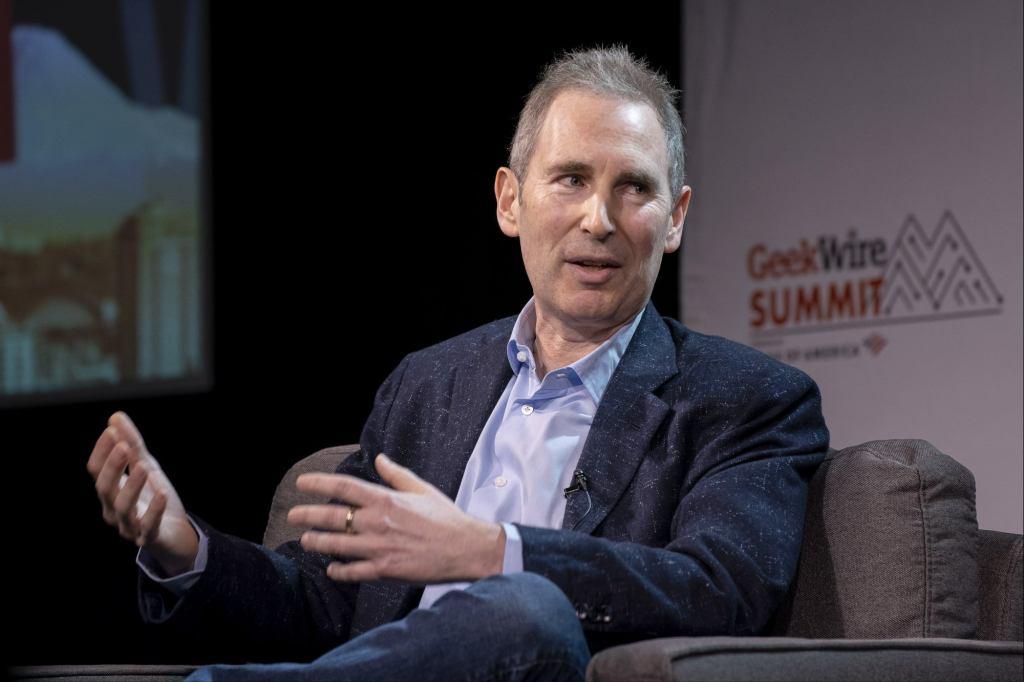
.
Source: Entrepreneur
Job Cuts and AI Investments Collide
The timing of the letter coincides with significant workforce reductions at the tech giant. Amazon announced in October it would eliminate approximately 14,000 corporate jobs, representing about 4% of its 350,000-person corporate workforce, as part of an AI-driven restructuring
1
. Reuters reported that total corporate cuts could reach up to 30,000 jobs, potentially marking the company's single biggest reduction ever. Beth Galetti, Amazon's senior vice president of people and experience, justified the AI related layoffs by stating that "this generation of AI is the most transformative technology we've seen since the Internet"1
.
Source: Fortune
Yet employees paint a different picture. A former Amazon software engineer who worked at the company for five years explains that AI tools are "nowhere near good enough to replace us" and often require hours or days to fix mistakes
2
. Instead, the shrinking workforce due to AI faces intensified demands, with managers expecting substantially more work from fewer people. The Amazon employees open letter describes workers being forced to build "wasteful" AI tools even for projects that don't need them, while witnessing massive investments funneled into AI infrastructure rather than career development1
.Environmental Impact of AI Infrastructure Raises Alarms
The letter highlights a stark contradiction in Amazon's environmental commitments. Employees point out that the company's global carbon emissions have increased by 35% since 2019, despite its pledge to achieve net-zero carbon emissions by 2040
3
. Amazon increased its carbon emissions by 6% last year alone, driven largely by rapid data center buildout1
. The company plans to spend almost $150 billion on data centers over the next 15 years, according to a March 2024 Bloomberg report1
.CFO Brian Olsavsky disclosed during the third-quarter earnings call that Amazon has spent $89.9 billion so far this year, primarily on strengthening AWS, its cloud computing business, to support demand for AI and core services
1
. In November, the company announced plans to invest up to $50 billion to expand AI and supercomputing infrastructure for U.S. government customers on AWS, beginning in 20261
. The environmental impact of AI infrastructure is compounded by carbon emissions from data centers requiring new gas plants and continued use of coal plants previously scheduled for retirement, potentially leading to higher energy bills and water scarcity2
.Amazon spokesperson Brad Glasser strongly rejected the claims, calling them "categorically false and ignoring the facts." He stated that Amazon is "committed to powering our operations even more sustainably," citing support for two advanced nuclear energy agreements and investment in more than 600 renewable energy projects worldwide
1
.Related Stories




Surveillance Concerns and Amazon AI Strategy
The Amazon employees open letter also warns about AI for surveillance, specifically highlighting plans to transform Ring doorbell camera technology into an AI-first platform and re-introduce tools for police to request footage
1
. Workers fear this "will be ceding an unbelievable amount of power into the hands of an increasingly authoritarian government and a few companies willing to abandon any principles they claim to have in the race for AI dominance"1
. The letter notes that Palantir runs mass deportation software used by ICE on Amazon Web Services, raising questions about Big Tech's collaboration with government surveillance programs2
.What Workers Are Demanding
The signatories demand specific actions from leadership. They want Amazon to detail a public plan to power all data centers with renewable energy, provide employees a seat at the table to review AI's use and necessity at an organizational level, and pledge that the company's AI won't be used for violence, surveillance, or mass deportation
1
. More than 3,600 workers outside of Amazon also signed the letter in solidarity3
. As Andy Jassy has indicated that AI would cause Amazon's workforce to shrink "in the next few years," these employee concerns reflect broader anxieties about AI investments over climate goals and the trajectory of work itself3
.References
Summarized by

Navi
[2]
Related Stories
Recent Highlights
1
Microsoft and Nvidia Launch Surface Laptop Ultra: A $2,599 AI-Ready PC With RTX Spark Chip
Technology

2
OpenAI Releases 722 AI-Generated Math Papers on GitHub, Igniting Fury Among Mathematicians
Science and Research

3
Trump Consulted Grok AI Before Ordering Venezuela Invasion and Capture of Nicolás Maduro
Policy and Regulation

Recent Highlights
Today's Top Stories









Don’t drown in AI news. We cut through the noise - filtering, ranking and summarizing the most important AI news, breakthroughs and research daily. Follow topics that matter to you and stay ahead.


