Amazon launches dedicated AI Store to help shoppers find AI-powered devices that actually matter


3 Sources
[1]
Amazon thinks you love AI, so it has launched a special storefront for AI-powered gadgets
You're browsing for a new laptop -- one has a better processor, another has more RAM, a third says "AI-powered" in bold letters, and you're not entirely sure what that means. But Amazon has noticed you pausing on that third one, and it has thoughts. The company just launched an AI Store on
[2]
Amazon's New AI Store Will Help Users Discover AI-Powered Devices
Amazon launched an AI Store microsite within its e-commerce website and app on Thursday. The new space is dedicated to consumer tech devices that come equipped with artificial intelligence (AI) features and tools. The Seattle-based tech giant said that the AI Store is aimed at helping users
[3]
Amazon introduces AI Store to simplify discovery of AI-enabled devices in India
Amazon.in has launched an AI Store, a dedicated destination designed to help customers discover and shop for AI-powered consumer electronics in a simplified way. The AI Store spans multiple product categories, including laptops, smartphones, televisions, air conditioners, refrigerators, washing
Share
Copy Link
Amazon has introduced an AI Store on Amazon.in, a curated storefront designed to cut through the confusion around AI-enabled devices. The platform features AI-powered gadgets across eight categories—smartphones, laptops, TVs, tablets, smartwatches, smart glasses, cameras, and audio—with clear explanations of what each AI feature actually does for users.
Amazon AI Store Brings Clarity to AI-Powered Gadgets
Amazon has launched a dedicated AI Store on Amazon.in, creating a specialized destination to help customers discover AI-powered devices without getting lost in technical jargon
1
. The new microsite curates AI-enabled devices across eight product categories: smartphones, laptops, smart TVs, tablets, smartwatches, smart glasses, cameras, and audio equipment2
. Rather than forcing shoppers to decode spec sheets and marketing buzzwords, the platform breaks down what AI features in products actually accomplish in real-world scenarios.
Source: Gadgets 360
Zeba Khan, Director of Consumer Electronics at Amazon India, explained the rationale behind the launch: "The AI Store brings together an array of intelligent devices in one destination, with clear explanations of what each device's AI can do for you"
2
. The initiative reflects Amazon's observation that AI is emerging as a key factor in consumer electronics purchases in India, based on search trends on the platform3
.Real-World Benefits Over Marketing Hype
The Amazon AI Store operates on a strict curation principle: every listed product must deliver tangible, real-world benefits through its AI capabilities
3
. This approach helps separate genuine AI consumer electronics from devices that simply slap "AI-powered" on the packaging. Featured products include the Samsung Galaxy S26 Ultra with real-time call translation and AI-assisted low-light photography, the HP OmniBook Ultra and Lenovo Yoga Slim 7x laptops with dedicated NPUs (Neural Processing Units) that handle AI workloads like video editing and noise cancellation more efficiently1
.The storefront extends beyond personal electronics to smart home appliances. Samsung Vision AI QLED TVs upscale content to 4K in real time and adjust sound based on on-screen action, while the Apple Watch Series 11 offers predictive health insights and personalized coaching
1
. Even household appliances get the AI treatment, with LG air conditioners learning cooling habits, Haier refrigerators monitoring their own temperature, and Bosch washing machines calculating optimal water usage.AI Tools to Shop for AI-Enabled Devices
Amazon has integrated multiple AI-driven features into the shopping experience itself, creating what amounts to using AI tools to shop for AI-powered gadgets. The conversational shopping assistant Rufus supports product discovery through natural language queries, while Lens AI enables visual search using images
2
. The View in Your Room feature allows customers to visualize devices in their actual space before purchasing, and AI-generated review summaries distill hundreds of customer opinions into digestible insights3
.
Source: FoneArena
Customers can browse products based on specific use cases rather than just technical specifications, making it easier to match devices to their actual needs
2
. The platform highlights how AI improves performance, efficiency, visuals, privacy, security, and personalization across devices while presenting information in a format designed for easy comparison3
.Related Stories

What This Means for the Market
The launch signals Amazon's bet that "AI-powered" will become a deciding factor for buyers navigating an increasingly crowded consumer electronics landscape
1
. For shoppers overwhelmed by technical terminology, the AI Store provides structure to what Khan describes as helping customers "navigate a rapidly evolving technology landscape with clarity" .The platform proves particularly valuable for users who prefer straightforward explanations over technical deep dives. By explaining that an NPU extends battery life or that on-device processing keeps personal data private, the store translates engineering specifications into practical advantages
2
. While the AI Store serves as a useful starting point for product discovery, shoppers should still conduct their own research to ensure devices match their specific requirements and use cases.References
Summarized by

Navi
[1]
Related Stories
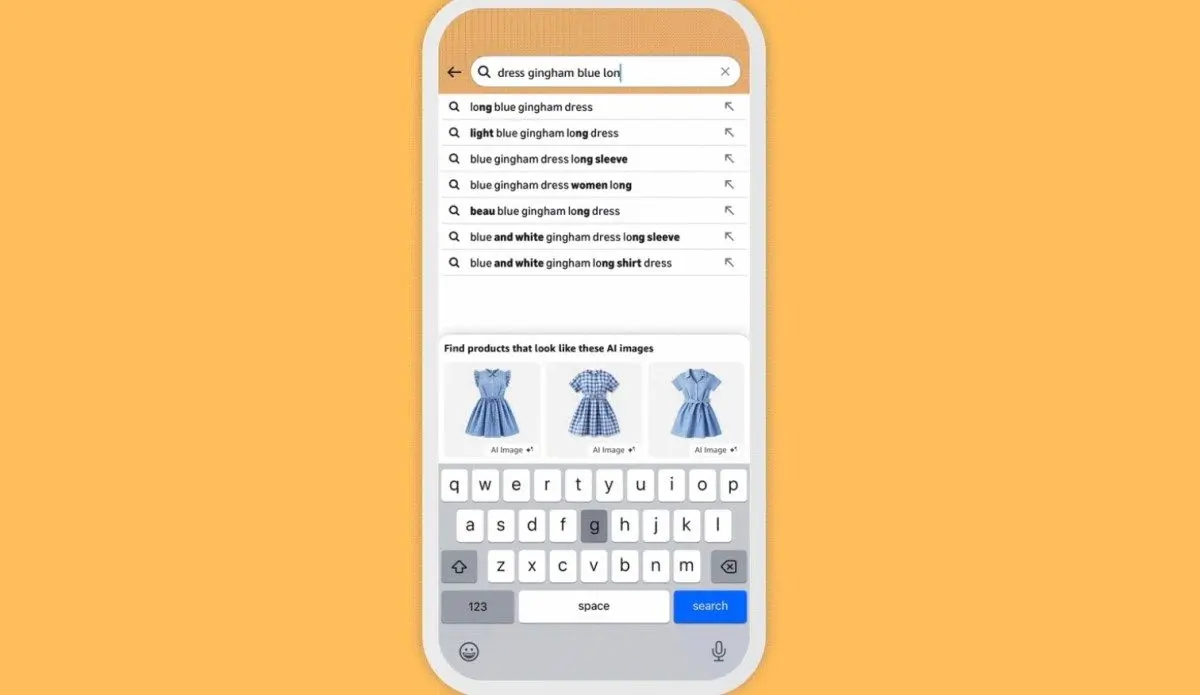
Amazon AI now generates fake product images as you search, sparking controversy over utility
03 Jun 2026•Technology
Amazon Launches AI-Powered Shopping Guides to Streamline Customer Experience
10 Oct 2024•Technology

Amazon Unveils 'Interests': A New AI-Powered Personalized Shopping Assistant
26 Mar 2025•Technology

Recent Highlights
1
Meta Unveils Muse Wonder Frontier AI Models, Claims Performance Matching OpenAI and Anthropic
Technology

2
IMF Report Warns AI Market Correction Could Spark Global Financial Crisis With $1.4T at Risk
Business and Economy

3
OpenAI Releases 722 AI-Generated Math Solutions, Triggering Existential Crisis in Mathematics
Technology

Recent Highlights
Today's Top Stories









Don’t drown in AI news. We cut through the noise - filtering, ranking and summarizing the most important AI news, breakthroughs and research daily. Follow topics that matter to you and stay ahead.


