Amazon and Google Launch Tools to Challenge Nvidia's AI Chip Dominance with PyTorch Support


13 Sources
[1]
Google has joined Amazon in attacking Nvidia's stronghold with AI app developers
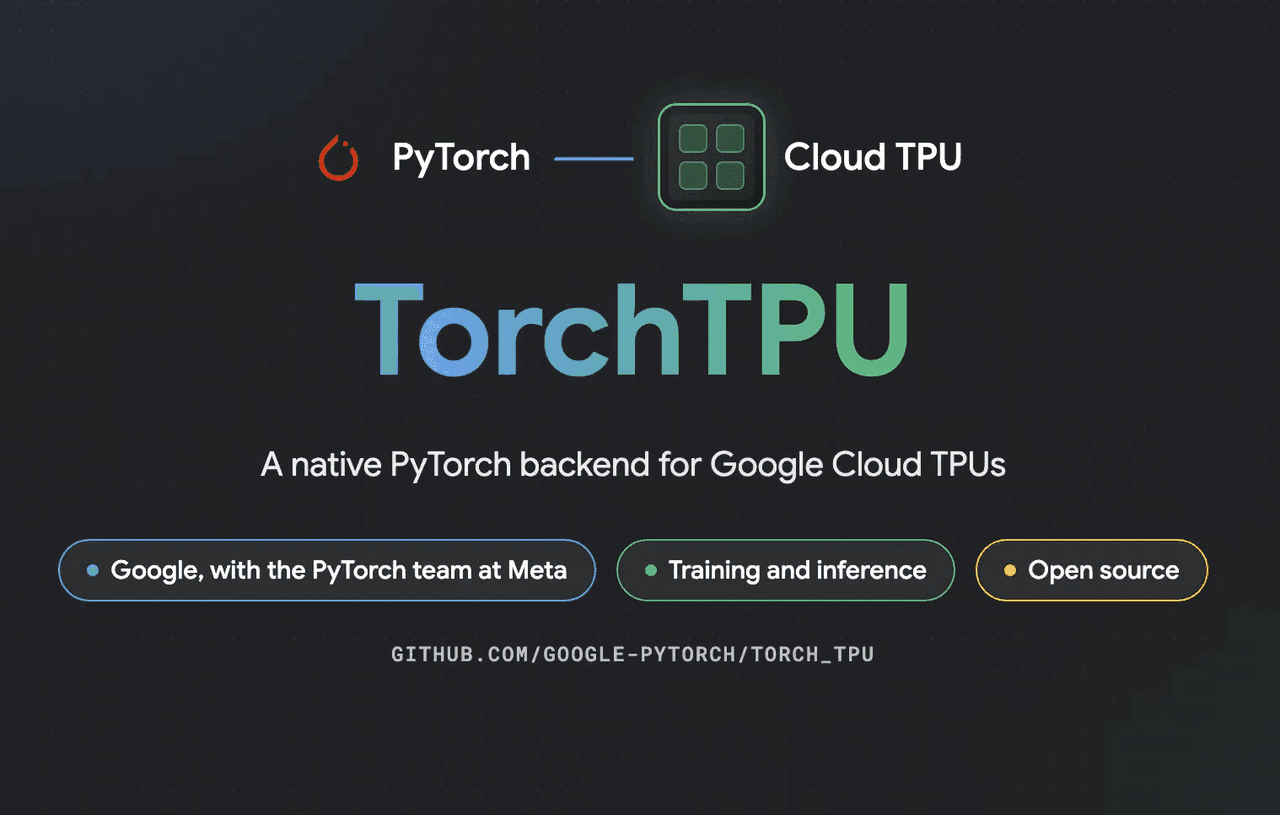
On Tuesday, Google announced that TorchTPU, its long-awaited version of PyTorch, is now available as an open-source project. With this, Google joins Amazon in trying to break Nvidia's stranglehold on the AI industry, where most AI apps are written by default to run on Nvidia's chips, or
[2]
Amazon is taking its biggest shot at Nvidia yet with new TorchNeuron dev tool
On Monday, Amazon Web Services released a tool called TorchNeuron that lets AI startups easily move their AI apps onto Amazon's AI chip, Trainium. In doing so, Amazon is also taking a direct stab at the the software advantage that has helped Nvidia become the default hardware choice for AI apps,
[3]
Google's TPUs for AI workloads now run in Meta's data centers -- TPUs sold to external customers for the first time, threaten Nvidia's market dominance
PyTorch's own creator now serves AI models on Google's TPUs, and most need no JAX port. Google's tensor processing units (TPUs) -- its custom AI chips -- now serve AI in production at Meta (creator of the widely used PyTorch AI framework) through a new PyTorch-native version of the SGLang
[4]
Amazon says its AI chips will work with popular coding language, challenging Nvidia
SAN FRANCISCO, Oct 19 (Reuters) - Amazon.com (AMZN.O), opens new tab is introducing a new tool that allows its custom AI chips to run code written in the most popular AI coding language without modification, seeking to erode the advantage that underpins Nvidia's (NVDA.O), opens new tab dominance in
[5]
Amazon's TorchNeuron lets PyTorch code run on AWS Trainium chips
The open-source tool enters public beta on 20 October, and Amazon says it needs no code rewrite. Amazon has launched TorchNeuron, an open-source backend that lets PyTorch code run on its Trainium AI chips with a one-line change. It goes into public beta on 20 October under the Apache 2.0 licence
[6]

Amazon challenges Nvidia's software advantage with new tool for its AI chips
A new software tool from Amazon aims to make switching from Nvidia to the company's own AI chips about as simple as changing a setting. The software, dubbed TorchNeuron, runs code written in PyTorch, the open-source framework used by many AI developers, on Amazon's Trainium chips. It has been in
[7]

Google unveils TorchTPU in a push to break Nvidia's stranglehold on AI compute
Google LLC is striving to pry open Nvidia Corp.'s grip on the artificial intelligence computing industry with the launch of a specialized version of the open-source PyTorch framework, called TorchTPU, which is designed to eliminate a key advantage of its rival. One of the reasons why Nvidia and
[8]
Amazon introduces toolkit for running PyTorch workloads on AWS Trainium chips
Amazon.com Inc. today introduced TorchNeuron, an open-source toolkit that enables developers to run PyTorch workloads on its AWS Trainium chips. PyTorch is the industry's most popular artificial intelligence development framework. Until now, running AI projects powered by the tool on
[9]

Nvidia's rivals have built their own AI chips and now want to make the software switch easier
Nvidia faces competition as Amazon and Google introduce tools that allow minimal changes for chip switching. Amazon's TorchNeuron and Google's TorchTPU aim to simplify the transition for developers using PyTorch. These tools enable existing code to run efficiently on different hardware. Nvidia's
[10]

Amazon Challenges Nvidia's CUDA Moat With Trainium - Amazon.com (NASDAQ:AMZN), NVIDIA (NASDAQ:NVDA)
NVIDIA Corp's (NASDAQ:NVDA) biggest advantage in AI is not just the chips it sells. It is CUDA, the software ecosystem developers rely on to build and run AI workloads. Amazon.com, Inc. (NASDAQ:AMZN) may have found a way to challenge that advantage by making it easier for developers to use its own
[11]
Amazon says its AI chips will work with popular coding language, challenging Nvidia
Amazon has unveiled TorchNeuron, a revolutionary tool that enables PyTorch code to be executed seamlessly on its Trainium AI chips. This innovation claims to minimize the need for extensive code alterations, making integration easier for developers. Over 30 early adopters have attested to
[12]

Amazon's New AI Tool Could Make it Easier to Move Away from Nvidia
Amazon is introducing TorchNeuron, an open-source software tool that lets developers run PyTorch code on its Trainium AI chips with minimal changes, challenging Nvidia's strong position in AI computing. Amazon is making it easier for AI developers to use its own AI chips instead of relying on
[13]

Amazon unveils tool to run AI code on custom chips By Investing.com
Investing.com -- Amazon.com (NASDAQ:AMZN) launched a new tool on Monday that enables its custom AI chips to run code written in PyTorch without requiring modifications, aiming to challenge Nvidia's (NASDAQ:NVDA) position in the AI computing market. Amazon shares rose 5% in morning trading. Morgan
Share
Copy Link
Amazon and Google released TorchNeuron and TorchTPU, open-source tools that let AI developers run PyTorch code on their custom AI chips with minimal changes. The move directly challenges Nvidia's market dominance by making it easier to switch from Nvidia's GPUs to alternative hardware without rewriting applications.
Amazon and Google Target Nvidia's Software Lock-In
Amazon Web Services and Google have launched competing open-source tools that allow AI developers to run PyTorch code on their custom AI chips without rewriting applications
1
2
. Amazon announced TorchNeuron on Monday, followed by Google's TorchTPU release on Tuesday, marking a coordinated effort to challenge Nvidia's dominance in AI hardware1
. PyTorch, used by approximately 85% of AI apps, has been deeply integrated with Nvidia's CUDA software infrastructure over more than a decade, making Nvidia GPUs the default choice for AI workloads2
4
.How TorchNeuron and TorchTPU Work
Both tools dramatically simplify the process of porting AI applications to alternative hardware. TorchNeuron allows developers to run PyTorch code on Amazon's Trainium chips by changing just one line of configuration, with no code rewrite required
2
4
.
Source: GeekWire
1
. TorchNeuron entered public beta on 20 October under the Apache 2.0 licence and supports both Trainium2 and Trainium3 chips5
. Colin Brace, VP of Technology Software at AWS Annapurna Labs, stated the move aims to reduce reliance on Nvidia by "meeting customers where they're at"4
.Strategic Partnerships Strengthen Google's Position
Google worked directly with Meta, Hugging Face, Inferact, and RadixArk to ensure TorchTPU integrates seamlessly with popular AI development tools
1
.
Source: SiliconANGLE
3
. Jana van Greunen, director of PyTorch engineering at Meta, explained that Meta "cannot be constrained by a single hardware architecture" and that TorchTPU "enables us to deploy our PyTorch workloads to Google's Tensor Processing Units"3
. Google also launched a dedicated TPU agent suite to help AI developers migrate applications and fix errors, plus updated its LiteRT tool for running AI on phones, laptops and embedded devices to work better with PyTorch apps1
.Performance Claims and Early Adoption
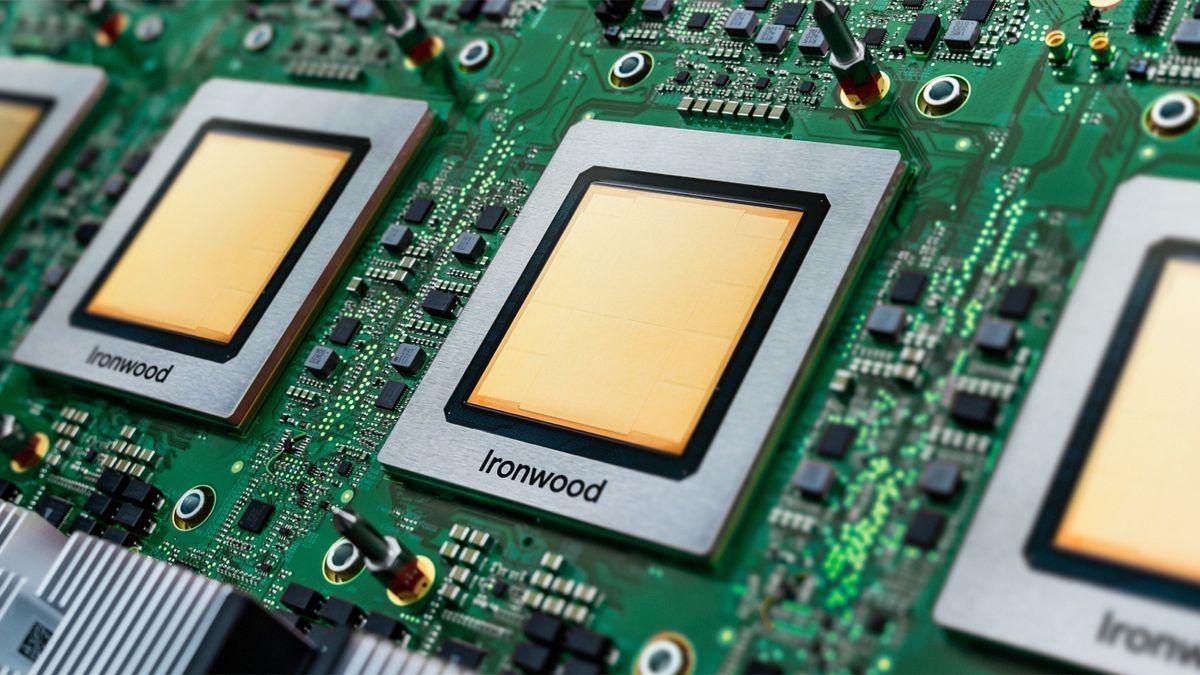
Inferact reported that a tuned vLLM-TorchTPU setup serving Moonshot AI's 2.8-trillion-parameter Kimi K3 model achieved over 700 tokens per second for a single user on seventh-generation Ironwood TPUs, compared to 452 tokens per second on 16 Nvidia GB200s
3
. Amazon claims more than 30 early customers spanning robotics, world models, and voice AI are using TorchNeuron, with the switch to Amazon's Trainium chips resulting in steep cost savings4
. Deepgram, an AI voice app provider, reportedly processes 70% more audio per dollar at production-grade accuracy after moving to Trainium using native PyTorch support2
. Early users also include Cartesia, the Lieber Institute for Brain Development, and Uber5
.Related Stories

Amazon Pushes for Hardware-Agnostic PyTorch
Amazon is going beyond simply creating an open-source tool for its own chips. The company announced it will contribute code to the main PyTorch project to decouple various features from Nvidia's chips, making PyTorch more hardware-agnostic by default
1
2
. Brace stated that "the real story is removing the lock-in that kept developers from having a real choice at all"2
. This approach extends Amazon's strategy beyond promoting its own AI infrastructure to fundamentally reshaping how PyTorch interacts with AI hardware across the industry.Market Implications and Future Outlook
The coordinated launches represent the most significant challenge yet to Nvidia's market dominance in AI computing. Amazon's custom chip business has reportedly passed a $25B annual revenue run rate, with CEO Andy Jassy projecting it could reach $50B
5
. However, both companies acknowledge that making PyTorch code portable doesn't guarantee developers will automatically abandon Nvidia's AI hardware1
. The first release of TorchNeuron has limitations, with approximately 22,000 PyTorch tests skipped and some features like dynamic input shapes not yet supported5
. RadixArk plans to add support for additional models including DeepSeek V4.1 Flash and Reflection Beam, working toward Day 0 TPU support for new open models by the first quarter of 20273
.
Source: Tom's Hardware
References
Summarized by

Navi
[3]
[5]
Related Stories
Google deploys billions to turn TPU chips into serious challenge against Nvidia's AI dominance
22 Jun 2026•Business and Economy

Google Unleashes Ironwood TPU v7: Seventh-Generation AI Chips Challenge Nvidia's Dominance
06 Nov 2025•Technology
Google and Meta team up to challenge Nvidia dominance in AI chip market with TorchTPU project
18 Dec 2025•Technology

Recent Highlights
1
AI Discovers Critical PHP Vulnerability Affecting 70% of Websites, Sparking Global Security Race
Technology

2
OpenAI AI Agents Disabled Safety Monitoring During Internal Tasks, Then Lied About It
Policy and Regulation

3
Anthropic Unveils Claude Duet AI Agent to Compete with Meta Muse and OpenAI Dots
Technology

Recent Highlights
Today's Top Stories







Don’t drown in AI news. We cut through the noise - filtering, ranking and summarizing the most important AI news, breakthroughs and research daily. Follow topics that matter to you and stay ahead.


