Google deploys billions to turn TPU chips into serious challenge against Nvidia's AI dominance


3 Sources
[1]
Alphabet burnishes one of its best weapons in the battle for AI supremacy
Alphabet has squashed concerns that artificial intelligence will destroy its Google tech empire. One of its biggest weapons in the fight: homegrown silicon chips. Google's in-house tensor processing units (TPUs) serve as the engine to the company's Gemini chatbot, which has bolstered its image in
[2]
Google is spending billions to turn its TPU chips into a real challenger to Nvidia
Serving tech enthusiasts for over 25 years. TechSpot means tech analysis and advice you can trust. TL;DR: Google is pushing its in-house AI chips much more aggressively, turning years of tensor processing unit development into a direct challenge to Nvidia's hold on the AI hardware market. For
[3]
Google Deploys Billions to Challenge NVIDIA in Expanding AI Chip Market
Google is expanding its custom artificial intelligence chip business as competition grows across the global data centre market. The company is using financial guarantees, manufacturing deals, and software tools to attract more outside customers to its Tensor Processing Units, or TPUs. Google has
Share
Copy Link
Google is transforming its in-house tensor processing units into a direct competitor to Nvidia's market-leading position. With a $3.2 billion financial guarantee for the Lake Mariner data center and plans to raise $85 billion for AI infrastructure, Google is backing its TPU chips with serious capital. The move signals a shift from internal use to aggressive external competition in the booming AI hardware market.
Google Shifts TPU Strategy from Internal Tool to External Weapon
Google is making an aggressive push to transform its tensor processing units into a formidable competitor in the AI chip market, directly challenging Nvidia's estimated 90% market share
2
. For years, the company built TPU chips primarily to handle internal workloads behind products like search and speech recognition2
. Now, Alphabet is deploying billions of dollars in financial guarantees and infrastructure deals to turn that in-house advantage into a business capable of competing with Nvidia in the AI hardware market.The clearest example of this strategic shift is Google's $3.2 billion financial guarantee for the Lake Mariner data center cluster in western New York, located on Lake Ontario's southern shore near Niagara Falls
2
3
. The project, developed by TeraWulf and FluidStack, will rent computing power from thousands of Google's chips to Anthropic, the AI startup behind the Claude models2
. This playbook mirrors Nvidia's approach: support data center financing and benefit when those sites purchase your chips2
.TPU Chips Deliver Cost Advantages in AI Infrastructure
Google's TPU chips belong to a class of processors called application-specific integrated circuits, or ASICs, which are designed specifically for machine learning tasks like training models and running inference
1
. The company co-designs these chips with Broadcom, optimizing them for the computational demands of AI workloads1
. This specialization delivers tangible benefits: most ASICs consume 20% to 40% less energy than Nvidia processors, allowing for greater performance-per-dollar1
.
Source: TechSpot
Those cost advantages enable Google to charge about 20% to 30% less for excess compute capacity, attracting AI startups to its cloud computing offerings
1
. Citadel Securities, a longtime Google Cloud client, recently began using TPU chips for research software and reported running key workloads at 30% lower cost and up to four times faster2
. These efficiency gains matter as companies race to deploy AI at scale and manage the cumulative costs of inference, which can exceed training costs over a model's lifetime1
.From Gemini to Cloud Growth: TPU Powers Google's AI Supremacy Battle
The TPU chips serve as the engine behind Google's Gemini chatbot, which has strengthened the company's position against rivals like OpenAI's ChatGPT
1
. They also represent an integral component of Google's fast-growing cloud computing business, where customers rent access to the chips or, in some cases, purchase TPU chips for their own data centers1
. Wall Street projects Google Cloud revenue to surge roughly 64% this year to $96 billion, with analysts modeling growth above 50% continuing in 20271
.Google recently struck a $5 billion deal with Blackstone to create a new cloud-services business designed to compete with Nvidia-aligned providers such as CoreWeave and Nebius
2
. The company has also decided to sell chips directly to customers rather than only through its cloud and rolled out its first TPU designed specifically for inference2
. Mark Lohmeyer, vice president of AI and computing infrastructure for Google Cloud, noted that the new inference chip and improvements in how TPU chips work across different systems have generated fresh interest from customers who might not have considered them previously2
.Related Stories

Nvidia Responds as Competition Intensifies
Source: Analytics Insight
Despite Google's advances, Nvidia CEO Jensen Huang remains confident in his company's position. In an April podcast appearance, Huang questioned the cost advantage of TPU chips, stating "I would love to hear them demonstrate the cost advantage of TPUs. It makes no sense in my mind"
2
. Nvidia maintains its dominance through its CUDA software stack and a hardware ecosystem that many AI labs already rely on, with GPUs remaining the standard for most training and inference workloads2
.Some cloud providers worry about being locked into Nvidia's full stack, concerned that shifting spending elsewhere could cost them access to its most coveted chips—a situation insiders half-jokingly call "Jensen jail"
2
. Google aims to counter that inertia with capital and focus, announcing plans to raise $85 billion in equity largely to support AI infrastructure2
. Research firm SemiAnalysis asked in a November note whether the release of Google's seventh-generation TPU—which Anthropic uses to train its models—marked "the end of Nvidia's dominance"2
. While that remains speculative, Google's financial commitments and expanding customer base suggest the AI chip market is entering a more competitive phase, with implications for pricing, innovation, and the balance of power in AI infrastructure.References
Summarized by

Navi
[3]
Related Stories
Google Unleashes Ironwood TPU v7: Seventh-Generation AI Chips Challenge Nvidia's Dominance
06 Nov 2025•Technology
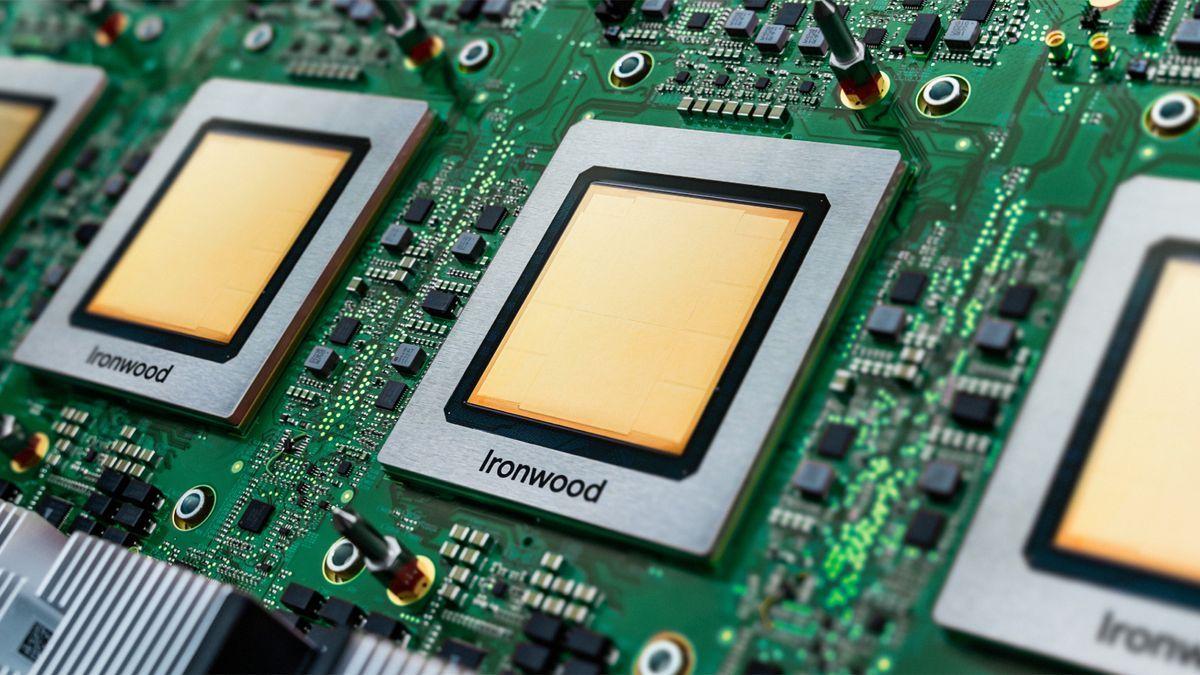
Google Builds $200bn AI Chips Infrastructure With Broadcom, Apollo & Blackstone to Power Anthropic
04 Aug 2026•Business and Economy
Google's TPUs Challenge NVIDIA's AI Chip Dominance as Demand Surges
18 Dec 2024•Technology

Recent Highlights



Recent Highlights
Today's Top Stories







Don’t drown in AI news. We cut through the noise - filtering, ranking and summarizing the most important AI news, breakthroughs and research daily. Follow topics that matter to you and stay ahead.


