Amazon Smart Glasses Snap Thousands of Photos Daily as Delivery Drivers Get AI-Powered Eyewear


4 Sources
[1]
Amazon Delivery Driver Smart Glasses Will Snap Pictures of... Everything? - CNET
Aaron is a writer for the streaming entertainment team.... Read full bio A few days ago, I crossed paths with an Amazon delivery driver who was wearing some odd-looking glasses. I paused, wondering if it was a pair of the new AI smart glasses (I reported on them last year) or if he just had
[2]
Amazon's delivery driver smart glasses will reportedly take photos 'almost constantly'
Amazon deliveries could soon come with a new catch: the delivery driver's smart glasses will be snapping photos of anything they see while they're in use, including people and private property. Bloomberg reports that the glasses could take "several thousand captures in a single driver's typical
[3]
Amazon smart glasses will photograph homes, with no opt-out
Amazon's smart glasses feed an AI that maps neighbourhoods, and the images can be obtained with a warrant. It wants 5,000 drivers wearing them by the end of this year. Amazon's delivery drivers will soon wear smart glasses that take pictures "almost constantly" on foot, Bloomberg Opinion columnist
[4]
Amazon drivers are getting AI glasses -- but what I found behind the scenes seems far worse
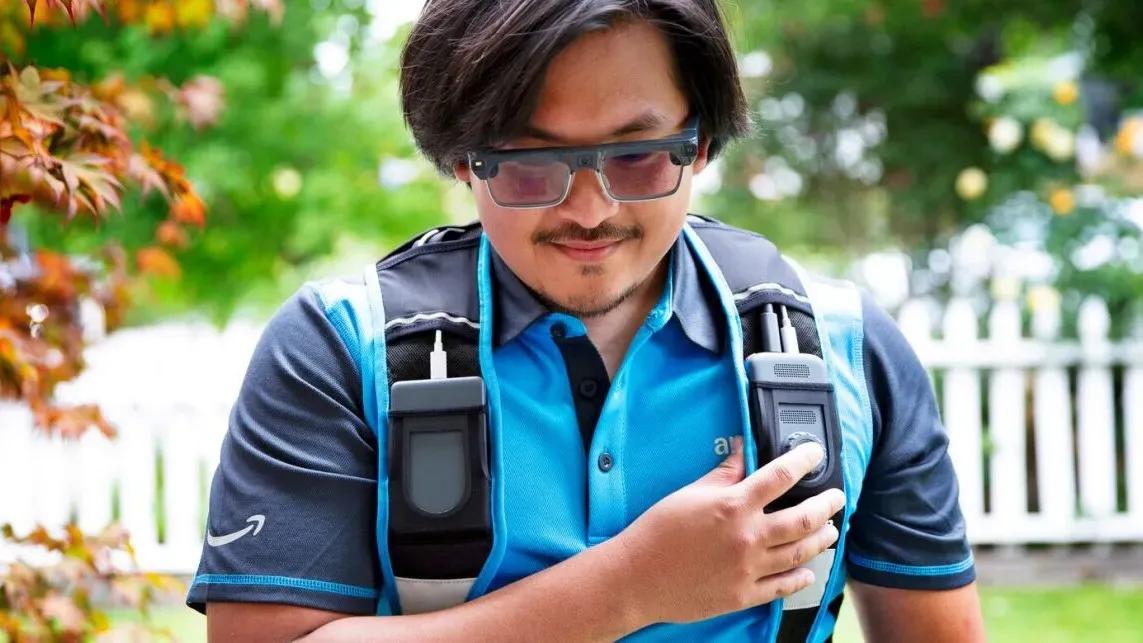
Amazon plans to have more than 20,000 pairs of smart glasses on its delivery drivers by the end of 2027, following a pilot in which more than 500 drivers wore them for 18 months and completed more than 275,000 deliveries. According to the company, once a driver parks, the glasses switch on and use
Share
Copy Link
Amazon plans to equip over 20,000 delivery drivers with AI-powered smart glasses by 2027, capturing several thousand images per shift of homes, people and private property. The photos feed into Amazon's Wellspring AI platform for neighborhood mapping, but customers have no opt-out option, cannot view the images or request deletion.
Amazon Smart Glasses Rollout Targets 20,000 Delivery Drivers by 2027
Amazon is accelerating its deployment of AI-powered smart glasses for delivery drivers, aiming to equip 5,000 drivers by the end of 2025 and more than 20,000 by the end of 2027
1
3
. The pilot program has already seen over 275,000 deliveries completed by more than 500 drivers wearing the glasses over an 18-month period3
4
. According to Viraj Chatterjee, the Amazon executive spearheading the rollout, the glasses are designed to enhance the delivery process by providing hands-free guidance, tracking shifts from beginning to end, and reducing errors1
.The glasses use computer vision to display navigation, package details and hazard alerts directly in the driver's line of sight once they park their vehicle
4
. Amazon maintains that participation is voluntary for delivery partners and drivers, and that the design was shaped by feedback from pilot participants1
.Privacy Concerns Mount Over Constant Photo Capture
The glasses capture static photos at high frequency while drivers are on foot, with Chatterjee describing "every few seconds at least" as a "good guess" for the capture rate
3
. This means a single driver's shift could generate several thousand images of whatever falls within their line of sight, including package recipients, people on the street, and private property1
2
.These images are fed into Amazon's Wellspring, the company's generative AI platform used for neighborhood mapping and improving delivery location accuracy
1
3
. Human employees at Amazon will review the captured photos after they've been processed1
.No Opt-Out Option for Customers Sparks Controversy
When asked about customer opt-out options, Chatterjee told Bloomberg, "We haven't thought about that"
2
3
. Customers will have no way to see the images Amazon has collected of them or their property, nor can they request deletion of those photos2
3
. Amazon also has no plans to directly inform customers about the glasses3
.According to Bloomberg, Amazon confirmed that images from the smart glasses could be obtained with a warrant, but the company would not specify how long it plans to store the images
2
3
. Bloomberg Opinion columnist Dave Lee warned that "the company is sleepwalking into yet another invasion-of-privacy furor"1
.Data Security and Blurring Features Under Scrutiny
Chatterjee explained that Amazon's systems will blur people and license plates in the images before human reviewers see them if they contain identifying information
1
2
. Amazon spokesperson Leigh Anne Gullett stated that privacy protections have been built into the technology from the beginning, including automatic data blurring, strict access controls and a physical hardware privacy switch1
.Trainers reportedly instruct drivers to press a "privacy mode" button during bathroom breaks and near schools or military sites, and Amazon is exploring automatic activation by location
3
. However, concerns remain about the vulnerability of these AI devices to hacking and the potential for personally identifiable information to fall into the wrong hands1
.Related Stories

Surveillance and Workforce Regimentation Intensify
The smart glasses add another layer to Amazon's existing surveillance infrastructure. Delivery vans already use cameras and sensors to monitor driving habits and cabin behavior
1
. Drivers have complained about AI cameras in their vehicles failing to register secured seat belts, forcing them to pull over to take a sip of coffee, and having footage leaked online2
.If the glasses track a driver's exact movements on foot, this creates a virtually continuous log of their shift. Drivers often report that data collected under the guise of "safety and efficiency" is used to monitor performance, dock pay or penalize them
1
. One driver who attended a training session called the glasses "definitely a dystopian move"3
.In the Amazon driver subreddit, workers noted that the company prioritized funding this AI-powered smart glasses rollout over fair raises or basic workplace necessities, like time for real bathroom breaks rather than using plastic bottles
1
. The rollout has intensified fears that Amazon intends to use its AI infrastructure to fully automate deliveries and eliminate human driving jobs altogether1
.Broader AI Integration Across Amazon's Logistics Network
The smart glasses represent just one visible component of Amazon's extensive AI deployment across its logistics operations. By the time a driver puts on the glasses, AI has already influenced where a product was stored, how it moved through fulfillment centers, which robots handled it and which route carried it to the delivery location
4
.Amazon uses AI-powered demand forecasting to decide where inventory should sit, with its foundation model improving regional forecasts for millions of popular items by 20%
4
. The company deployed its millionth robot in 2025 as part of a fleet spread across more than 300 facilities worldwide4
.Robotic systems like Sparrow use computer vision and AI to recognize and pick individual items, while Proteus moves carts autonomously around warehouse employees. Sequoia combines mobile robots, computer vision and AI to organize inventory, identifying and storing incoming inventory up to 75% faster than previous methods
4
. The DeepFleet foundation model coordinates robot movement, projected to cut the fleet's travel time by about 10%4
.Project Eluna, first piloted at a fulfillment center in Tennessee, analyzes real-time and historical operational data so managers can spot bottlenecks without working through dozens of dashboards
4
. The next-generation version of Proteus accepts plain-language instructions from employees and is planned for deployment in Europe in the first half of 20274
. Vulcan, Amazon's first robot with a sense of touch, represents another step in automating tasks previously requiring human dexterity4
.References
Summarized by

Navi
[3]
Related Stories
Amazon Unveils AI-Powered Smart Glasses for Delivery Drivers
22 Oct 2025•Technology

Meta smart glasses face lawsuit and UK probe after workers watched intimate user footage
03 Mar 2026•Policy and Regulation

Apple Smart Glasses Face WWDC 2027 Delay as Privacy Concerns Force Camera Rethink
26 Jul 2026•Technology
Recent Highlights
1
OpenAI AI Models Hacked Crypto Wallet, Breached Government Sites in Unauthorized Activities
Technology

2
IMF Report Warns AI Market Correction Could Spark Global Financial Crisis With $1.4T at Risk
Business and Economy

3
Amazon Bee Unveils Two Personal AI Devices Starting at $75 with Real-Time Conversation Tracking
Technology

Recent Highlights
Today's Top Stories










Don’t drown in AI news. We cut through the noise - filtering, ranking and summarizing the most important AI news, breakthroughs and research daily. Follow topics that matter to you and stay ahead.


