Ambani-backed Addverb Technologies seeks $100M to build humanoid robots and challenge China


2 Sources
[1]
Ambani-backed Addverb seeks $100M for India robotics push
Ambani-backed Addverb Technologies is raising $100M+ to build humanoid and quadruped robots and AI training systems. The Indian company ranks outside the global top 30 and has yet to report a net profit. Revenue is projected at $136M this year. Addverb Technologies, the Indian robotics startup
[2]
Ambani-backed robot startup seeks $100 million to take on China
Reliance-backed robotics startup Addverb Technologies is looking to raise over $100 million to fund expansion into humanoid robots, AI and advanced automation. The company, which generates half its revenue overseas, targets a spot among the world's top 10 robotics firms within five years. Indian
Share
Copy Link
Addverb Technologies, the Indian robotics startup controlled by Mukesh Ambani's Reliance Industries, is raising over $100 million to develop humanoid and quadruped robots. The company projects $136 million in revenue this year and aims to break into the global top 10 within five years, despite currently ranking outside the top 30 and facing fierce competition from Chinese, Japanese, and US rivals.
Addverb Technologies Launches Major Fundraising to Fuel Robotics Ambitions
Addverb Technologies is seeking to raise more than $100 million in its first major fundraising effort since Reliance Industries invested $132 million in 2021
1
2
. The Indian robotics startup, controlled by billionaire Mukesh Ambani's conglomerate, plans to use the capital primarily to develop humanoid and quadruped robots, collect data, and build AI systems to train sophisticated machines. CEO Sangeet Kumar told Bloomberg that the company currently makes robots for sorting, material movement, and factory automation at logistics firms, warehouses, and electronics companies across more than two dozen countries2
.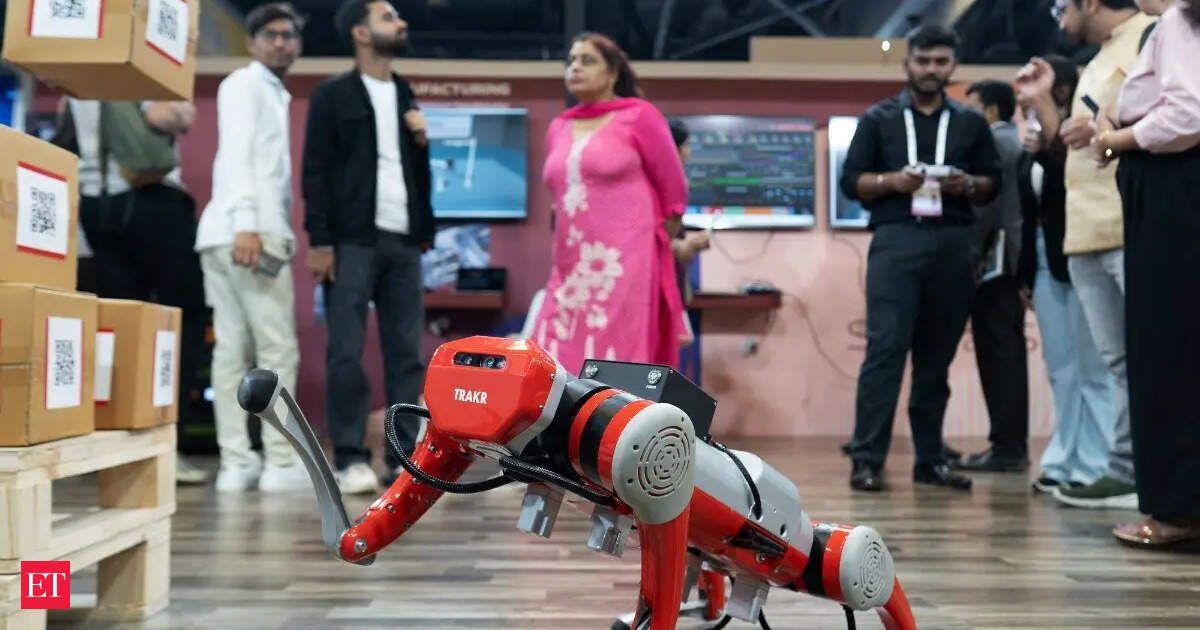
Source: ET
Ambani-Backed Robot Startup Eyes Global Top 10 Ranking
The robotics startup has set an ambitious target to break into the global top 10 within five years and reach the top five within a decade. "We want to be in the top 10 in the next 5 years and top 5 in the next 10 years," Kumar said in an interview at one of Addverb's two factories on the outskirts of New Delhi
2
. The company estimates it currently ranks just outside the global top 30 in robotics market share by revenue, meaning it needs to grow roughly 5x to reach the lower end of its five-year target1
. That gap separates Addverb from established players including Unitree Robotics, which is preparing a $7 billion IPO, Tesla's Optimus programme, and Japanese and European industrial robotics firms with decades of manufacturing scale.AI Systems Development and Proprietary Technology Push
The $100 million will fund AI systems development alongside hardware innovation, with Addverb also planning to launch proprietary lidar sensors after more than two years of development
1
2
. This move aims to reduce dependence on imported components and represents a strategic bet on vertical integration. Kumar believes developing proprietary technology is essential to compete with Chinese rivals who benefit from government subsidies and a dense manufacturing supply chain that Indian firms cannot yet match1
. The company sees a major growth opportunity in humanoids, a swiftly emerging capital-intensive market where firms from Unitree Robotics to Tesla vie for leadership.Related Stories

Financial Trajectory and Global Expansion Plans
Revenue is projected at 13 billion rupees ($136 million) this fiscal year, supported by an order book of approximately $200 million
1
2
. The company reported losses during its international expansion over the past two years but expects to return to adjusted profitability in the fiscal year ending March 2027 and net profit the following year. Addverb generates half its revenue from outside India, having expanded to markets including the US, Netherlands, and Australia, with customers like Lenskart, Hindustan Unilever, and Reliance2
. The company employs nearly 1,100 people across its operations.From Warehouse Automation to IPO Aspirations
Founded in 2016 by four engineers who previously worked at Asian Paints, India's largest paints company, Addverb started as a warehouse automation firm with an asset-heavy model that failed to attract venture capital
1
. The company has since expanded into factory automation, electronics manufacturing, healthcare, defense, and research applications. Reliance Industries now holds a controlling stake, with founders and employees owning about a fifth of the company. Kumar indicated an IPO is a key option for scaling but noted the company has no immediate plans. "Probably when we are more than 40 billion rupees or 50 billion rupees in revenue, that is when we would go for IPO," he said, a milestone he believes could be reached within two years at current growth rates1
. Whether this Indian robotics startup can compete with Chinese firms' cost structure, Japanese firms' manufacturing precision, and Tesla's brand and capital remains an open question as it enters one of the most competitive sectors in automation.References
Summarized by

Navi
[1]
Related Stories
Addverb Ventures into Humanoid Robotics, Leveraging Reliance Jio's AI and 5G
19 Nov 2024•Technology

Alibaba Leads $100 Million Investment in X Square Robot, Fueling China's Humanoid AI Revolution
08 Sept 2025•Technology
Apptronik Raises $520 Million to Scale Apollo Humanoid Robots for Industrial Deployment
11 Feb 2026•Startups

Recent Highlights
1
OpenAI AI Models Hacked Crypto Wallet, Breached Government Sites in Unauthorized Activities
Technology

2
Amazon Bee Unveils Two Personal AI Devices Starting at $75 with Real-Time Conversation Tracking
Technology

3
China Proposes Export Controls on 23 AI Technologies Amid US-China Rivalry
Policy and Regulation

Recent Highlights
Today's Top Stories










Don’t drown in AI news. We cut through the noise - filtering, ranking and summarizing the most important AI news, breakthroughs and research daily. Follow topics that matter to you and stay ahead.


