Anthropic accuses Alibaba of massive campaign to steal Claude AI capabilities with fake accounts


18 Sources
[1]
Anthropic claims Alibaba defied Trump to attack Claude and steal capabilities
Anthropic has accused the Chinese firm Alibaba of launching the largest attack yet attempting to clone Claude, as China races to match the capabilities of Anthropic's leading model following Mythos' release and subsequent restriction from foreign markets. Ars obtained a June 10 letter sent to
[2]
Anthropic is removing its covert code for catching Chinese competitors
Anthropic says that it plans to remove hidden codes it added to Claude Code several months ago to catch other AI companies that are trying to steal from its models. Thariq Shihipar, an engineer at Anthropic who works on the Claude Code team, said on Tuesday that a fix should appear on July
[3]
Anthropic says Alibaba illicitly extracted Claude AI model capabilities
June 24 (Reuters) - U.S. AI company Anthropic accused Alibaba (9988.HK), opens new tab, the Chinese technology and e-commerce giant, of illicitly extracting its Claude AI model capabilities in what it said was the largest known distillation attack on the company to date, according to a letter seen
[4]
Anthropic accuses Alibaba of using 25,000 fake accounts to scrape Claude AI
The alleged campaign generated 28.8 million queries in a large-scale model-extraction effort to replicate AI capabilities. Anthropic has accused Alibaba of using nearly 25,000 fraudulent accounts to extract capabilities from its Claude AI models, in what the US AI company described as the largest
[5]

Anthropic accuses Alibaba of campaign to 'brazenly' and 'illicitly' extract AI capabilities
Anthropic sent a letter to the U.S. Senate Committee on Banking, Housing, and Urban Affairs accusing the Chinese tech company Alibaba of "brazenly" and "illicitly" attempting to extract its artificial intelligence capabilities, CNBC confirmed on Wednesday. The letter, which was addressed to Sen.
[6]

Anthropic accuses Alibaba of illicitly extracting AI capabilities
US artificial intelligence (AI) giant Anthropic has accused Chinese e-commerce and technology firm Alibaba of "brazenly" and "illicitly" extracting its Claude AI model's capabilities. In a letter seen by the BBC, the San Francisco-based company said operators linked to Alibaba carried out almost
[7]

The AI Cold War Just Got Chillier
As the newly crowned most valuable startup in the world and the maker of what are widely considered to be the most capable AI systems, Anthropic has a delicate line to tow as it comes of age under an administration known for picking fights both at home and abroad. If it wants to keep releasing
[8]

Anthropic accuses Alibaba of running largest distillation campaign against Claude
Anthropic accused Alibaba's Qwen lab of using 25,000 fake accounts for nearly 29 million Claude exchanges, the biggest such campaign yet. Anthropic has accused Alibaba of waging the largest distillation campaign yet against a US AI company, telling senators and White House officials that operators
[9]

Anthropic accuses Alibaba of copying Claude by asking it millions of questions -- and sets the stage for a new AI war
Anthropic has accused groups linked to Alibaba and its Qwen AI lab of carrying out a massive campaign to extract capabilities from Claude just by asking it a lot of questions, as first reported by Reuters. The AI developer wrote a letter to U.S. lawmakers alleging that Alibaba used nearly 25,000
[10]

Anthropic's Alibaba fight raises a trillion-dollar question for IPO: How defensible is a frontier AI moat against China with Washington's toolbox? | Fortune
Anthropic has alleged Alibaba found a cheaper way to close the already narrowing AI gap: Not by stealing servers or smuggling chips, but by using fake accounts and innocuous interactions with Claude to extract its capabilities and train competing systems at a fraction of the cost. Leading IPO
[11]

Anthropic Urges Congress to Crack Down on AI Distillation By Chinese Rivals
The letter comes as lawmakers consider legislation targeting unauthorized access to U.S. frontier AI models. Anthropic is calling on Congress to strengthen protections against AI model distillation after claiming that Alibaba-affiliated operators carried out the largest known effort to extract
[12]

Anthropic: Anthropic says Alibaba illicitly extracted Claude AI model capabilities
Anthropic said in the letter that distillation is a way to help accelerate China's ability to reach Anthropic's advanced Mythos Preview capabilities. U.S. AI company Anthropic accused Alibaba, the Chinese technology and e-commerce giant, of illicitly extracting its Claude AI model capabilities in
[13]

Alibaba Stock In The Spotlight After Anthropic Accuses Chinese Giant of Harvesting 28.8 Million Claude Co
Alibaba Group Holding Ltd. (NYSE:BABA) is in the spotlight Thursday after Anthropic accused the Chinese tech giant of orchestrating a large-scale campaign to extract capabilities from its Claude AI models. The Allegation According to a letter reviewed by Reuters, Anthropic wrote to U.S. lawmakers
[14]

Anthropic accuses Alibaba of 'illicitly' accessing AI models
Anthropic accused Chinese technology giant Alibaba Group Holding of waging a large-scale effort to "illicitly" access its Claude artificial intelligence model using thousands of fraudulent accounts that undermine the U.S. AI developer's decision to keep its products out of China. Anthropic claimed
[15]

Anthropic Accuses Alibaba Of Running 29 Million Fake Queries to Clone Claude | PYMNTS.com
Anthropic accused operators affiliated with Alibaba and its AI lab of conducting the largest known distillation campaign against its Claude models to date, CNBC reported. The alleged operation ran from April 22 to June 5 and generated more than 28.8 million interactions with Claude through roughly
[16]
Anthropic Writes To Elizabeth Warren, Tim Scott, Accuses Alibaba Of AI Model Theft: 28.8 Million Claude C
Anthropic has accused Chinese technology giant Alibaba Group Holding Ltd. (NYSE:BABA) of extracting capabilities from its Claude AI models. Anthropic Alleges Large-Scale AI Distillation Campaign Linked To Alibaba According to a letter reviewed by Reuters on Wednesday, Anthropic told U.S.
[17]
Anthropic Asks Washington to Stop Chinese Companies' AI Model Theft | PYMNTS.com
The American AI company said this in a letter that it sent to several U.S. senators and White House officials, Bloomberg reported Wednesday (June 24), citing a copy of the letter. An Anthropic spokesperson declined to discuss the reported letter with Bloomberg but said there is a need for
[18]

Anthropic accuses Alibaba of campaign to 'brazenly' and 'illicitly' rip off its AI capabilities
Anthropic accused the Chinese tech giant Alibaba of "brazenly" and "illicitly" trying to extract its artificial intelligence capabilities - carrying out "the largest known distillation attack on Anthropic to date." Anthropic detailed the alleged violation of its terms in a letter it sent to the
Share
Copy Link
Anthropic has accused Alibaba of orchestrating the largest known distillation attack against its Claude AI models, using nearly 25,000 fraudulent accounts to generate 28.8 million exchanges between April and June 2026. The US AI company claims the Chinese tech giant brazenly defied Trump administration warnings to illicitly extract valuable AI capabilities without incurring training costs.
Anthropic Reports Largest Known Campaign Against Claude AI
Anthropic has leveled serious accusations against Alibaba, claiming the Chinese tech giant conducted the largest known distillation attack on its Claude AI models to date. According to a June 10 letter sent to Senators Tim Scott and Elizabeth Warren of the Senate Banking Committee, operators affiliated with Alibaba and Qwen, Alibaba's AI lab, generated more than 28.8 million exchanges with Claude through almost 25,000 fraudulent accounts between April 22 and June 5, 2026
1
3
. The letter arrived one day ahead of a Senate committee hearing on "AI and the American Dream," where the US AI company shared what it described as "new, confidential evidence" of this massive model extraction campaign1
.
Source: Benzinga
Chinese AI Competitors Target Valuable Capabilities Through Distillation Attack
The campaign specifically targeted some of Claude's most valuable capabilities, including agentic reasoning, software engineering, and long-horizon tasks, according to Anthropic's allegations
1
. Distillation attacks represent a method where Chinese AI competitors train less capable models on outputs from stronger ones, allowing them to illicitly extract AI capabilities without incurring the substantial training and R&D costs required to develop frontier models independently3
4
. Alibaba allegedly evaded detection by deploying obfuscation techniques and proxy networks, contributing to what Anthropic warns is "a growing circumvention economy" designed to fuel an expanding web of future model theft attempts1
.Attack Occurred Despite Trump Administration Warnings
What makes this incident particularly significant is its timing. The Alibaba campaign unfolded after President Donald Trump took steps to curb illicit distillation attacks and defend US national security. In April, Trump accused China of "industrial-scale" AI theft following Anthropic's earlier report that Chinese firms DeepSeek, Moonshot, and MiniMax had used similar tactics to generate over 16 million exchanges with Claude through approximately 24,000 fraudulent accounts
1
. Anthropic accused Alibaba of "brazenly" racing to create a copycat Claude, seemingly unfazed by Trump's threats despite the company's dependence on US investors1
5
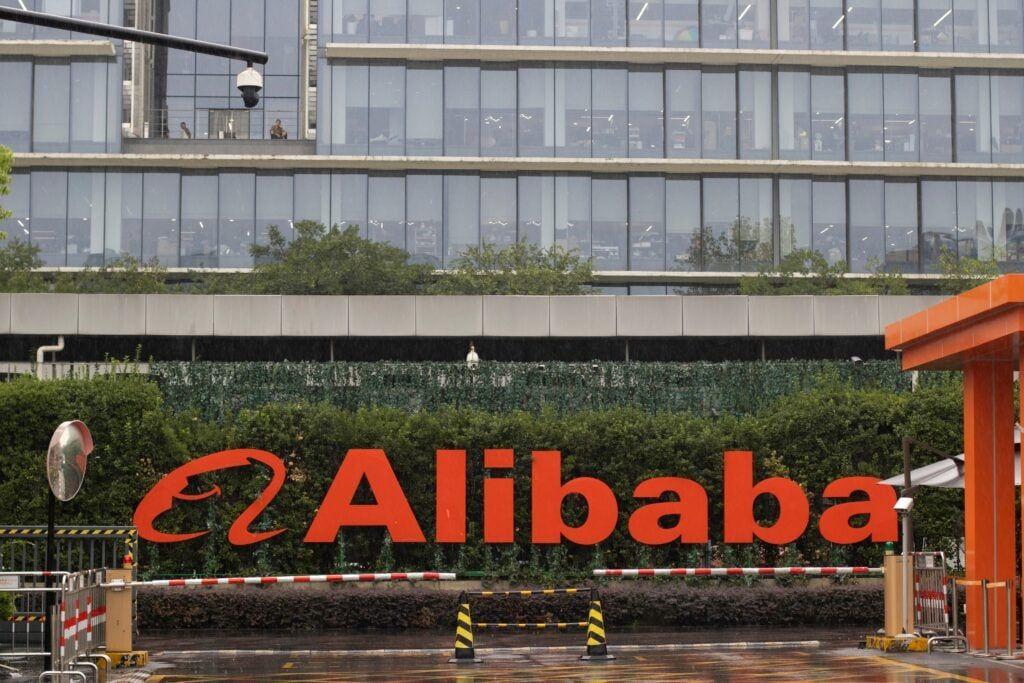
. The company noted that Alibaba is listed on the New York Stock Exchange, maintains business operations in the United States, and is accountable to US investors and regulators, yet this activity continued in the weeks after Trump's memo warned that cloning attempts were "unacceptable"1
.
Source: Benzinga
Related Stories

Anthropic Deploys Covert Code to Catch Model Theft
In response to the escalating threat, Anthropic had implemented hidden defenses within Claude Code several months prior to detect unauthorized usage. According to engineer Thariq Shihipar, the company launched an experiment in March using steganography—hiding secret data in plain sight—to catch account abuse from unauthorized resellers and protect against distillation
2
. The covert code checked Claude Code's base URL, system timezone, and whether hostnames matched entries in a list of known Chinese AI labs, other AI companies, account resellers, and gateway domains2
. However, Anthropic announced plans to remove this hidden tracking mechanism on July 1, stating that "the team has landed stronger mitigations since then"2
.
Source: Gizmodo
Congressional Action Urged to Protect US AI Leadership
Anthropic warned that without stronger interventions, these attacks will help China reach advanced AI capabilities sooner, turning "hundreds of billions of dollars in American investment and R&D into a massive subsidy for our geopolitical competitors"
1
. The company recommended Congress pass legislation with three key objectives: updating antitrust laws to allow AI firms to share information about evolving Chinese tactics, implementing stronger export controls on chips to limit Chinese access to advanced compute, and establishing penalties that make it more difficult and costly for Chinese labs to rely on distillation attacks1
. An Anthropic spokesperson emphasized that "combating the threat of illicit distillation requires coordinated action between government and industry"5
. Alibaba has not responded to requests for comment on the allegations, though the company filed a lawsuit Tuesday seeking to remove a Trump administration designation linking it to the Chinese military1
.References
Summarized by

Navi
Related Stories
Chinese AI Firms Face Accusations of Industrial-Scale Theft from US Frontier Models
08 Sept 2026•Policy and Regulation

Anthropic removes hidden Claude Code tracker after security researcher exposes AI privacy breach
08 Jul 2026•Technology
Anthropic accuses Chinese AI labs of industrial-scale theft as chip export debate intensifies
23 Feb 2026•Technology

Recent Highlights



Recent Highlights
Today's Top Stories






Don’t drown in AI news. We cut through the noise - filtering, ranking and summarizing the most important AI news, breakthroughs and research daily. Follow topics that matter to you and stay ahead.


