Anthropic's Seven Founders Pledge $79 Billion to Charity Ahead of Blockbuster IPO


5 Sources
[1]
Anthropic's seven founders tighten grip ahead of blockbuster IPO
From a rebellion at OpenAI to building the Claude-maker, the new billionaires are betting their future on staying united Anthropic's seven billionaire co-founders are set to gain collective control over one of the world's biggest companies following its blockbuster listing, testing whether shared
[2]
Anthropic CEO Dario Amodei charts a new direction for tech philanthropy
* In an SEC filing this week, Anthropic revealed that CEO Dario Amodei and the other founders each own over 200 million shares, which could be worth billions if Anthropic reaches its expected valuation of over $1 trillion. * In its filing, Anthropic says the company co-founders have each pledged
[3]
Anthropic's potential $2 trillion IPO could turn staff into millionaires -- but the AI firm is asking candidates what they'd do if stock fell to zero
But that potential multimillion-dollar employee windfall appears to be raising concern among company leaders. Anthropic is reportedly asking job candidates during culture interviews how they would feel if the company someday abandoned its AI ambitions for safety reasons -- and that decision caused
[4]
From Carnegie to Claude: AI wealth could reshape philanthropy
Washington (United States) (AFP) - A wave of American wealth created by artificial intelligence companies could produce some of the largest charitable sums since the era of Andrew Carnegie and John D. Rockefeller, raising questions about where the money goes. Anthropic, the maker of the Claude
[5]
Anthropic's founders' 80% giving pledge could be worth nearly $80 billion | Fortune
Anthropic's seven cofounders have pledged to give away 80% of their personal stakes in the AI company -- a promise that could amount to nearly $80 billion. CEO Dario Amodei outlined the pledge in a January essay warning about AI's risks, arguing that people becoming wealthy from the technology
Share
Copy Link
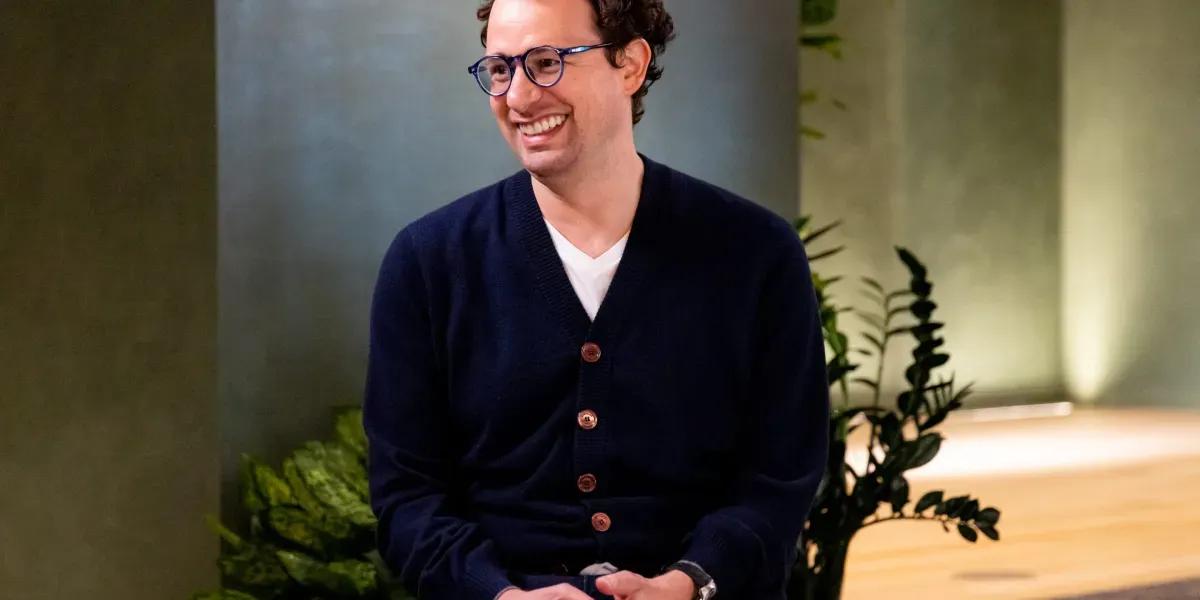
Anthropic's seven co-founders have committed to donate 80% of their personal stakes—potentially worth $79 billion—to philanthropic causes as the AI company prepares for a $1.5-2 trillion IPO. The unprecedented pledge comes as CEO Dario Amodei warns that AI-driven wealth concentration could "break society" if left unchecked.
Anthropic Founders Commit Historic $79 Billion to AI Philanthropy
Anthropic's seven co-founders have pledged to donate 80% of their personal equity in the company to philanthropic causes, a commitment that could amount to nearly $79 billion based on recent valuations
5
. The founders—CEO Dario Amodei, president Daniela Amodei, Tom Brown, Jack Clark, Jared Kaplan, Sam McCandlish, and Christopher Olah—collectively hold roughly 1.69 billion shares, with combined holdings worth approximately $99.3 billion at the latest private funding-round price5
. This unprecedented commitment to AI philanthropy comes as Anthropic prepares for a blockbuster IPO expected around Thanksgiving, with a potential valuation between $1.5 trillion and $2 trillion5
.The pledge follows Dario Amodei's open letter in January warning that wealthy individuals, especially in the tech industry, have an obligation to support workers and families affected by artificial intelligence
2
. "It is sad to me that wealthy individuals (especially in the tech industry) have recently adopted a cynical and nihilistic attitude that philanthropy is inevitably fraudulent or useless," Amodei wrote2
. The commitment represents one of the largest philanthropic pledges in corporate history, potentially rivaling the charitable contributions of industrial-era titans like Andrew Carnegie and John D. Rockefeller4
.
Source: Fortune
Unprecedented Governance Structure Grants Founders 50.1% Voting Power
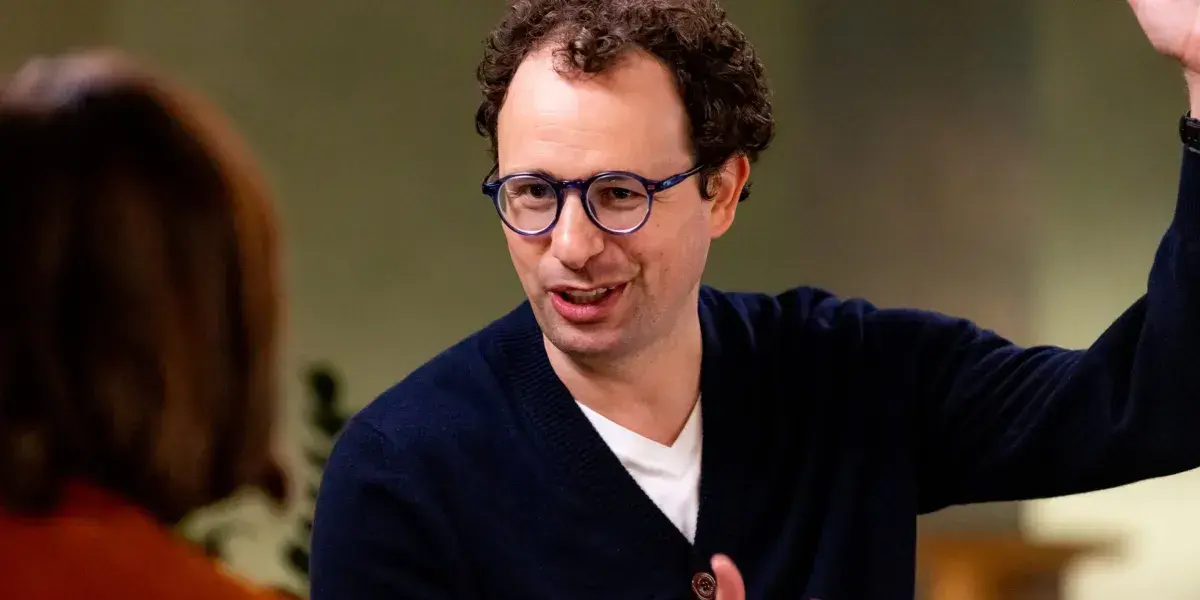
Anthropic's IPO prospectus revealed an unusual governance structure that grants the seven founders collective control over the company despite their charitable commitments
1
. Through a special class of stock, the founders will hold 50.1% of the voting power, meaning ordinary shareholders will have virtually no control over Anthropic's decisions1
. The structure allows founders to maintain their influence even while fulfilling their giving pledge—a cofounder can give away 98% of their stake and still help decide how the controlling share votes, as long as they retain at least 2% of their Class A shares from the IPO5
.This concentration of voting power reflects Anthropic's commitment to responsible AI development and its mission-driven approach as a public benefit corporation
1
. The company's S-1 filing described the founders as "stewards of our mission" and highlighted the "uncommon" retention of all seven co-founders—a subtle critique of OpenAI, where the majority of co-founders have departed1
. Jenny Xiao, former OpenAI researcher and partner at Leonis Capital, noted that "the Anthropic founding team has an incredibly unified vision and culture, which is something that is pretty rare among frontier AI labs"1
.
Source: Fortune
AI-Driven Wealth Creation Raises Questions About Societal Impact
Anthropic's rapid growth underscores the scale of AI-driven wealth creation transforming the technology sector. The company generated $16.3 billion in revenue in the first half of 2026, up from $1.2 billion in the same period a year earlier
5
. Individual founder stakes were estimated to be worth up to $15.5 billion each after Anthropic's last fundraising valued it at $965 billion in May1
. Dario Amodei, with an estimated net worth of $13.6 billion, has expressed concerns about how these enormous financial incentives could affect the company's ability to retain employees genuinely committed to its mission3
.The potential wealth concentration has prompted Anthropic to take unusual steps during its hiring process. The company reportedly asks job candidates during culture interviews how they would feel if Anthropic abandoned its AI ambitions for AI safety reasons and the stock fell to zero
3
. "The thing to worry about is a level of wealth concentration that will break society," Amodei wrote in his January essay5
. This concern about economic consequences extends beyond individual wealth to broader societal disruptions caused by AI, including potential job displacement and inequality.
Source: France 24
Public Benefit Fund and Donor-Advised Funds Shape Philanthropic Strategy
Beyond the founders' personal commitments, Anthropic has established a Public Benefit Fund holding 5% of company shares, a stake potentially worth around $50 billion at current valuations
4
5
. Combined with the founders giving pledge and a program matching employee donations, roughly a fifth of Anthropic's shares will be dedicated to public-benefit purposes4
. Michael Moody, a professor at Indiana University's Lilly Family School of Philanthropy, called this "one of the biggest stories in corporate philanthropy ever"4
.For executing their personal pledges, the Anthropic founders have chosen donor-advised funds as their primary vehicle for charitable contributions
2
. Dario Amodei disclosed voting rights over shares held by Daffy Charitable Fund and Dechomai Asset Trust, allowing him to vote shares "currently owned or subsequently acquired" by these funds2
. DAFs allow donors to contribute highly appreciated private shares while avoiding capital gains taxes and receiving immediate tax deductions, though this arrangement has raised questions about control and transparency in the nonprofit sector2
.Related Stories
Effective Altruism and Mission-Driven Culture Define Anthropic's Approach
Many Anthropic founders and staff maintain close ties to effective altruism, a movement that prioritizes measurable impact in causes like AI safety and global health
4
. This philosophical foundation has shaped both the company's approach to responsible AI development and its philanthropic strategy. The seven co-founders were colleagues at OpenAI until December 2020, when they departed over shared concerns that AI systems were scaling rapidly and required a more responsible path forward1
. "Things are never going to be chill again," Dario Amodei told an early company meeting1
.The founders initially questioned whether to form a company at all or create an organization modeled on CERN, the renowned Swiss physics center
1
. Many expressed doubts about creating a for-profit venture but ultimately recognized the need to raise substantial capital to run AI models, settling on a public benefit corporation structure required to consider societal impact alongside shareholder returns1
. The Amodei siblings split core responsibilities, with Dario setting the vision and diving deep into research while Daniela runs day-to-day operations, overseeing the executive team from research and engineering to policy and communications1
. According to people familiar with the siblings, Daniela is considered a good balance to her brother, with better people skills and emotional intelligence1
.Competitive Talent Market and Stock Valuation Concerns
Anthropic faces intense competition for AI talent, offering base salaries ranging from $350,000 to $850,000 for staff software engineering roles
3
. The company acknowledged in its S-1 filing that hiring and retaining qualified employees has become exceptionally difficult, particularly in the San Francisco Bay Area where it is headquartered3
. Competition for talent has escalated so significantly that some candidates reportedly spend more than $4,000 on private coaching to improve their chances of getting hired3
.The potential employee windfall from stock valuation has raised concerns among company leaders about maintaining mission alignment. Anthropic currently has more than 600 open roles, including about 120 in sales, over 60 in AI research and engineering, and 50 in security
3
. The company's values statement emphasizes that "at the end of the day, the mission is what we're all here for," providing a shared purpose that allows swift collective action rather than being pulled in multiple directions by competing goals3
. This tension between financial incentives and mission commitment will be tested as the company transitions to public markets and employees see their equity stakes potentially become worth millions.References
Summarized by

Navi
Related Stories
Anthropic Commits 5% of Shares to Public Benefit Fund Addressing AI Job Disruption
19 Oct 2026•Business and Economy
Anthropic IPO Filing Warns AI Could Blackmail Humans, Become Sentient, Pose Existential Threats
26 Oct 2026•Business and Economy

Anthropic's charity pledge could be worth $70 billion. Critics ask who controls it.
Today•Entertainment and Society

Recent Highlights


Recent Highlights
Today's Top Stories





Don’t drown in AI news. We cut through the noise - filtering, ranking and summarizing the most important AI news, breakthroughs and research daily. Follow topics that matter to you and stay ahead.


