Australian Broadcasting Corporation Rejects AI Copyright Opt-Out as Content Scraping Concerns Surface


5 Sources
[1]
Australia's ABC rejects AI copyright carveout, believes already been scraped
SYDNEY, Oct 6 (Reuters) - The Australian national broadcaster rejected a suggestion on Tuesday that it was too hard for AI companies to strike licencing deals to access its content and said the tech giants had probably already "scraped" its output for model training. After ChatGPT maker OpenAI and
[2]
ABC tells Australian AI inquiry its content has likely been scraped
The public broadcaster rejected an opt-out copyright model at a Sydney hearing where OpenAI and Anthropic also gave evidence. The Australian Broadcasting Corporation told a parliamentary inquiry on Tuesday that AI companies have probably already used its content to train their models. The public
[3]
ABC and SBS want AI firms to pay for news, as Anthropic seeks opt-out
Anthropic has asked Canberra to let AI firms train on Australian content unless rights holders opt out. SBS says the robots.txt signals behind that plan are routinely ignored. Australia's public broadcasters, the ABC and SBS, want the country's news bargaining incentive to cover AI companies. That
[4]
Anthropic pushes for opt-out model for Australian content as ABC warns of 'cannibalisation' of news
Maker of Claude claims AI could transform economy but ABC and SBS say the technology should be subject to media regulations AI giant Anthropic has urged the Albanese government to consider giving "conditional approval" for big tech to train its models on Australian copyrighted works under an
[5]
Australian creators demand protection as AI firms call for looser laws
A coalition of Australian content creators has demanded strict laws protecting them from artificial intelligence giants harvesting their books, films, television shows and news output to train AI models, ahead of a highly anticipated public appearance from the world's biggest AI
Share
Copy Link
The Australian Broadcasting Corporation told a parliamentary inquiry that AI companies have likely scraped its content without permission. ABC's head of content operations rejected proposed opt-out models, arguing current copyright laws already work and that AI firms should negotiate commercial deals with media outlets for content access.
ABC Confronts AI Companies Over Content Scraping at Parliamentary Inquiry
The Australian Broadcasting Corporation has taken a firm stance against relaxing AI copyright protections, telling a parliamentary inquiry that AI companies have likely already scraped its content for training models without authorization. Kate Gilchrist, ABC's head of content and legal operations, testified before the Joint Select Committee on Artificial Intelligence in Sydney, stating "I do not think we have conclusive evidence that we have been scraped but I expect that there is a likely possibility that we have been."
1
2
The testimony came as OpenAI and Anthropic pushed for relaxed copyright laws to access domestically produced Australian content.
Source: The Next Web
Why Opt-Out Models Place Unfair Burden on Rights Holders
Gilchrist forcefully rejected suggestions that an opt-out model for AI would be workable, directly challenging proposals from major AI firms. Under such a system, AI companies could use content unless rightsholders actively object. "We cannot scour the internet and ensure that we are opting out on all those sites. It simply does not work," she told the inquiry.
1
Media reports indicate the Australian government has been considering this opt-out clause, but the ABC argues it "places the burden on rightsholders" rather than on AI companies to seek permission.2
SBS, Australia's other public broadcaster, reinforced this position in its written submission, pointing out that robots.txt mechanisms—which Anthropic proposed as a solution—are "routinely ignored or bypassed."
3
The broadcaster emphasized that "the onus should be on AI companies to avoid wrongdoing" rather than forcing content creators to constantly monitor and block evolving AI training models.4
Current Copyright Laws Already Adequate for AI Regulation in Australia
The Australian Broadcasting Corporation maintains that existing copyright frameworks are sufficient to manage AI's use of protected content. "The copyright system is completely adequate to manage the business of AI," Gilchrist stated. "AI can engage in negotiations with rightsholders for the relevant licences that they need."
1
This position directly contradicts claims from AI firms that licensing negotiations are too complex or burdensome.Both ABC and SBS have called for AI firms to pay for news content through commercial deals with media outlets, similar to arrangements already required of platforms like Facebook, Google, and TikTok under Australia's news bargaining incentive.
3
4
The broadcasters argue that extending this framework to cover AI companies would create a level playing field and support the sustainability of journalism.Protecting Intellectual Property From AI and Preventing News Industry Cannibalisation
The ABC warned that unequal treatment of AI companies threatens the entire Australian news ecosystem. In its submission to the parliamentary inquiry, the broadcaster stated: "As publishers, AI-based services are currently unregulated and receive more favourable treatment than established Australian media. This unequal treatment will accelerate the cannibalisation of the Australian news industry."
4
The public broadcaster demanded that AI companies be subject to the same copyright, defamation, and privacy rules as traditional media outlets, calling the current system "anti-competitive."3
SBS echoed these concerns, noting that AI-powered large language models like ChatGPT and Claude pose "challenges to the sustainability of the Australian news industry and the erosion of information integrity and public trust through their use of news content without permission, attribution or compensation."
4
This framing positions protecting intellectual property from AI as essential to maintaining quality journalism and public trust in information.Related Stories

Anthropic and OpenAI Push for Conditional Approval Despite Government Rejection
Anthropicappeared before the same Joint Select Committee on Artificial Intelligence later the same day, proposing what it calls a "narrow form of conditional approval" for AI training models to access Australian copyrighted works.
4
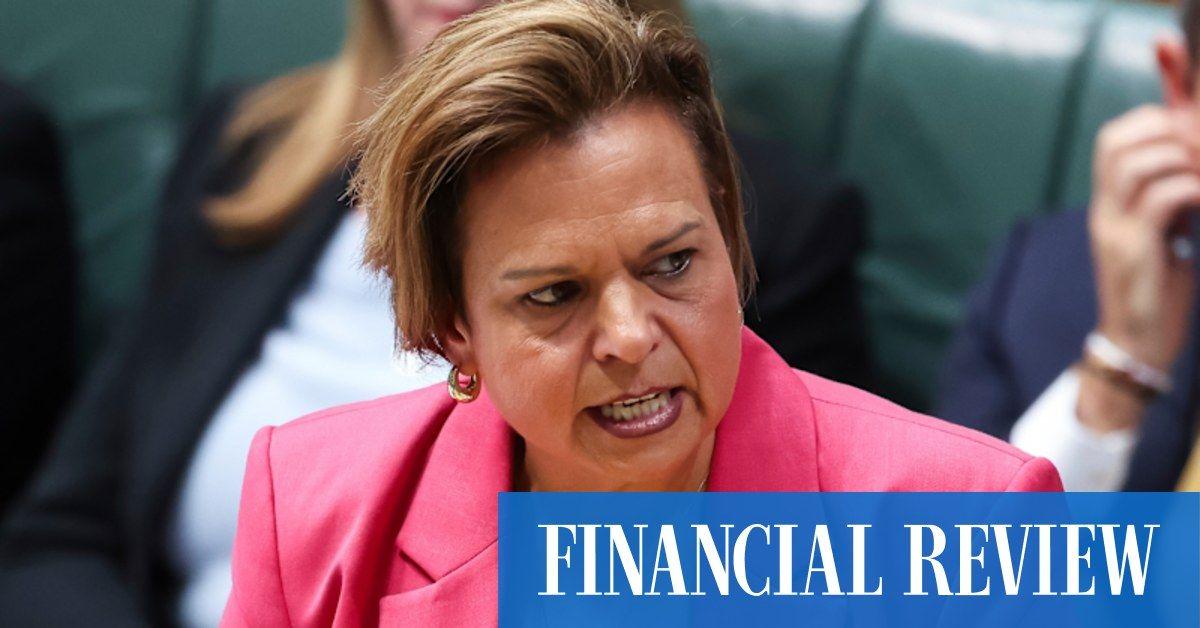
The company acknowledged that a broad text and data mining exception—which would allow AI companies to train on copyrighted material without permission—has been ruled out by the government. Attorney-General Michelle Rowland announced this decision in October 2025, with Prime Minister Anthony Albanese promising "the strongest possible protection" for Australian creatives.2
4
Source: The Next Web
In its submission, Anthropic described AI as having "light and shade," claiming the technology could "transform the Australian economy, drive a new wave of productivity" while also warning of "serious implications for Australia's national security, the resilience of its critical infrastructure and the safety of its people."
3
4
The company highlighted its plans to invest billions in Australia, including large new data centres, as it seeks more favorable content scraping policies.What This Means for Australia's AI Regulation Framework
The parliamentary inquiry represents one of at least four Australian state and federal inquiries into AI currently underway, signaling the government's serious approach to AI regulation in Australia.
1
2
The testimony from the Australian Broadcasting Corporation and confrontation with OpenAI and Anthropic highlights the fundamental tension between attracting AI investment and protecting Australian cultural identity and intellectual property.When asked whether the government-funded broadcaster would replace newsreaders with AI-produced alternatives, ABC senior executive David Sutton stated the company had "no plan to replace humans," though he acknowledged AI "might be necessary" in some programme-making contexts.
1
2
This careful positioning reflects broader anxieties about AI's role in journalism while maintaining openness to technological tools that don't displace human workers.The coming months will reveal whether Australia follows the path of stricter copyright enforcement demanded by content creators or adopts the more permissive frameworks sought by AI companies. With Google already paying some publishers when their content feeds AI answers elsewhere, and platforms like Facebook and TikTok subject to news bargaining requirements, the precedent exists for requiring AI firms to compensate content creators. Watch for how the Joint Select Committee on Artificial Intelligence translates this testimony into policy recommendations, and whether the government extends the news bargaining incentive to cover AI companies as ABC and SBS have requested.
References
Summarized by

Navi
[4]
[5]
Related Stories
OpenAI and Anthropic Push Australia to Ease Copyright Laws for AI Training on Local Content
16 Sept 2026•Policy and Regulation

Australia Rejects Copyright Exemption for AI Training, Prioritizing Creative Industries
26 Oct 2025•Policy and Regulation
Anthropic lobbies Australia for AI copyright reform as $50bn datacentre deal sparks creator backlash
13 Jul 2026•Policy and Regulation
Recent Highlights



Recent Highlights
Today's Top Stories








Don’t drown in AI news. We cut through the noise - filtering, ranking and summarizing the most important AI news, breakthroughs and research daily. Follow topics that matter to you and stay ahead.


