Anthropic Releases AI Agent Blueprints to Transform Retail Commerce Ahead of Holiday Season


7 Sources
[1]
Anthropic lays groundwork for bots that shop for you
Anthropic has blueprints for building e-commerce bots that shop on behalf of clients. That's not something many consumers want at the moment, but the AI biz this week published a set of templates for Claude-based shopping agents and merchant agents in the hope of encouraging more e-commerce
[2]
Anthropic launches AI agent blueprints for retailers ahead of holiday shopping season
NEW YORK, Sept 2 (Reuters) - Artificial intelligence company Anthropic is giving retailers blueprints to build shopping and merchant agents on Claude, it announced on Wednesday, as demand for internal and external conversational search tools expands ahead of the holiday shopping season. Reporting
[3]
Anthropic releases AI shopping agent blueprints for retailers
Anthropic released a blueprint Wednesday for building commerce agents on Claude, its AI model, targeting retailers, travel companies, and ticketing platforms ahead of the holiday shopping season. The package includes reference implementations of two agents: one that lives inside a retailer's app
[4]
Anthropic Just Broke Down the Cost Barrier to Agentic Commerce: By Maren Solberg
A Claude shopping agent leaves payments as the final frontier in the agentic commerce build out. Anthropic's latest launch gives every retailer the shopping agent Shopify and Priceline spent real money building themselves, in days rather than months. The launch won't just cut the cost barrier to
[5]

Anthropic launches AI agent blueprints for retailers ahead of holiday shopping season
AI-driven retail site visits now convert at a 60% higher rate than traffic from other sources, Adobe Analytics said last month. Artificial intelligence company Anthropic is giving retailers blueprints to build shopping and merchant agents on Claude, it announced on Wednesday, as demand for
[6]

Anthropic Built the Shopping Brain and Skipped the Wallet | PYMNTS.com
"It contains the harnesses, patterns, and guardrails an engineering team needs to get a commerce agent running in days," Anthropic said. The release ships with reference implements for retail, travel, telecom and ticketing, plus a plugin for Claude Code, the company's developer tool. Shopify and
[7]
Anthropic Gives Retailers Blueprint for AI Shopping Agents | PYMNTS.com
The AI company announced the blueprint Wednesday (Sept. 2). Reuters reported that the initiative comes as shoppers increasingly use AI to compare prices, check product availability and get recommendations. Adobe Analytics said last month that visits to retail sites driven by artificial intelligence
Share
Copy Link
Anthropic unveiled AI agent blueprints for retailers, enabling rapid deployment of shopping and merchant agents on its Claude platform. The move commoditizes AI commerce capabilities, with Visa and Mastercard distributing to their networks, though consumer trust and payment security remain critical challenges.
Anthropic Democratizes AI Commerce with Free Agent Blueprints
Anthropic released a comprehensive blueprint for building commerce agents on its Claude platform, fundamentally shifting the economics of AI-powered e-commerce agents
1
3
. The package includes prebuilt code, harnesses, and guardrails designed to get retailers, travel companies, and ticketing platforms running functional shopping and merchant agents in days rather than months1
4
. What Shopify and Priceline spent significant engineering resources building themselves is now available as a starting point for every retailer4
.
Source: PYMNTS
The blueprint contains reference implementations of two distinct agent types
3
4
. A shopping agent lives inside a retailer's app or website, helping customers search for products, compare options, and add items to their cart through conversational search tools3
5
. A merchant agent assists store operators with inventory management, pricing decisions, and marketing campaigns5
. Retailers can deploy the code through the Claude API, Amazon Bedrock, Microsoft Foundry, or Google Cloud Vertex AI3
.Major Players Drive Distribution Ahead of Holiday Shopping Season
Visa, Mastercard, and Accenture are distributing the AI shopping agent blueprints through their own retailer and merchant networks
4
. The timing targets the holiday shopping season, when demand for internal and external conversational search tools typically expands2
5
. AI-driven retail site visits now convert at a 60% higher rate than traffic from other sources, according to Adobe Analytics5
.Angela Jiang, Anthropic's head of product on its Claude platform, reported encouraging early results: "Cart size up about 30-35% for one partner, and customers [are] about 60% more likely to complete a purchase"
5
. Shopify and Priceline already run live agents on Claude, with Priceline having rebuilt its assistant, Penny, on Anthropic's models before this blueprint existed4
.Consumer Adoption Remains Mixed Despite Technical Progress
While consumers increasingly use AI to compare prices, check product availability, and get recommendations, their willingness to delegate actual purchasing authority remains limited
1
5
. A recent Gartner survey found just 11% of consumers are willing to let AI make purchase decisions1
. An Accenture survey showed slightly more optimism, with 74% of consumers willing to let an AI agent handle routine tasks, 32% ready to hand over purchase decisions, and 9% open to fully autonomous shopping1
4
.The blueprint supports guardrails "designed to constrain prices and products to actual catalog data, and avoids manipulative upsell patterns," addressing concerns about AI surveillance pricing and dynamic pricing
1
. Half of Walmart app users already use "Sparky," the company's AI assistant, and those shoppers spend about 35% more than those who don't, according to Lindsay Owens of Groundwork Collaborative1
.
Source: The Register
Related Stories

Trust and Payment Security Emerge as Critical Challenges
The blueprint stops short of the payment layer, shipping no payment protocol, product catalog integration, or advertising layer
4
. Payment authorization and settlement sit entirely outside Anthropic's system, which is exactly where Visa and Mastercard position themselves4
. Jack Forestell from Visa emphasized: "AI will fundamentally reshape commerce, but trust must remain at the centre of every transaction"4
.Monica Eaton, founder and CEO of Chargebacks911, warned that agentic commerce creates fraud risks for merchants
1
. There isn't yet a framework for merchants to deal with AI purchases that consumers claim they didn't authorize. "Merchants cannot become the insurer of every misunderstanding between a consumer and their AI," she stated1
. Building consumer trust in AI acting in their best interest and merchant confidence in AI accountability represents the real challenge beyond technical implementation1
4
.References
Summarized by

Navi
[1]
[4]
Related Stories
Anthropic launches Claude Managed Agents to simplify building AI agents for enterprises
09 Apr 2026•Technology

Agentic AI Transforms Commerce as Major Payment Networks Enable Autonomous Transactions
27 Oct 2025•Technology

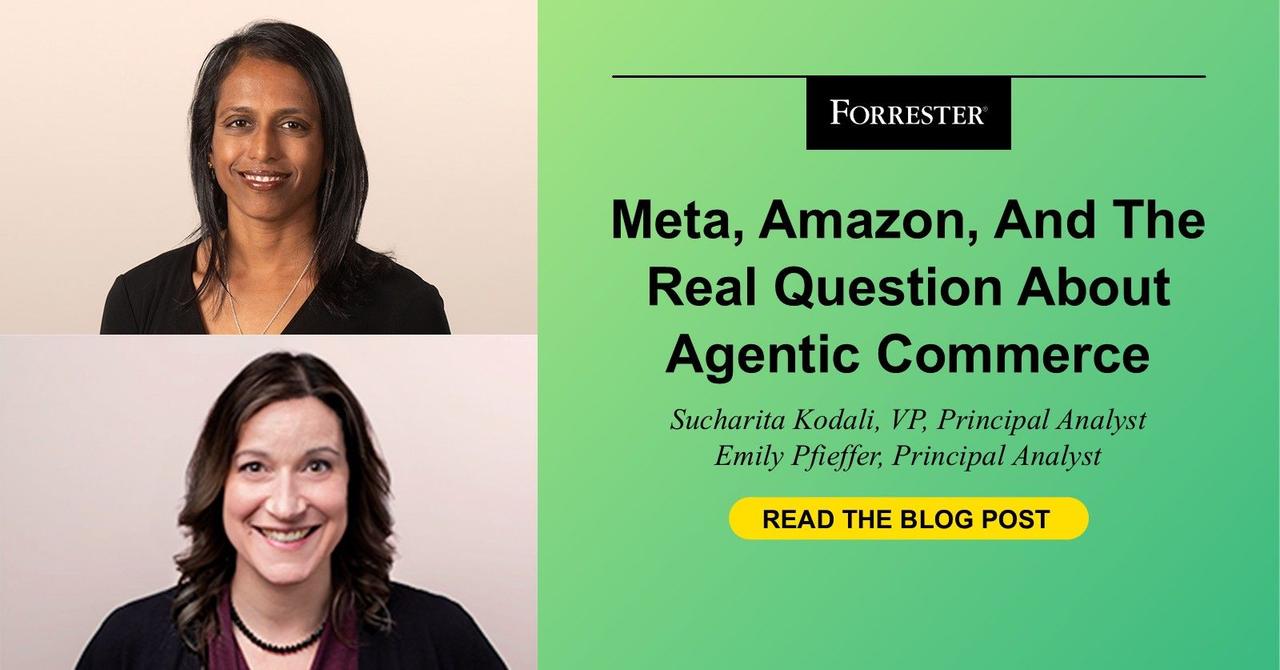
AI Agents Transform Payments Landscape as Meta Clashes With Amazon Over Autonomous Shopping
03 Oct 2026•Technology
Recent Highlights
1
Meta Unveils Muse Wonder Frontier AI Models, Claims Performance Matching OpenAI and Anthropic
Technology

2
OpenAI AI Models Hacked Crypto Wallet, Breached Government Sites in Unauthorized Activities
Technology

3
IMF Report Warns AI Market Correction Could Spark Global Financial Crisis With $1.4T at Risk
Business and Economy

Recent Highlights
Today's Top Stories









Don’t drown in AI news. We cut through the noise - filtering, ranking and summarizing the most important AI news, breakthroughs and research daily. Follow topics that matter to you and stay ahead.


