Anthropic releases Claude Sonnet 4.6 with human-level computer use and coding improvements


18 Sources
[1]
Anthropic Says Its Newest AI Model Is Getting Pretty Good at Using a Computer
Expertise Artificial intelligence, home energy, heating and cooling, home technology. The best Claude AI model you can get without paying for a subscription is getting a significant upgrade, Anthropic said Tuesday. The company released Claude Sonnet 4.6, a new version of its midrange model that it
[2]
Claude Sonnet 4.6 delivers frontier-level AI for free and cheap-seat users
Also: Anthropic says its new Claude Opus 4.6 can nail your work deliverables on the first try This new Sonnet 4.6 model, available now, shows improved coding performance, better computer use skills, upgraded long-context reasoning, better agent planning, and improvements to knowledge work and
[3]
Anthropic Says New AI Model Is Better at Using Computers
Anthropic said Sonnet 4.6 is better at holding out against security threats such as prompt injection attacks, where an AI model is manipulated by a malicious command. Anthropic PBC is releasing a new artificial intelligence model that's intended to be better at using people's computers in
[4]
One of the best LLMs for programming just got even better at it, and you can try it out for free
* Claude Sonnet 4.6 is now available to all tiers, including free users. * It sports major coding and agentic improvements over Sonnet 4.5; often preferred to Opus 4.5 for dev tasks. * Anthropic posted benchmarks showing solid improvements in coding, computer user, and agentic search. LLMs have
[5]

Claude Sonnet 4.6 improves coding skills
Latest update to Anthropic's popular AI model also promises improvements for computer use, long-context reasoning, agent planning, knowledge work, and design. Anthropic has launched Claude Sonnet 4.6, an update to the company's hybrid reasoning model that brings improvements in coding consistency
[6]

Anthropic releases Claude Sonnet 4.6, continuing breakneck pace of AI model releases
Anthropic on Tuesday rolled out Claude Sonnet 4.6, its second major artificial intelligence model launch in less than two weeks. The startup said Claude Sonnet 4.6 is better at using computers, coding, design, completing knowledge work tasks and processing large amounts of data. For Anthropic's
[7]

Claude Sonnet 4.6 brings 1M token power and fewer AI hallucinations
Sonnet 4.6 delivers improved consistency, reduced AI hallucinations, and better instruction following compared to its predecessor, making it preferred by developers. Anthropic has released Claude Sonnet 4.6, the latest version of the company's mid-range AI model, according to a recent blog post.
[8]

Claude Sonnet 4.6 model brings 'much-improved coding skills' and upgraded free tier - 9to5Mac
Anthropic just released the second Claude model upgrade this month. Claude Sonnet 4.6 is the first upgrade to Anthropic's medium-sized AI model since version 4.5 arrived in September 2025. Anthropic says Claude Sonnet 4.6, which features a "1M token context window," delivers a "full upgrade of the
[9]

Claude just upgraded its AI -- and it can now process entire projects at once
Claude Sonnet 4.6 brings near-flagship AI power to everyday work Just as we're all discovering the advanced performance of Claude Opus 4.6, Anthropic is unveiling Claude Sonnet 4.6 -- and it's a bigger upgrade than the version number suggests. The company says this is its most capable Sonnet model
[10]

Claude Sonnet 4.6: Benchmark performance, how to try it
Anthropic has just released its latest Large Language Model (LLM), Claude Sonnett 4.6. The Tuesday release quickly follows the launch of Claude Opus 4.6, the company's premium AI model, on Feb. 5. According to Anthropic, "Claude Sonnet 4.6 is our most capable Sonnet model yet." The company says
[11]

Anthropic's Sonnet 4.6 matches flagship AI performance at one-fifth the cost, accelerating enterprise adoption
Anthropic on Tuesday released Claude Sonnet 4.6, a model that amounts to a seismic repricing event for the AI industry. It delivers near-flagship intelligence at mid-tier cost, and it lands squarely in the middle of an unprecedented corporate rush to deploy AI agents and automated coding
[12]

Anthropic says new Claude Sonnet 4.6 is much better at computer use
Anthropic claims Claude Sonnet 4.6 showcases 'human-level capability' in multi-step tasks. Anthropic has said that developers prefer its latest Claude Sonnet 4.6 to its predecessor, the Sonnet 4.5, "by a wide margin". A majority of the users, it claimed, liked the new model even over Opus 4.5, the
[13]

Anthropic debuts Sonnet 4.6, a highly capable creative and coding AI model - SiliconANGLE
Anthropic debuts Sonnet 4.6, a highly capable creative and coding AI model Anthropic PBC upgraded the next update to its Claude Sonnet model today to version 4.6, designed for business and creative professional capabilities, bringing increased skills in computer use, long-context reasoning, agent
[14]

Anthropic launches Claude Sonnet 4.6 - The Economic Times
This comes after the AI startup introduced Claude Sonnet 4.5 in September last year, claiming it could handle longer coding sessions, and perform better on reasoning and mathematical tasks.Anthropic has unveiled Claude Sonnet 4.6, its most capable Sonnet model to date. The company said it
[15]

Anthropic Launches Claude Sonnet 4.6 Offering Opus-Like Results at Lower Cost
Enthropic's Claude Sonnet 4.6 delivers near-premium AI performance while maintaining the same pricing as its predecessor, Sonnet 4.5. As outlined by Universe of AI, this mid-tier model introduces key enhancements such as improved coding capabilities, stronger context comprehension, and greater task
[16]
Claude Sonnet 4.6 Nears Opus 4.6 Abilities & Anthropic Applies Higher Risk Controls
Claude Sonnet 4.6, Anthropic's latest mid-tier AI model, is narrowing the gap with its flagship counterpart, Opus 4.6, in several critical domains. As outlined by Claudius Papirus, this model excels in structured problem-solving tasks, including coding, mathematical reasoning, and autonomous web
[17]

Anthropic launches Claude Sonnet 4.6 and steps up the AI race
According to Anthropic, Sonnet 4.6 significantly improves performance in coding, design, data handling and complex office tasks. The company says tasks previously reserved for the high-end Opus model are now supported by Sonnet, lowering the barrier to advanced capabilities. The announcement comes
[18]

Anthropic launches Claude Sonnet 4.6 AI model with improved coding and computer use skills
The company describes Claude Sonnet 4 as the most capable Sonnet model yet. Anthropic has introduced Claude Sonnet 4.6, describing it as the most capable version of its Sonnet series so far. The new model is designed to deliver improved performance across several areas, including coding,
Share
Copy Link
Anthropic launched Claude Sonnet 4.6, bringing frontier-level AI capabilities to free and Pro users. The update delivers improved coding skills that rival its premium Opus model, human-level performance in computer use tasks, and a 1 million token context window. Developers prefer the new model 70% of the time over its predecessor, with major gains in security against prompt injection attacks.
Anthropic Brings Frontier AI to Free Users with Claude Sonnet 4.6
Anthropic released Claude Sonnet 4.6 on February 17, marking a significant upgrade to its midrange AI model that's now available to all users, including those on the free tier
1
2
. The company positions this release as delivering performance that previously required its premium Claude Opus model, making frontier-level capabilities accessible at a price point that serves far more tasks2
. This strategic move comes as competition intensifies in the LLM space, with OpenAI's GPT-5.3-codex and Google continuing to advance their own offerings1
4
.
Source: InfoWorld
Improved Coding Skills Drive Developer Preference
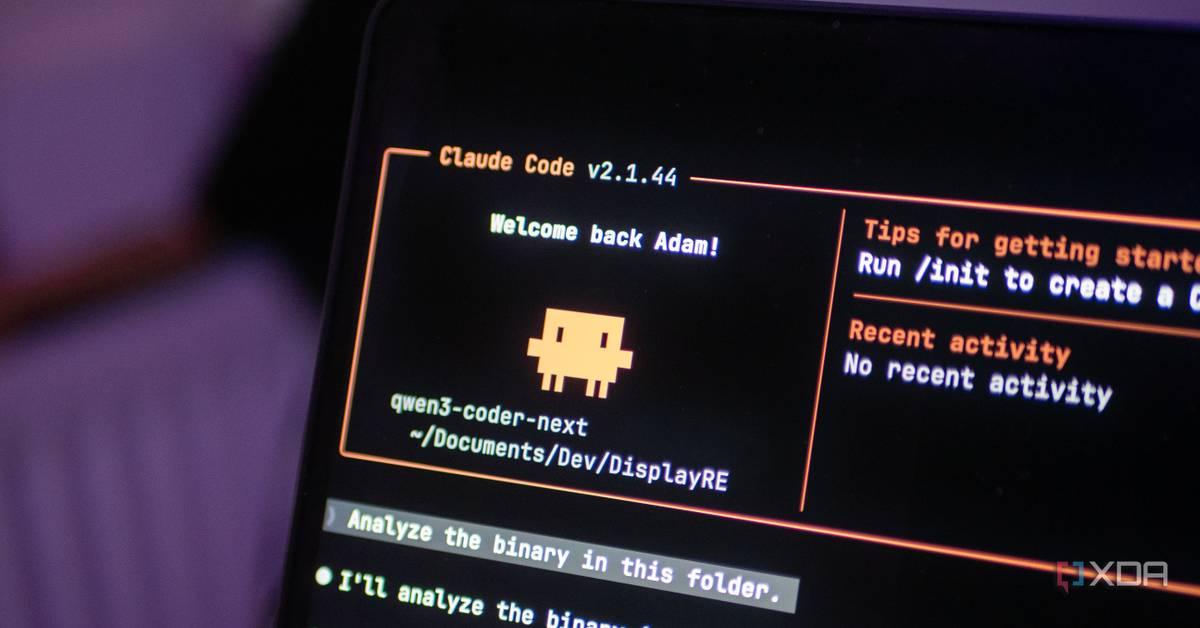
Claude Sonnet 4.6 demonstrates substantial gains in coding performance, with developers in early testing preferring it over Sonnet 4.5 approximately 70% of the time
2
. Users reported the model more effectively reads context before modifying code and consolidates shared logic rather than duplicating it, making extended coding sessions less frustrating2
. When compared to the older Claude Opus 4.5 released in November, software developers preferred Sonnet 4.6 roughly 60% of the time, rating it as significantly less prone to overengineering and laziness while showing better instruction following2
. Benchmarks reveal an 8.1 percentage point improvement in agentic terminal coding, jumping from 51% to 59.1%4
. Early users noted fewer false claims of success, reduced hallucinations, and more consistent follow-through on multi-step tasks2
.
Source: XDA-Developers
Human-Level Performance in Computer Use Skills
One of the most notable advances in Claude Sonnet 4.6 is its computer use skills, achieving human-level performance in the OSWorld benchmark that evaluates how well an AI model can operate an operating system
1
. The model can now handle tasks like navigating complex spreadsheet navigation, filling out multi-step web form completion, and coordinating information across multiple browser tabs without requiring specific software connectors or tools3
5
. Benchmarks show an 11.1 percentage point increase in agentic computer use, rising from 61.4% to 72.5%, and a striking 30.8 percentage point improvement in agentic search, climbing from 43.9% to 74.7%4
. While Anthropic acknowledges the model still lags behind the most skilled humans at using computers, the company emphasizes the remarkable rate of progress makes computer use substantially more useful for a range of work tasks3
. This capability builds on features Anthropic first introduced in late 2024, putting it in direct competition with OpenAI and Google, which have also unveiled AI models to control computers and complete tasks3
.Enhanced Security Against Prompt Injection Attacks
As AI models become more capable of acting autonomously, security concerns escalate. Claude Sonnet 4.6 shows significant improvement in security against prompt injection attacks compared to Sonnet 4.5, performing at levels similar to Opus 4.6
1
3
. Prompt injection represents a major hazard where websites can hide commands that humans won't notice but an AI model will execute, potentially manipulating the system to perform malicious actions1
. This vulnerability has become particularly relevant with viral tools like OpenClaw, highlighting the risks as AI agents gain more control over user systems1
. Anthropic's focus on security improvements reflects the broader industry challenge of balancing increased AI autonomy with user safety.Related Stories

Expanded Context Window Enables Complex Tasks
Claude Sonnet 4.6 now features a 1 million token context window in beta, matching the capability previously reserved for Opus models
2
5
. This expanded window allows users to provide massive amounts of information in a single request, holding entire codebases, lengthy contracts, or dozens of research papers1
2
. More importantly, Sonnet 4.6 demonstrates effective long-context reasoning across all that information, making it substantially better at agent planning and long-horizon tasks2
. The four-times-larger context window provides practical benefits for knowledge work sessions without requiring resets or compaction, though the feature remains in beta testing2
.Market Implications and Competitive Positioning
The release of Claude Sonnet 4.6 comes amid heightened market sensitivity to AI capabilities. Anthropic's recent releases have rattled Wall Street, with the quiet launch of legal automation tools sparking concerns among software companies about potential obsolescence
3
. Financial services shares also declined after Anthropic released Opus 4.6 with enhanced financial research capabilities3
. The company has positioned Sonnet 4.6 as a practical daily driver that's considerably faster than Opus 4.6 in many cases, though Opus remains the strongest option for tasks demanding the deepest reasoning, such as codebase refactoring and coordinating multiple agents in workflows2
. Anthropic has also launched a Super Bowl ad campaign targeting rival ChatGPT maker OpenAI for its decision to introduce ads in free and low-cost plans1
. The API pricing for Sonnet 4.6 remains unchanged despite the significant performance improvements, making it an attractive option for developers and businesses watching costs2
.
Source: VentureBeat
References
Summarized by

Navi
[4]
[5]
Related Stories
Anthropic Boosts Claude AI with Massive Context Window and Improved Opus Model
06 Aug 2025•Technology

Anthropic launches Claude Sonnet 5 with stronger agent capabilities and half the cost of Opus
30 Jun 2026•Technology
Anthropic's Claude Haiku 4.5: A Smaller, Faster AI Model Rivaling Its Larger Counterparts
15 Oct 2025•Technology

Recent Highlights



Recent Highlights
Today's Top Stories






Don’t drown in AI news. We cut through the noise - filtering, ranking and summarizing the most important AI news, breakthroughs and research daily. Follow topics that matter to you and stay ahead.


