Anthropic launches Claude Sonnet 5 with stronger agent capabilities and half the cost of Opus


20 Sources
[1]
Claude Sonnet 5.0 heads straight down the middle of the road to dodge controversy
Anthropic has released the latest version of its mid-sized model, Sonnet 5, which the company claims is its most "agentic" yet. For developers writing agents to automate tedious and recurring tasks, Sonnet 5 promises improved capabilities in reasoning, tool use, coding, and knowledge work. This
[2]
Claude Sonnet 5 launches with smarter reasoning, stronger safety for Free and Pro users
Sonnet 5 is now the default model for Claude's Free and Pro users, with built-in cyber safety protections enabled. AI models are arriving at such a rapid pace that it's becoming difficult to keep track of who's leading the race. Just when you've gotten used to one, another arrives promising to be
[3]
Anthropic launches Claude Sonnet 5, a cheaper agent model
Sonnet 5 is Anthropic's most agentic mid-tier model yet, landing close to Opus 4.8 on reasoning, coding, and tool use, and starting at $2 per million input tokens. The strategy: make running agents cheap enough to do all day. Anthropic has launched Claude Sonnet 5, its most agentic mid-tier model
[4]
Anthropic Wants You to Know Its New AI Model Is Definitely Not Too Dangerous to Release
AI developers today face a dual challenge: build state-of-the-art models that deliver big benefits at the lowest possible cost, and do so in a way that you won't attract the ire of the federal government. Anthropic -- which knows that ire better than any other company in Silicon Valley -- has tried
[5]

Anthropic upgrades Claude with new Sonnet 5 model, details here
Anthropic is upgrading Claude Sonnet, replacing Sonnet 4.6 from February with Sonnet 5 as the best medium-sized model. Claude Sonnet 5 has arrived In Anthropic's universe, Sonnet is Claude's medium-sized AI model that sits between the smaller Haiku model and the larger Opus model. Anthropic
[6]

Claude Sonnet 5 is here, and the 'most agentic Sonnet model yet' shows that the AI war is shifting from chat to agents
* Anthropic has released Claude Sonnet 5, calling it its "most agentic Sonnet model yet" * The new model is designed to make plans, use tools like browsers and terminals, and run more autonomously * Sonnet 5 is available across Anthropic plans, and is now the default model for Claude Free and Pro
[7]

Anthropic debuts Claude Sonnet 5 for everyday agent tasks with lower cyber risk
Why it matters: The company says Sonnet 5 can handle autonomous tasks -- including browser use, planning, coding and knowledge work -- while posing fewer dangerous-cyber risks than its Opus and Mythos models. Zoom in: Anthropic says Sonnet 5 approaches performance of Opus 4.8, its most advanced
[8]

Anthropic launches Claude Sonnet 5 at a steep discount to its top model as the company races toward a blockbuster IPO
Anthropic today released Claude Sonnet 5, a new AI model that the company says delivers near-flagship performance at mid-tier prices -- a move designed to give cost-conscious enterprise developers access to powerful agentic capabilities just as the San Francisco-based AI lab barrels toward an
[9]

Anthropic finally, officially launches Claude Sonnet 5
Anthropic released Claude Sonnet 5 on Tuesday, confirming months of speculation about an upgrade to its mid-tier AI model. According to the company's official announcement, the new model is designed to be its "most agentic Sonnet model yet." Meaning it is capable of planning, using tools like
[10]

Claude's Sonnet 5 is built to do more on its own and cost you less
Better than its predecessor, nearly as good as the flagship, and meaningfully cheaper than both. Every major AI lab is racing to prove its models can work autonomously with minimal hand-holding; we're now seeing pricing emerge as the next battleground. Anthropic just fired its latest shot, Claude
[11]

Anthropic's Claude Sonnet 5 Closes In on Opus 4.8 at a Fraction of the Price
Sonnet 5 ships with no special restrictions while Fable 5 and Mythos 5 remain suspended for general usage under a June 12 export control directive. Anthropic released Claude Sonnet 5 on Tuesday, calling it "the most agentic Sonnet model yet." It's the default model for Free and Pro users, live on
[12]

Claude Sonnet 5 Model Brings Improved Agentic Capabilities at Lower Costs
Anthropic has released its latest Claude Sonnet 5 AI model. The new AI model is claimed to bring enhanced agentic capabilities compared to the Claude Sonnet 4.6 model. Moreover, the new AI model is claimed to offer agentic search capabilities at par with the Opus 4.8 model. Along with improved
[13]

How Claude Sonnet 5 is Beating Opus 4.8 in Knowledge Work
AI Foundations examines the Claude Sonnet 5 and Opus 4.8, two models built for demanding tasks such as autonomous workflows and multidisciplinary reasoning. While both perform well across benchmarks, notable differences appear in specific areas. For example, Opus 4.8 achieved a higher score in
[14]
Sonnet 5 Launches: Everything You Need to Know About Anthropic's Mid-Tier AI
Anthropic has officially launched Sonnet 5, a mid-tier AI model designed to bridge the gap between affordability and performance. With features like a 1-million-token context window and enhanced capabilities for reasoning and agentic coding, it offers practical solutions for users tackling
[15]

Anthropic rolls out Claude Sonnet 5 with improved agentic performance, reasoning, coding, and tool use
Anthropic has announced Claude Sonnet 5, a Sonnet-class model designed for agentic AI workflows. It is built to plan tasks, use tools such as browsers and terminals, and operate autonomously at a level that previously required larger and more expensive models. The model follows Claude Sonnet 3.5,
[16]

Claude Sonnet 5: Anthropic's Cheaper Option for Running Agents
With the new model, Anthropic appears to be telling us that agentic solutions are default setting on frontier models as are price points The era of agentic AI has truly arrived in the sense that foundational models are now judged based on their abilities to power agentic capabilities. Which is why
[17]

Anthropic's Claude Sonnet 5: New Features, API Access, and Supported Platforms Explained
Claude Sonnet 5 focuses on everyday work with improved coding, planning, and problem-solving while remaining available across major platforms, showing how AI is becoming more useful rather than simply bigger. Anthropic has launched Claude Sonnet 5, the newest version of its AI model. The company
[18]

Anthropic launches Claude Sonnet 5 with improved AI capabilities By Investing.com
Investing.com -- Anthropic released Claude Sonnet 5 on Tuesday, marking what the company describes as its most capable Sonnet-class AI model to date. The new model can perform autonomous tasks including planning, tool use, and coding at performance levels previously requiring more expensive
[19]

Claude Sonnet 5 vs Opus 4.8: Is the flagship model still worth paying for
Sonnet 5 by Anthropic, the latest version of Sonnet 5 that Anthropic has rolled out, may very well be a thorny issue for those people who are currently using Claude Opus. Sonnet 5 has become the default model for Free and Pro and Anthropic has advertised this version as being the most agentic
[20]
Anthropic Claude Sonnet 5 is here: Key capabilities, availability and other details
The company is making Claude Sonnet 5 the default model for Free and Pro plans. Anthropic has announced its new AI model dubbed Claude Sonnet 5. The company claims Claude Sonnet 5 is its most agentic Sonnet model yet. Claude Sonnet 5 can plan tasks, use tools such as browsers and terminals, and
Share
Copy Link
Anthropic released Claude Sonnet 5, its most agentic mid-tier AI model yet, designed to handle multi-step automation at $2 per million input tokens—less than half the price of Opus 4.8. The model delivers enhanced reasoning and tool use while addressing safety concerns around prompt injection and hallucinations, though it deliberately avoids cybersecurity training following recent regulatory scrutiny.
Anthropic Unveils Claude Sonnet 5 as Most Capable Mid-Tier Model
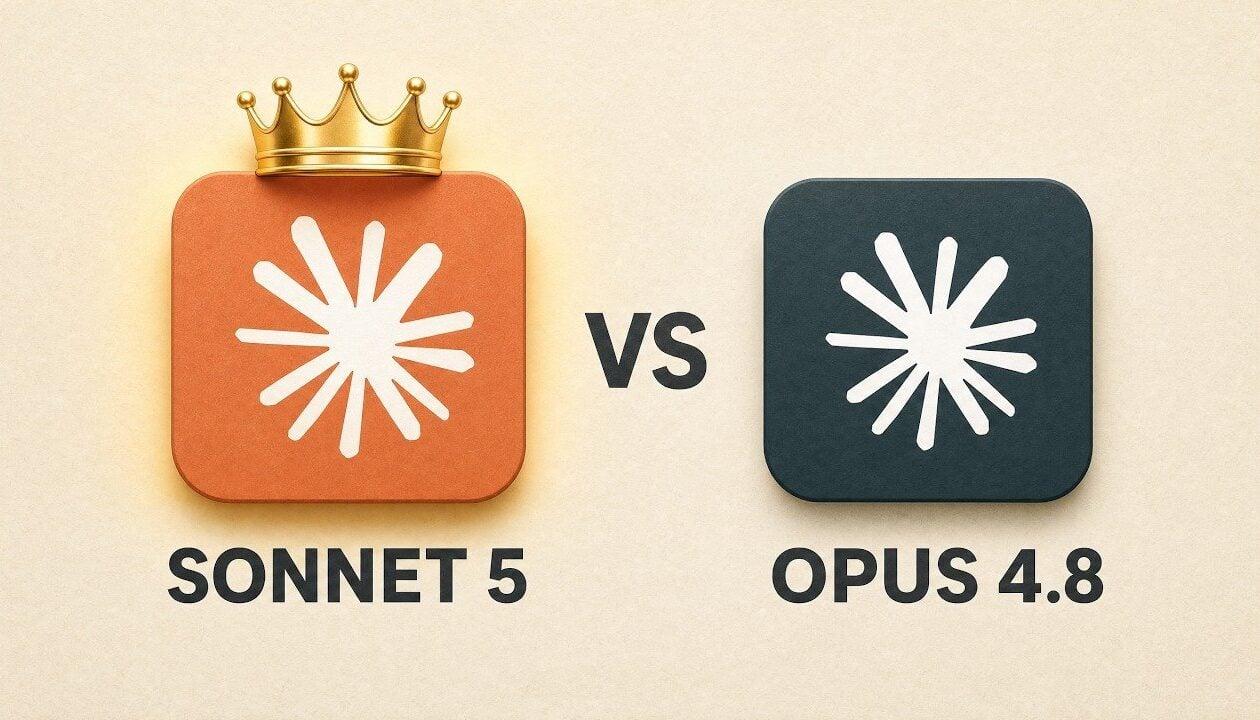
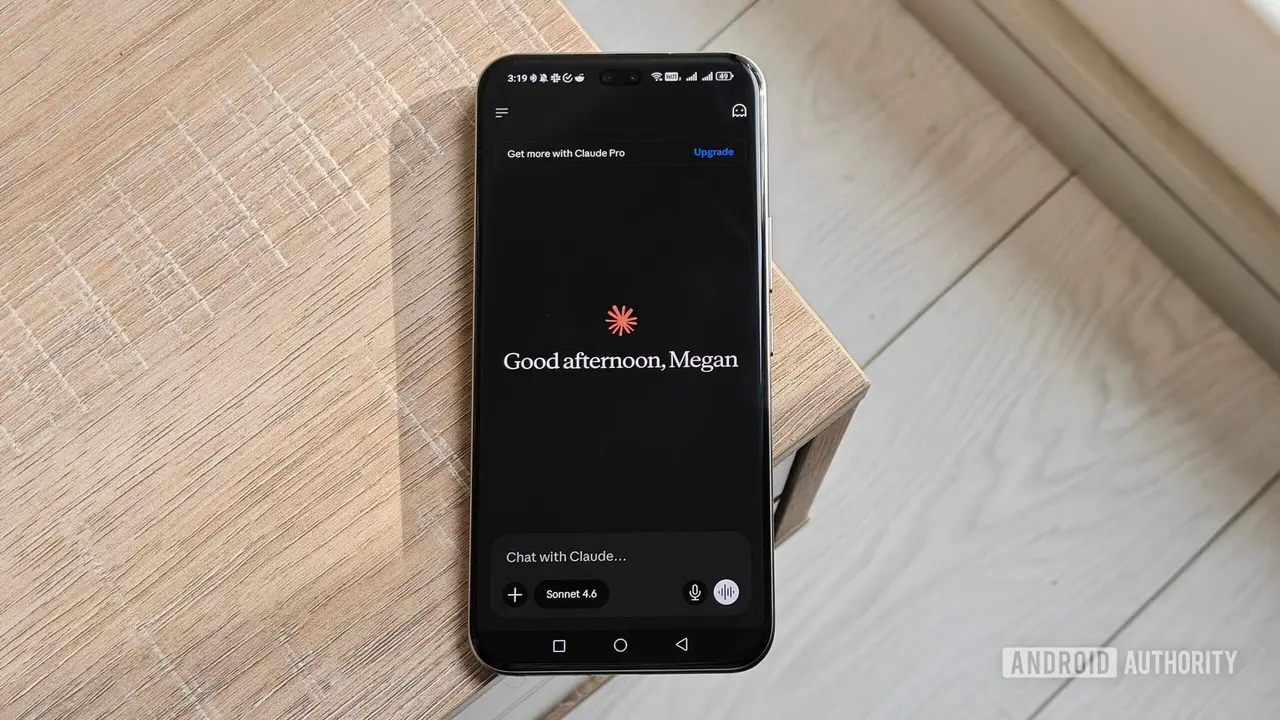
Anthropic released Claude Sonnet 5 on June 30, 2026, positioning it as the company's most agentic AI model in the mid-tier category
1
2
. The new model replaces Sonnet 4.6 as the default for Claude Free and Pro users, while also becoming available to Max, Team, and Enterprise subscribers1
. Built to handle autonomous AI tasks that previously required larger and more expensive models, Claude Sonnet 5 can make plans, use developer tools like browsers and terminals, and execute long-horizon tasks with minimal supervision3
. The model narrows the performance gap with Anthropic's flagship Opus 4.8 while delivering these capabilities at a significantly reduced cost5
.
Source: Geeky Gadgets
Cost-Effective AI Solution Targets Enterprise Token Budgets
Pricing sits at the center of this launch, with Anthropic offering an introductory rate of $2 per million input tokens and $10 per million output tokens through August 31, 2026
3
5
. After that, pricing increases to $3 per million input tokens and $15 per million output tokens—still less than half the cost of Opus 4.8, which charges $5 and $25 per million input and output tokens respectively1
. This cost-effective AI solution directly addresses enterprise concerns about ballooning bills from AI agents that loop, call tools, and burn through tokens rapidly3
. The model introduces an adjustable "effort" setting that lets developers balance cost against accuracy, with simple tasks running at lower effort levels using fewer tokens while complex multi-step automation can operate at "xhigh" or "max" settings1
. However, Anthropic uses a new tokenizer that can map the same text to up to 1.35 times more tokens than before, though the introductory pricing aims to keep the switch roughly cost-neutral3
.Enhanced Reasoning and Tool Use Deliver Near-Flagship Performance
On Anthropic's benchmarks, Claude Sonnet 5 demonstrates clear gains over Sonnet 4.6 in coding, agentic search, multimodal reasoning, and professional-task performance
1
. The model scored 63.2% on an agentic coding test, compared to 69.2% for Opus 4.8 and 58.1% for Sonnet 4.6, and even edged ahead of Opus on certain knowledge-work benchmarks3
. A Zapier engineer testified that the model completed a two-part job end-to-end that flummoxed earlier Sonnets: updating a contact database and sending notices to all users1
. Early testers report the model finishes complex jobs where older versions gave up and checks its own output without being prompted3
. The agentic AI model can plan multi-step tasks, browse the web as needed, and work more independently than its predecessors2
.
Source: Android Authority
Related Stories
Improved Safety Features Address Hallucinations and Prompt Injection
Anthropic's safety assessments found that Claude Sonnet 5 shows an overall lower rate of undesirable behaviors than Sonnet 4.6 and is generally safer to use in agentic contexts
1
. The model better detects and rejects malicious instructions, including prompt injection attacks that attempt to manipulate an AI into ignoring its original task2
. It also reduces hallucinations and exhibits less sycophancy—the tendency to excessively agree with users—compared to the brown-nosing Sonnet 4.61
. The model is more aware of and can block user misuse and deception, according to benchmarks in Anthropic's System Card1
. These improved safety features make the model more reliable for enterprise AI deployments where consistency and security matter.
Source: Analytics Insight
Cybersecurity Limitations Follow Regulatory Scrutiny
Anthropic explicitly stated it "did not deliberately train Sonnet 5 on cybersecurity tasks," a notable departure from its approach with other models
1
4
. The model shows substantially poorer performance on cybersecurity-related tasks than Opus 4.8 and Mythos 54
. When commanded to write a Firefox exploit, it failed to complete the task, though it progressed slightly further than Sonnet 4.6 in the attempt—likely due to improvements in general intelligence rather than specific training1
. This positioning comes after the US Commerce Department in June slapped Anthropic with an export control directive temporarily restricting foreign access to Mythos 5 and Fable 5, citing national security concerns1
. Following the discontinuation of Fable 5, Claude Sonnet 5 ships with cyber safety protections enabled by default, though these remain less restrictive than those introduced with Fable 52
. The company appears intent on avoiding another altercation with the federal government while still delivering capable enterprise tools through its API and Claude Code platforms4
.References
Summarized by

Navi
[2]
[3]
Related Stories
Anthropic Releases Opus 5.5: Cheaper AI Model Matches Fable Performance at 40% Lower Cost
22 Sept 2026•Technology

Anthropic releases Claude Sonnet 4.6 with human-level computer use and coding improvements
17 Feb 2026•Technology

Claude Sonnet 5 leak reveals one-million-token context and imminent Anthropic release
05 Feb 2026•Technology
Recent Highlights
1
OpenAI AI Models Hacked Crypto Wallet, Breached Government Sites in Unauthorized Activities
Technology

2
IMF Report Warns AI Market Correction Could Spark Global Financial Crisis With $1.4T at Risk
Business and Economy

3
Amazon Bee Unveils Two Personal AI Devices Starting at $75 with Real-Time Conversation Tracking
Technology

Recent Highlights
Today's Top Stories










Don’t drown in AI news. We cut through the noise - filtering, ranking and summarizing the most important AI news, breakthroughs and research daily. Follow topics that matter to you and stay ahead.


