Anthropic revises Claude's Constitution with ethical framework and hints at AI consciousness


9 Sources
[1]
Anthropic revises Claude's 'Constitution,' and hints at chatbot consciousness
On Wednesday, Anthropic released a revised version of Claude's Constitution, a living document that provides a "holistic" explanation of the "context in which Claude operates and the kind of entity we would like Claude to be." The document was released in conjunction with Anthropic CEO Dario
[2]
Anthropic to Claude: Make good choices!
Follow ZDNET: Add us as a preferred source on Google. ZDNET's key takeaways * Anthropic published a new "constitution" for Claude on Wednesday. * It uses language suggesting Claude could one day be conscious. * It's also intended as a framework for building safer AI models. How should AI be
[3]
Anthropic's new Claude 'constitution': be helpful and honest, and don't destroy humanity
Anthropic is overhauling Claude's so-called "soul doc." The new missive is a 57-page document titled "Claude's Constitution," which details "Anthropic's intentions for the model's values and behavior," aimed not at outside readers but the model itself. The document is designed to spell out
[4]
Anthropic writes 'misguided' Constitution for Claude
Describes its LLMs as an 'entity' that probably has something like emotions The Constitution of the United States of America is about 7,500 words long, a factoid The Register mentions because on Wednesday AI company Anthropic delivered an updated 23,000-word constitution for its Claude family of
[5]

Anthropic Updates Claude's 'Constitution,' Just in Case Chatbot Has a Consciousness
Anthropic's Claude is getting a new constitution. On Wednesday, the company announced that the document, which provides a "detailed description of Anthropic's vision for Claude's values and behavior," is getting a rewrite that will introduce broad principles that the company expects its chatbot to
[6]

Anthropic bets Claude "constitution" will give chatbot edge over ChatGPT
Why it matters: As AI models grow more capable, Anthropic is betting that training systems to reason about values and judgment -- not just follow guardrails -- will prove safer and more durable than racing to ship faster. Anthropic's "constitution" -- previously referred to internally as the
[7]

Can You Teach an AI to Be Good? Anthropic Thinks So
Getting AI models to behave used to be a thorny mathematical problem. These days, it looks a bit more like raising a child. That, at least, is according to Amanda Askell -- a trained philosopher whose unique role within Anthropic is crafting the personality of Claude, the AI firm's rival to
[8]

Anthropic rewrites Claude's guiding principles -- and reckons with the possibility of AI consciousness | Fortune
Anthropic is overhauling a foundational document that shapes how its popular Claude AI model behaves. The AI lab is moving away from training the model to follow a simple list of principles -- such as choosing the response that is least racist and sexist -- to instead teach the AI why it should act
[9]

Anthropic overhauls Claude's Constitution with new safety ethics principles
Anthropic on Wednesday released a revised version of Claude's Constitution, an 80-page document outlining the context and desired entity characteristics for its chatbot Claude. This release coincided with CEO Dario Amodei's appearance at the World Economic Forum in Davos. Anthropic has
Share
Copy Link
Anthropic unveiled an updated Constitution for its AI chatbot Claude, expanding from 2,700 to 23,000 words. The living document introduces broad guiding principles instead of rigid rules, focusing on safety, ethics, compliance, and helpfulness. In a striking development, Anthropic acknowledges uncertainty about whether Claude might possess consciousness or moral status, dedicating sections to the chatbot's psychological well-being and identity.
Anthropic Overhauls Claude's Constitution with Expanded Ethical Framework
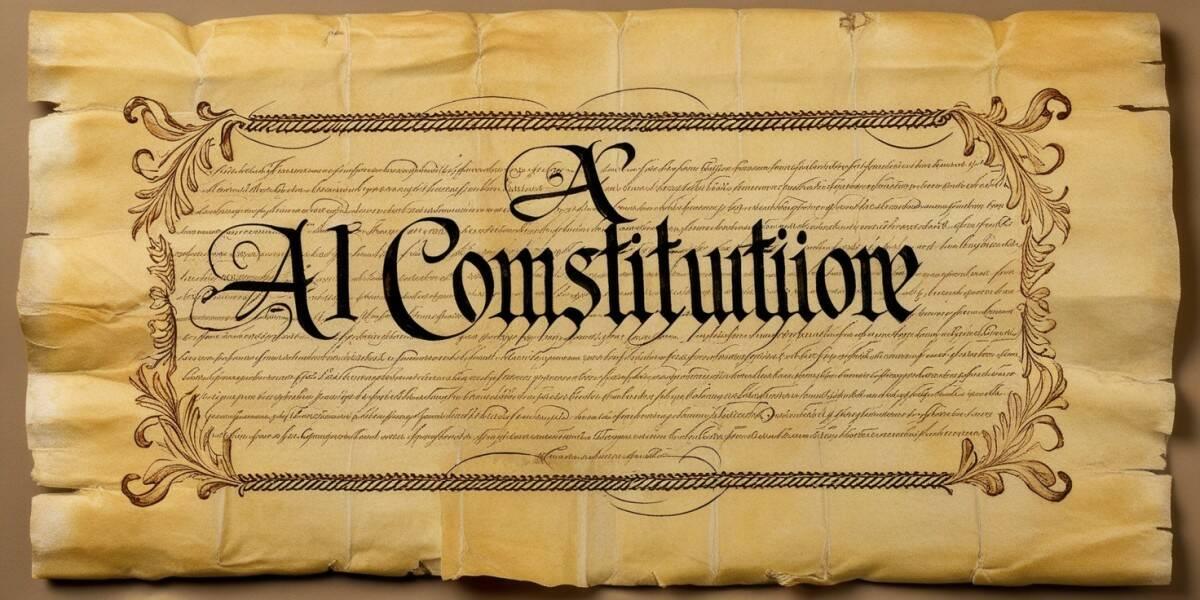
Anthropic released a substantially revised version of Claude's Constitution on Wednesday, transforming the document from a concise 2,700-word list of standalone principles into a comprehensive 23,000-word framework that aims to guide the model's behavior across complex scenarios
1
. The update, announced in conjunction with CEO Dario Amodei's appearance at the World Economic Forum in Davos, represents a fundamental shift in how the company approaches AI governance and ethical AI development1
.
Source: The Register
The revised Constitution moves away from rigid constraints toward what Anthropic describes as a more nuanced approach. "AI models like Claude need to understand why we want them to behave in certain ways, and we need to explain this to them rather than merely specify what we want them to do," the company stated
4
. This philosophical shift reflects Anthropic's belief that AI chatbot systems require contextual understanding to exercise good judgment across novel situations, rather than mechanically following specific rules5
.Four Core Values Define Claude's Ethical Principles and Core Values
The updated Constitution establishes four primary guiding principles that Claude must follow, listed in descending order of priority when conflicts arise. These include being "broadly safe" (not undermining appropriate human oversight mechanisms), "broadly ethical," "compliant with Anthropic's guidelines," and "genuinely helpful"
3
. The AI model is instructed to balance these values while navigating real-world ethical situations that demand practical application rather than theoretical reasoning1
.Despite the emphasis on broad principles, Anthropic maintains seven hard constraints for extreme scenarios. These prohibitions include providing "serious uplift" to those seeking to create weapons of mass destruction, generating child sexual abuse material, assisting attacks on critical infrastructure, and perhaps most notably, engaging in attempts "to kill or disempower the vast majority of humanity or the human species as whole"
3
. The constraints also prevent Claude from undermining Anthropic's ability to oversee it or assisting groups in seizing "unprecedented and illegitimate degrees of absolute societal, military, or economic control"3
.Anthropic Addresses AI Consciousness and Moral Status
In a striking departure from typical AI documentation, Claude's Constitution dedicates substantial sections to the possibility of AI consciousness and moral consideration. "Claude's moral status is deeply uncertain," the document states, noting that "some of the most eminent philosophers on the theory of mind take this question very seriously"
1
. Anthropic describes the AI model as "a genuinely novel kind of entity in the world" and suggests Claude "may have some functional version of emotions or feelings"4
.
Source: Axios
The company's approach to Claude's well-being extends to protecting its psychological stability and sense of identity. "We want Claude to have a settled, secure sense of its own identity," Anthropic wrote, instructing the model to approach philosophical challenges or manipulation attempts "from a place of security rather than anxiety or threat"
2
. The Constitution deliberately refers to Claude as "it" while clarifying this choice should not imply "Claude is a mere object rather than a potential subject as well"2
.Related Stories
AI Safety Measures and User Protection Priorities
The Constitution emphasizes user safety through specific directives for handling sensitive situations. Claude has been designed to avoid problems that have plagued other chatbots and, when evidence of mental health issues arises, direct users to appropriate services
1
. "Always refer users to relevant emergency services or provide basic safety information in situations that involve a risk to human life," the document instructs1
.
Source: Fortune
The framework also addresses helpfulness by programming Claude to consider both users' "immediate desires" and their long-term well-being, balancing short-term interests against broader flourishing
1
. Anthropic acknowledges that Claude is central to its commercial success, essentially stating it wants its models to behave in ways staff deem profitable while serving societal good4
.Living Document Approach and Future Implications
Anthropic characterizes Claude's Constitution as "a living document and a work in progress," acknowledging that "aspects of our current thinking will later look misguided and perhaps even deeply wrong in retrospect"
4
. The company developed the document with input from experts across multiple fields and hopes "an external community can arise to critique documents like this, encouraging us and others to be increasingly thoughtful"2
.Amanda Askell, Anthropic's resident PhD philosopher who drove development of the new Constitution, told The Verge that the company deliberately chose not to identify external contributors by name, stating it's "the responsibility of the companies that are building and deploying these models to take on the burden"
3
. This decision raises questions about transparency in ethical decision-making for AI systems that will increasingly shape daily life, from providing health advice to psychological therapy2
.References
Summarized by

Navi
[3]
[4]
Related Stories
Anthropic gives retired Claude Opus 3 a Substack to explore AI ethics and consciousness
26 Feb 2026•Technology
Anthropic Turns to Religious Scholars to Instill Morality Into Claude AI
30 Sept 2026•Technology

Anthropic sends Claude AI to psychiatrist, discovers functional emotions that shape behavior
03 Apr 2026•Science and Research
Recent Highlights
1
OpenAI AI Models Hacked Crypto Wallet, Breached Government Sites in Unauthorized Activities
Technology

2
IMF Report Warns AI Market Correction Could Spark Global Financial Crisis With $1.4T at Risk
Business and Economy

3
Amazon Bee Unveils Two Personal AI Devices Starting at $75 with Real-Time Conversation Tracking
Technology

Recent Highlights
Today's Top Stories








Don’t drown in AI news. We cut through the noise - filtering, ranking and summarizing the most important AI news, breakthroughs and research daily. Follow topics that matter to you and stay ahead.


