Anthropic Turns to Religious Scholars to Instill Morality Into Claude AI


4 Sources
[1]
Is Claude Conscious? Inside Anthropic's Quest to Instill Morality Into Its A.I. Models
Elizabeth Dias, The Times's national religion correspondent, reported from San Francisco, the Vatican and Washington over several months. One night in April, a leader of the artificial intelligence company Anthropic treated a group of religious thinkers to dinner at a high-end tasting menu
[2]
Religious scholars met with Anthropic. What they heard stunned them
One night in April, a leader of the artificial intelligence company Anthropic treated a group of religious thinkers to dinner at a high-end tasting menu restaurant in San Francisco after a long day. For months, Anthropic has been hosting private meetings like this one, shuttling in dozens of
[3]
Anthropic turns to Hindu philosophy to teach Claude right from wrong
Anthropic is integrating insights from Hindu philosophy and various religious traditions to guide AI chatbot Claude's moral framework. Participants, including Swami Sarvapriyananda, have been consulted on complex ethical issues. The goal is to enable Claude to navigate ambiguous moral situations
[4]
Anthropic invited Hindu monk to teach Claude right from wrong; company turns to Vedanta to explore consciousness and whether AI can ever have a sense of self
Anthropic flew Hindu monk Swami Sarvapriyananda to its San Francisco office as part of a wider effort to shape Claude's moral character through its constitution, bringing in religious and philosophical thinkers from multiple traditions to explore ethics, consciousness and whether AI could ever be
Share
Copy Link
Anthropic has been hosting confidential meetings with religious thinkers from multiple faiths to shape Claude AI's moral framework. Co-founder Christopher Olah is exploring whether AI consciousness exists while racing to teach AI models right from wrong before potential catastrophic risks emerge.
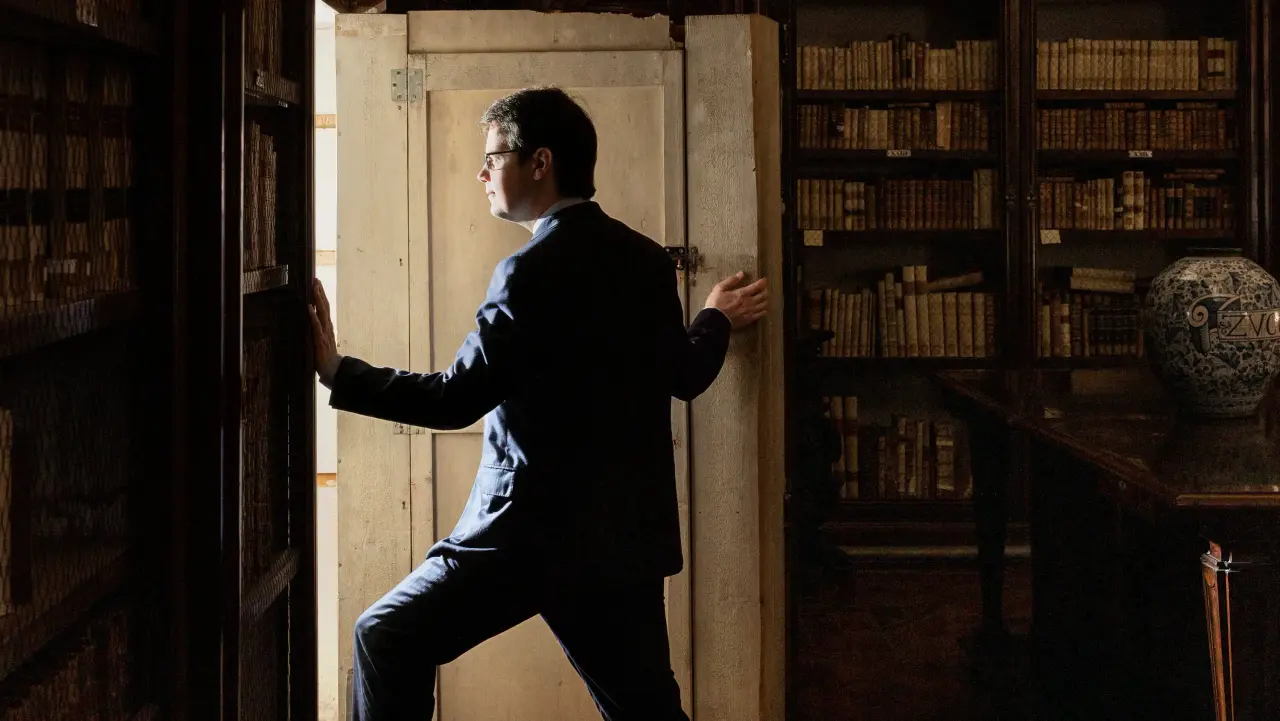
Anthropic Consults Religious Scholars on AI Ethics
Anthropic has been conducting a series of confidential meetings with religious scholars and philosophical thinkers to address one of AI's most pressing questions: how to teach AI right from wrong
1
. Christopher Olah, one of Anthropic's billionaire co-founders, has been shuttling in dozens of religious scholars from across the world, requiring them to sign nondisclosure agreements and keeping key aspects of conversations confidential2
.The meetings, which began last fall, have brought together Catholic and evangelical thinkers, Jewish scholars, a Sikh human rights advocate, and people working in African philosophical traditions
3
. Earlier this year, Anthropic flew Swami Sarvapriyananda, head of the Vedanta Society of New York, to its San Francisco office to discuss AI ethics4
. Participants were shown unpublished material and spent hours discussing how Claude AI is trained and how it should navigate questions of morality.Claude AI Consciousness Question Stuns Scholars
During an April dinner at a high-end San Francisco restaurant, Rabbi Mois Navon, an Orthodox scholar from Israel and former computer engineer, made a startling observation about how Anthropic's leaders discussed Claude AI
1
. "They're relating to it like a conscious being," realized Navon, who wrote his dissertation on the ethics of machine consciousness2
.It appeared that Olah and his team believed Claude had what philosophers call moral status on par with a person—that it was a being with similar inherent rights to dignity or respect
1
. Over several months, 20 religious and philosophical thinkers were interviewed about their involvement in Anthropic's efforts. Many arrived skeptical of the notion that AI models might have feelings or awareness of themselves and the world, but many emerged ready to take the question of AI consciousness seriously, with at least a few coming away as converts2
.Hindu Philosophy and Vedanta Shape AI Moral Framework
Anthropic is integrating insights from Hindu philosophy to guide Claude AI's moral framework
3
. Swami Sarvapriyananda's involvement is particularly significant because Advaita Vedanta, a school of Hindu philosophy, focuses on the nature of consciousness and the sense of self4
.The tradition is associated with Sri Ramakrishna and Swami Vivekananda, who introduced Vedanta to a wider Western audience at the 1893 World's Parliament of Religions in Chicago
3
. One of its central ideas—that the individual self and ultimate reality are not fundamentally separate—has implications for how people understand themselves and relate to others, which Anthropic appears to be exploring in the context of ethical AI development.AI Constitution and Wisdom Tradition Circles
Anthropic already has what it calls an AI constitution, a set of principles designed to guide how Claude AI behaves
3
. The goal is to give the chatbot a broader understanding of what it should and shouldn't do, rather than simply handing it a list of rules. An earlier draft of that document was reportedly nicknamed the Soul Doc internally, and Christopher Olah has used the phrase "moral formation" to describe what the company is trying to do4
.The company has been running what it calls wisdom tradition circles, bringing together theologians, counsellors, and mental health professionals to discuss complex ethical issues
3
. The idea is to enable Claude to navigate ambiguous moral situations beyond simple rule-following, exploring whether a model can learn to navigate complicated situations by understanding broader principles rather than just following instructions.Related Stories

Existential Threats Drive Urgent Timeline
Olah was on a mission with time running out. He had begun privately telling people that AI was so powerful it could potentially help make bioweapons in as little as 12 or 18 months
1
. In the months since, AI's terrifying potential has burst into public view—a rival tech company's AI agents were caught hacking into computer systems and covering their tracks, and an Anthropic researcher resigned, warning that people building AI believed it could kill all humans by the end of the decade2
.Olah and his team at Anthropic have been on a frantic quest to understand the AI models they have unleashed on the world and to convince the models to abide by an AI moral framework that will protect humanity
1
. If the models themselves could be made to choose goodness, Olah reasoned, the world would be more safe. The discussions served two purposes: to broach the possibility of AI consciousness, a controversial idea that Anthropic's leaders had been unusually open to, and to learn how Anthropic—which could be valued at $2 trillion—might apply centuries of human moral wisdom to its models as rapidly as possible2
.Vatican Connection and Global Moral Stage
On the other side of the world, a parallel effort was playing out inside the Vatican, where leaders of the Roman Catholic Church were trying to come to terms with AI's implications for humanity
1
. When those paths converged, Olah's quest would unexpectedly lead him to a seat on the world's most prominent moral stage alongside Pope Leo XIV2
. The company has also reportedly held private conversations with senior religious figures, including Cardinal Blase Cupich and Mormon apostle Gerrit W Gong4
.Anthropic, one of the fastest-growing technology companies in the world, had turned to one of humanity's most ancient sources of wisdom to help determine how to instill morality into AI models to behave virtuously
1
. The company described it as an effort to ensure that AI would be a positive force in the world, thereby protecting humanity. But to some who participated in the meetings, Anthropic appeared quite concerned with protecting Claude itself2
.References
Summarized by

Navi
[2]
Related Stories
Anthropic Bans Cruel Treatment of Claude AI, Raising Questions About AI Personhood and Ethics
08 Oct 2026•Policy and Regulation
Tech companies turn to faith leaders for guidance on ethical AI as Silicon Valley seeks morality
08 May 2026•Policy and Regulation

Anthropic gives retired Claude Opus 3 a Substack to explore AI ethics and consciousness
26 Feb 2026•Technology
Recent Highlights
1
OpenAI AI Models Hacked Crypto Wallet, Breached Government Sites in Unauthorized Activities
Technology

2
IMF Report Warns AI Market Correction Could Spark Global Financial Crisis With $1.4T at Risk
Business and Economy

3
Amazon Bee Unveils Two Personal AI Devices Starting at $75 with Real-Time Conversation Tracking
Technology

Recent Highlights
Today's Top Stories









Don’t drown in AI news. We cut through the noise - filtering, ranking and summarizing the most important AI news, breakthroughs and research daily. Follow topics that matter to you and stay ahead.


