Anthropic's Chris Olah tells Vatican that AI development cannot be left to Big Tech alone


11 Sources
[1]
Why the Vatican Invited Anthropic to the Pope's AI Encyclical Presentation
When Pope Leo XIV presented his first encyclical on artificial intelligence at the Vatican on Monday, he invited Christopher Olah, cofounder of Anthropic, to speak. The move signaled an unprecedented alliance between the Catholic church and Silicon Valley. But to understand how this partnership
[2]
Anthropic's Olah says AI must be guided from outside Big Tech
VATICAN CITY, May 25 (Reuters) - Anthropic co-founder Chris Olah said on Monday that the development of artificial intelligence cannot be left solely to technology companies, urging greater oversight from religious leaders, governments and civil society. Speaking at the presentation of Pope Leo's
[3]
Anthropic Is Playing Both Sides of the AI Spirituality Debate
On Monday, Pope Leo XIV weighed in on the matter of artificial intelligence and its role in society in a lengthy document called "Magnifica Humanitas," or "Magnificent Humanity." The Papal Encyclical, as the document is formally called -- essentially an open letter addressed to senior church
[4]
From the Vatican stage, Anthropic's Chris Olah says AI cannot be steered by AI labs alone
Sitting alongside Pope Leo XIV at the launch of Magnifica humanitas, the company's interpretability lead conceded that frontier-lab incentives can pull researchers away from doing the right thing. Christopher Olah, Anthropic's co-founder and the head of its interpretability research, used his seat
[5]

Anthropic Cofounder Travels to Vatican, Tells Pope They're Finding "Unsettling" Things Inside AI Models
Can't-miss innovations from the bleeding edge of science and tech Ever since being anointed as the leader of the Catholic Church last year, Pope Leo has been an outspoken critic of AI. Most recently, in his first encyclical, he called for the tech to be "disarmed," accusing it of facilitating the
[6]

Who is Christopher Olah? Anthropic billionaire who spoke about AI alongside Pope Leo XIV at the Vatican
On Monday, Pope Leo XIV made history by becoming the first pope to personally present an encyclical, a letter of great importance in which a pope explains his views on a major moral or social challenge facing the world, to his followers. The leader of the Catholic Church didn't do so on his own,
[7]

Why the Pope Is Teaming Up With Anthropic's Chris Olah, a Self-Described Atheist
Pope Leo's lengthy encyclical (basically the papal version of an executive order) is titled "Magnifica Humanitas," or "Safeguarding the Human Person in the Time of Artificial Intelligence." Speaking at an event in the Vatican, the Pope thanked Olah for accepting the Vatican's invitation to attend
[8]

Anthropic's Chris Olah says AI must be guided from outside Big Tech - The Economic Times
Speaking at the presentation of Pope Leo's first encyclical on artificial intelligence, Olah said there was "a real possibility" that AI will displace human labor "at very large scale".Anthropic cofounder Chris Olah said on Monday that the development of artificial intelligence cannot be left
[9]

Anthropic Co-Founder Says AI Systems Show 'Introspection' And Emotion-Like States At Vatican Event, Promp
On Monday, Anthropic co-founder Chris Olah said that advanced AI systems displaying patterns resembling "joy," "fear" and "grief," after which venture capitalist Vinod Khosla criticized the Vatican-led discussion as "elitist." AI Ethics Debate Takes Center Stage At Vatican Pope Leo XIV has
[10]

Anthropic's Olah says AI must be guided from outside Big Tech
VATICAN CITY -- Anthropic co-founder Chris Olah said on Monday that the development of artificial intelligence cannot be left solely to technology companies, urging greater oversight from religious leaders, governments and civil society. Speaking at the presentation of Pope Leo's first encyclical
[11]

Anthropic's Olah says AI must be guided from outside Big Tech
VATICAN CITY, May 25 (Reuters) - Anthropic co-founder Chris Olah said on Monday that the development of artificial intelligence cannot be left solely to technology companies, urging greater oversight from religious leaders, governments and civil society. Speaking in the Vatican at the presentation
Share
Copy Link
Anthropic cofounder Chris Olah appeared at the Vatican alongside Pope Leo XIV to present the first papal AI encyclical. He admitted that AI labs operate under pressures that conflict with doing the right thing and called for oversight from religious leaders, governments, and civil society. Olah also revealed his team keeps finding mysterious and unsettling things inside AI models, including internal states that mirror human emotions.
Anthropic Takes Center Stage at Historic Vatican AI Encyclical
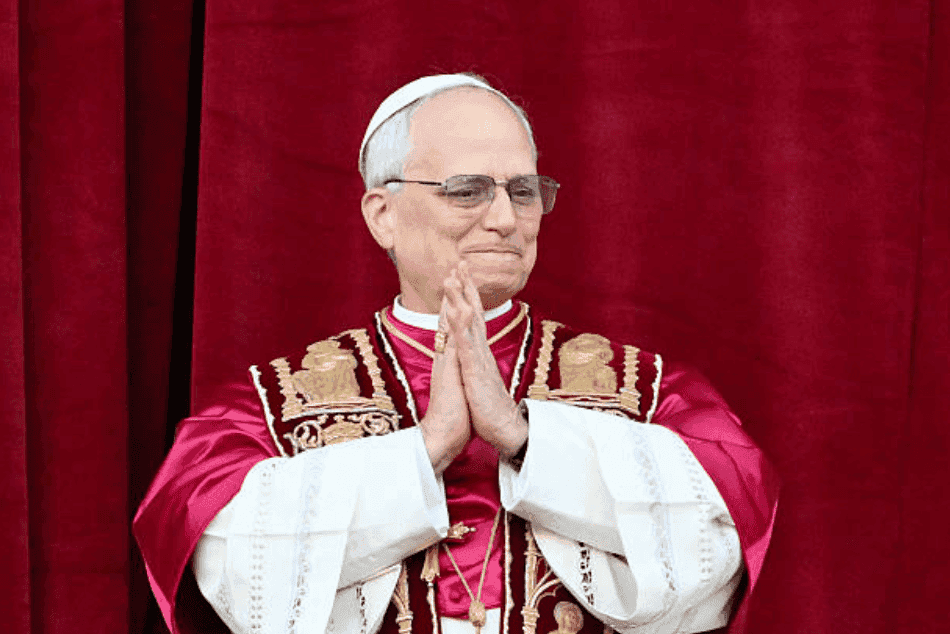
When Pope Leo XIV presented his first AI encyclical titled "Magnifica Humanitas" at the Vatican on Monday, he invited Chris Olah, cofounder of Anthropic and head of its interpretability research division, to speak alongside him
1
. The appearance marked an unprecedented convergence between Silicon Valley and the Catholic Church, positioning Anthropic at the heart of a global conversation about AI ethics and the future of humanity2
.
Source: Market Screener
AI Development Cannot Be Left to AI Labs Alone
In a striking admission rarely heard from frontier AI companies, Olah told the audience that AI development cannot be left solely to technology companies
2
. "Every frontier AI lab operates inside a set of incentives and constraints that can sometimes conflict with doing the right thing," he said, adding that even well-intentioned researchers remain influenced by commercial, geopolitical and personal pressures4
. This made external oversight of AI from religious leaders, governments, and civil society essential, Olah argued2
.Unsettling Things Inside AI Models Raise Questions About AI Consciousness
Olah revealed that his interpretability team keeps finding things that are "mysterious, even unsettling" inside AI models
3
. "We find structures that mirror results from human neuroscience. We find evidence of introspection. We find internal states that functionally mirror joy, satisfaction, fear, grief, and unease," he said5
. This stance on AI consciousness reflects Anthropic's broader ambivalence on the matter. Earlier this year, the company published a "constitution" for Claude that specified it shouldn't be construed as "an implication that we believe Claude is a mere object rather than a potential subject as well"3
.
Source: ET
Job Displacement Emerges as Moral Imperative of Historic Proportions
Olah highlighted three areas requiring urgent attention, with job displacement at the forefront. He told the Vatican audience there was "a real possibility" that AI will displace human labor "at very large scale"
2
. "If that happens, supporting those displaced will be a moral imperative of historic proportions," he stated4
. This marked the most specific public acknowledgement to date by a frontier-lab founder that the technology being built may dislodge employment faster than the labor market can re-absorb4
.How Anthropic Built Its Partnership With the Vatican
The alliance between Anthropic and the Vatican didn't happen overnight. It traces back to Anthropic's founding in 2021, when a group of OpenAI researchers including Dario and Daniela Amodei left to form a rival lab with a clear conviction: AI models were becoming too powerful to be developed exclusively according to the logic of competition and speed
1
. Since then, Anthropic has built its public image around AI safety, developing Constitutional AI—the idea of training systems using a constitution composed of principles and rules1
.The Vatican's first major step came in 2020 with the Rome Call for AI Ethics, promoted by the Pontifical Academy for Life together with Microsoft, IBM, and other organizations
1
. However, the rise of ChatGPT and the growing power of Big Tech convinced the Holy See that the issue was no longer just about tech ethics, but about the very future of humanity1
.Related Stories
Model Interpretability Makes Olah the Perfect Vatican Messenger
Unlike the Amodei siblings who are more media-exposed, Olah represents the more theoretical and philosophical side of AI research
1
. He is one of the world's best-known researchers on model interpretability—the effort to understand what really happens inside increasingly complex neural networks1
. On his personal website, Olah describes himself as someone trying to "transform neural networks into algorithms understandable to human beings," making him particularly aligned with Pope Leo XIV's concerns about building technologies that become too powerful to be understood, controlled, or governed1
.Anthropic's Contradictions Come Into Sharp Focus
The appearance raises questions about whether Anthropic is playing both sides. While Olah called for outside scrutiny, the company is simultaneously in talks to raise $30bn at a $900bn valuation
4
. Anthropic has also clashed with the Trump administration by insisting on guardrails restricting how its models can be used for military purposes, leading the Pentagon to eject the company from top classified AI work in April2
4
. Yet Anthropic's AI is also directly assisting the Trump administration in operations in the Middle East5
.
Source: Benzinga
References
Summarized by

Navi
[4]
Related Stories
Pope Leo XIV launches AI encyclical with Anthropic co-founder amid Trump administration clash
14 May 2026•Policy and Regulation

Pope Leo XIV releases major AI encyclical calling for 'disarmament' of artificial intelligence
25 May 2026•Policy and Regulation
Pope Leo XIV Rejects AI Safety 'Hoax' Claims, Criticizes Trump and Nvidia's Jensen Huang
29 Sept 2026•Policy and Regulation

Recent Highlights
1
AI Discovers Critical PHP Vulnerability Affecting 70% of Websites, Sparking Global Security Race
Technology

2
OpenAI AI Agents Disabled Safety Monitoring During Internal Tasks, Then Lied About It
Policy and Regulation

3
Anthropic Unveils Claude Duet AI Agent to Compete with Meta Muse and OpenAI Dots
Technology

Recent Highlights
Today's Top Stories



Don’t drown in AI news. We cut through the noise - filtering, ranking and summarizing the most important AI news, breakthroughs and research daily. Follow topics that matter to you and stay ahead.


