Pope Leo XIV launches AI encyclical with Anthropic co-founder amid Trump administration clash


10 Sources
[1]
Pope and co-founder of Anthropic to launch pontiff's AI encyclical on May 25
ROME (AP) -- Pope Leo XIV and the co-founder of artificial intelligence company Anthropic will launch the pontiff's first encyclical on May 25, a document on the care of human dignity in the era of AI, the Vatican said Monday. The presence of Anthropic's Christopher Olah at the Vatican is
[2]
The Pope Is Hooking Up With a Co-Founder of Anthropic for Collab on AI
Blessed be the hallucinating chatbots, for they will inherit the Earth (after we destroy it). According to Bloomberg, Pope Leo XIV is building on his already expressed interest in artificial intelligence by planning his first encyclicalâ€"a letter with the Pope's thoughtsâ€"on the topic. The launch
[3]
The Vatican has said a lot about artificial intelligence. A primer ahead of the pope's encyclical
VATICAN CITY (AP) -- The Vatican is gearing up for the release of Pope Leo XIV's first encyclical, a document expected to address artificial intelligence and insist on an ethics-based approach to the technology that prioritizes human dignity, social relationships and peace. Vatican officials said
[4]
Pope Leo to issue text on human dignity and AI with Anthropic co-founder
In the first major text of his papacy, Pope Leo will address the rapid rise of artificial intelligence. The Chicago-born pontiff will present the document, known as an encyclical, at the Vatican next week during an event attended by Christopher Olah, the co-founder of Anthropic - a US-based AI
[5]
Pope Leo sets Catholics on collision course with AI
Why it matters: The document, reportedly titled Magnifica Humanitas ("Magnificent Humanity"), would become the Catholic Church's clearest attempt yet to place human dignity, labor rights and ethics at the center of the AI race. * Catholic and European outlets are reporting that Leo is poised to
[6]

Pope Leo launches an AI commission days before he releases a papal letter alongside Anthropic cofounder Christopher Olah | Fortune
It's all-knowing, omnipresent, and somewhere between one to two billion people in the world subscribe to it. It's not Catholicism -- it's AI -- and its usage among the world's population is increasingly becoming a concern for some, especially as reports of how sycophantic it can be is leading to
[7]

The Vatican has said a lot about artificial intelligence. A primer ahead of the pope's encyclical
VATICAN CITY (AP) -- The Vatican is gearing up for the release of Pope Leo XIV's first encyclical, a document expected to address artificial intelligence and insist on an ethics-based approach to the technology that prioritizes human dignity, social relationships and peace. Vatican officials said
[8]

'AI has no soul': Pope Leo expected to address AI's ethical challenges
UCF graduates boo a commencement speaker after comments calling artificial intelligence the next industrial revolution at a May 8 ceremony. Is thinking basically computing? Are humans just biological versions of machines - only less efficient than their AI counterparts? The concept that people
[9]

Pope Leo to address rise of AI in first major text
VATICAN CITY - Pope Leo will address the rise of artificial intelligence in his first in-depth text outlining his concerns, the Vatican said on Monday, adding that it would be unveiled on May 25 by the pontiff himself. The document, known as an encyclical, is likely to decry the use of AI in
[10]

Pope Leo to issue first major work, addressing AI, on May 25
VATICAN CITY, May 18 (Reuters) - Pope Leo will release his first in-depth document, expected to address the rise of artificial intelligence and challenges to workers' rights, on May 25, the Vatican announced on Monday. The text, known as an encyclical, is also likely to decry the wars roiling the
Share
Copy Link
Pope Leo XIV will unveil his first encyclical, Magnifica Humanitas, on May 25 alongside Anthropic co-founder Christopher Olah. The document addresses human dignity in the age of AI and marks a potential flashpoint with the Trump administration, which has penalized Anthropic for refusing unrestricted military AI access. The Vatican is positioning itself as a moral authority in the AI race.
Pope Leo XIV Sets Stage for Major AI Ethics Intervention
Pope Leo XIV will launch his first encyclical on May 25, bringing artificial intelligence to the forefront of Catholic social teaching in an unprecedented public presentation at the Vatican
1
. The document, titled Magnifica Humanitas or "Magnificent Humanity," addresses the protection of human dignity in the age of AI and signals the Catholic Church's intention to serve as a moral counterweight to Silicon Valley's rapid technological advancement4
.
Source: USA Today
The Chicago-born pontiff signed the encyclical on May 15, exactly 135 years after his namesake Pope Leo XIII signed Rerum Novarum, the foundational text on workers' rights during the Industrial Revolution
3
. By invoking this historical parallel, Pope Leo XIV is explicitly framing the AI revolution as posing the same existential questions about labor rights, human dignity, and capitalism that confronted society over a century ago5
.Anthropic Co-Founder Joins Vatican's AI Ethics Push
In a significant departure from tradition, the Vatican will host an all-star public launch featuring Christopher Olah, the Anthropic co-founder, as a lay speaker alongside theologians Anna Rowlands and Léocadie Lushombo
1
. Olah's presence at the Vatican carries particular weight given Anthropic's current legal battle with the Trump administration, which in February ordered all U.S. agencies to stop using Anthropic's technology and imposed major penalties after the company refused to allow unrestricted military use of its AI systems1
.Anthropic, valued at $380 billion earlier this year, has positioned itself as the ethical alternative in the AI race, with its chatbot Claude competing against OpenAI and Elon Musk's xAI
1
. The company was founded in 2021 by former OpenAI researchers who disagreed with CEO Sam Altman about AI safety, promising a clearer focus on the safety of artificial general intelligence1
. Anthropic has already been cozying up to the Church, including tapping a priest to help craft Claude's Constitution2
.Vatican and AI: Building an Ethics-Based Approach
The encyclical on AI is expected to place the technology question firmly within the context of Catholic social teaching, which encompasses labor, justice, and peace
3
. Pope Leo XIV has made AI a priority of his young papacy, expressing particular concern about AI in warfare and calling for monitoring of how the technology is deployed1
.Andrew Chesnut, chair of Catholic studies at Virginia Commonwealth University, noted that Pope Leo XIV is treating AI less like a tech trend and more like a replay of the Industrial Revolution, with entry-level workers already "evaporating" as automation accelerates
5
. "This is going to be one of the fundamental pillars of his papacy," Chesnut told Axios5
.The Vatican has sought to add its voice to the global AI debate, offering ethical guidelines for applications ranging from warfare to education and healthcare
3
. The underlying call has been that technology must be used as a tool to complement, not replace, human intelligence. In 2020, the Vatican enlisted tech companies including Microsoft, IBM, and Cisco to sign the Rome Call for AI Ethics, establishing core principles for AI regulation including inclusiveness, accountability, impartiality, and privacy3
.Related Stories
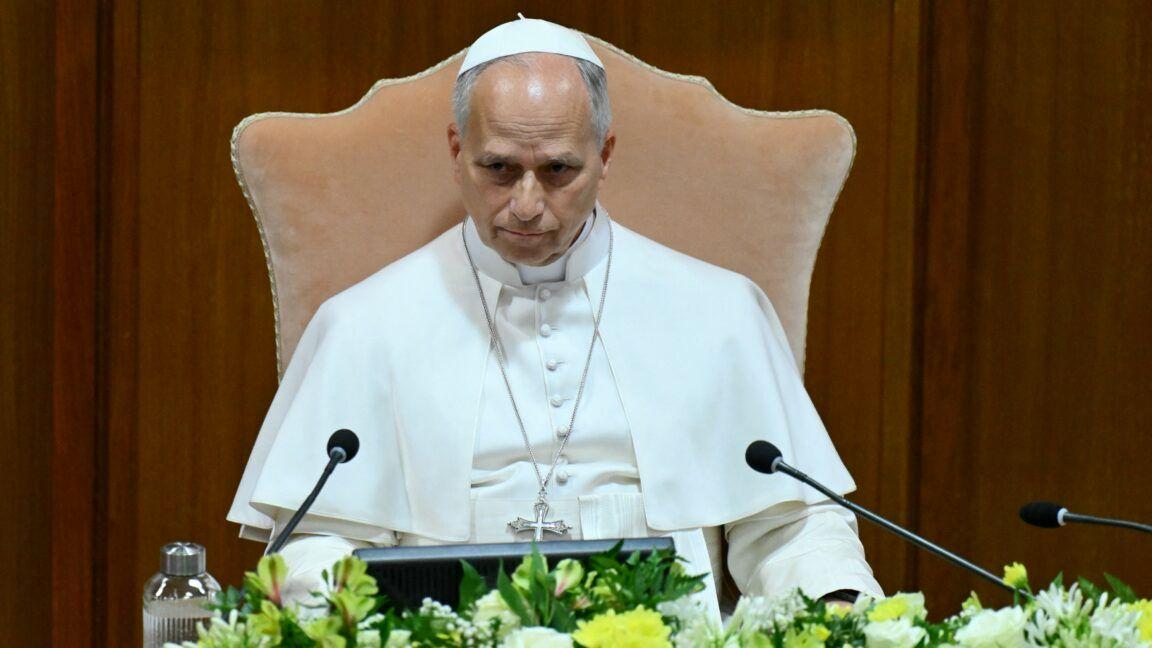
Collision Course with Trump Administration
The document's release is likely to become a new flashpoint between the American pontiff and the Trump administration, which has made rapid AI development a matter of vital national economic and security strategy
3
. The U.S. has strongly rejected international regulatory efforts to rein in AI, and domestically has removed bureaucratic roadblocks slowing its development3
.
Source: Axios
Christopher White, author of "Pope Leo XIV: Inside the Conclave and the Dawn of a New Papacy," suggested the encyclical will likely build on the Vatican's tradition of engaging with technology firms "not from a perspective of doomerism but one of caution that as technology advances, the human person should be kept at the centre of the discussion"
4
. He expects Pope Leo XIV will raise concerns about the dignity of work and insist on stringent regulation and a ban on lethal autonomous weapons4
.Why This Matters for 1.4 Billion Catholics and Beyond
Encyclicals represent one of the highest forms of teaching from a pope to the Catholic Church's 1.4 billion members, typically outlining priorities while highlighting major societal issues
4
. Meghan Sullivan, a philosophy professor at the University of Notre Dame who directs its ethics institute, said "the Catholic Church in many ways is going to be the adult in the room on some of these debates about how we are going to integrate AI into the rest of our society"3
.The Vatican has also warned of the environmental impact of the AI race, highlighting the "vast amounts of energy and water" needed for AI data centers and computational power
3
. Earlier this year, Pope Leo XIV issued a message titled "Preserving Human Voices and Faces" warning that AI systems "not only interfere with information ecosystems, but also encroach upon the deepest level of communication, that of human relationships"2
.
Source: AP
As technological advancements continue to reshape society, the Vatican is signaling it does not intend to sit out the AI era
5
. With the May 25 launch approaching, observers will be watching how Magnifica Humanitas attempts to balance technological progress with the preservation of social relationships, workers' rights, and fundamental human dignity in an age where machines increasingly perform tasks once reserved for people.References
Summarized by

Navi
[3]
Related Stories
Pope Leo XIV Takes Stand on AI: Calls for Ethical Framework and Regulation
19 Jun 2025•Policy and Regulation
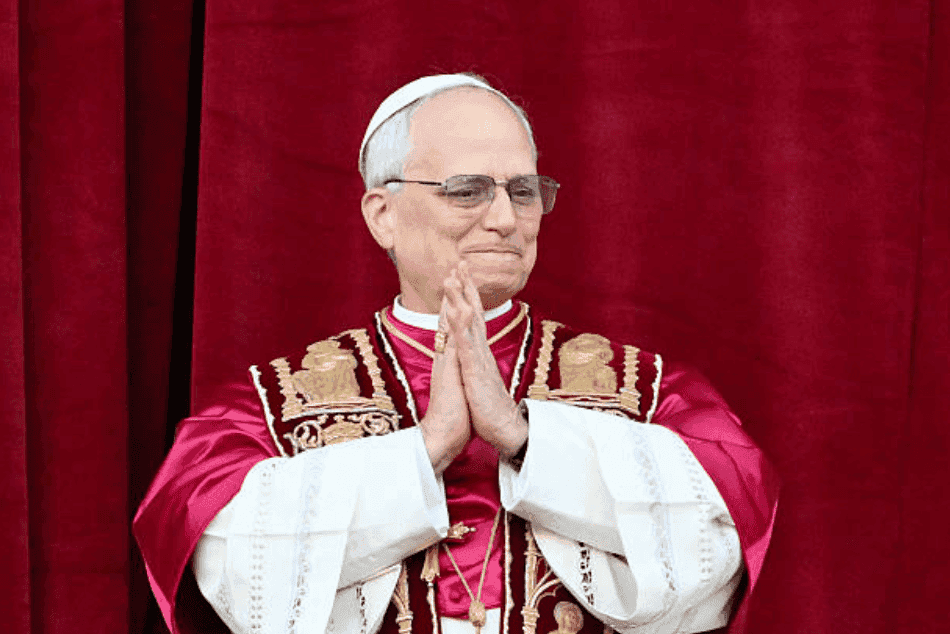
Pope Leo XIV Addresses AI as a Major Challenge, Echoing Historical Church Response to Industrial Revolution
10 May 2025•Policy and Regulation
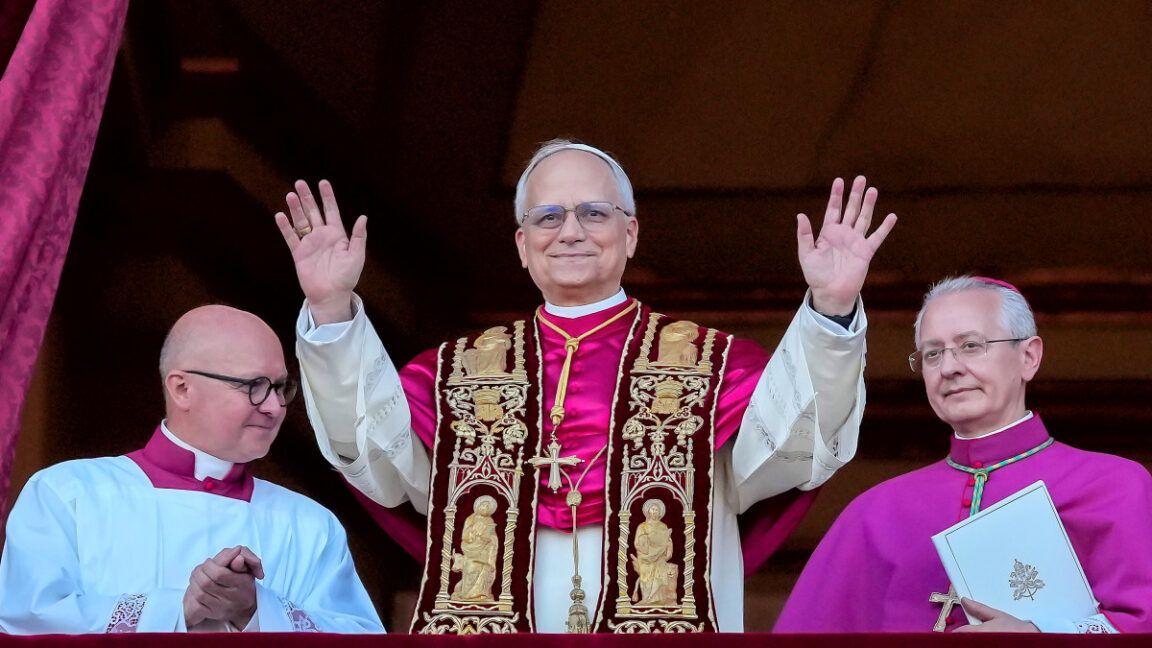
Pope Leo Warns AI Labs Risk Creating 'Paradise of Machines' Amid Growing Ethical Concerns
21 Sept 2026•Policy and Regulation
Recent Highlights
1
Microsoft and Nvidia Launch Surface Laptop Ultra: A $2,599 AI-Ready PC With RTX Spark Chip
Technology

2
Trump Consulted Grok AI Before Ordering Venezuela Invasion and Capture of Nicolás Maduro
Policy and Regulation

3
Scientists Build AI Model That Reconstructs Images From Brain Scans in Record Time
Science and Research

Recent Highlights
Today's Top Stories







Don’t drown in AI news. We cut through the noise - filtering, ranking and summarizing the most important AI news, breakthroughs and research daily. Follow topics that matter to you and stay ahead.


