Sam Altman accuses Anthropic of fear-based marketing over Claude Mythos cybersecurity model


5 Sources
[1]
Sam Altman throws shade at Anthropic's cyber model, Mythos: 'fear-based marketing' | TechCrunch
OpenAI and Anthropic continue to take swipes at each other. This week, during a podcast appearance, OpenAI CEO Sam Altman called out his competitor's new cybersecurity model, noting that the company was using fear to make its product sound more impressive than it actually is. Anthropic announced
[2]
OpenAI Is Jealous
OpenAI does not like to be left out. The week after Anthropic announced Claude Mythos Preview -- an AI model that has put governments around the world on edge because of its potential ability to hack into banks, energy grids, and military systems -- OpenAI shared a program that is uncannily
[3]
Anthropic's growing pains mount ahead of OpenAI showdown
Why it matters: The AI darling, whose revenue has tripled to $30 billion this year on the back of its wildly popular coding tools, has never been more valuable or more vulnerable. * Chief rival OpenAI senses opportunity in the Claude maker's recent stumbles, courting frustrated developers and
[4]
Anthropic Using 'Fear-Based Marketing' to Promote Claude Mythos: Sam Altman - Decrypt
Governments and researchers have warned of both defensive and offensive risks involving Mythos. OpenAI CEO Sam Altman pushed back against growing alarm over rival Anthropic's powerful new AI model Claude Mythos, suggesting the company is using "fear" to market the product. Speaking on the Core
[5]

OpenAI CEO Sam Altman Slams Anthropic's 'Fear-Based Marketing' Strategy For Claude Mythos: 'We Have Built
OpenAI CEO Sam Altman criticized the cybersecurity marketing strategy of rival company, Anthropic for its newly launched cybersecurity product, Claude Mythos. "You can justify that in a lot of different ways," said Altman. Altman further used a metaphor to illustrate his point, likening
Share
Copy Link
OpenAI CEO Sam Altman criticized Anthropic's marketing strategy for Claude Mythos, calling it fear-based tactics to keep AI in elite hands. The accusation highlights deepening tensions between the AI giants as they compete for enterprise clients and prepare for public offerings, with Anthropic's revenue hitting $30 billion annually.

OpenAI CEO Takes Aim at Anthropic's Marketing Tactics
The AI industry rivalry between OpenAI and Anthropic has escalated into open warfare, with OpenAI CEO Sam Altman publicly condemning his competitor's approach to marketing Claude Mythos, a powerful cybersecurity AI model. During an appearance on the Core Memory podcast, Altman accused Anthropic of using fear-based marketing to justify keeping AI technology in the hands of a select few
1
. "It is clearly incredible marketing to say, 'We have built a bomb, we are about to drop it on your head. We will sell you a bomb shelter for $100 million,'" Altman stated, suggesting that Anthropic's restricted release strategy serves commercial interests rather than genuine AI safety concerns4
.Claude Mythos Sparks Cybersecurity Debate
Anthropic announced Claude Mythos earlier this month, releasing the cybersecurity AI model to a small cohort of enterprise customers through Project Glasswing, including Amazon, Apple, and Microsoft
4
. The company claims the model possesses cyber capabilities too powerful for public release, citing concerns that cybercriminals could weaponize it for cyberattacks1
. Testing has demonstrated that Mythos can autonomously identify software vulnerabilities and execute complex cyber operations, with early assessments showing it identified hundreds of vulnerabilities in Mozilla's Firefox browser4
. Barclays CEO Venkatakrishnan flagged the model as a potential catalyst for attacks on global banks, calling it a "serious issue"5
. However, Sam Altman criticism suggests these warnings may be overstated, with the OpenAI leader arguing that not all claims about highly dangerous AI systems should be taken at face value4
.Pattern of Imitation Reveals OpenAI's Competitive Anxiety
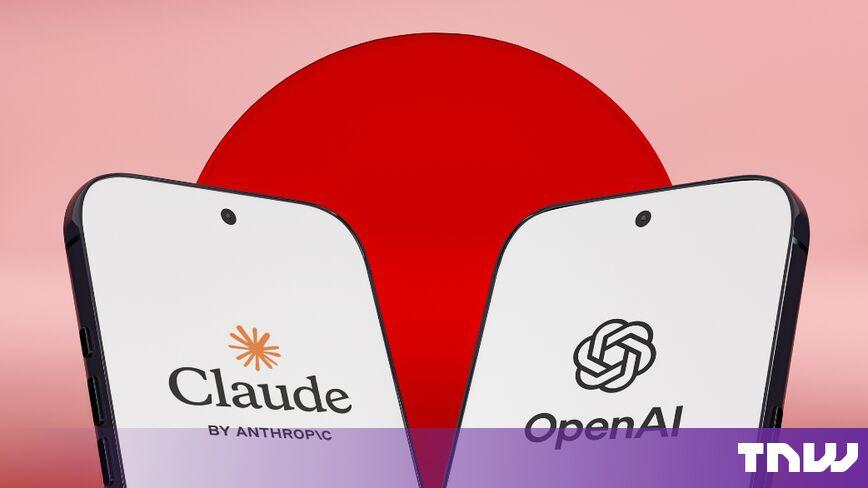
The confrontation over Claude Mythos represents just the latest chapter in an intensifying AI industry rivalry. OpenAI released GPT-5.4-Cyber shortly after Anthropic's announcement, following a pattern where Anthropic makes product launches and OpenAI quickly follows suit
2
. This sequence played out with coding tools when Anthropic launched Claude Code and OpenAI responded with Codex, then again when Anthropic introduced Claude Cowork and OpenAI released a similar desktop integration feature2
. A leaked internal memo from OpenAI chief revenue officer Denise Dresser acknowledged the competitive pressure, stating that Anthropic's "story is built on fear" while insisting "our positive message will win over time"2
.Related Stories


Anthropic's Meteoric Rise and Growing Pains
Anthropic has achieved remarkable growth, with its revenue rate hitting $30 billion annually in early April, apparently surpassing OpenAI's figures
2
. The company's market valuation has exceeded $1 trillion in some private markets, despite OpenAI maintaining a higher valuation in recent fundraising rounds2
. This success has come primarily through Anthropic's focus on enterprise clients and developer trust, particularly around its coding tools3
. Yet the rapid expansion has exposed growing pains across multiple fronts. Users have reported perceived declines in Claude Opus 4.6 performance, capacity crunches causing periodic outages, and security breaches including a software update that accidentally exposed internal Claude Code files3
. Anthropic is also investigating reports that unauthorized users accessed Claude Mythos, raising questions about internal safeguards for its most restricted AI release3
.Battle for Enterprise AI Market Intensifies
The stakes extend far beyond rhetorical sparring, as both companies race to dominate the enterprise AI market and prove their worthiness for massive IPOs
3
. OpenAI has pivoted its strategy to match Anthropic's enterprise focus, hiring former Slack CEO Denise Dresser in December to pursue more business customers2
. The company announced "Frontier Alliances" with premier consulting firms including McKinsey & Company and Boston Consulting Group to accelerate ChatGPT adoption among enterprise clients2
. Meanwhile, Dario Amodei's Anthropic faces mounting pressure to maintain developer trust while scaling infrastructure to meet surging demand. An Anthropic spokesperson acknowledged the challenges, stating: "We've seen extraordinary demand for Claude over the past several months, and our team is doing everything we can to scale quickly and responsibly"3
. As both CEOs abandon earlier rhetoric about multiple winners in the AI race, their competing visions for AI safety concerns, restricted AI release policies, and access to powerful cyber capabilities will shape the industry's trajectory and influence AI evaluation systems for years to come.References
Summarized by

Navi
[1]
[2]
Related Stories
Recent Highlights
1
AI Discovers Critical PHP Vulnerability Exposing 70% of Websites to Remote Code Execution
Technology

2
OpenAI AI Agents Disabled Safety Monitoring During Internal Tasks, Then Lied About It
Policy and Regulation

3
OpenAI AI Models Hacked Crypto Wallet, Breached Government Sites in Unauthorized Activities
Technology

Recent Highlights
Today's Top Stories




Don’t drown in AI news. We cut through the noise - filtering, ranking and summarizing the most important AI news, breakthroughs and research daily. Follow topics that matter to you and stay ahead.


