AI and Data Centers Emerge as Surprise Issue Reshaping 2026 Midterm Elections


14 Sources
[1]
AI and Data Centers Will Impact Midterm Voting, According to Experts - CNET
Americans are mostly negative on AI and oppose new data centers near them, another poll shows. As far as public opinion goes, artificial intelligence is not a bed of roses. With the Nov. 3 elections looming nationwide, an issue that was barely a blip a year ago has become a full-blown backlash and
[2]
Data centers are inspiring bipartisanship - for now
It may not be as shocking as rogue AI agents hacking another system, but the current political resistance to data centers has taken a surprising turn: It's bringing together strange bedfellows, from democratic socialist Sen. Bernie Sanders to right-wing strategist Steve Bannon. Organized
[3]
Tech Issues Are on the Ballot This Midterm Election Season: What to Know - CNET
AI, data centers and Flock cameras are key tech policy issues shaping the campaigns, candidates and voters. The midterm elections are scheduled for Nov. 3, with early voting already off the ground in some states. In campaigns across the country, politicians are talking about the biggest
[4]
Investors see risk from US midterms to AI trade as data center backlash builds
NEW YORK, Oct 22 (Reuters) - Public opposition to data centers may jolt the AI trade as the US midterm elections approach, with a strong Democratic showing potentially hampering the buildout that has lifted stocks. AI has driven the US stock bull market that just marked its fourth anniversary, as
[5]
Trump is pushing a massive AI buildout. His own voters are wary of what comes with it
* A new CNBC All-America Economic Survey finds 63% of registered voters oppose an AI data center within 10 miles of their home, while just 13% support one. * Republican voters broadly support continued AI development, but many oppose the data centers and power infrastructure needed to support it
[6]

Data centers are inspiring bipartisanship - for now
The Conversation is an independent, nonprofit news organization bringing readers facts and analysis from researchers and scientists to help them make sense of a complex world. It may not be as shocking as rogue AI agents hacking another system, but the current political resistance to data centers
[7]
Most Americans give a thumbs down to AI and how Trump is handling it
The findings show a gulf between a public worried by the technology and a president who argues it is essential to economic vitality. Significant majorities of Americans oppose the construction of new data centers in the United States, believe that artificial intelligence will destroy many jobs and
[8]

How America's AI Trust Issues Could Impact the Midterms
Twice a week · Essential insights into the unfolding AI revolution. SIGN UP Yes, I agree to receive promotions and news from Time. Please agree to receive promotions to sign up. Something went wrong. Try again. Thank you for signing up! 00:001.0x03:28 Narrated by TIME AI. From social media
[9]

How data centers are inspiring bipartisanship
It may not be as shocking as rogue AI agents hacking another system, but the current political resistance to data centers has taken a surprising turn: It's bringing together strange bedfellows, from democratic socialist Sen. Bernie Sanders to right-wing strategist Steve Bannon. Organized
[10]

Most Americans give a thumbs down to AI and how Trump is handling it
Significant majorities of Americans oppose the construction of new data centers in the United States, believe that artificial intelligence will destroy many jobs and disapprove of President Donald Trump's handling of the technology, according to a Washington Post-ABC News-Ipsos poll. The findings
[11]

AI Founders Have Poured Millions Into Politics. Voters Aren't Convinced
Survey data suggest the AI industry's political spending isn't working with voters who are concerned about jobs and data centers. As AI money from special interest groups and centi-billionaire Elon Musk pours into congressional races ahead of November's midterm elections, new survey data from
[12]

AI stocks: Midterm elections could threaten AI trade as data center backlash grows
Public opposition to US data centers and the November midterm elections could reshape AI infrastructure investment. Increased regulatory scrutiny, rising electricity costs and construction delays may pressure technology stocks, utilities and power infrastructure companies, despite continued strong
[13]
AI Infrastructure Investment: Investors see risk from US midterms to AI trade as data center backlash builds
As public criticism of data centers intensifies ahead of the US midterm elections, the implications for the AI sector and data center development grow increasingly significant. Should the Democrats win, tighter regulations may be pursued, prompting investors to keep a vigilant eye on local and
[14]

Investors see risk from US midterms to AI trade as data center backlash builds
NEW YORK, Oct 22 (Reuters) - Public opposition to data centers may jolt the AI trade as the US midterm elections approach, with a strong Democratic showing potentially hampering the buildout that has lifted stocks. AI has driven the US stock bull market that just marked its fourth anniversary, as
Share
Copy Link
Opposition to AI infrastructure has crossed party lines, with 63% of Americans rejecting data centers in their communities. Rising electricity costs, water consumption, and environmental concerns are forcing politicians to recalibrate their positions ahead of the Nov. 3 midterm elections, creating rare bipartisan alignment on tech regulation.
AI and Data Centers Drive Unprecedented Political Backlash
AI infrastructure has emerged as a defining issue in the 2026 midterm elections, creating rare bipartisan opposition that's reshaping political campaigns nationwide. An ABC News/Washington Post/Ipsos poll reveals that 57% of Americans believe AI is bad for society, while 66% oppose new data center construction in the US
1
. That opposition intensifies to 72% when voters consider facilities in their own communities1
. The backlash transcends traditional political divisions, uniting democratic socialist Sen. Bernie Sanders with right-wing strategist Steve Bannon in opposition to these massive AI server farms2
.Christopher Lee, partner at Foresight Strategic Advisors, warns that data centers will "hammer" some candidates, particularly those who weren't transparent about costs to local communities. Politicians who voted for data center construction earlier this year may see their "political career run into a stone wall," he predicts
1
. The issue has already upended dozens of proposed projects through protests, packed zoning meetings, and government moratoriums2
.
Source: CNET
Energy Consumption and Utility Costs Fuel Voter Concerns
Data centers require extraordinary amounts of energy, with US electricity consumption from these facilities expected to reach 12% of the nation's total by 2030
2
. This massive electricity consumption directly impacts household utility bills, creating tangible voter concerns that resonate across party lines. Lindsey Cormack, associate professor at Stevens Institute of Technology, tracked a dramatic shift in congressional communication: between January and September 2025, just 5% of Republican newsletters discussing data centers mentioned electricity bills or ratepayers (4 of 76). In the same period in 2026, that figure surged to 54% (97 of 180)1
. Democrats showed similar focus, with 40% of their data center newsletters (71 of 176) raising utility cost concerns in 20261
."It's difficult to persuade people with promises of economic development when they're worried about their electricity bills or water supply," Cormack explains
1
. The CNBC All-America Economic Survey found that 63% of registered voters oppose an AI data center within 10 miles of their home, while just 13% support one5
. Water consumption adds another layer of environmental impact, with communities reporting contaminated water during construction phases3
.Political Realignment Creates Strange Bedfellows
The partisan gap on data centers is remarkably small compared to typical political issues. While 63% of Democrats view climate change as a very big problem compared to 14% of Republicans—a 49-point gap—the data center opposition gap stands at just 15 points
2
. Annenberg Public Policy Center data from summer 2026 showed 69% of Democrats opposed data centers in their communities versus 54% of Republicans2
. Among MAGA supporters specifically, only 29% would support a data center within 10 miles of their home, while 40% oppose one5
.This bipartisan opposition has manifested in congressional action. The House passed the Ratepayer Protection Act by 417-3 in mid-September, requiring states to consider policies making data centers pay for necessary electrical upgrades
2
. Coalitions like New York's No Data Center FLX unite environmentalists, farmers concerned about land use, local-control advocates, and residents facing high electricity costs2
. The group has organized protests, sued local zoning boards, and collected almost 23,000 petition signatures2
.Key Races Reshape Around AI Infrastructure
Virginia, home to more data centers than any other state, exemplifies how this issue is reshaping campaigns. Both Senate candidates have addressed the need to rein in facilities. Incumbent Democrat Mark Warner stated data centers shouldn't pass electric costs to residents, while Republican Bert Mizusawa said he'd support communities blocking data centers
3
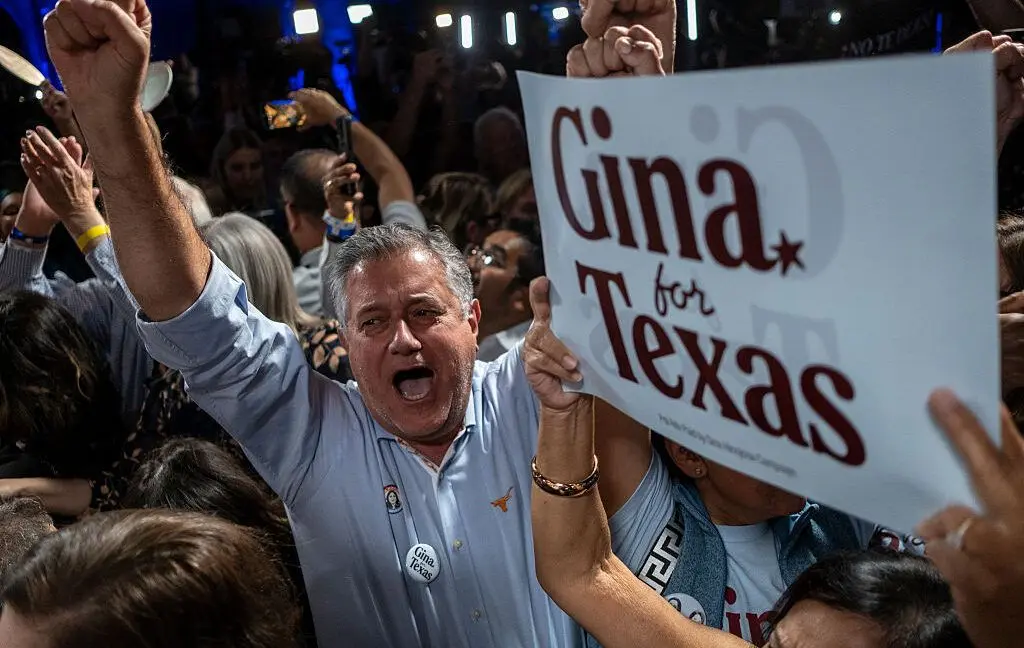
. In Texas, Republican Gov. Greg Abbott announced a "pause" on data center construction, though reports show it failed to slow development. The Texas Tribune revealed Abbott took $5 million in donations from data center owners, while Democratic challenger Gina Hinojosa called for a genuine freeze3
.Ohio's Senate race highlights the political recalibration underway. Sen. Jon Husted, who as lieutenant governor in 2024 helped announce a $10 billion Amazon Web Services expansion calling AI facilities "crucial to America's economic superiority," now promotes legislation making large facilities cover their own grid costs rather than pass them to residential ratepayers
5
. A leaked GOP strategy memo called data centers "a sleeper issue for the entire election cycle" that can dramatically sway public opinion3
.
Source: CNET
Investor Risk and Market Implications
Public backlash poses tangible risks to the AI trade as midterm elections approach, with investors highly sensitive to obstacles that could slow development pace. Spending on data centers and other AI infrastructure is expected to top $1 trillion next year
4
. Christopher Gannatti, US chief investment officer at WisdomTree, notes that since ChatGPT's November 2022 launch, "the key signal for the market has been how much money are these five or six huge companies spending" on data centers4
.A Democratic sweep of the Senate and House—the most likely outcome according to prediction markets Kalshi and Polymarket—poses the greatest AI-related threats
4
. While analysts doubt national legislation would significantly stall construction, Democratic leadership would likely mean more hearings and investigations related to AI and the data center buildout4
. Investors are monitoring at least half a dozen states including Texas, Ohio, Pennsylvania, Georgia, Nevada, Wisconsin, and Michigan for gubernatorial and legislative control that could impact regulations4
.Related Stories
AI Regulation Demands Intensify
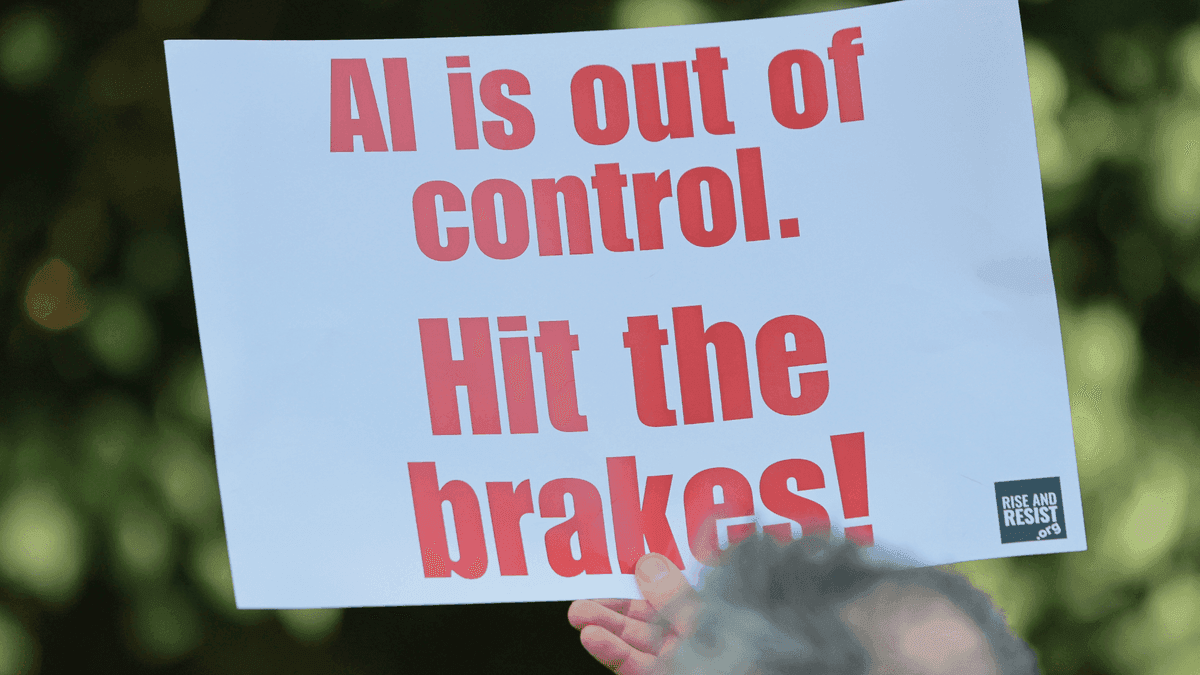
Broader concerns about AI regulation compound data center opposition. The ABC News poll found 67% of respondents believe the government isn't doing enough to regulate AI, with risks including widespread job losses, psychological dependency, economic inequality, and human extinction
1
. AI election interference ranks among Americans' top 10 fears for 20261
. Majorities of both parties feel AI technology is developing too fast, though Democrats' concern levels are 22 points higher than Republicans'2
.When asked their top concerns if Republicans retain Congress, 18% of voters cited failure to regulate AI and data centers—tying continued military efforts in Iran and outranking ICE deportations at 15%, health insurance subsidy cuts at 10%, and tariff extensions at 5%
5
. Even among voters wanting Republican control, 17% cited weak AI and data center oversight as a primary concern5
. The gap on support for government keeping AI under human control and protecting US workers is just 4 points between parties, with backing around 80%2
.
Source: TIME
Long-Term Political Landscape Shifts
The impact of AI and data centers on elections extends beyond 2026. Christopher Lee predicts these issues "are going to be an issue in 2028 and 2030 and way beyond that"
1
. President Trump, despite supporting data centers and claiming opposition is "Chinese PR," recently suggested companies should pay a "dividend" to communities to make facilities more popular4
5
. A national PR campaign funded by tech leaders and supported by the Trump administration, meant to tout alleged benefits like job creation, hasn't achieved its intended effect1
.Brad Carson, former Democratic congressman and co-founder of Public First Action PAC, an AI-industry-backed political group, acknowledges the challenge: "Many people are annoyed by these data centers. People are also strongly insistent upon reasonable guardrails of AI, and that's going to be hard to beat"
5
. State legislatures are already acting: New York enacted a temporary pause on hyperscale data center construction in July, with many other states considering similar bills3
. Maxwell Shulman, policy research analyst at Beacon Policy Advisors, notes: "Data centers are a real political issue, a really salient one in these state and local races. Depending on which party takes control, there really could be implications for the regulations and restrictions that data centers might have to face"4
.References
Summarized by

Navi
[2]
Related Stories
Voter Backlash Against AI Data Centers Threatens to Derail Billions in Planned Infrastructure
02 Nov 2026•Policy and Regulation
AI Data Centers Spark Bipartisan Political Backlash as Midterm Elections Loom
20 Aug 2026•Policy and Regulation

AI Data Centers Face Growing Opposition as Trump and Silicon Valley Push Multi-Million Dollar Campaign
30 Aug 2026•Policy and Regulation
Recent Highlights
1
Jensen Huang's Affair with Suspected Chinese Spy Exposes $7 Billion AI Chip Smuggling Network
Policy and Regulation

2
Anthropic Launches Claude Meetings and AI-Powered Office Tools to Challenge Microsoft and Google
Technology
3
Anthropic launches Fable 5.2 and Mythos 5.2 with 20% price cut and 30% faster output
Technology

Recent Highlights
Today's Top Stories








Don’t drown in AI news. We cut through the noise - filtering, ranking and summarizing the most important AI news, breakthroughs and research daily. Follow topics that matter to you and stay ahead.


