Apollo and Blackstone arrange $36 billion debt deal to fund Anthropic's AI chip expansion


3 Sources
[1]
Apollo and Blackstone shop a $36bn debt deal to buy Anthropic its chips
The financing would buy Google's TPUs through a special-purpose vehicle and lease them to Anthropic, with Broadcom standing behind the senior debt. The way to read the latest Anthropic financing is to notice who is not borrowing the money. Apollo Global Management and Blackstone are arranging
[2]
Apollo, Blackstone Arrange $36 Billion To Fund Anthropic's AI Chips - Apollo Global Management (NYSE:APO)
The sources also stated that Broadcom Inc., a key partner in developing Google's chips, is providing payment guarantees for the largest parts of the deal. Anthropic overtook OpenAI as the world's most valuable startup after raising $65 billion in Series H, valuing the company at $965
[3]
Apollo, Blackstone work on $36 billion debt deal for Anthropic, Bloomberg News reports
May 28 (Reuters) - Apollo Global Management and Blackstone are working to bring in additional investors for about $36 billion debt financing tied to AI startup Anthropic PBC's efforts to expand its AI infrastructure, Bloomberg News reported on Thursday. The debt would be used to buy custom chips
Share
Copy Link
Apollo Global Management and Blackstone are orchestrating a $36 billion debt financing package for Anthropic to acquire Google's tensor processing units through a special-purpose vehicle. Broadcom is providing payment guarantees on roughly $31 billion of the senior debt, effectively underwriting demand for its own chips in one of the largest private credit transactions ever assembled around AI infrastructure.
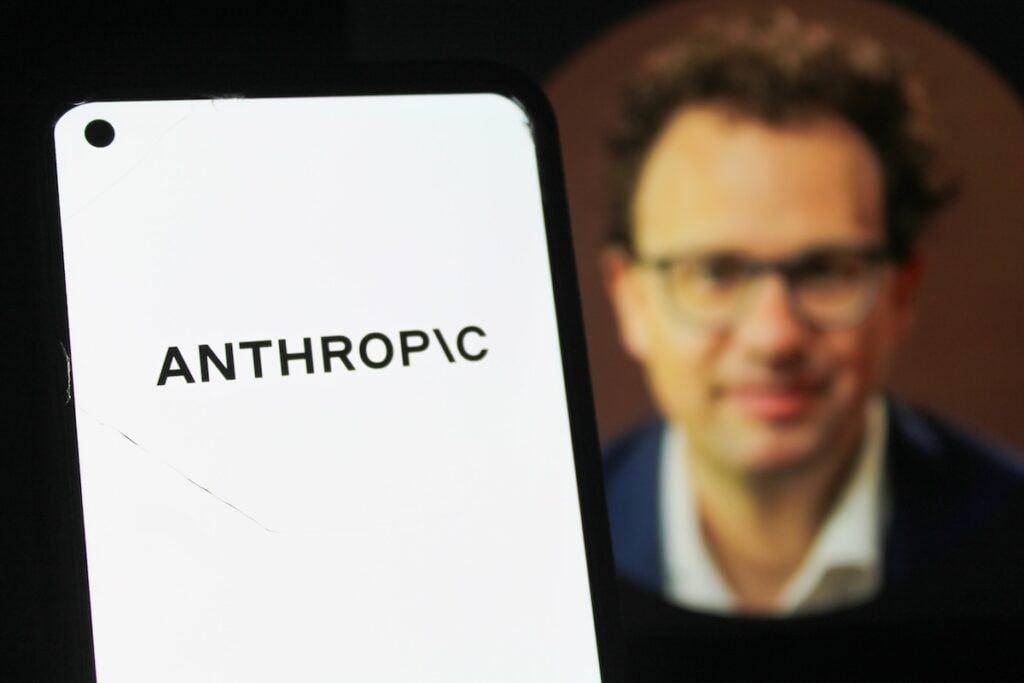
Apollo and Blackstone Structure Massive Debt Financing for AI Infrastructure
Apollo Global Management and Blackstone are bringing additional investors into a roughly $36 billion debt deal this week to fund Anthropic's expansion of AI compute capacity, with the transaction expected to close next week
1
2
. The debt financing would be used for the purchase of custom chips from Google, specifically tensor processing units that serve as Anthropic's alternative to relying solely on Nvidia hardware1
. This represents one of the largest-ever private credit deals and the largest chip-financing transaction on record2
.The financial engineering behind this deal does significant work. Rather than having Anthropic carry tens of billions in hardware debt directly on its balance sheet, the borrowed money flows through a special-purpose vehicle that purchases Google TPUs and then leases that hardware to Anthropic for use in data centers across New York, Texas, Louisiana, and Indiana
1
. This leasing structure gives lenders an asset-backed arrangement rather than an unsecured bet on a company that does not yet turn a profit1
.Broadcom Underwrites the AI Chips Deal
The most significant element of the financing for AI infrastructure sits in the risk allocation. Broadcom, which helps Google develop the chips, is providing a residual-value support agreement on roughly $31 billion of the senior debt
1
3
. In plain terms, if Anthropic stops paying its lease and the used chips do not fetch enough on resale to cover the loan, Broadcom absorbs the shortfall1
. A chipmaker is effectively underwriting demand for its own chips, binding the model developer, cloud provider, chip designer, and private credit giants into a single financing structure where each holds a different slice of risk1
.Both Apollo and Blackstone plan to offload portions of the debt while retaining meaningful stakes themselves, a skin-in-the-game signal that helps move a deal of this size through syndication
1
2
. Blackstone already holds around $1 billion of Anthropic equity and participates in a separate $1.5 billion joint venture to push the Claude AI model into private-equity portfolio companies1
. Investors have been asked to submit their commitments this week, though discussions remain ongoing and terms could still change2
3
.Related Stories
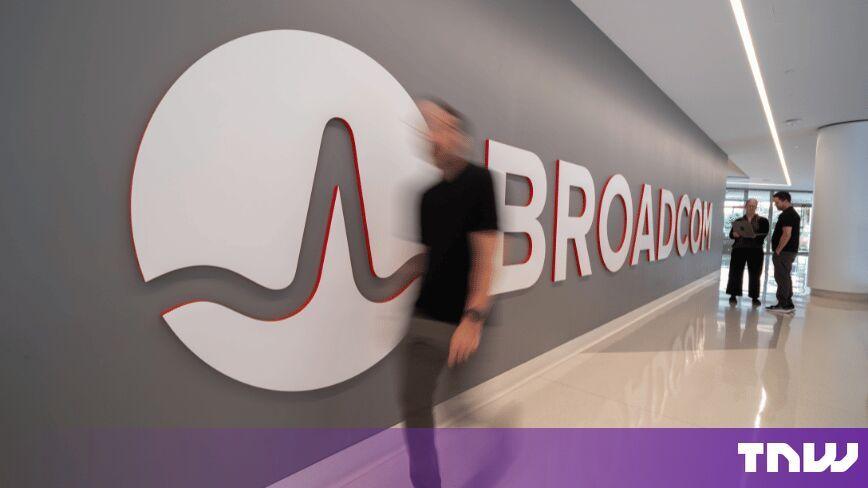
Frontier AI Development Demands Fuel Record Valuations
This $36 billion debt deal serves as the physical counterpart to Anthropic's soaring valuation. The company just raised $65 billion in Series H funding at a $965 billion post-money valuation, surpassing rival OpenAI as the world's most valuable startup
2
3
. Altimeter Capital, Dragoneer, Greenoaks, and Sequoia Capital led the funding round2
. "This funding will help us serve the historic demand we are experiencing, stay at the research frontier, and bring Claude to more of the places where work happens," said Krishna Rao, chief financial officer of Anthropic2
.The backdrop is an arms race in AI compute that has pushed valuations to levels that would have seemed implausible a year ago
1
. The valuation buys the ambition, while the debt buys the silicon to make frontier AI development real1
. Anthropic recently released Claude Opus 4.8, aiming to deliver improved performance and new controls for customers and developers2
. The company is also working on Project Glasswing, an AI-assisted security testing effort with more than 50 organizations collaborating2
. Both Anthropic and OpenAI are eyeing potential IPOs as early as this year3
, making the structure and scale of this chip-financing transaction a signal of how the cost of building competitive AI is being distributed across the industry.References
Summarized by

Navi
[2]
Related Stories
Broadcom misses revenue targets but unveils $35 billion AI infrastructure financing deal
03 Jun 2026•Business and Economy
Google to invest up to $40 billion in Anthropic as AI infrastructure race intensifies
21 Apr 2026•Business and Economy

Apollo Global Management opens trading on $3.5B private debt deal backing Elon Musk's xAI
14 Jan 2026•Business and Economy

Recent Highlights



Recent Highlights
Today's Top Stories





Don’t drown in AI news. We cut through the noise - filtering, ranking and summarizing the most important AI news, breakthroughs and research daily. Follow topics that matter to you and stay ahead.


