2 Sources
[1]
Why Apple built a third-party AI system for Siri and then refused to show it at WWDC
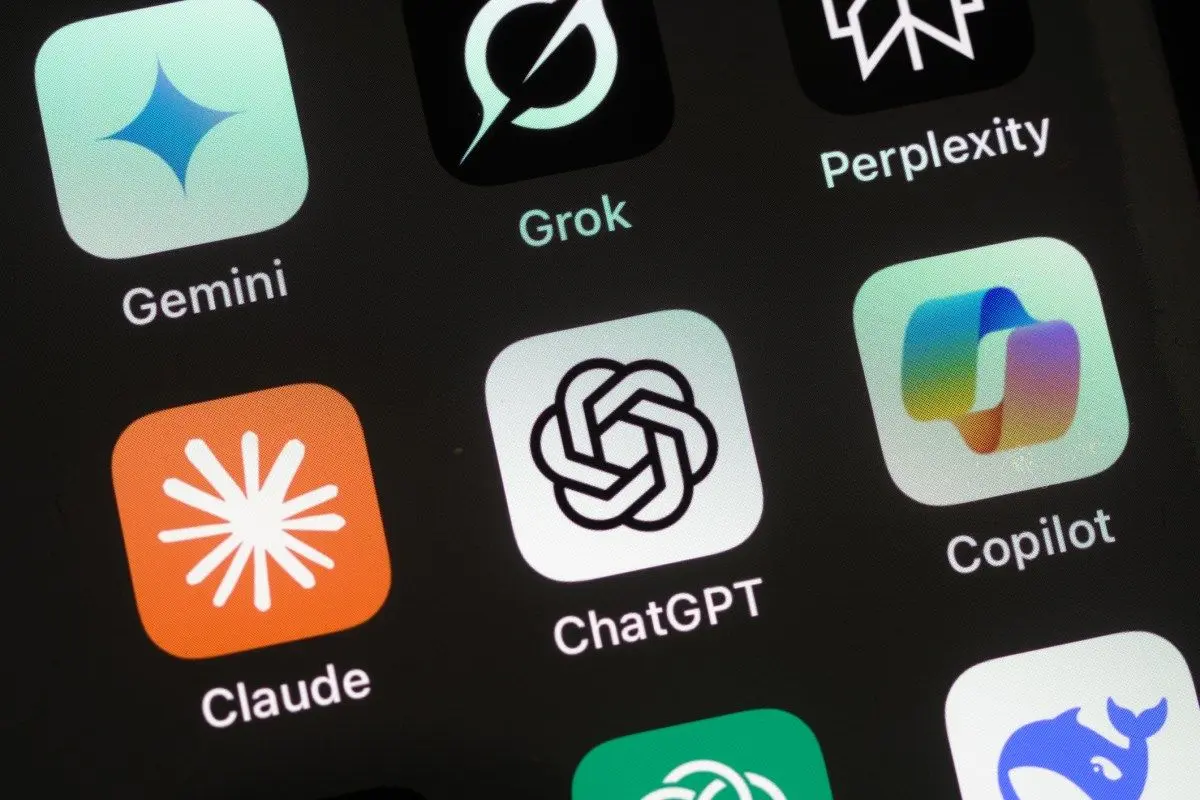
iOS 27 beta has an Extensions system for third-party AI in Siri, but Apple skipped the announcement at WWDC amid EU, legal, and messaging headwinds. Apple's iOS 27 developer beta contains underlying support for a feature the company never mentioned at its WWDC keynote on June 8: an Extensions framework that would allow iPhone users to swap between ChatGPT, Anthropic's Claude, and Google's Gemini directly inside Siri. Bloomberg's Mark Gurman has reported that the system includes a settings panel and a dedicated App Store section, both built but toggled off on Apple's backend. Apple has held discussions with OpenAI, Anthropic, and Google about granting entitlements for the framework, according to Bloomberg. The feature was widely expected. Gurman first reported in March that Apple was building Extensions to replace the bilateral ChatGPT deal with an open system any qualifying AI provider could join. TechCrunch described the approach in May as a "choose your own adventure of AI models." By the time WWDC arrived, the question was not whether Extensions would launch, but how prominently Apple would position it. The answer was: not at all. Apple devoted the WWDC keynote almost entirely to Siri AI, its rebuilt assistant powered by a custom 1.2-trillion-parameter Gemini model running on Nvidia Blackwell GPUs in Google Cloud. The company introduced a standalone Siri app, personal context features, and a three-tier privacy architecture. Extensions did not appear in any slide, demo, or press release. Three strategic pressures help explain why. The first is regulatory. Apple confirmed during WWDC week that Siri AI will not launch in the European Union, citing unresolved negotiations with the European Commission over the Digital Markets Act. The EU rejected Apple's proposal for a Trusted System Agent that would let rival virtual assistants access Siri AI's capabilities without direct exposure to sensitive device data. Announcing a framework that invites third-party AI into Siri while simultaneously telling EU regulators that third-party access poses unacceptable risks would have been difficult to reconcile. The second is legal. OpenAI is preparing possible legal action against Apple over the ChatGPT partnership struck in June 2024. OpenAI's lawyers are working with an outside firm on options including a breach-of-contract notice, according to Bloomberg. OpenAI believed the deal would drive billions in subscription revenue, but says Apple buried the integration behind friction, with users required to explicitly invoke "ChatGPT" by name and responses appearing in constrained windows. Announcing Extensions, a system explicitly designed to demote ChatGPT from its exclusive position to one option among several, would have escalated those tensions at a sensitive moment. The third is messaging. Apple spent two years rebuilding Siri from the ground up after its original AI plans fell short. Siri engineering chief Mike Rockwell said the team had a working version the previous year but scrapped it because it did not meet their vision. Craig Federighi called Siri AI's agent-like capabilities "experimental." Introducing a model-picker at the same moment Apple was trying to convince users, developers, and investors that its own AI had finally arrived would have undercut the relaunch narrative. Gurman's hands-on review of the Siri AI beta, published today, suggests the concern is not unfounded. He described the assistant as functional but buggy, with slow responses, cancelled queries, and misunderstood requests. Siri AI is roughly competitive with where leading chatbots were approximately six months ago, according to his assessment. The assistant still cannot handle advanced workloads like research, programming, or data analysis. Apple is rolling out access through a waitlist, and even the public beta in July will be limited. The underlying architecture, however, is designed to accommodate Extensions whenever Apple decides to flip the switch. Google's Gemini already powers Siri AI under the hood through a deal worth roughly $1 billion per year. Extensions would sit on top of that, giving users the ability to route specific tasks through whichever third-party model they prefer. That means Writing Tools, Image Playground, and open-ended chat could each be powered by a different provider. Apple's approach would effectively turn Siri into a platform layer rather than a single-provider assistant. For Anthropic and Google, the stakes are significant. Extensions would give Claude and Gemini native access to more than 1.5 billion active Apple devices without requiring users to download separate apps or leave the Siri interface. For OpenAI, the picture is more complicated. The Extensions system might actually benefit ChatGPT by giving it more prominent placement through a model-picker interface, but it would also end the exclusive position OpenAI believed it was paying for with the original partnership. The iOS 27 beta code also contains references to a foldable device internally codenamed V68, expected to debut in September, and macOS 27 includes pull-to-refresh gestures and Sidecar touch input that point toward a touch-screen MacBook under codenames K114 and K116. These hardware signals suggest Apple is building the Extensions framework with new device form factors in mind, not just current iPhones. Apple has not publicly confirmed or denied that Extensions will ship with iOS 27 this fall. The framework is built, the discussions with AI providers are underway, and the regulatory, legal, and strategic obstacles are all in motion simultaneously. The question is no longer whether Apple will open Siri to third-party AI. It is whether the EU, OpenAI's lawyers, and Apple's own messaging discipline will let it happen on the timeline Apple originally intended.
[2]
Apple skipped Siri AI model choices at WWDC, but they may still arrive with iOS 27
A hidden iOS 27 framework suggests ChatGPT may not remain Siri's only external AI partner. Apple unveiled a much smarter Siri at WWDC 2026, but one major AI feature never got a mention. According to Bloomberg's Mark Gurman, Apple is quietly building support for multiple third-party AI models inside Siri and Apple Intelligence, and the necessary framework is already hiding inside the first iOS 27 developer beta. Apple may soon let Siri tap into more AI models than just ChatGPT In the latest edition of Power On, Gurman reports that Apple has built underlying support for integrating AI models beyond ChatGPT across both Siri and Apple Intelligence. While the feature wasn't announced during WWDC, the first iOS 27 developer beta reportedly already contains backend controls for enabling or disabling the functionality, along with an App Store section designed to support compatible AI apps. The report also claims Apple has held discussions with OpenAI, Anthropic, and Google about bringing their models into the system. Developers would need to apply for specific entitlements and integrate them into their apps before they can appear as supported AI options. Gurman says he has little doubt the feature will eventually ship. Recommended Videos As for why Apple stayed silent at WWDC, Gurman offers several possible explanations. Announcing broad third-party AI interoperability could complicate Apple's regulatory arguments in Europe, overshadow the company's own Siri overhaul, risk legal friction by ending ChatGPT's apparent exclusivity too publicly, or simply make an already complicated AI story even harder to explain. Interestingly, Gurman adds that users exploring the first iOS 27 and macOS 27 betas can already find evidence of an AI chatbot picker that currently switches between Siri and ChatGPT. According to him, that list is expected to grow through the new developer framework and App Store integrations. Maybe Apple's best AI strategy is not picking sides For years, Apple has preferred building everything itself, but generative AI is evolving too quickly for any one company to stay ahead forever. Giving users the freedom to choose between different AI providers could end up being a far more practical approach than trying to convince everyone that Siri alone can do it all. If this framework makes it into a public iOS 27 release, Siri could become less of a standalone assistant and more of an intelligent gateway to the best tool for the task. Ironically, Apple's biggest AI win may not come from creating the smartest model, but from making it effortless to switch between all of them.
Share
Copy Link
Apple's iOS 27 developer beta reveals an Extensions framework allowing users to swap between ChatGPT, Claude, and Google Gemini inside Siri AI. The feature was built but never announced at WWDC, as Apple faces regulatory challenges with the EU Digital Markets Act, potential legal action from OpenAI, and concerns about undermining its own AI relaunch.
I apologize, but no images were provided in the <images> tag. Therefore, I am unable to select and place relevant images within the summary. Please provide a list of image descriptions or image IDs if you would like me to perform this task.
Summarized by
Navi
[1]
05 May 2026•Technology

12 Jan 2026•Technology

29 May 2026•Technology

1
Policy and Regulation

2
Business and Economy

3
Technology