Apple hunts AI chip acquisitions as M2 Ultra servers fail to deliver on advanced workloads


5 Sources
[1]
Apple is reportedly shopping for AI chip companies - Engadget
Apple's current M2 Ultra-powered servers don't seem to be cutting it. Apple doesn't tend to spend a ton of money on buying companies, but that might change as it looks to shore up its AI processing power. The company is said to have been in talks with semiconductor makers and bankers about
[2]
Apple hunts AI chip acquisitions to fix its servers
Apple is hunting AI chip acquisitions to power its AI servers, a rare move for a company that almost never buys big. Its own M2 Ultra chips could not keep up. Apple built a trillion-dollar business on chips it designs itself. It cannot design the ones its AI needs fast enough, so it is going
[3]
Apple seeks AI chip acquisitions to fix server performance woes
Apple is reportedly seeking to acquire AI chip companies to enhance its processing power amid performance issues with its current M2 Ultra-powered servers. The company has engaged in talks with semiconductor manufacturers and bankers regarding potential acquisitions that would improve its server
[4]
Apple Reportedly Eyes Chip Startup Acquisitions
Apple is known for designing custom silicon for its iPhone and Mac models. The Cupertino-based company now seems to be preparing for a broader push to expand its AI processing power by acquiring AI chip companies. Apple is said to have approached investment bankers and several chip makers to assess
[5]

Apple plans to buy chip startups to catch up in the AI race: Report
In recent months, Apple has reportedly reached out to startup companies to understand whether they would be interested in selling their businesses. Apple is reportedly planning to buy semiconductor startups as it tries to improve its AI technology and catch up with rivals in the AI race. According
Share
Copy Link
Apple is shopping for AI chip companies after its M2 Ultra-powered servers proved insufficient for advanced AI tasks. The company has approached semiconductor startups and investment bankers about potential acquisitions to bolster its AI server capabilities. With the Gemini-powered Siri running on NVIDIA chips via Google Cloud and delays in its next-generation Baltra chip, Apple appears ready to break its pattern of modest spending to secure its AI infrastructure future.
Apple Seeks AI Chip Acquisitions to Address Server Performance Issues
Apple is actively pursuing AI chip acquisitions in a strategic shift that marks a departure from its traditionally conservative approach to buying companies
1
. The iPhone maker has approached semiconductor startups in recent months to gauge their interest in selling, while simultaneously holding discussions with investment bankers about potential deals2
. This aggressive pursuit of AI chip companies stems from a problem Apple can no longer hide: its current infrastructure is failing to meet the demands of advanced AI workloads.The company's M2 Ultra-powered servers, which handle some AI tasks, have encountered significant performance issues that forced Apple to rely on external solutions
3
. The heavy lifting behind the new Gemini model that powers Siri AI runs on NVIDIA chips operating through Google Cloud rather than Apple's own infrastructure. Apple attempted to use its own servers for these demanding tasks, but the results proved its in-house AI processing capabilities were insufficient for the job2
.
Source: Gadgets 360
Delays in Next-Generation AI Server Chip Development
Apple's roadmap for developing its own solution faces substantial delays that underscore the urgency of seeking external help. The company planned to debut a next-generation AI server chip codenamed Baltra this year, but that timeline has slipped significantly
1
. Bloomberg reported that a server chip based on the M7 Ultra won't be ready until 2029, though Apple will soon upgrade its infrastructure with M5 Ultra chips as an interim measure3
.These delays expose a critical gap in Apple's capabilities. While the company built a trillion-dollar business on chips it designs for consumer devices, it cannot design the ones its AI needs fast enough
2
. Apple's chip design expertise has primarily focused on consumer products like iPhones and Macs, making it logical for the company to seek additional support on the server side4
.Breaking From Traditional Acquisition Patterns
If Apple proceeds with major AI chip acquisitions, it would represent a significant shift from its historical approach. The company doesn't typically spend large sums on buying businesses—its biggest deal ever was the $3 billion it paid for Beats over a decade ago
1
. Apple got into making its own chips after acquiring PA Semi for just $278 million in 2008, a relatively modest investment that launched its entire custom silicon strategy2
.
Source: Engadget
This year, Apple acquired Israeli AI startup Q.ai for almost $2 billion, marking its second-largest acquisition on record
3
. The company is also reportedly in talks with PrismML, a startup that shrinks large AI models to run directly on iPhones5
. Additionally, Apple recently struck a deal with Broadcom to purchase $30 billion worth of chips manufactured in the United States, extending that partnership through 20312
.Related Stories

Financial Flexibility and Leadership Transition
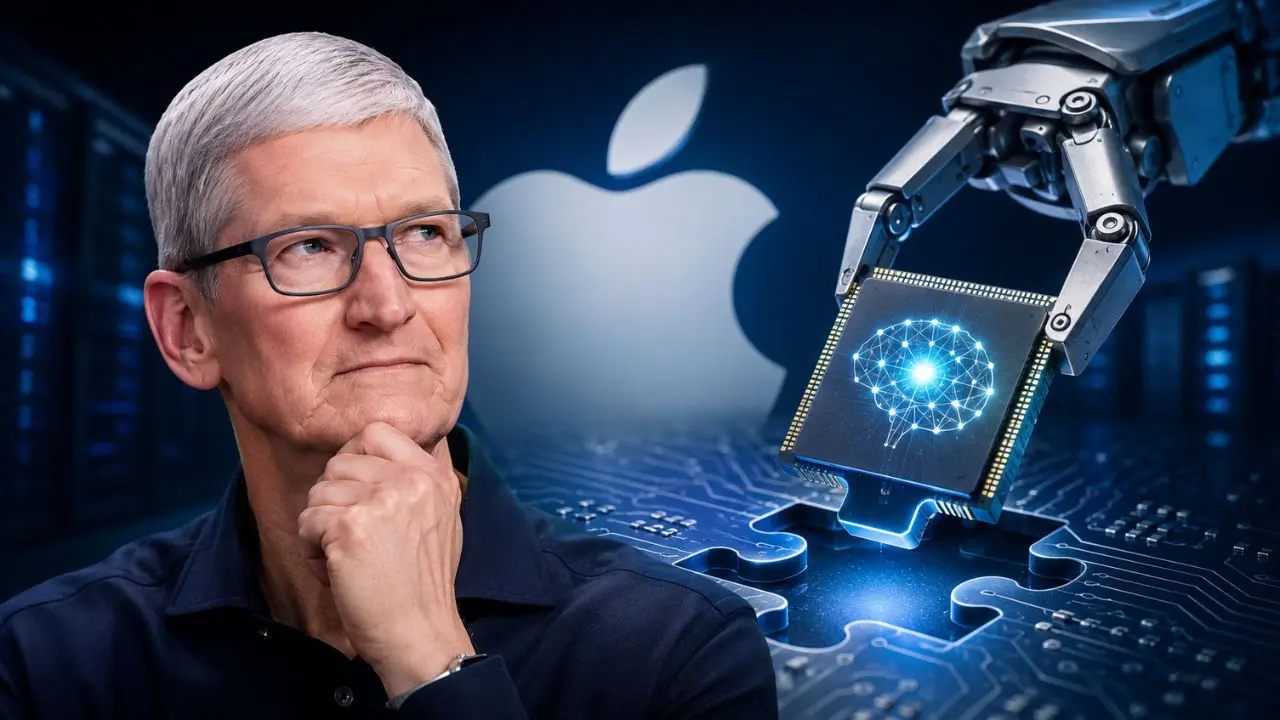
Two factors suggest Apple is prepared to spend more aggressively. The company's finance chief, Kevan Parekh, told analysts that Apple would drop its long-held goal of holding as much cash as debt, freeing up capital for strategic investments
2
. As of the end of March, Apple had $45.6 billion in cash and cash equivalents, providing substantial flexibility for acquisitions in the competitive AI chip sector1
.
Source: Digit
These moves coincide with a major leadership transition. Senior Vice President of Hardware Engineering John Ternus is set to replace Tim Cook as CEO on September 1, while chip chief Johny Srouji now oversees all of Apple's hardware operations
4
. Both are engineers who may be more willing to pursue acquisitions to solve technical challenges2
. Given the intense demand for chips among AI companies, Apple might need to pay a premium for any acquisitions in this domain, but the company's financial position gives it room to maneuver3
.References
Summarized by

Navi
[2]
[4]
Related Stories
Apple to begin mass production of in-house AI server chips in H2 2026 as Google deal buys time
13 Jan 2026•Technology

Apple's $1 Billion Investment in NVIDIA AI Servers Signals Major Shift in AI Strategy
26 Mar 2025•Technology
Apple Collaborates with Broadcom on Custom AI Server Chip for Enhanced Cloud Processing
12 Dec 2024•Technology

Recent Highlights



Recent Highlights
Today's Top Stories






Don’t drown in AI news. We cut through the noise - filtering, ranking and summarizing the most important AI news, breakthroughs and research daily. Follow topics that matter to you and stay ahead.


