Apple explores PrismML's compression tech to run AI models on iPhone without the cloud


10 Sources
[1]
Apple in talks with startup that shrinks AI models to run on an iPhone
If PrismML's claims hold up in real-world testing, the technology could reshape demand for memory and datacenter compute -- though analysts say AI will still require plenty of chips. Apple is in talks with a small Silicon Valley company that says it can shrink powerful artificial intelligence
[2]
Apple eyes PrismML's on-device AI for the iPhone
Apple is in early talks with PrismML, a Caltech spinout whose on-device AI compression shrinks a 27-billion-parameter model from 54GB to under 4GB, small enough to run on an iPhone. CEO Babak Hassibi told CNBC the talks are early, and Apple has not commented. Apple is in early talks with PrismML,
[3]
PrismML releases Bonsai 27B, claiming first major AI model of its size fit for iPhone
PrismML is back in the news today after the AI startup's CEO told CNBC that Apple is looking at the company's technology. The company has also released its Bonsai 27B model that it says runs on iPhone, iPad, and Mac. PrismML first made headlines last week when The Information reported on the AI
[4]
Apple Exploring Ways to Run Much Larger AI Models Directly on iPhones
Apple has held meetings with PrismML about ways it could use the startup's technology to run much larger AI models directly on iPhones, according to The Information. The report said PrismML has managed to shrink down Alibaba's open-source large language model Qwen 3.6 to run entirely on an iPhone
[5]

AppleInsider.com
Five days after initial reports that there was an AI-model shrinking technology by PrismML suitable for iPhones, the company has confirmed it is talking to Apple over the use of its technology. One of the major problems with AI processing is the need to manage massive models that most normal
[6]
Report: Apple interested in startup that runs giant AI models on iPhone without servers
The Information reports that Apple may be interested in PrismML's technology. The firm is focused on shrinking AI models that generally require servers to function, offering on-device functionality with comparable intelligence. PrismML may be key to unlocking more powerful models on-device "The
[7]

Meet Bonsai: The First 27B AI Model That Fits on Your Phone
Apple is in early talks with PrismML about the underlying compression technology, per CNBC, with the company targeting a compressed Gemma model next in the pipeline. I models eat up a lot of memory. A 27-billion-parameter AI model, considered medium-sized by industry standards, needs roughly 54 GB
[8]
AppleInsider.com
PrismML, a startup that uses mathematical wizardry to shrink the size of large language models, could be used to bring more advanced AI capabilities to iPhones in the future. The company has already been able to compress the 54GB Qwen 3.6 model to just 4GB. And, importantly, the technology that it
[9]

A Startup Says It Shrunk an AI Model by 93%. Apple Wants to Talk.
Honey, I shrunk the AI. That's startup PrismML's message to Apple, and it could solve one of the company's biggest headaches. PrismML, a Caltech spinout backed by Khosla Ventures, says it shrank a 54GB AI model down to under 4GB, small enough to run all 27 billion of its parameters directly on an
[10]

Apple eyeing startup PrismML to bring massive AI models direct to iPhone By Investing.com
Apple is in talks with PrismML, a stealthy California Institute of Technology (Caltech) spinout, as it looks to drastically reduce its reliance on the cloud and run heavyweight AI entirely on-device. The discussions, first reported by The Information, come on the heels of a massive technical
Share
Copy Link
Apple is evaluating technology from PrismML that could shrink powerful AI models from 54GB to under 4GB, enabling them to run entirely on an iPhone. The Caltech spinout's compression approach could reduce Apple's cloud computing costs, enhance privacy, and allow Siri to process more requests locally without internet connectivity.
Apple Evaluates PrismML's Breakthrough in AI Model Compression
Apple is in early-stage discussions with PrismML, a Caltech spinout backed by Khosla Ventures, about technology that could fundamentally change how AI models for iPhone operate. PrismML CEO Babak Hassibi confirmed to CNBC that Apple and other companies are evaluating the startup's models, measuring their speed, energy efficiency, and performance on devices
1
. "They're really evaluating our technology right now," Hassibi said of Apple, characterizing the discussions as very early but noting that "things are progressing nicely"1
. The timing aligns with Apple's ongoing efforts to make Siri more competitive while addressing one of the central constraints facing its AI strategy: most capable models require too much memory and processing power to run AI models on iPhone hardware alone.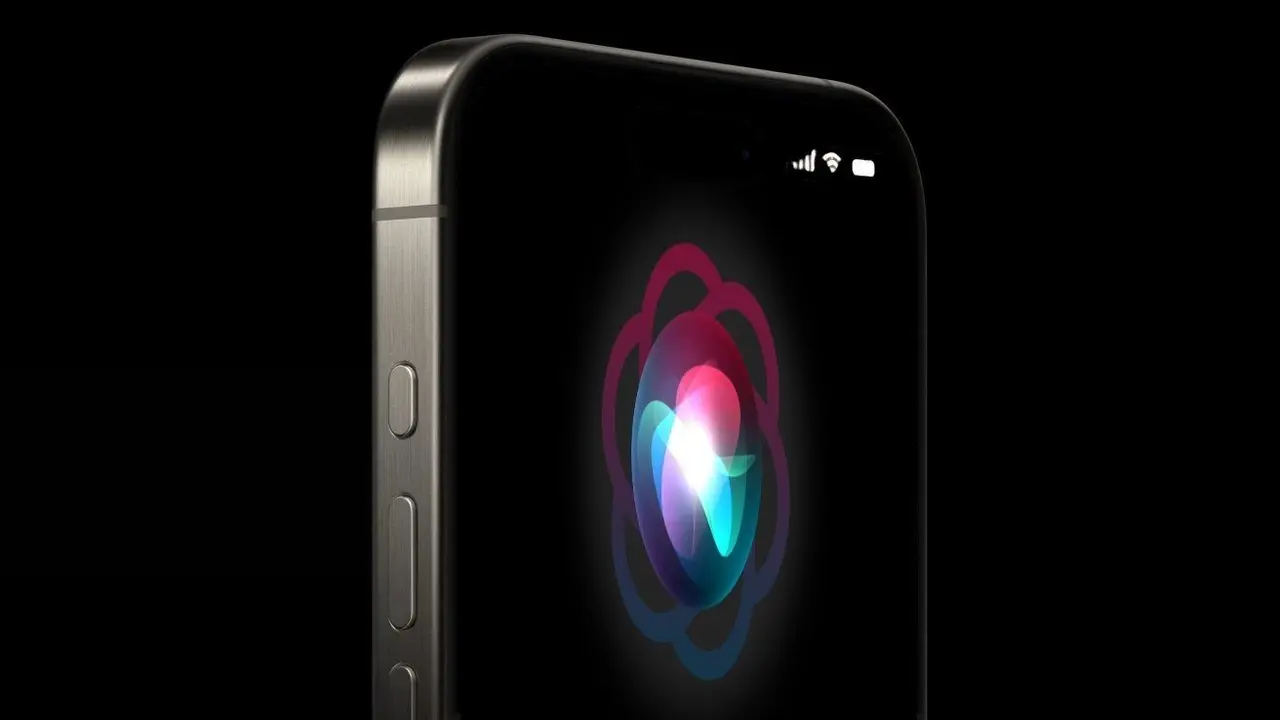
Source: AppleInsider
PrismML Releases Bonsai 27B with Dramatic Size Reduction
On Tuesday, PrismML publicly released Bonsai 27B, compressed versions of the Alibaba Qwen model that demonstrate the startup's core innovation
1
. The company reduced the model from roughly 54GB to less than 4GB, allowing all 27 billion of its parameters to run on an iPhone 15 or newer1
. This represents a significant advance in on-device AI capabilities. Unlike Apple's AFM 3 Core Advanced model with 20 billion parameters that uses a sparse architecture where only 1 billion to 4 billion parameters are active at a time, all 27 billion parameters in PrismML's compressed AI models remain active simultaneously[4](https://www.macrumor ar-147521 s.com/2026/07/09/apple-prismml-larger-on-device-ai-models/). The release came one day after Apple opened the public beta of iOS 27, giving iPhone owners their first broad access to the company's long-delayed Siri overhaul1
.How AI Model Compression Works and Its Trade-offs
PrismML achieves dramatic size reduction by drastically simplifying how internal information is stored, reducing each value from 16 bits to just one or three possible values
1
. Hassibi compared it to the chip industry's move from eight-bit to four-bit computing, but said PrismML takes it a step further1
. The startup reports that compressed AI models use between 10 and 15 times less memory usage, generate responses six to eight times faster, and consume three to six times less energy efficiency than conventional versions running on existing hardware1
. However, there is a trade-off. PrismML's models typically lose a few percentage points of overall performance, with factual recall weakening before skills such as reasoning, math, and coding1
. PrismML says its builds keep about 95% of full performance in the ternary version and 90% in the 1-bit one2
.Strategic Implications for Apple Intelligence Features and Privacy
The technology could address critical challenges in Apple's AI strategy by enabling more on-device processing rather than relying on Private Cloud Compute servers. Carolina Milanesi, president and principal analyst at Creative Strategies, said smaller models could let Apple move more demanding features onto the iPhone, including computational photography, video generation, and health or fitness tools that rely on sensitive personal data
1
. "The more you can do on device, the better it is," she said, pointing to health and medication data that users would want to keep private1
. Running more AI directly on the iPhone would reduce latency associated with sending data to remote servers, lower cloud-computing costs, and support Apple's privacy pitch1
. It would also allow certain Apple Intelligence features to work without an internet connection, addressing privacy concerns that have become central to Apple's positioning against competitors like OpenAI and Anthropic.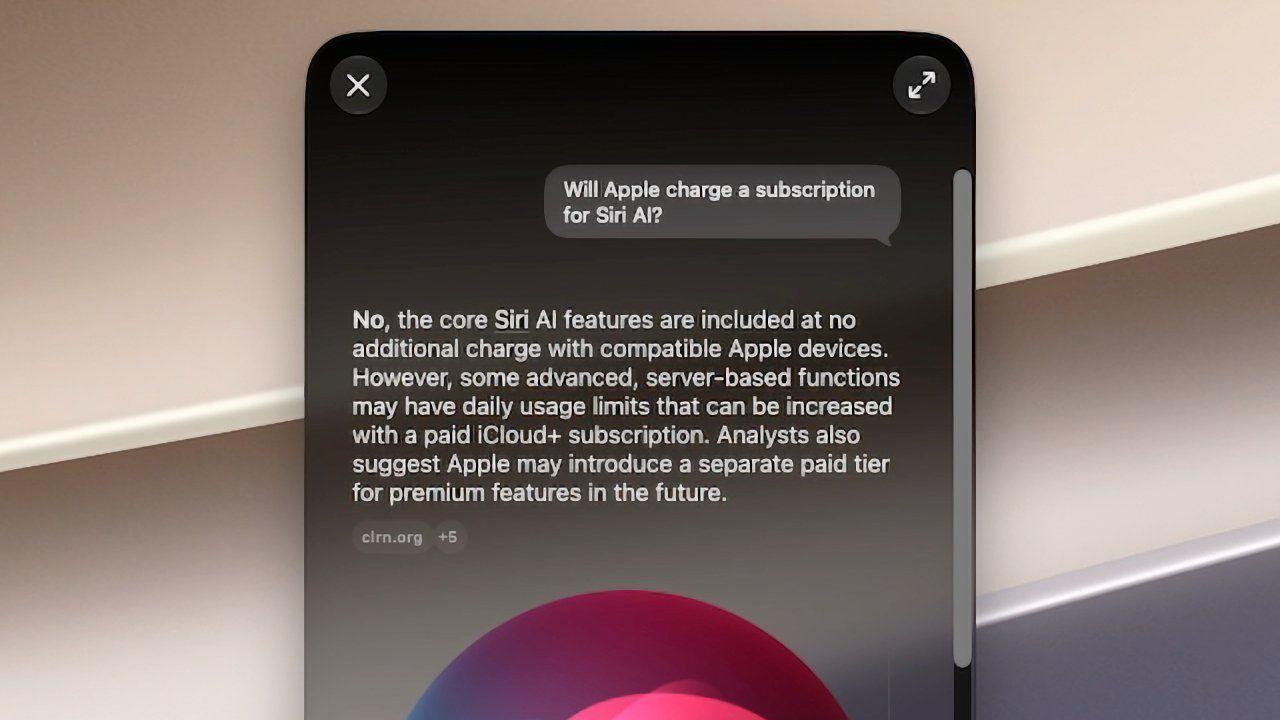
Source: AppleInsider
Related Stories

Technical Implementation and Device Compatibility
Bonsai 27B runs natively on Apple devices including Mac, iPhone, and iPad via Apple's MLX framework, and on NVIDIA GPUs via CUDA through custom low-bit kernels built for its hybrid-attention architecture
3
. PrismML ships two versions under a free Apache 2.0 License: a ternary build that runs on a laptop, and a smaller 1-bit build at about 3.9GB designed to fit within the memory budget of an iPhone 17 Pro2
. Fitting a phone is a stricter gate than storage numbers suggest, since a phone never exposes its full memory to an app—a 12GB iPhone offers about 6GB for the model to use for on-device processing, and the model shares that budget with its KV cache and activations3
. At about 4GB, 1-bit Bonsai 27B is the first to pass through with room to work3
.Analyst Perspectives on Edge AI and Future Roadmap
Analysts urged caution about real-world performance. Tarun Pathak of Counterpoint Research said the real test would be millions of queries across thousands of devices, while Phil Solis of IDC said power use was the biggest open question, since a model that runs often could still drain a battery
2
. The release also feeds a debate over whether efficiency gains will cut demand for memory and data-center chips. Gil Luria, an analyst at D.A. Davidson, said shrinking models would not remove the need for processors but would simply move some of them from data centers onto phones, part of a broader shift toward edge AI2
. Hassibi said Google's open-source Gemma model is next in the pipeline, followed by much larger models, including those from frontier labs that today generally require datacenter hardware1
. The technology could ultimately extend well beyond phones and laptops to robotics, autonomous systems, and other products that need to make decisions quickly without relying on a cloud connection1
. The California Institute of Technology owns the underlying patents and licenses them exclusively to PrismML, which raised a $16.25 million seed round in March backed by Khosla Ventures and other investors1
.References
Summarized by

Navi
[2]
[5]
Related Stories
PrismML Brings Tiny LLM to Smart Glasses and Consumer Devices with 9x Compression
18 Sept 2026•Technology

Apple's Cautious AI Strategy Gains Traction Amid Industry Disruption
08 Feb 2025•Business and Economy

Perplexity CEO warns on-device AI threatens $500 billion data center industry buildout
02 Jan 2026•Technology

Recent Highlights



Recent Highlights
Today's Top Stories






Don’t drown in AI news. We cut through the noise - filtering, ranking and summarizing the most important AI news, breakthroughs and research daily. Follow topics that matter to you and stay ahead.


