8 Sources
[1]
Apple's New Home AI Brings Video Descriptions and More for Home Security
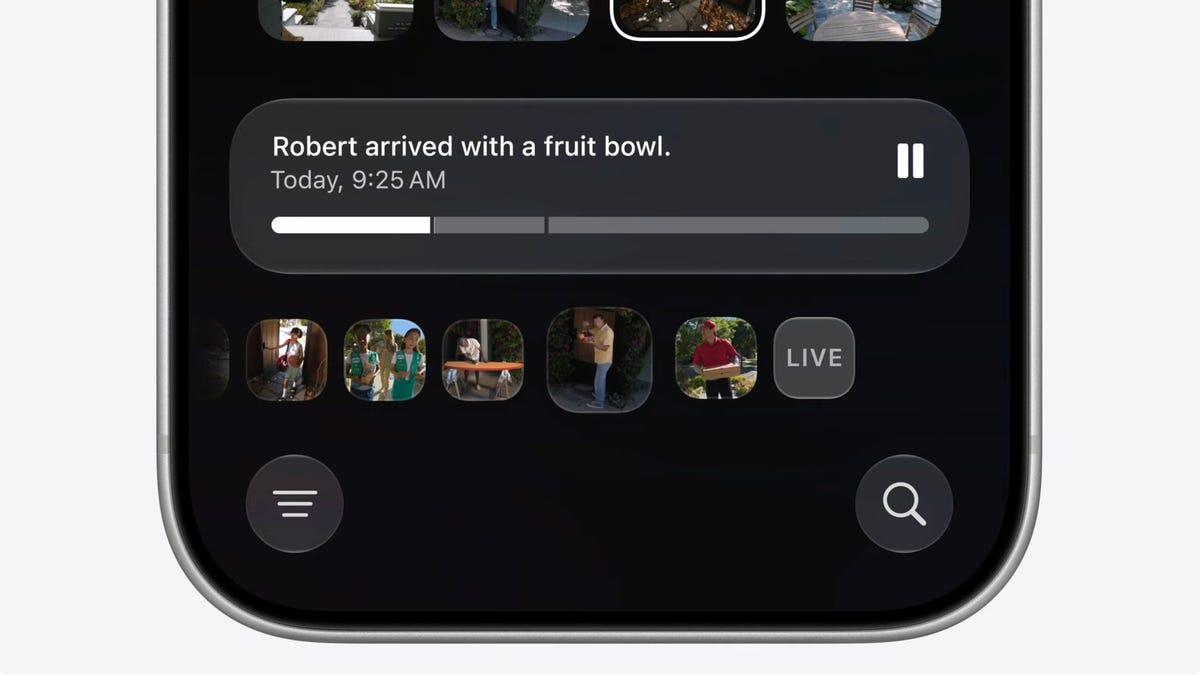
Expertise Smart home | Smart security | Home tech | Energy savings | A/V Siri AI and Apple Intelligence took center stage at Apple's WWDC 2206 event, and I noticed some especially interesting features for home security. While Apple's rumored push into the smart home will have to wait until fall (fingers crossed), we got a look at major software changes, including video descriptions via Apple Intelligence in the Apple Home app. If you've never seen video descriptions before, they use an algorithm to analyze video footage and put it into text, so you get an alert about what a camera "sees" without needing to watch the video yourself. That saves a lot of time when it comes to home security clips. For example, Apple showed off Siri notifying a phone that "Robert arrived with a fruit bowl." Users will also be able to search for specific objects or terms in their history of video clips. I've seen this feature pop up on many brands, including Google Nest (note that Apple partnered with Google Gemini for some of Siri's AI prowess here), Arlo, Ring, Blink, and others. What makes Apple's version different is that Siri's Visual Intelligence appears able to pull data from any camera supported by Apple Home instead of being bound to just one security brand. I like this option a lot, but the trick is finding cameras that work on Apple Home, which are currently few and far between, as the latest Matter standard updates have been slow to add camera support. That's starting to change, and this year could be a key turning point with Apple's new features. Apple wouldn't announce abilities like this if it didn't have some cams in mind -- it's Gemini partnership could indicate that Nest cameras will be on the list. Two additional important notes about these new Apple Home features. First, I don't know if these video descriptions and searches will cost extra or not, such as a higher tier of iCloud. Apple didn't mention any costs when it announced these options. Second, Apple Home can also combine related activity notications, as well as video descriptions, so you can get a single alert about people spotted, doors unlocked, and so on, saving even more time. Finally, it's very interesting these alerts are identifying people by name. That indicates that Vision Intelligence is tapping into some kind of facial recognition data, which is a tricky subject considering Ring just got sued for its similar Familiar Face technology. Apple indicated that these Siri tools will be rolling out this year and available for beta testing soon. When I get a chance to test them with compatible cams, I'll let you know how they work and how they may affect our privacy.
[2]
Cameras get an Apple Intelligence boost in Apple Home
Apple Intelligence is coming to cameras connected to Apple Home. At WWDC, Apple announced that the Home app will now use Apple Intelligence to analyze footage and generate descriptions summarizing what the camera saw. You can also search your footage with natural language to find clips from across connected cameras, such as when a package was delivered. The Home app will also connect relevant clips together to give you a picture of what's happening across your home. This AI boost is similar to features Amazon's Ring and Google's Nest cameras have added over the last year. Apple also announced support for 4K video resolution on supported cameras and the ability to condense multiple alerts for the same device into a single notification that updates as more activity occurs. Developing... see our live blog for the latest details.
[3]
Forget Siri AI: This Overlooked iOS 27 Update Is the Best Smart Home Feature in Years
Apple's smart home platform had a brief chance to shine during the company's WWDC developer keynote, which was largely centered on the new Siri AI. The company announced that Apple Intelligence will be integrated into both the Apple Home app and the broader HomeKit ecosystem. While many of the new AI-driven features resemble capabilities already found in smart home security cameras, one update stood out. HomeKit will soon allow you to monitor and search for events across compatible security cameras from multiple brands in a single place. This cross-platform functionality represents a significant step forward for the smart home industry and could make managing connected devices much more seamless. Here's why this particular upgrade has me excited. One Capability Changes Everything At WWDC, Apple announced a few new abilities for HomeKit-compatible cameras and other smart home devices. For starters, the company's AI will be able to group notifications from all of your gadgets, so if the door and motion sensors of your home security system ping a few times as someone stands on your porch, you'll get a single alert instead of multiple. If you have a HomeKit-compatible camera recording that person, you can get an AI-generated summary of the event so you know it isn't an emergency, just someone delivering the mail or a trusted friend. The update also adds support for 2K and 4K footage and makes it easier to share camera access with other family members. Finally, it makes camera footage searchable with AI. Let's say you have a package delivered while at work, but can't find it when you get home. You can then search the Home app for clips of the package, and it will compile recorded footage from any relevant cameras, including your video doorbell. All of these features, including AI-powered video search, already exist on many indoor and outdoor home cameras we've tested, including models from Arlo, Blink, Nest, and Ring. But if you use multiple cameras from different manufacturers, you'd have to search each of their apps separately for footage of your missing package. HomeKit's added benefit is the ability to search for relevant footage and have it pull clips from compatible cameras of different brands. From Walled Garden to Connected Neighborhood HomeKit has long been a bit of a walled garden. Apple's smart home platform allows you to set up and use smart home devices, including those developed by third parties, with Siri and the Home app on your iPhone. To have a device certified for HomeKit, third-party developers have to meet specific usability criteria and security standards. While the benefits of a securely controlled smart home are obvious, these stringent requirements have also led to a comparatively small ecosystem. The list of smart home devices that work with HomeKit has always been diminutive compared with that of Amazon Alexa and Google Home. It's a bit ironic that Apple appears to be leading the way in security camera interoperability, but the change isn't as sudden as it seems. Apple, like Amazon and Google, is one of the companies behind Matter, a smart home standard that focuses on interoperability. As Matter has gained momentum, the number of devices that work with HomeKit has grown exponentially. Matter didn't add compatibility for security cameras until more than two years after its initial launch. Even now, the standard only covers capabilities such as streaming and controls. In other words, if you have a Matter-compatible Ring camera, you can stream its feed on your Google Nest Hub. But Matter doesn't encompass any AI-related abilities. For now, as far as AI interoperability on smart home security cameras, HomeKit is the only game in town. Apple's Biggest AI Win Could Be Interoperability At the moment, only a few brands make HomeKit-compatible cameras, including Aqara, Eve, and Logitech. To see the benefit of this interoperability, you'd need multiple cameras from different brands within this limited selection. At least initially, this feature probably won't apply to many people, but that could change rapidly on multiple fronts. Firstly, more cameras could gain HomeKit support. With Matter compatibility and new AI capabilities, Apple's platform could be more appealing to developers, and the list of HomeKit-compatible cameras could grow naturally over time. Secondly, now that Apple is doing it, I imagine that Amazon and Google won't be far behind. Each company has its own AI assistant powering its smart home ecosystem, and Google's Gemini is already part of the foundation for Apple's AI. In fact, Amazon and Google subsidiaries already have cameras with these capabilities, so now they just need to bring third-party devices into the fold. Interoperability tends to follow well after capability -- Matter didn't come to fruition until more than a decade after the popularization of smart home tech. I'm excited to see that Apple is already taking strides to make its AI broadly applicable across smart home brands.
[4]
This Overlooked WWDC Feature Could Transform Smart Homes Forever
Apple's smart home platform received only brief attention during the company's WWDC developer keynote, which was largely centered on AI. The company announced that Apple Intelligence will be integrated into both the Apple Home app and the broader HomeKit ecosystem. While many of the new AI-driven features resemble capabilities already found in smart home security cameras, one update stood out. HomeKit will soon allow you to monitor and search for events across compatible security cameras from multiple brands in a single place. This cross-platform functionality represents a significant step forward for the smart home industry and could make managing connected devices much more seamless. Here's why this particular upgrade has me excited. One Capability Changes Everything At WWDC, Apple announced a few new abilities for HomeKit-compatible cameras and other smart home devices. For starters, the company's AI will be able to group notifications from all of your gadgets, so if the door and motion sensors of your home security system ping a few times as someone stands on your porch, you'll get a single alert instead of multiple. If you have a HomeKit-compatible camera recording that person, you can get an AI-generated summary of the event so you know it isn't an emergency, just someone delivering the mail or a trusted friend. The update also adds support for 2K and 4K footage and makes it easier to share camera access with other family members. Finally, it makes camera footage searchable with AI. Let's say you have a package delivered while at work, but can't find it when you get home. You can then search the Home app for clips of the package, and it will compile recorded footage from any relevant cameras, including your video doorbell. All of these features, including AI-powered video search, already exist on many indoor and outdoor home cameras we've tested, including models from Arlo, Blink, Nest, and Ring. But if you use multiple cameras from different manufacturers, you'd have to search each of their apps separately for footage of your missing package. HomeKit's added benefit is the ability to search for relevant footage and have it pull clips from compatible cameras of different brands. From Walled Garden to Connected Neighborhood HomeKit has long been a bit of a walled garden. Apple's smart home platform allows you to set up and use smart home devices, including those developed by third parties, with Siri and the Home app on your iPhone. To have a device certified for HomeKit, third-party developers have to meet specific usability criteria and security standards. While the benefits of a securely controlled smart home are obvious, these stringent requirements have also led to a comparatively small ecosystem. The list of smart home devices that work with HomeKit has always been diminutive compared with that of Amazon Alexa and Google Home. It's a bit ironic that Apple appears to be leading the way in security camera interoperability, but the change isn't as sudden as it seems. Apple, like Amazon and Google, is one of the companies behind Matter, a smart home standard that focuses on interoperability. As Matter has gained momentum, the number of devices that work with HomeKit has grown exponentially. Matter didn't add compatibility for security cameras until more than two years after its initial launch. Even now, the standard only covers capabilities such as streaming and controls. In other words, if you have a Matter-compatible Ring camera, you can stream its feed on your Google Nest Hub. But Matter doesn't encompass any AI-related abilities. For now, as far as AI interoperability on smart home security cameras, HomeKit is the only game in town. Apple's Biggest AI Win Could Be Interoperability At the moment, only a few brands make HomeKit-compatible cameras, including Aqara, Eve, and Logitech. To see the benefit of this interoperability, you'd need multiple cameras from different brands within this limited selection. At least initially, this feature probably won't apply to many people, but that could change rapidly on multiple fronts. Firstly, more cameras could gain HomeKit support. With Matter compatibility and new AI capabilities, Apple's platform could be more appealing to developers, and the list of HomeKit-compatible cameras could grow naturally over time. Secondly, now that Apple is doing it, I imagine that Amazon and Google won't be far behind. Each company has its own AI assistant powering its smart home ecosystem, and Google's Gemini is already part of the foundation for Apple's AI. In fact, Amazon and Google subsidiaries already have cameras with these capabilities, so now they just need to bring third-party devices into the fold. Interoperability tends to follow well after capability -- Matter didn't come to fruition until more than a decade after the popularization of smart home tech. I'm excited to see that Apple is already taking strides to make its AI broadly applicable across smart home brands.
[5]
You'll Be Able to Search Apple Home-Connected Camera Footage Using AI This Fall
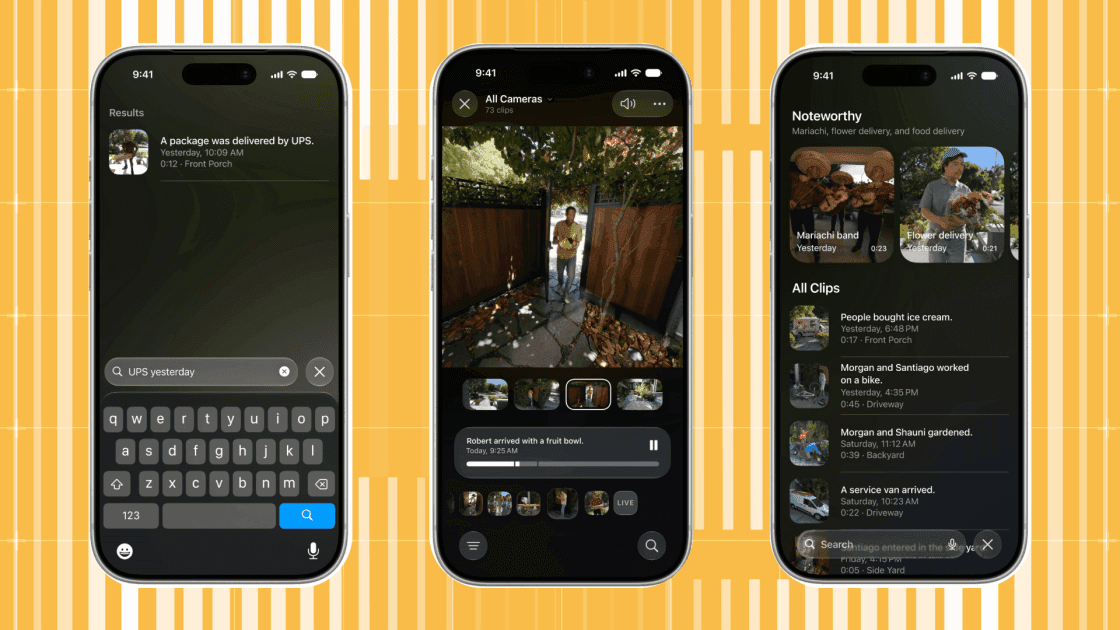
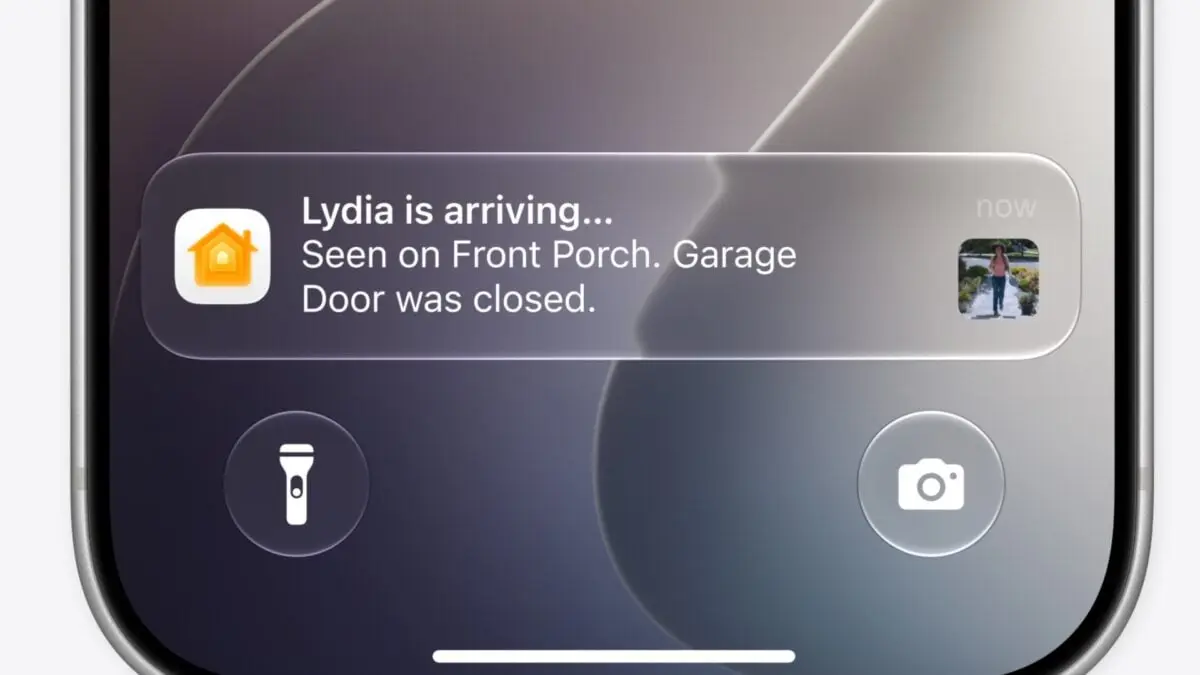
At WWDC 2026, Apple announced it's bringing AI-powered search and notification summaries to Apple Home users. The features, at least some of which require an iCloud+ subscription, will come alongside this fall's big OS updates, including to iOS 27, macOS 27, and iPadOS 27. Apple Home users might be familiar with the wall of notifications that the Home app sends on activity-heavy days. The company says that will change with the updates this fall. With the change, these notifications will be lumped together as one summary, similar to the way Apple Intelligence-compatible devices currently summarize text messages and group threads. During its WWDC keynote presentation, Apple highlighted how that could be useful for HomeKit cameras, with a notification both informing that someone arrived and that the garage door was closed. The company is also bumping the resolution for recorded HomeKit Secure Video (HKSV) camera footage from 1080p to 4K -- and making that footage searchable -- for those on "most iCloud+ subscription plans." Which plans that includes isn't clear, but right now, those with 50GB- and- up subscriptions get 10 days of cloud-stored video event history -- for between one and an unlimited number of cameras -- depending on plan tier. After the updates come this fall, you'll be able to search video history using natural language -- During its keynote, Apple showed one example of someone searching for "UPS yesterday," with a result showing a thumbnail of a package being delivered next to the text "A package was delivered by UPS." Along with the new AI search update, the company is also redesigning the interface for all of this to look similar to the Apple Photos update, with "Noteworthy" highlights at the top of the screen followed by a list of clips below. For example, the company showed screenshots in which the app surfaced clips of a flower delivery and a Mariachi band. These are all features we've seen with other cameras, and only time will tell how much value they actually add. The HomeKit Secure Video clip view, which has been essentially unchanged since its inception, has been in desperate need of an overhaul, and the changes there seem positive. How the AI summary features come across, at least for me, will depend on whether Apple keeps its iCloud+ plan pricing the same. Google introduced a lot of Google Home AI capabilities last year -- including summarized notifications and searchable security camera footage -- along with a price hike for its camera plans. I grumbled about that price hike, combined with inaccurate AI summaries, in my reviews for the Google Nest Doorbell and Nest Outdoor Cameras. Now, I like AI-powered camera footage search, in theory, and I'm not totally offended by inaccurate summaries on their own. But I don't want to pay extra to be lied to, and hope Apple doesn't go the route of cranking up its iCloud subscription prices over these new AI features. At the very least, I'd love to see an AI-free version at the old price, if it does raise its rates. Whether any of this will come to HomeKit-compatible but non-HKSV cameras isn't clear. For those not in the know, merely HomeKit-compatible cameras don't save footage to Apple's servers, and you can only view their live streams in the Apple Home app. I've asked Apple and will update here if and when the company responds.
[6]
Apple Intelligence security camera features just seriously undercut Ring and Google
As expected, the all-new Siri AI and Apple Intelligence took up the bulk of the announcements during the WWDC 2026 keynote. From improved camera editing tools, better awareness of everything happening on your iPhone, and even a dedicated app, there's a lot to unpack as Apple plays catch-up with Google and Samsung. As someone who covers smart home products a lot, one Apple Intelligence feature really stood out for me, and it's something that could make Apple Home far more attractive than Ring and Google Nest for those looking to purchase one of the best home security cameras or video doorbells for their house. When the new-and-improved Apple Intelligence rolls out, those who use Apple Home Secure Video will now be able to get detailed video descriptions of what's happening in not just individual videos, but across all stored video. In addition, you'll also be able to use natural language search to more easily look for specific events. Also of note: You'll now be able to store 4K video; until now, HomeKit Secure Video has been limited to 1080p, a serious restriction. What's notable is not the features themselves -- Ring, Google, and plenty of other companies already offer AI-generated search results -- but the price at which Apple is offering these features. Apple iCloud vs. Google Home Premium vs. Ring Pro If you want to use Apple Home Secure Video -- and these new features -- all you'll need is an iCloud+ account, which starts at $0.99 per month for 50GB of storage and one camera, $2.99/month for 200GB and up to five cameras, and $9.99/month for 2TB of storage and unlimited cameras. (Apple offers higher-capacity plans, but we'll set them aside for now). So, if you want AI-assisted search functionality for your smart home cameras and video doorbells, you could get it for as little as $0.99/month. By comparison, if you wanted those same features from Ring or Google, you'd have to spend $20/month for Ring Pro and Google Home Premium Advanced. Even if we were to factor in the unlimited camera angle, you'd still be paying half as much with Apple. The two caveats I should note two things here. The first is that Apple's iCloud+ storage is not just for security camera footage; it's used for everything else, so if your cameras are recording a lot of video, you might run out of room a lot faster for your iPhone backups. The second caveat is that there are comparatively fewer cameras and doorbells that are compatible with Apple HomeKit Secure Video than with Ring and Google Nest. Apple's own page only lists six cameras and video doorbells that work with HomeKit Secure Video, though we've reviewed others, such as the EufyCam 2C Pro. The fact that HomeKit Secure Video was, until now, limited to 1080p has also put a damper on our enthusiasm for it, but its upgrade to 4K -- plus these new AI-assisted features for much less than the competition -- make it a much more compelling option. I'm also curious to see how Apple Intelligence compares to other security cameras with AI, when it comes to delivering actionable messages and more. Apple is doing for AI security video what it did with the MacBook Neo: offering a very competitive product for a lower price than the competition. Now, we just need more cameras. Follow Tom's Guide on Google News and add us as a preferred source to get our up-to-date news, analysis, and reviews in your feeds. Subscribe to Tom's Guide on YouTube and follow us on TikTok. Finally, you can visit our dedicated Tom's Guide Savings Squad hub for expert help on getting the best products for less.
[7]
Apple to Add AI Video Descriptions and Smarter Notifications to Home App
Apple today announced new Apple Intelligence features for the Home app, including AI-generated descriptions of HomeKit Secure Video camera clips and smarter grouping of accessory notifications. The Home app will use Apple Intelligence to analyze recorded clips from compatible cameras and generate text descriptions summarizing what happened in them. Users can search through footage to find specific events, such as a package delivery, without needing to watch each clip individually. The app will also surface noteworthy clips at the top of the Search page, so users can quickly identify important moments. When playing a clip, the Home app can pull together footage from multiple cameras to provide a more complete picture of an event. Apple Intelligence will also make accessory notifications smarter. Rather than receiving a separate alert for every triggered accessory, the Home app will understand related notifications as a single ongoing activity and deliver one notification that continues to update as the activity unfolds.
[8]
Apple Home app's new AI superpowers are about to make your life easier
This story is part of our complete Apple WWDC coverage Updated less than 51 seconds ago At WWDC 2026, Apple showed off how Apple Intelligence is making its way into the Home app. While the Siri AI announcements stole most of the spotlight, these Home updates might be the ones that quietly make your day-to-day life easier. Here's the lowdown on everything coming to the Home app with the iOS 27 update. Tired of notification overload? If you have a bunch of smart home accessories, you know how quickly notifications pile up. They are a great way to know what's going on, but they can also bury you in alerts. Apple is fixing this by using Apple Intelligence to understand related notifications as a single activity. So instead of ten separate pings, you get one notification that keeps updating as the activity happens. It's a small change, but one that will declutter your Lock Screen in a big way. Your cameras can finally make sense of your footage This is the feature I am most excited about. The Home app can now use Apple Intelligence to analyze recorded clips from your compatible HomeKit cameras and generate descriptions that summarize what actually happened in them. Since it understands what happened in the video, it can pull up relevant footage from all your cameras and stitch them together to give you the whole picture. This is an awesome feature that everyone will appreciate. Recommended Videos You can also search through your camera clips by what was captured. Before you even type, the Home app surfaces the most important clips at the top of search. And if you are still hunting for one specific moment, like a package delivery, you can find it across multiple cameras in seconds. Finally, you can view your recorded clips in even greater detail with 4K resolution on supported cameras. These are all excellent features, and I cannot wait to test them out.
Share
Copy Link
Apple announced major upgrades to Apple Home at WWDC, integrating Apple Intelligence for AI-powered video analysis and search across multiple camera brands. The update enables natural language search for video footage, AI-generated summaries of events, and cross-platform monitoring—a capability that sets Apple apart from competitors by working across different manufacturers rather than being locked to a single brand.
Apple unveiled significant updates to Apple Home at WWDC, integrating Apple Intelligence to deliver AI-powered video analysis and search capabilities across home security cameras
1
2
. The announcement positions Apple to compete directly with features already available from Google Nest, Amazon Ring, Arlo, and Blink, but with a crucial difference: cross-platform monitoring that works across multiple camera brands within the HomeKit ecosystem3
.The updates will roll out this fall alongside iOS 27, macOS 27, and iPadOS 27, with beta testing available soon
1
5
. Apple's Visual Intelligence will analyze footage from any camera supported by Apple Home, generating video descriptions that convert visual data into text alerts. For instance, Siri might notify users that "Robert arrived with a fruit bowl" without requiring them to watch the actual footage1
.
Source: CNET
The AI-powered search functionality allows users to find specific clips using natural language queries. Apple demonstrated this by showing someone searching for "UPS yesterday," which surfaced a thumbnail of a package delivery with the text "A package was delivered by UPS"
5
. This capability extends across all connected cameras, meaning users can search for a missing package and retrieve relevant footage from their video doorbell, outdoor cameras, and indoor cameras simultaneously3
4
.
Source: PC Magazine
Apple Home will also consolidate notifications from multiple devices into single alerts that update as activity occurs
2
. If door sensors and motion detectors trigger multiple times as someone stands on your porch, you'll receive one combined notification instead of a barrage of separate alerts3
. The system can also combine related activity notifications with video descriptions, delivering a single alert about people spotted and doors unlocked1
.While AI-powered video analysis features already exist on cameras from individual manufacturers, Apple's approach to smart home interoperability represents a significant advancement
3
. Currently, users with cameras from different brands must search each manufacturer's app separately for footage. Apple Home's unified search pulls clips from compatible cameras across different manufacturers, including brands like Aqara, Eve, and Logitech4
.The challenge lies in the limited number of cameras currently compatible with Apple Home, as Matter standard updates have been slow to add camera support
1
. However, Apple's partnership with Google Gemini for some of Siri's AI capabilities could indicate that Google Nest cameras may join the compatible list1
. Matter added camera compatibility more than two years after its initial launch, but currently only covers streaming and controls, not AI-related abilities4
.Related Stories
The alerts appear to identify people by name, suggesting Visual Intelligence taps into facial recognition data
1
. This raises privacy concerns similar to those that led to Amazon Ring being sued for its Familiar Face technology1
.Apple announced that HomeKit Secure Video will support 4K resolution footage, up from 1080p, for "most iCloud+ subscription plans"
5
. Currently, iCloud+ plans with 50GB and above provide 10 days of cloud-stored video event history for between one and unlimited cameras depending on tier5
. Apple didn't mention additional costs for the new AI features, but observers note that Google introduced similar capabilities last year alongside price hikes for its camera plans5
. Whether these features will extend to HomeKit-compatible cameras that don't use HomeKit Secure Video remains unclear5
.
Source: Gizmodo
The redesigned interface will resemble the Apple Photos update, with "Noteworthy" highlights at the top followed by a list of clips below
5
. Industry observers expect Amazon and Google to follow Apple's lead on cross-platform AI interoperability, as both companies already have subsidiaries with these capabilities and Google's Gemini already powers part of Apple's AI foundation4
.Summarized by
Navi
[3]
1
Technology

2
Business and Economy

3
Health