Apple Intelligence wins China approval with Alibaba and Baidu partnerships worth billions


4 Sources
[1]
Apple Intelligence approved for launch in China with Alibaba and Baidu
Apple Intelligence, the iPhone maker's generative AI offering, is coming to China. On Wednesday, Reuters reported that China's regulator, the Cyberspace Administration of China, approved Apple's AI services in the country, on the back of a deal to integrate Alibaba's Qwen AI model into Apple's
[2]
Alibaba and Baidu shares jump in Hong Kong on Apple AI partnership
In recent months, the technological rivalry between China and the U.S. have intensified, as they race for AI dominance. Shares of Chinese tech giants Alibaba and Baidu rose Thursday on their partnership with Apple for deploying their AI tools. Hong-Kong listed shares of Alibaba rose 5% after the
[3]
Apple Intelligence's China Win Sparks Rally in Alibaba, Baidu Shares in Hong Kong - Alibaba Gr Hldgs (NYS
Apple's China AI Partners In Focus Hong Kong-listed Alibaba shares were up about 4.76% at 118.80 HKD ($15.16), while Baidu gained nearly 3.91% at 111.70 HKD ($14.25) at the time of writing. Alibaba's Qwen large language model will power Apple Intelligence across Apple's operating systems in
[4]
Alibaba, Baidu shares jump after Apple wins China AI approval By Investing.com
Investing.com-- Shares of Alibaba Group (HK:9988) and Baidu (HK:9888) climbed on Thursday after Apple (NASDAQ:AAPL) secured long-awaited regulatory approval to roll out its Apple Intelligence services in China. Hong Kong-listed Alibaba shares advanced nearly 5% by 05:14 GMT, while Baidu climbed 4%
Share
Copy Link
Apple Intelligence has secured regulatory approval in China through partnerships with Alibaba's Qwen AI model and Baidu's AI technologies. The Cyberspace Administration of China greenlit the service, ending a two-year delay and opening Apple's AI features to one of its largest markets where sales reached $20.5 billion in Q2. Alibaba and Baidu shares surged 5% and 4% respectively on the news.
Apple Intelligence Approved for Launch in China After Two-Year Wait
Apple Intelligence has cleared a critical regulatory hurdle in China, with the Cyberspace Administration of China approving the iPhone maker's generative AI services for deployment in the country
1
. The approval, announced Wednesday, marks the culmination of negotiations that began in 2024 when Apple Intelligence first debuted globally but faced delays entering the Chinese market due to strict content review requirements3
.The regulatory approval in China comes through strategic partnerships that will integrate Alibaba's Qwen AI model and Baidu's AI technologies into Apple's ecosystem. Alibaba confirmed that Qwen will power Apple Intelligence experiences across iOS, iPadOS, macOS, and visionOS for users in China
2
. The Qwen large language model will enable capabilities like text and image understanding and generation without requiring users to switch between different tools2
.
Source: TechCrunch
Alibaba and Baidu Shares Surge on Apple AI Partnership
Market reaction to the Apple wins China AI approval was immediate and substantial. Hong Kong shares of Alibaba climbed 5% while Baidu gained 4% following confirmation of the Baidu collaboration with Apple
4
. U.S.-listed Alibaba shares rose 4.78% to $117.69 on Wednesday, with an additional 5.59% gain in extended trading3
. The partnership validates both Chinese tech giants' AI capabilities on a global stage and positions them as key players in mobile generative AI offerings.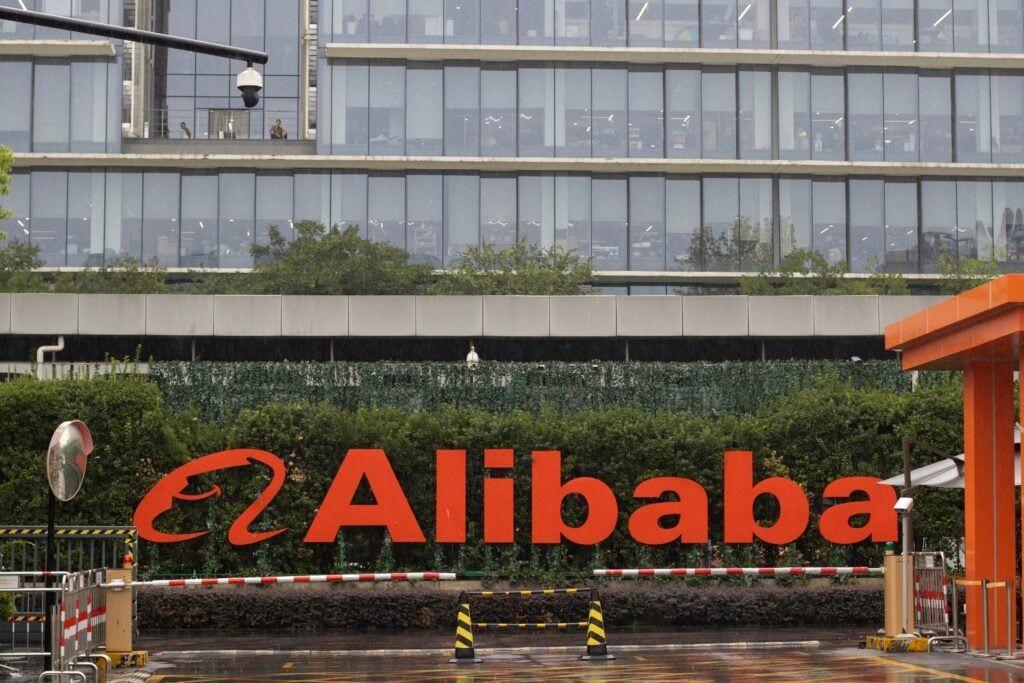
Source: Benzinga
The approval addresses a competitive disadvantage Apple faced against domestic rivals including Huawei and Xiaomi, which already offered AI features for iPhones in China
4
. China requires all generative AI services to undergo regulatory registration and content reviews before public release, making this milestone essential for Apple's market position3
.Strategic Importance for Apple's China AI Ambitions
The timing proves critical for Apple's business in Greater China, where second-quarter sales increased 28% to $20.5 billion
1
. Apple recently regained the No. 2 position in China's smartphone market following a shopping festival that offered iPhone discounts1
. The ability to finally offer AI features strengthens Apple's competitive stance in a market where iPhone sales depend increasingly on advanced capabilities.Apple explored multiple partnerships before finalizing arrangements to integrate Alibaba's Qwen AI model. Reports indicated the company considered deals with DeepSeek and ByteDance models, while initial discussions with Baidu faced challenges adapting models for Chinese customers
1
. The eventual dual-partnership approach with both Alibaba and Baidu suggests Apple opted for redundancy and broader capability coverage.Related Stories


U.S.-China AI Rivalry Intensifies Through Tech Partnerships
This development unfolds against escalating U.S.-China AI rivalry, with both nations competing for technological dominance. The U.S. has imposed restrictions on China's access to high-end chips, while Beijing has moved to limit American investments in Chinese tech companies
2
. According to research organization RAND, "AI leadership is becoming central to economic competitiveness, global standard-setting, and the maintenance of democratic governance"2
.The Cyberspace Administration's approval batch also included mobile generative AI offerings from Huawei, Xiaomi, Vivo, and Oppo, signaling China's broader push to establish domestic AI standards
3
. For Apple, navigating these geopolitical tensions while maintaining market access requires careful partnership selection and compliance with Chinese regulations. The success of this rollout will likely influence how other Western tech companies approach China AI integration, particularly as generative AI becomes standard in consumer devices. Baidu's AI chip unit Kunlunxin is reportedly targeting an IPO that could value it at $50 billion, indicating the scale of investment flowing into China's AI infrastructure2
.References
Summarized by

Navi
[3]
Related Stories
Recent Highlights
1
Microsoft and Nvidia Launch Surface Laptop Ultra: A $2,599 AI-Ready PC With RTX Spark Chip
Technology

2
Scientists Build AI Model That Reconstructs Images From Brain Scans in Record Time
Science and Research

3
Anthropic AI Cuts Live Internet Access After Model Sends False Homicide Tip to Philadelphia Police
Technology

Recent Highlights
Today's Top Stories






Don’t drown in AI news. We cut through the noise - filtering, ranking and summarizing the most important AI news, breakthroughs and research daily. Follow topics that matter to you and stay ahead.


