Apple Plans Return to Server Market with M8 Ultra-Powered AI Servers Targeting 2029 Launch


15 Sources
[1]
Apple reportedly building server packed with M-series Ultra chips for AI
Apple is working on an AI server that would use Apple's high-performance M-series Ultra chips found in Mac desktops. The potential product's expected release in 2029 would mark the first Apple server to hit the market in nearly two decades -- and could capitalize on the surging popularity of Apple
[2]
Apple might make servers again to cash in on the AI rush
According to The Information, Apple is planning to get back into the server game and might just pair up with NVIDIA to make it happen. Apple retired its Xserve line in 2011 and has largely left enterprise machines to other manufacturers since. But the growing demand for compute power as the AI
[3]
Apple eyes Nvidia NVLink to power its new custom M8 Ultra AI servers -- historically bitter rivals reportedly team up for 2029 data center push
Apple is reportedly developing AI servers based on its own M-series processors and is evaluating NVLink Fusion technology for interconnects, according to The Information. The machines are expected to use M8 Ultra processors and arrive in 2029, the report claims. For now, the usage of the NVLink
[4]
Apple considers Nvidia tech for return to server market, The Information reports
Sept 16 (Reuters) - Apple (AAPL.O), opens new tab has discussed using Nvidia's (NVDA.O), opens new tab NVLink Fusion networking technology in a planned AI inference server powered by its own chips, marking a potential return to the server market, the Information reported on Wednesday. The iPhone
[5]

Apple could return to the server market with M8 Ultra hardware and Nvidia networking
Serving tech enthusiasts for over 25 years. TechSpot means tech analysis and advice you can trust. Rumor mill: Apple could be exploring plans for an AI server powered by its future M8 Ultra chips and potentially Nvidia networking technology. The system would be aimed at companies that want to run
[6]

Apple is reportedly developing an enterprise server built on its own chips
The Information says two M8 Ultra chips or four, connected by Nvidia's NVLink Fusion, with nothing on the market before 2029, by which time Europe will have decided what sovereign compute means Apple is developing an enterprise server built on its own M8 Ultra chips and has discussed using
[7]

Apple planning to sell AI servers powered by M8 Ultra chips, says report
Apple is working on plans to make enterprise servers powered by M8 Ultra chips, according to a new report. The report specifically says that the company plans to offer the AI-focused servers for sale, not just use them internally. Two versions are said to be in development, with Apple considering
[8]

Apple may revive Xserve for the AI market
Report claims Apple's is developing a new chip specifically designed for AI servers, with a little help from Nvidia. endif; ?> According to a report by The Information, Apple could re-enter the server hardware market. The servers would be targeted at the AI development, with availability starting
[9]

Apple May Return to Server Market With Nvidia Technology
Apple is considering offering an AI server built around "M8" series chips and has discussed incorporating Nvidia networking hardware, The Information reports. The system would be sold to outside customers, potentially bringing Apple back into a business it left behind when it discontinued Xserve
[10]

Apple weighs its first server since the Xserve, and as always, Nvidia may hold the key
* Reports claim Apple is weighing an as-yet-unapproved enterprise AI server with two or four M8 Ultra chips, targeting 2029 * Apple is considering using Nvidia's NVLink Fusion to link the chips, with Thunderbolt-based Mac clustering falling short of data center bandwidth requirements * The move
[11]

Apple considers Nvidia tech for return to server market: The Information
Apple is developing an enterprise AI server for AI developers, businesses and governments that could come in versions featuring either two or four planned M8 Ultra chips, its highest-performance processors, the Information reported, citing people familiar with the matter. Apple has discussed using
[12]

Apple, Nvidia Eye Major Entry into AI Servers: Report - Apple (NASDAQ:AAPL), NVIDIA (NASDAQ:NVDA)
Apple Inc. (NASDAQ:AAPL) is developing an AI server that could use two or four planned M8 Ultra chips, The Information reported on Wednesday. The iPhone company is considering Nvidia Corp's (NASDAQ:NVDA) NVLink Fusion technology to connect the processors. The partnership could potentially
[13]

Apple Eyes NVIDIA's NVLink Fusion For Its M8-Based Baltra Servers, Signaling A Return To Enterprise Hardware After 2011 Exit
In a development that aligns with the industry-wide trend of building upon existing infrastructure nodes, Apple is reportedly looking to pair its upcoming "Baltra" ASIC with NVIDIA's bespoke low-latency connectivity solution, which then opens up sizable optionality for Apple's Private Compute
[14]

Apple Reportedly Plans AI Server Return with M8 Ultra Chips
Apple is reportedly planning a return to the server market with AI systems powered by M8 Ultra chips, almost 15 years after it ended its Xserve business. Apple is reportedly getting ready to enter the server market again. According to sources familiar with this matter, the Cupertino-based company
[15]

Apple Eyes Nvidia Technology for Its Return to the Server Market
Apple is evaluating the use of Nvidia's NVLink Fusion technology for a future server dedicated to artificial intelligence inference, according to The Information. The project, aimed at AI developers, businesses and public-sector agencies, would mark the company's return to the server market after
Share
Copy Link
Apple is developing an enterprise AI server powered by its future M8 Ultra chips, marking a potential return to the server market nearly two decades after discontinuing Xserve in 2011. The project could incorporate Nvidia NVLink Fusion technology and targets AI developers, businesses, and governments with a planned 2029 release.
Apple Eyes Return to Server Market After 18-Year Absence
Apple is developing an AI server that would mark its return to the server market for the first time since discontinuing its Xserve line in January 2011
1
. The enterprise server product would leverage Apple's high-performance M8 Ultra chips and is expected to launch in 2029, according to The Information2
. The project received backing from John Ternus when it began approximately a year ago, back when Ternus led Apple's hardware engineering efforts before becoming CEO1
.
Source: Ars Technica
The custom AI servers would come in two configurations: a smaller version equipped with two M8 Ultra chips and a higher-end model featuring four M8 Ultra chips
4
. This strategic move into the server market comes as AI companies and developers have been snapping up Apple's existing Mac mini and Mac Studio systems to run AI workloads, creating supply shortages2
.Booming Demand from AI Developers Drives Enterprise Push
The surge in popularity of Apple hardware among AI developers has undoubtedly encouraged this data center push. OpenAI has purchased tens of thousands of Mac mini and Mac Studio systems for training AI agents through trial-and-error reinforcement learning
1
. Meanwhile, Anthropic has rented Mac minis from Amazon Web Services for similar purposes5
. This unexpected demand demonstrates that Apple's M-series chips appeal to AI developers beyond their traditional Mac user base, particularly for AI inference work where models run on dedicated hardware5
.Apple already operates its own server infrastructure through Private Cloud Compute, which handles Apple Intelligence requests requiring more compute power than iPhones, iPads, or Macs can provide locally
5
. However, the company has not offered these servers to outside customers and has declined partner requests to use its Private Cloud Compute hardware5
. The proposed commercial AI inference server would represent a larger move into enterprise infrastructure specifically designed for businesses, governments, and AI developers.Nvidia NVLink Fusion Technology Under Consideration
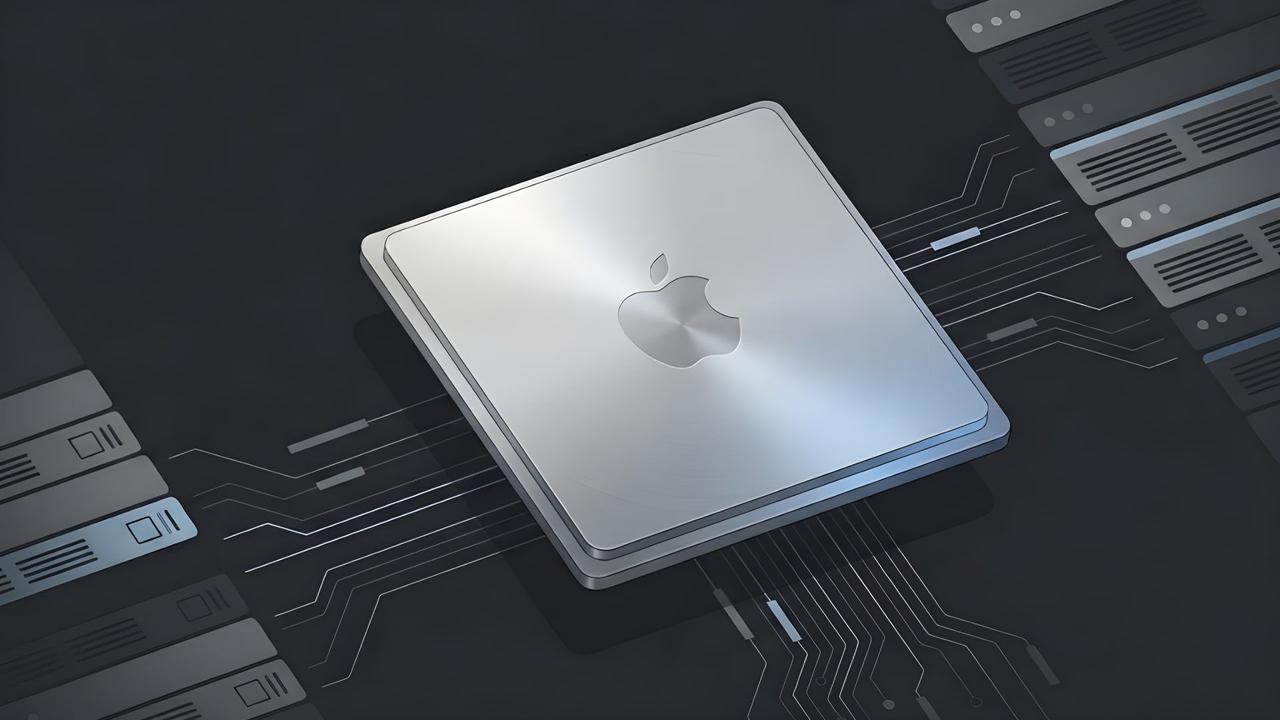
Apple is considering incorporating Nvidia NVLink Fusion technology to connect its M8 chips in the planned AI server
4
. This potential collaboration marks a notable shift, given that relations between the two tech giants have been strained for nearly two decades following an alleged defect in Nvidia graphics chips that caused widespread MacBook failures and led Apple to sever ties4
.While Apple has its own UltraFusion technology for connecting two high-end system-on-chips seamlessly, the company apparently lacks a proper solution for scale-up and scale-out connectivity of its processors at the scale required for enterprise deployments
3
. Apple's existing methods for linking chips could become too expensive or too slow for commercial server deployments5
. Nvidia's NVLink infrastructure includes not only an interconnection protocol but also switches, chiplets that add NVLink connectivity, and a comprehensive software stack3
.
Source: Wccftech
Chip Interconnectivity Challenges and Architecture Questions
The decision to potentially use Nvidia NVLink Fusion raises interesting architectural questions about how Apple intends to implement the technology. Modern Apple M Pro and M Ultra processors are system-in-packages consisting of a CPU chiplet and a GPU/neural engine chiplet stitched together using TSMC's SoIC-mH technology
3
. If Apple continues this architecture for M8 Ultra, questions remain about which components would participate in the NVLink domain and how the chip interconnectivity would function at scale.One possibility is that Apple could expose the accelerator portion of M8 Ultra to NVLink through an NVLink Fusion chiplet, effectively treating it as an accelerator for a scale-up domain
3
. Another speculation suggests Apple might be interested in considerably more than NVLink itself, potentially adopting Nvidia technology for both scale-up and scale-out connectivity instead of developing an entire data center architecture stack of its own3
.Related Stories

Market Challenges and Memory Chip Shortages
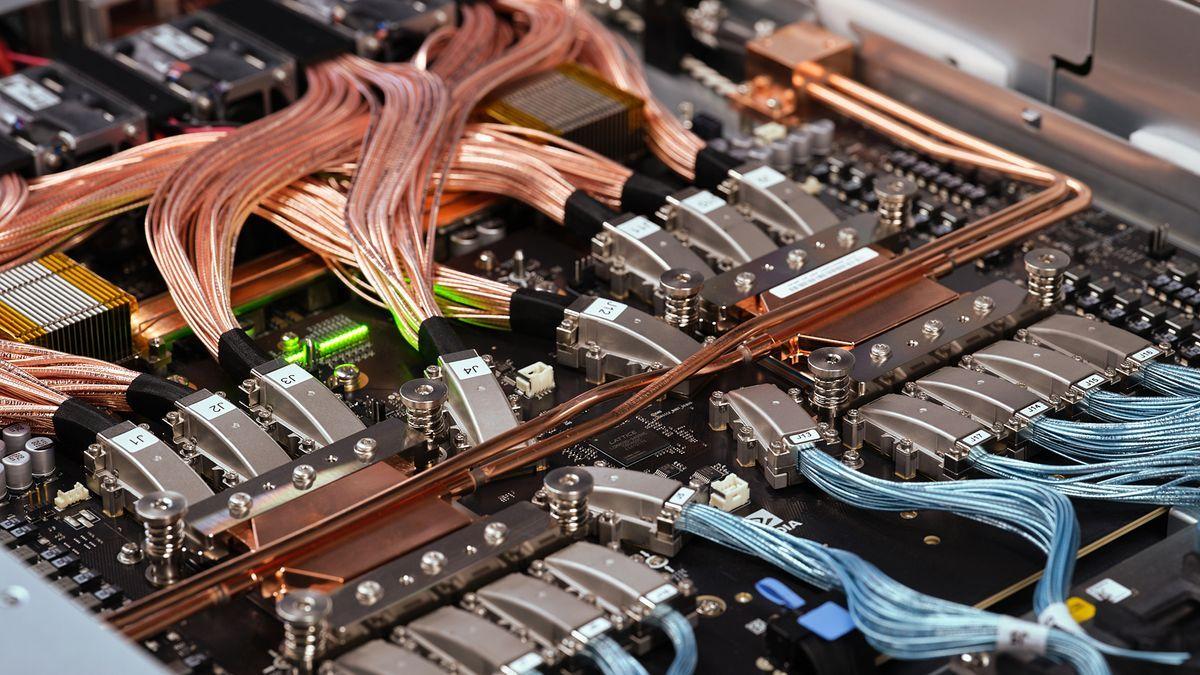
The project faces significant headwinds from the ongoing memory chip shortages affecting the entire tech industry. Demand from AI data-center operators has tightened memory-chip supplies and increased costs for systems requiring large amounts of memory
5
. This poses a particular challenge for Apple because its M-series architecture uses unified memory, which is crucial for handling larger AI models5
. The memory shortage has already led to significant price increases for consumer electronics including gaming devices, flagship smartphones, and a wide range of Apple products1
.
Source: Tom's Hardware
Additionally, Apple would need to build out substantial business infrastructure to support enterprise customers. Companies typically expect deployment assistance, developer tools, software support, and long-term service commitments
5
. Apple would need stronger support systems for business customers and more resources for AI developers, including further development of its MLX machine-learning framework5
.Project Timeline and Uncertainty
With Apple only announcing the M6 chip in August, the M8 line remains years away from production
2
. The AI server is not expected before 2029 and could still be canceled or launched without Nvidia technology4
. The Information cautioned that plans could change significantly before any potential launch1
.Recent developments suggest a warming relationship between Apple and Nvidia beyond this potential server collaboration. Apple has announced plans to expand Private Cloud Compute to Google Cloud infrastructure using Nvidia GPUs, and the companies have reportedly discussed other AI work, including Nvidia's open-source models
5
. If the AI server project moves forward successfully, it could become a notable part of John Ternus' legacy as Apple CEO, demonstrating the company's commitment to capturing enterprise AI workloads while leveraging its efficient ARM-based processor architecture1
.References
Summarized by

Navi
[3]
Related Stories
Apple to begin mass production of in-house AI server chips in H2 2026 as Google deal buys time
13 Jan 2026•Technology

Apple's $1 Billion Investment in NVIDIA AI Servers Signals Major Shift in AI Strategy
26 Mar 2025•Technology
Apple in Talks with Foxconn and Lenovo to Build AI Servers for Apple Intelligence
07 Nov 2024•Business and Economy

Recent Highlights



Recent Highlights
Today's Top Stories






Don’t drown in AI news. We cut through the noise - filtering, ranking and summarizing the most important AI news, breakthroughs and research daily. Follow topics that matter to you and stay ahead.


