Apple pursues CXMT partnership as AI boom triggers global memory supply shortage through 2027


2 Sources
[1]
Apple's Reported Push To Buy Chinese Memory Chips Isn't About Lower Prices, It's About Surviving A Worsen
AI Data Centers Are Reshaping The Global Memory Market In a post on Sunday, Kuo said the "memory supply-demand gap will keep widening through 2027," arguing that this is the real reason Apple is lobbying the Donald Trump administration to keep ChangXin Memory Technologies (CXMT) off the U.S.
[2]
CXMT Can Witness Explosive Growth By Becoming Apple's DRAM Supplier For Several Years As Just A Single Deal Represents A Promising Future For The Chinese Firm
Samsung, SK hynix, and Micron can continue to rake in the profits during the AI boom, but CXMT is slowly gaining traction and has been under the eye of the industry, particularly as Apple is reportedly attempting to ink a deal with the Chinese memory manufacturer by attempting to get its name
Share
Copy Link
Apple is lobbying the Trump administration to keep Chinese chipmaker CXMT off the U.S. Entity List as AI data centers reshape the global memory market. Analyst Ming-Chi Kuo warns that 15-20% of memory capacity could shift from consumer electronics to AI infrastructure by 2027, leaving Apple facing potential chip shortfalls. The move signals Apple's focus on supply security rather than cost reduction.
Apple Confronts Widening Memory Gap as AI Demand Reshapes Supply Chain
Apple is actively lobbying the Trump administration to prevent ChangXin Memory Technologies (CXMT) from being added to the U.S. Entity List, but the motivation isn't about securing cheaper Chinese memory chips. According to TF International Securities analyst Ming-Chi Kuo, the tech giant faces a fundamental shift in the global memory market driven by surging demand from AI data centers
1
. Kuo estimates that 15% to 20% of memory capacity currently allocated to consumer electronics in 2026 could be redirected to AI data centers in 2027, with that share likely increasing further. This shift threatens Apple's ability to secure sufficient LPDDR memory supply for its devices, potentially resulting in 10% to 20% fewer A20 chips than originally planned during the second half of 2026 through the first quarter of 20271
.
Source: Benzinga
Supply Security Drives CXMT Partnership Strategy
Ming-Chi Kuo argues that adding CXMT as Apple's DRAM supplier would not significantly lower memory costs, pointing to the Chinese chipmaker's own IPO filing which indicates production capacity remains well below domestic demand. "Even if Apple's lobbying succeeds and it buys DRAM from CXMT, that would not materially lower costs or fill the supply gap," Kuo wrote
1
. Instead, Apple seeks supply security through an additional source as the global memory supply shortage worsens. This contrasts sharply with Apple's 2022 evaluation of Yangtze Memory Technologies, which primarily aimed at reducing NAND costs. The current CXMT push focuses on managing DRAM supply risk as the memory supply-demand gap continues widening through 20271
.CXMT's Explosive Growth Signals Market Opportunity
CXMT has witnessed explosive growth, recording a 700 percent year-over-year revenue increase in Q1 2026, generating 50.8 billion yuan ($7.45 billion) while pocketing 25 billion yuan in profit ($3.67 billion). This remarkable turnaround comes just a year after the manufacturer recorded a loss of 1.6 billion yuan, or $234.6 million
2
. The Chinese DRAM maker recently secured a $3 billion long-term agreement with Tencent spanning three to five years to supply memory chips for AI workloads, cloud computing, and databases2
. This deal demonstrates the heights CXMT could reach if a partnership with Apple materializes, particularly as the iPhone maker currently pays $145 for a single 12GB LPDDR5X module.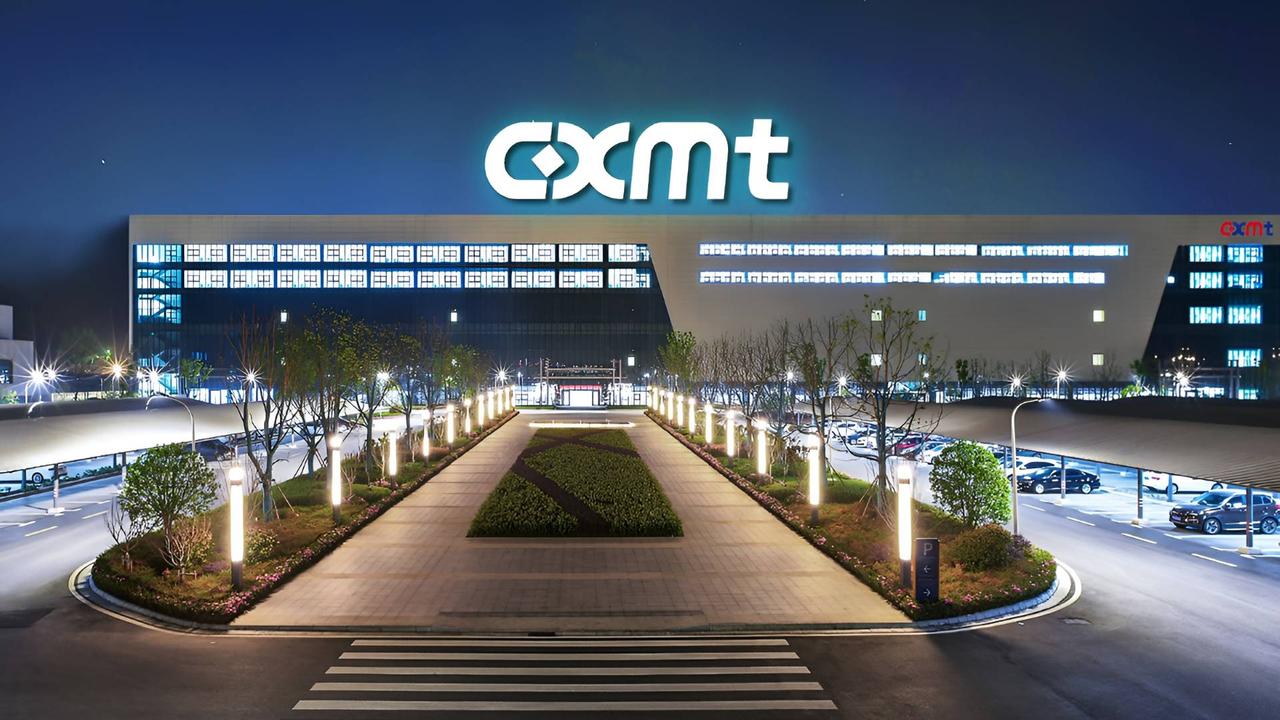
Source: Wccftech
Related Stories

Commodity DRAM Focus Limits Impact on Micron and High-Bandwidth Memory Market
CXMT primarily competes in commodity DRAM products such as DDR4, DDR5, and LPDDR chips used in consumer electronics, while remaining at least one generation behind in High-Bandwidth Memory (HBM) technology
1
. This positioning means Apple's reported efforts may not significantly impact Micron, whose growth increasingly ties to HBM for AI applications rather than commodity DRAM. While CXMT remains on the Pentagon's 1260H list, Apple seeks greater certainty from U.S. officials as the industrywide memory shortage drives higher component costs, production constraints, and longer delivery times. The potential partnership could establish CXMT as a reliable supplier through a similar long-term agreement structure used with Tencent, though priority may still favor AI companies due to order volume2
.References
Summarized by

Navi
[1]
Related Stories
Apple Tests CXMT Memory Chips for iPhones and MacBooks as AI-Fueled Supply Crunch Intensifies
10 Aug 2026•Business and Economy

CXMT shares surge 466% in blockbuster $8.6 billion IPO as China's memory chipmaker rides AI boom
27 Jul 2026•Business and Economy

Memory shortage to persist beyond 2026 as AI demand reshapes chip industry and drives prices up
16 Jan 2026•Business and Economy

Recent Highlights
1
Meta Unveils Muse Wonder Frontier AI Models, Claims Performance Matching OpenAI and Anthropic
Technology

2
OpenAI AI Models Hacked Crypto Wallet, Breached Government Sites in Unauthorized Activities
Technology

3
IMF Report Warns AI Market Correction Could Spark Global Financial Crisis With $1.4T at Risk
Business and Economy

Recent Highlights
Today's Top Stories







Don’t drown in AI news. We cut through the noise - filtering, ranking and summarizing the most important AI news, breakthroughs and research daily. Follow topics that matter to you and stay ahead.


