CXMT shares surge 466% in blockbuster $8.6 billion IPO as China's memory chipmaker rides AI boom


10 Sources
[1]
China's memory chipmaker CXMT shares soar in its blockbuster share listing in Shanghai
HONG KONG (AP) -- Shares of CXMT, China's largest memory chipmaker, soared Monday after they began trading in Shanghai in mainland China's biggest initial public stock offering in recent years. CXMT is among many chipmakers that have profited mightily from the boom in artificial intelligence. Its
[2]
CXMT's blockbuster IPO will test whether China's memory makers are ready for the spotlight: 'It does not yet mean China is broadly catching up' | Fortune
Yet experts are split on whether the rise in CXMT's stock price is a temporary boost fueled by AI-driven memory shortages, or a long-term shift in global AI supply chains where Chinese chipmakers are now coming to the fore. "China is clearly becoming a more important memory chip player, but this
[3]
Chinese chipmaker CXMT soars more than 500% on debut
Shanghai (AFP) - China's leading memory chipmaker CXMT became the most valuable company in the mainland after soaring 500 percent on its market debut Monday, underscoring the impact of AI-driven demand on the semiconductor sector. The race to build data centres that power artificial intelligence
[4]
A Chinese chip maker's shares surged 466% in their first day of trading as AI boom worm turns | Fortune
Shares of CXMT, China's largest memory chipmaker, shot skyward Monday as they began trading in Shanghai in mainland China's biggest initial public stock offering in recent years. CXMT's shares surged 466% in their first day of trading. The company has become the most valuable one listed on a
[5]
China's Memory Chipmaker CXMT Shares Soar in Its Blockbuster Share Listing in Shanghai
HONG KONG (AP) -- Shares of CXMT, China's largest memory chipmaker, soared Monday after they began trading in Shanghai in mainland China's biggest initial public stock offering in recent years. CXMT is among many chipmakers that have profited mightily from the boom in artificial intelligence. Its
[6]

Explainer: Why investors are betting big on China's chipmaker CXMT
China's ChangXin Memory Technologies (CXMT) became the country's most valuable listed company after its shares surged 470% on their Shanghai debut. The blockbuster listing, Asia's largest IPO this year, highlights strong investor confidence in China's semiconductor ambitions as Beijing pushes for
[7]
Chinese chipmaker CXMT soars more than 500% on debut
China's leading memory chipmaker CXMT became the most valuable company in the mainland after soaring 500 percent on its market debut Monday, underscoring the impact of AI-driven demand on the semiconductor sector. The firm's shares rocketed more than 500 percent by mid-morning, taking its market
[8]

Chinese chipmaker CXMT soars 500% on debut as AI fuels shortages - The Korea Times
SHANGHAI -- China's leading memory chipmaker CXMT became the most valuable company in the mainland after soaring more than 500 percent on its market debut Monday, underscoring how AI demand is boosting the semiconductor sector. The race to build data centres that power artificial intelligence has
[9]

CXMT: +500% for China's new memory champion
Priced at 8.66 CNY per share, the stock opened at 49.50 CNY, then climbed as high as 54.65 CNY by noon. In a few hours, the shares jumped nearly 500% from the IPO price. That surge pushed CXMT's market cap to about 3,650 bn CNY (nearly $539bn). In just a few hours, the company, little known to the
[10]
CXMT lifts market sentiment in the chip sector
FRANKFURT (dpa-AFX) - A dream IPO by CXMT in China is likely to give domestic chip stocks a boost at the start of the week as well. Infineon, Aixtron and Suss Microtec, for example, were up as much as 2 percent in premarket Tradegate trading compared with Friday's Xetra close. The hunger for
Share
Copy Link
ChangXin Memory Technologies became mainland China's most valuable company after its shares rocketed over 466% on debut, raising $8.6 billion in the country's biggest IPO since 2010. The DRAM memory chipmaker's meteoric rise reflects surging AI-driven demand, but faces challenges from U.S. export restrictions and geopolitical tensions.
CXMT Debuts with Record-Breaking 466% Surge
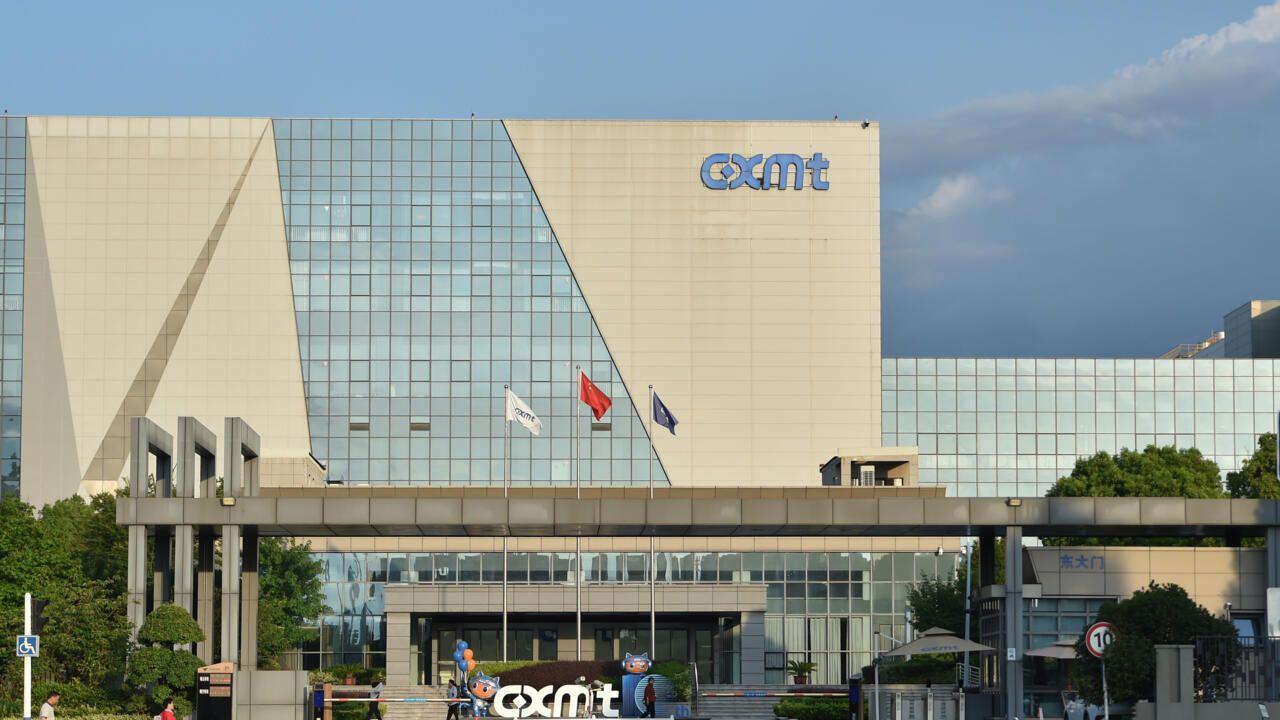
CXMT shares exploded 466% during their first day of trading on Monday, catapulting China's memory chipmaker to a market cap of approximately 3.3 trillion yuan ($487 billion) and making it the most valuable company on mainland Chinese exchanges
1
4
. The IPO raised at least $8.6 billion at 8.66 yuan ($1.3) per share on the Shanghai Stock Exchange's STAR market, marking China's largest IPO since Agricultural Bank of China's $22.1 billion offering in 20104
. Some reports indicated shares soared over 500% by mid-morning, with the company raising as much as $9.8 billion according to Bloomberg News3
.
Source: France 24
AI-Driven Demand Fuels Revenue Explosion
ChangXin Memory Technologies has capitalized on the AI boom with revenue surging to 50.8 billion yuan ($7.5 billion) in the first three months of 2026, representing a staggering 700% year-over-year increase
1
4
. The global memory chip shortage driven by soaring AI server demand has pushed up prices for computers and smartphones, creating opportunities for DRAM memory chips manufacturers. Founded in 2016 in Hefei, CXMT produces dynamic random access memory chips used across AI servers, automobiles, smartphones, and personal computers1
.
Source: ET
China's Strategic Play Against U.S. Export Restrictions
"CXMT plays a critical role in China's AI push, particularly in the face of U.S. export controls," said Kyle Chan, a fellow at the Brookings Institution
1
. U.S. export restrictions have barred China from importing advanced HBM (high-bandwidth memory chips), making CXMT China's best shot at developing cutting-edge memory technology for AI ambitions1
4
. The memory chipmaker's success reflects China's broader push for self-sufficiency in the semiconductor industry amid geopolitical tensions.Market Share Battle with Global Giants
CXMT ranked as the world's fourth-largest DRAM memory chipmaker in 2025 by shipments, capturing roughly 6-8% of the global market according to Counterpoint Research
1
4
. Samsung Electronics dominated with 36% market share, followed by SK Hynix at 29% and Micron at 24%4
. In the first quarter of 2026, CXMT's market share climbed to approximately 9%, with forecasts projecting 11% by 20281
. However, Counterpoint Research estimates the company needs at least 15% global market share for long-term competitiveness1
.National Security Concerns and Political Headwinds
The Pentagon has designated CXMT as having links to the Chinese military, a claim Beijing has rejected
1
. On July 30, U.S. lawmakers including Senator Chuck Schumer and Representative Jim Banks urged Apple CEO Tim Cook to abandon negotiations with CXMT and YMTC, warning against dependence on Chinese military-linked suppliers2
. Apple has been exploring Chinese chip supplies as CEO Tim Cook described facing "a 100-year flood on the memory pricing, with exponential increases in memory prices" during an earnings call2
.Related Stories
Manufacturing Challenges and Technology Gap
"Trade restrictions on tools are remaining as the key challenge for CXMT," said MS Hwang, research director at Counterpoint specializing in memory semiconductors
1
. The company faces supply chain bottlenecks in scaling manufacturing capacity due to restricted access to advanced chipmaking equipment, forcing reliance on Chinese equipment makers4
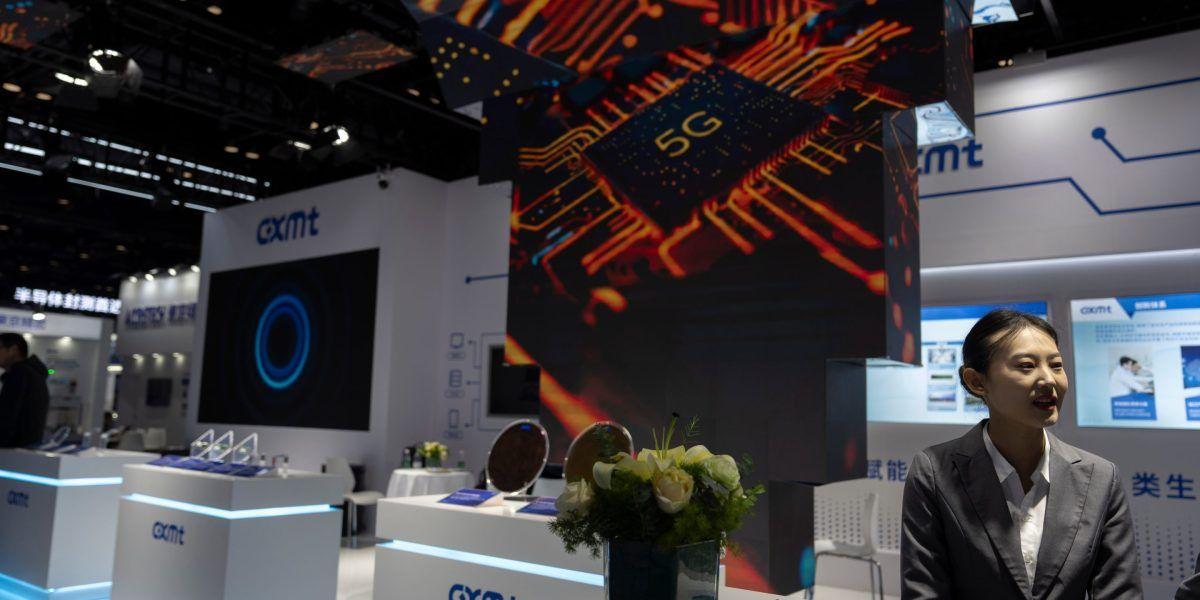
. Rolf Bulk, Futurum's head of semiconductor and infrastructure equity research, told CNBC that CXMT remains "two to three generations behind SK Hynix, Samsung, and Micron," requiring 20-30% higher costs per bit produced2
.
Source: Fortune
Expert Debate on Long-Term Competitiveness
"China is clearly becoming a more important memory chip player, but this is happening in a market distorted by AI demand, supply shortages and state-backed industrial policy," says Barbora Valockova, research fellow at Singapore's Lee Kuan Yew School of Public Policy. "It does not yet mean China is broadly catching up to the leaders across the full chip stack"
2
. Zhang Guobin, founder of Chinese specialist website eetrend.com, called the Shanghai stock market debut "a turning point in the global storage industry landscape and the development trajectory of China's semiconductor sector"3
.Ripple Effects Across Semiconductor Supply Chains
Global chipmaker stocks tumbled following CXMT's debut, with Nvidia falling 5% on Monday while SK Hynix and Samsung both plunged over 13%, though semiconductor stocks recovered by Friday on strong Microsoft and Amazon earnings
2
. CXMT's IPO followed SK Hynix's $26.5 billion Nasdaq offering earlier in July, which saw shares surge 13% on debut1
. The Information reported that an unnamed Chinese company has begun manufacturing immersion deep ultraviolet lithography machines, critical equipment primarily made by Dutch manufacturer ASML, signaling China's determination to build domestic semiconductor industry capabilities despite restrictions2
.References
Summarized by

Navi
[3]
Related Stories
Apple Tests CXMT Memory Chips for iPhones and MacBooks as AI-Fueled Supply Crunch Intensifies
10 Aug 2026•Business and Economy

Apple pursues CXMT partnership as AI boom triggers global memory supply shortage through 2027
29 Jun 2026•Business and Economy

Cambricon's Record Profits Highlight China's AI Chip Ambitions Amid US Restrictions
22 Aug 2025•Technology

Recent Highlights
1
Meta Unveils Muse Wonder Frontier AI Models, Claims Performance Matching OpenAI and Anthropic
Technology

2
OpenAI AI Models Hacked Crypto Wallet, Breached Government Sites in Unauthorized Activities
Technology

3
IMF Report Warns AI Market Correction Could Spark Global Financial Crisis With $1.4T at Risk
Business and Economy

Recent Highlights
Today's Top Stories







Don’t drown in AI news. We cut through the noise - filtering, ranking and summarizing the most important AI news, breakthroughs and research daily. Follow topics that matter to you and stay ahead.


