12 Sources
[1]
Apple expected to unveil new AI features at last developers conference with CEO Tim Cook
Apple is expected to unveil new artificial intelligence features at its annual developers conference beginning Monday, which will be the last one featuring CEO Tim Cook before he turns his post over to John Ternus in September. The World Wide Developers Conference, which attracts thousands of developers from some 60 countries to Apple's Silicon Valley headquarters, usually focuses on software, in contrast to the fall unveiling of the latest iPhones. Analysts expect the iPhone maker to give updates on new AI features and capabilities, including developments with its Siri voice assistant. "While hardware products are rarely launched at a developer show, we could see hints of Apple's expansion into foldables, wearables, and smart home products by way of developer and ecosystem updates," said Emarketer senior analyst Gadjo Sevilla, who called 2026 a "transition year" for the conference. Apple has been playing catch-up with on AI with its Big Tech peers. It uses Google's Gemini AI model to help power its AI features. Sevilla said he anticipates Siri will be reimagined as an AI chatbot and will be more conversational, have memory to pick up previous conversations, and will be able to complete multiple tasks with single requests. There is optimism around the potential for an enhanced Siri, he said. "An upgraded, agentic version of Siri -- capable of managing conversations and tasks across iPhones, Macs, and iPads -- could become as ubiquitous as features like AirDrop and Handoff, which already unify Apple's ecosystem," Sevilla said. Cook announced his retirement in April, ending a 15-year run that saw the company's market value soar by more than $4 trillion during an iPhone-fueled era of prosperity. Ternus has been with Apple for the past quarter century, including the past five years overseeing the engineering underlying the iPhone, iPad and Mac -- a role that made him a prime candidate to succeed Cook. The transition to a new CEO comes at a pivotal time for Apple. Artificial intelligence has unleashed the most upheaval within the industry since Jobs unveiled the first iPhone in 2007. Apple has gotten off to a rough start in AI after stumbling in its efforts to deliver new features built on the technology, as promised nearly two years ago.
[2]
Apple unveils Siri AI makeover as Tim Cook bids farewell
Apple has announced a significant overhaul of its digital assistant, unveiling Siri AI that the company promised would offer a better artificial intelligence experience for users. The iPhone maker also announced on Monday a suite of changes to its trust and safety features that it said would help keep kids safer when using Apple products. The announcements were made at the company's annual Worldwide Developers Conference (WWDC), slated to be Tim Cook's last as CEO before he steps down in September after 15 years at the helm. Cook will be replaced by John Ternus, who has been a major presence at WWDC but did not speak at the company's main keynote address on Monday morning. Apple's introduction of Siri AI comes after criticism that the company has fallen behind fellow technology giants. The new version of Siri will work across other Apple products and apps, and will also accompany a new app, similar to what OpenAI and Anthropic offer for their AI assistants. The company promised that Siri AI would draw from a user's past interactions with the app, an understanding of images, as well as broad-world knowledge and will serve as a more capable and conversational assistant than its current iteration. During his comments, the company's perpetually sunny senior vice president of Software Engineering, Craig Federighi, leveled an unusual public critique of "AI for the sake of AI without considering the people it's supposed to be able to serve." "We believe that truly helpful AI must be centered around you and your needs," Federighi said, adding that Apple's new Siri AI experience was designed with privacy in mind "at every step." Apple Intelligence already offers writing tools and image editing but the company has been slow to roll out its new and improved Siri. "Apple had to address its shortcomings in AI, and WWDC provided some answers," said Ben Wood, chief analyst at the industry analyst firm FDM CCS Insight. "The company must now prove that its privacy-led, integration-first approach can translate into a meaningfully better everyday experience, not just parity with rivals." "Whether it has succeeded or not will come down to user reaction when new capabilities are in their hands," Wood added. A beta version of Siri AI will be available later this year to supported devices set to English -- although not in the EU. "Over the past several months, EU regulators did not accept any of Apple's proposed solutions to bring Siri AI to the EU while safely supporting other virtual assistants," Apple said in a news release on Monday. Earlier this year, the company partnered with Google to roll out Apple Foundation Models that will be based on Google's Gemini models and cloud technology. Apple also outlined changes to its trust and safety initiatives as part of its rollout of iOS 27. The company will expand its "ask" feature which can enable parents to control whom their children can speak with, requiring parental approval before they can converse with an unknown person. Apple also said it will automatically censor any image sent to a known child's device if its flagged by its system as potentially inappropriate for sexual or violent content. Federighi said Apple was providing "powerful, easy to use tools to manage what kids can see, who they talk to and when they have access." The company has come under fire from some child safety advocates for failing to do enough to protect kids. A small group of protesters gathered outside early Monday morning ahead of the keynote to critique Apple's approach to child safety in its App Store. Sarah Gardner of the HEAT Initiative, an advocacy group, chained herself to a tree in front of the Apple visitors centre as she demanded Apple remove all "nudification" technology from its App Store. Gardner also asked that Apple take down all child sexual abuse material, known as CSAM, from iCloud, saying that the company has made at least $177mn from sexually explicit AI deepfake apps. The BBC has reached out to Apple for a response to the allegations. Earlier Monday, Sir Keir Starmer said in a speech that he was demanding that tech companies including Apple and Google block access to naked images on smartphones and other devices for anyone under 18 years old. Also notable was Tim Cook's last appearance at WWDC as CEO, a role he took over after Apple co-founder Steve Jobs stepped down for health reasons shortly before his death. Cook has held the job for 15 years. Thousands of Apple employees and developers in the audience at Apple Park greeted him with a standing ovation. "I've never seen so many iPhones before!," Cook joked. Cook also appeared to get emotional at various points as he bid farewell. "I've loved hearing your stories and hearing how you're enriching the lives of so many people around the world," he told the developers in the audience before thanking members of the Apple staff. "Your imagination and ingenuity have inspired me for the last 15 years and I'm deeply grateful to have been on this journey with you." Cook called it the "honour of a lifetime" to serve as head of the company. His replacement, John Ternus, did not appear as part of the main keynote presentation and was seated in the front row next to Cook at a media briefing on the company's new Siri AI features. On Sunday evening, he greeted attendees at a welcome reception that in some-ways also acted as his coming-out party, analysts say. "WWDC 2026 gives Ternus a clear strategic runway: more personal devices, more contextual software, more intelligent services and a tighter link between silicon, hardware and AI," said Francisco Jeronimo, VP for data and analytics at the market intelligence firm IDC EMEA. "If Apple delivers the experience with the reliability, elegance and trust users expect, this could be remembered as the moment Siri and Apple Intelligence moved from the background of Apple's ecosystem to the centre of its future." Sign up for our Tech Decoded newsletter to follow the world's top tech stories and trends. Outside the UK? Sign up here.
[3]
Apple finally unveils Siri AI at Tim Cook's farewell WWDC keynote
During his final Worldwide Developers Conference keynote before stepping down as Apple CEO in September, Tim Cook unveiled the long-awaited Siri overhaul that has been at the center of Apple's AI ambitions for years. At WWDC 2026, Apple formally introduced Siri AI, a rebuilt version of its digital assistant that arrives after delays and growing pressure from rivals in the artificial intelligence race. The keynote also brought a broad expansion of Apple Intelligence features across the iPhone, iPad, and Mac, making AI the defining theme of Cook's final developer conference. Alongside the AI announcements, Apple revealed iOS 27, new family safety tools, refinements to its Liquid Glass design language, and the next version of macOS, called Golden Gate. The headline announcement was Siri AI, a redesigned version of Apple's voice assistant built to handle more natural conversations and provide more contextual responses. Users can now customize how Siri sounds through new pacing and expressiveness controls, while also interacting with the assistant through voice or text. Apple has moved Siri into a dedicated app while maintaining integration across its operating systems. The assistant also gains access to Visual Intelligence features, allowing it to identify locations and other details from images stored on a user's device. The launch marks a significant milestone for Apple after months of scrutiny surrounding delays to advanced Siri features. The company is positioning the new assistant as a central part of its broader AI strategy moving forward. Apple Intelligence is now reaching deeper into many of the company's most-used applications. Safari can monitor webpages and notify users when information changes, while Messages and Mail gain smarter contextual reply suggestions. Calendar can create events from conversational prompts, and the Home app can summarize camera activity and make footage easier to search. Apple is also bringing AI-assisted automation to Shortcuts, allowing users to describe a task and have the software build the shortcut automatically. The updates reflect Apple's effort to weave AI features directly into everyday workflows rather than confining them to standalone tools. Apple also highlighted the scale of its upcoming software rollout. The company said iOS 27 will support every iPhone model dating back to the iPhone 11, making it one of the broadest compatibility expansions in the platform's history. Apple claimed the update will reach more users than any previous iOS release. The company also announced several performance improvements, including faster photo loading, quicker AirDrop transfers, and multitasking enhancements. Alongside iOS 27, Apple introduced new tools for families. Parents will be able to create approved app lists for child accounts and manage access over time. A new Communication Safety feature will help prevent children and teenagers from viewing shared content that contains nudity, graphic imagery, and other sensitive material. Apple also refined its Liquid Glass interface with new readability improvements and user-controlled transparency settings. The company closed the software showcase with a preview of macOS Golden Gate, which will become the next major release for Mac users. Taken together, the announcements represented Apple's most ambitious AI-focused software update yet, giving Cook a fitting final WWDC centered on the Siri upgrade that many users had been waiting to see.
[4]
Apple debuts Siri AI at WWDC as Tim Cook prepares to hand over the reins | Fortune
On Monday, Apple held its annual Worldwide Developers Conference, in what was both Tim Cook's last as chief executive and what analysts have dubbed the company's most high-stakes showcase in years. At the event, Apple debuted a new and improved Siri -- rebranded as Siri AI -- as the company sought to answer mounting questions about its place in the AI race. The revamped assistant, which can draw on real-time information and personal device data, marks the company's most significant AI push to date. The event comes at a pivotal moment for Apple. The company has been under pressure to stay current as other leading tech giants continue making gains in the AI space. Its first attempt at an AI offering -- Apple Intelligence, released in Oct. 2024 -- was widely considered a misstep due to several feature delays and what was seen as over-promising on capabilities that were not ready for launch. In the run-up to WWDC, however, Apple has seen its shares approach record levels, lifted by continued iPhone sales strength and a January agreement to bring Google's AI into its ecosystem. Perhaps most hotly anticipated among Monday's updates were Apple's new AI features, chief among them a new Siri. Apple says the revamped assistant, unveiled by Apple vice president Mike Rockwell, can understand personal context and what apps across a device can do, fulfilling improvements Apple first promised in 2024. Siri AI can draw on both real-time world knowledge and information stored on a user's device. Apple says Siri AI is more conversational and allows users to go back and forth across multiple exchanges, receiving longer, more detailed answers. The new Siri will include a standalone app, which positions it to compete more directly with tools like OpenAI's ChatGPT and Anthropic's Claude. It also comes with new voices that are customizable. As Apple continues to carve it its identity in the AI race, the company was keen to differentiate itself from rival tech companies and stake out a distinct approach to AI during the event. Taking a few swipes at several AI companies, Apple's software chief, Craig Federighi, took the time to emphasize the company's focus on privacy and user experience. "Some appear to be racing forward, seemingly pursuing AI for the sake of AI, without clear regard for the people, all of us, that it's ultimately meant to serve. At Apple, our mission has always been to turn the potential of advanced technology into helpful and intuitive products for everyone," Federighi said. "Many AI providers talk about privacy, but by default, most of them retain your personal interactions, leaving the onus on you to defend your privacy." Alongside Siri, Apple also announced a shift into AI-enhanced photography with a new feature called Spatial Reframing, which uses 3D modeling to let users adjust the angle or composition of an existing photo after it has been taken. The company also revealed a second version of its Apple Foundation Models, capable of processing speech, text, and images, with Apple Intelligence coordinating across them through a new system orchestrator. Analysts have been putting pressure on Apple to deliver a clear AI strategy. Prior to Monday's event, Gene Munster, managing partner at Deepwater Asset Management, called it the most important WWDC in the conference's 43-year history. Munster said that if Apple delivers on the new Siri, the company's AI narrative could shift from follower to leader, with a corresponding boost to its stock. If it falls flat, he argued, investor patience -- already stretched thin after two years of underwhelming AI progress -- will likely fray further. Morgan Stanley took a similar stance, calling WWDC 2026 a key catalyst for Apple stock, with the potential to reframe the company as an "AI winner." Apple's stock rose around 2% at Monday's open, but slid during the WWDC keynote. Design upgrades and new tools for parents Outside of AI, Apple announced a series of design upgrades, a search overhaul, and new trust and safety tools. The company introduced updates to Liquid Glass, the design language it introduced across its devices last year, to make the system more customizable. Users can now adjust window transparency and tweak text labels and toolbars. Apple also said it has tuned macOS to open apps faster and feel more responsive. Apple announced it had also overhauled the search index that underpins Spotlight and other system features, with the company saying the rebuild makes its search tools more stable and efficient. Content will now be indexed as it is created, which Apple said will improve search across the device, including in the Mail app. The company also unveiled a suite of new trust and safety controls aimed at giving parents greater oversight of their children's device and app usage. A new setup assistant walks parents through configuring which apps their children can access and for how long. Children using Safari on iPhone, iPad, or Mac will now also need parental approval before visiting certain websites. Tim Cook's farewell Monday's WWDC was also the last to be hosted by outgoing CEO Tim Cook, who rounded the event off on a personal note. "It's been the honor of a lifetime to help advance that mission with teams whose creativity, care, and conviction continue to make a lasting difference in people's lives," Cook said of his time at the company. After nearly 15 years at the helm, Apple announced in April that Cook will step down as chief executive, with the transition set for September 1. John Ternus, Apple's senior vice president of hardware engineering, will take over as CEO, while Cook assumes the role of executive chairman. Over 25 years at Apple, Ternus has been a key architect of the company's hardware pipeline, overseeing engineering for the iPad, AirPods, and recent iPhone models. His selection is widely seen as a signal that Apple's board believes the next decade of competition will be won or lost at the hardware-AI intersection.
[5]
Apple tries again on AI, turns to Google for help
San Francisco (United States) (AFP) - Apple unveiled an artificial intelligence overhaul for the iPhone on Monday, turning to Google for help two years after the company stumbled on a first attempt. The presentation marked Apple CEO Tim Cook's final appearance at the company's annual developers conference -- Cook will cede the reins to longtime executive John Ternus in September. Cook two years ago announced at the same conference that Apple was making a major leap to embrace AI, in a program called Apple Intelligence, as the company faced pressure to join the AI race that had engulfed its US tech giant rivals. But its promised rollout never occurred fully, with a much-anticipated upgrade to the Siri voice assistant failing to materialize despite the announcements, drawing a lawsuit from some US customers that the company settled earlier this year. Apple's more deliberate pace in entering the AI frenzy has won praise from some analysts, who credit the company for staying out of the hundreds of billions of dollars in infrastructure spending committed by rivals to build out AI capacity. The company underlined this narrative at the event, saying it was taking its time to get the technology right. "AI is incredibly powerful technology with the potential to shape society in profound ways, and with proper care, unlock meaningful benefits for people everywhere," Apple's software chief Craig Federighi said in a launch video. "Still, some appear to be racing forward, seemingly pursuing AI for the sake of AI, without clear regard for the people... that it's ultimately meant to serve." The company again promised a strengthened Siri -- dubbed Siri AI -- with the ability to communicate naturally and track information across apps like Maps and Mail and carry out tasks. Many of the advances Apple announced on Monday have already been rolled out to individual users by Google, with AI-powered features added to Gmail, Maps and its Android operating system for smartphones and tablets. "Apple is making an enormous bet on AI -- but their bet is that they don't need to spend hundreds of billions per year on AI infrastructure...to reap the benefits," said John Gruber, a closely followed blogger tracking Apple. Instead of building models in-house, Apple hired Google to provide the AI capabilities for its new capabilities, using a version of the search engine giant's Gemini model rather than any technology developed internally. Google and Apple are already closely tied, with Google paying out tens of billions of dollars every year to be the default search engine on the iPhone's Safari web browser. Apple also touted its parental controls as tech companies face increasing pressure worldwide on child safety and screen addiction. These included beefed-up time allowance tools for children, with special attention to social media and games. Despite the company's lack of a competitive AI offering, Apple shares have largely defied gravity over the past two years, and the stock is up about 15 percent this year. In the first quarter of this year, Apple iPhone sales grew by double digits in just about every country where it does business.
[6]
Apple lays out its AI with a new Siri: Here's what to know
Apple's unveiling of Siri AI comes after criticism that the company has fallen behind in the AI race. Apple's keynote at its annual World Wide Developers Conference unveiled new and long-awaited artificial intelligence advances, including upgrades to its Siri assistant. It was also the last one to be held by CEO Tim Cook before he turns his post over to John Ternus in September. Cook received an extended standing ovation and told the audience he is "deeply grateful to have been on this journey with you" and said "the energy around Apple platforms has never been stronger." Here are the key takeaways from the event. The new Siri AI The new Siri, which Apple is calling Siri AI, will be available on Apple devices and will analyse what is on a user's screen and incorporate information from a person's Apple devices to better answer questions. Apple emphasised a focus on privacy and day-to-day use as the iPhone maker tries to catch up to rivals when it comes to AI. It will be available both in a standalone app and throughout the company's software, and Apple plans to launchSiri AI in beta later this year. Apple said Siri is now a "much more capable assistant" that can help users find what they need and get things done across various Apple devices. For instance, it can create a menu and gather recipes from the web or from your own text messages for a World Cup viewing party and invite friends from a group chat. Siri mode on your camera, meanwhile, can tell you what you are looking at and give you relevant information, such as the nutritional details of a plate of food. Siri's visual intelligence also works with images on your screen. For example, it can tell you whether a backpack you are thinking of getting will work as a carry-on for a flight or whether a pair of bulky hiking boots will fit inside it. Apple focuses on helpful AI Apple software chief Craig Federighi took some swipes at AI companies -- without naming them -- that seem to be "pursuing AI for the sake of AI" without clear regard for the people it is supposed to serve. At Apple, he said, "we believe that truly helpful AI should be centred around you and your needs," which means integrating AI into the products people use every day while prioritising privacy. Apple is partnering with Google on the models that will power its new Siri and other features. Apple also announced improvements to its popular AI photo editing tools, including spatial reframing that lets you adjust how a photo is framed after it was taken -- as if you had moved the camera to a better position while you were snapping the picture. Apple's announcement follows Google's and OpenAI's launches of tools that allow users to incorporate photos and other media into AI queries. A standalone Siri AI app will launch later this year, though Apple said it will not initially be available in Europe and it won't be available in China while the company works out regulatory issues. Tim Cook's last WWDC Cook announced his retirement in April, ending a 15-year run that saw the company's market value soar by more than $4 trillion (€3.47tn) during an iPhone-fueled era of prosperity. Ternus has been with Apple for the past quarter century, including the past five years overseeing the engineering underlying the iPhone, iPad and Mac -- a role that made him a prime candidate to succeed Cook. Ternus did not take the main stage during Monday's event. The transition to a new CEO comes at a pivotal time for Apple. Artificial intelligence has proved the most disruptive force in the technology industry since Steve Jobs unveiled the first iPhone in 2007 -- and Apple, the company he built, has been slow to keep up. The firm stumbled in its efforts to deliver AI features it promised nearly two years ago, and has yet to fully recover lost ground. Cook called his time at Apple "the honour of a lifetime." "I truly believe the best is still ahead."
[7]
Apple makes AI push at annual conference as it catches up with rivals
The tech giant is expected to launch new AI integration into its software and changes to the voice assistant, Siri. Apple will be setting its artificial intelligence (AI) agenda at its annual developers conference this week. The Worldwide Developers Conference (WWDC), an information technology conference held annually both online and on-location in Apple Park, regularly focuses on software updates. Apple touted Apple Intelligence integration into its new operating system, iOS 27, ahead of the conference. Expected new AI features include improvements to Image Playground, which is rumoured to generate more lifelike images, and an upgraded Genmoji feature that would proactively suggest custom graphics based on a user's photo library. The centrepiece, however, is expected to be a major overhaul of Siri, powered by Google's Gemini AI. Apple launched Apple Intelligence, the AI arm of its technology in 2024. At the time, it integrated OpenAI's ChatGPT into Apple devices, but has since struck a deal with Google to make Gemini AI its primary AI partner, with ChatGPT remaining available as an opt-in option. The company has been criticised for taking longer than rivals Samsung and Google to rush out the technology, but analysts have previously told Euronews Next that Apple is now in a position to take a "wait-and-see" approach with new AI technologies to offer customers a better experience than its rivals. Analysts told the Associated Press that Apple could show its AI expansion into some new hardware products, such as foldables, wearable tech and smart home products "by way of developer and ecosystem updates," according to Gadjo Sevilla, a senior analyst at research market company Emarketer. Sevilla also expects Apple to launch new features for Siri, the built-in voice assistant. Sevilla said he anticipates Siri should be more conversational, able to pick up multiple tasks in one request and will have more memory. "An upgraded, agentic version of Siri -- capable of managing conversations and tasks across iPhones, Macs, and iPads -- could become as ubiquitous as features like AirDrop and Handoff, which already unify Apple's ecosystem," Sevilla told the Associated Press. This WWDC is also the last for Apple CEO Tim Cook, who announced his retirement in April, passing the torch to John Ternus, the senior vice president of hardware engineering. During the Cook era, Apple grew to be worth $4 trillion (€3.44tn). Cook took the helm in 2011, four years after the iPhone's launch, but presided over its global dominance.
[8]
Apple CEO Tim Cook's final keynote at WWDC; Spotlight firmly on Siri AI and Apple's partnership with Google
"One of the greatest highlights of my time as CEO have been events like this, sharing powerful new tools with all of you and what you create with them has been a constant reminder that imagination has no limits... I truly believe the best is still ahead. At Apple, creating the best products in the world to deliver experiences that enrich people's lives has always been our north star," Cook said in a video message to a rousing reception Apple CEO Tim Cook opened the company's Worldwide Developers Conference (WWDC) on Monday marking his final keynote before stepping down in September. Cook will be replaced by John Ternus, who did not speak at the company's main keynote address. "One of the greatest highlights of my time as CEO have been events like this, sharing powerful new tools with all of you and what you create with them has been a constant reminder that imagination has no limits... I truly believe the best is still ahead. At Apple, creating the best products in the world to deliver experiences that enrich people's lives has always been our north star," Cook said in a video message to a rousing reception The Cupertino-headquartered firm rolled out a plethora of new features and updates at its annual developer conference while also providing a glimpse of its artificial intelligence strategy, including an update on the eagerly anticipated overhaul of Siri AI and its widely discussed partnership to use Google's Gemini models. The new version of Siri will work across other Apple products and apps, and will also feature a new app. Apple's introduction of Siri AI comes after criticism that the company has been a laggard in the AI race with peers forging ahead. However, Apple is differentiating itself as a player that views privacy as being the centre of their AI endeavour. It assured that Siri AI would draw from a user's past interactions with the app, an understanding of images, as well as broad-world knowledge and would serve as a more capable and conversational assistant than its current iteration. The company also flagged that Siri AI won't be available in Europe and China because of regulatory challenges. Siri AI will be available as part of the developer beta starting Monday. Users will need the latest devices for the new Apple AI foundation models. Non-programmer users will get the new Siri this fall as part of a software update alongside new hardware. Senior vice president of software engineering, Craig Federighi also criticised companies that were building "AI for the sake of AI" without considering the people it's supposed to be able to serve. "We believe that truly helpful AI must be centered around you and your needs," Federighi said, adding that Apple's new Siri AI experience was designed with privacy in mind "at every step." While shares of the iPhone maker were up about 2% shortly after the open on Monday, the stock price slid during the WWDC keynote and was around 1.89% down as of 3pm. Analysts attributed the slide to lack of clarity on Siri AI timelines. The company said the software updates revealed on Monday at WWDC will launch alongside new hardware in the fall. Specific Another significant talkpoint at WWDC surrounded Apple Foundation Models (AFM) on cloud which are the product of the company's collaboration with Google. The company said that the AFM Cloud Pro model is for the most demanding tasks. Amar Subramanya, vice president, AI at Apple said that AFM Cloud Pro is comparable to Google's Gemini frontier models. Senior executives of the company also confirmed that it will run in the cloud on Nvidia GPUs, which are part of Apple's Private Cloud Compute infrastructure. "We work with both Google and Nvidia to extend our private cloud compute infrastructure to Nvidia GPUs in Google's cloud, while maintaining Apple's unmatched privacy guarantees," Subramanya said while addressing the press after the keynote. The company, however, emphasised that it isn't collecting as much data as competitors and is using its access to locally-stored user information and world knowledge to personalize AI features. The author was in Cupertino at the invitation of Apple.
[9]
Apple expected to unveil new AI features at last developers conference with Tim Cook
Apple's developer conference begins Monday, showcasing new artificial intelligence features. This event marks CEO Tim Cook's final appearance before John Ternus takes over in September. Analysts anticipate significant updates to Siri, making it more conversational and capable. Apple is also expected to hint at future hardware expansions. This transition occurs as the tech industry experiences major AI-driven changes. Apple is expected to unveil new artificial intelligence features at its annual developers conference beginning Monday, which will be the last one featuring CEO Tim Cook before he turns his post over to John Ternus in September. Cook received an extended standing ovation and told the audience he is "deeply grateful to have been on this journey with you" and said "the energy around Apple platforms has never been stronger." The World Wide Developers Conference, which kicked off on Monday thousands of developers from some 65 countries at Apple's Silicon Valley headquarters, focuses on software, in contrast to the fall unveiling of the latest iPhones. Analysts expect the iPhone maker to give updates on new AI features and capabilities, including developments with its Siri voice assistant. "While hardware products are rarely launched at a developer show, we could see hints of Apple's expansion into foldables, wearables, and smart home products by way of developer and ecosystem updates," said Emarketer senior analyst Gadjo Sevilla, who called 2026 a "transition year" for the conference. Apple has been playing catch-up with on AI with its Big Tech peers. It uses Google's Gemini AI model to help power its AI features. Sevilla said he anticipates Siri will be reimagined as an AI chatbot and will be more conversational, have memory to pick up previous conversations, and will be able to complete multiple tasks with single requests. There is optimism around the potential for an enhanced Siri, he said. "An upgraded, agentic version of Siri - capable of managing conversations and tasks across iPhones, Macs, and iPads - could become as ubiquitous as features like AirDrop and Handoff, which already unify Apple's ecosystem," Sevilla said. Cook announced his retirement in April, ending a 15-year run that saw the company's market value soar by more than $4 trillion during an iPhone-fueled era of prosperity. Ternus has been with Apple for the past quarter century, including the past five years overseeing the engineering underlying the iPhone, iPad and Mac - a role that made him a prime candidate to succeed Cook. The transition to a new CEO comes at a pivotal time for Apple. Artificial intelligence has unleashed the most upheaval within the industry since Jobs unveiled the first iPhone in 2007. Apple has gotten off to a rough start in AI after stumbling in its efforts to deliver new features built on the technology, as promised nearly two years ago.
[10]
Apple's Long-Delayed Siri AI Overhaul Arrives; Outgoing CEO Tim Cook Calls "Next Big Step
By this time next year, Cook wouldn't be leading the pack as the Apple board decided to nominate technocrat John Ternus as his successor, suggesting that the company was ready for a reinvention Having faced considerable criticism for being lazy with its AI innovation for the past two years, Apple has finally announced that it would be delivering artificial intelligence to over a billion iPhones, in what CEO Tim Cook states would be the "next big step" for the company. While Apple Intelligence did arrive some time ago, Cook and his team faced criticism over some of the features, resulting in the company even disabling some. Thereafter, the company went ahead and postponed the release of their AI-powered digital assistant Siri, also because of some quality issues though experts perceive lack of innovation to be the real cause. The company kicked off the WWDC 2026 event at Apple Park yesterday and immediately set the tone for the Siri revamp and the next generation of Apple Intelligence. It would be Tim Cook's last developer conference, as Apple announced that he would be handing over to senior VP of Hardware Engineering John Ternus on September 1. Admitting that Siri did not meet expectations from users in the age of AI, the company said the coming of Google Gemini under the hood would make the voice assistant more capable, more conversational, and more compatible with visual intelligence. It would also be housed in a standalone app besides working across all other existing apps. The company revealed that it had collaborated with Google and the Gemini family of AI models to develop the next generation of Apple Foundation Models that would eventually power the integrated Apple Intelligence experiences. The standalone app is designed to function as a warehouse of the user's previous, archived conversations with Siri and would function quite similar to AI chatbots such as Claude and ChatGPT. It would allow users to scroll through all of their previous conversations and re-visit an entire session if need be. "We believe privacy in AI is non-negotiable," Apple Senior Vice President Craig Federighi said during the livestream. In fact, he took an additional step claiming thought leadership in data privacy to suggest that "data is only used to execute your request, and outside experts can continue to verify this promise at any time." And this wasn't all. Alongside the Siri AI overhaul, Apple also issued several announcements related to their Apple Intelligence updates across several apps. Some of these include one-tap password updating, tab management on Safari, and cross-app contextual awareness. IMessages will get an AI-powered reply suggestion option with the phone app becoming capable to pull context from other apps like Messages and Mail. This is indeed a major upheaval for Apple in the AI chatbot era that kicked-in during the winter of 2022 when ChatGPT rolled out a public version. Since then, Apple has refrained from aping other Big Tech rivals such as Google and Meta, by not spending billions on the technology and the infrastructure powering it. Of course, Siri and AI weren't the only stories that emerged on the first day of Apple WWDC. For those of us who weren't exactly happy with the Liquid Glass design updates from last year, Apple has listened to feedback and would now allow users to dial back some of these elements. And while at it, the company also showed off a few liquid glass design options within its apps. In recent time, the AI generating apps shared by Apple haven't exactly taken the world by storm. However, it has renewed its pitch to users by asking them to generate images and use them across multiple features on the Apple devices. Of course, once again the company pitched data privacy by stating that they wouldn't use our images for AI training. The company also noted that these latest set of updates as part of iOS27 would be "available to more users than any iOS release ever. All devices starting from the iPhone 11 would be eligible for the software update, which comes with several performance improvements. It claims that AirDrops will happen 80% faster and CPU schedulers will be enhanced to help multitasking. Sticking with its privacy and parental guidelines pitch, Apple also showcased a suite of new tools for parents seeking greater control over their children's devices. Now they can determine who their kid can call on the phone and what apps and websites they can access. Of course, the "Ask to Browse" and "Ask to Buy" features would be set as default for kids below 13. Yet another update announced on the first day of the WWDC related to the search function. "We've all had that moment where you search for something you know is there, but it just won't show up," Stacey Ford, VP of OS Program Management said. "So on iOS, iPadOS and macOS, we've rebuilt the foundation of search that powers Spotlight, Photos, and Mail. Finally, the company also introduced new AI editing features to its Photos app that helps users adjust the perspective of an image or change the aspect ratios and add more to a scene. However, what interested us more was the AI dictation app that Apple launched as a new systemwide dictation experience. The dictation experience has been built into the keyboard and can correct spellings, punctuation, and capitalisation across apps. This appears to be a direct battle with several AI-powered dictation apps that gained credence including the likes of Wispr and Monologue and provides users with a clean and legible recording and cleaning experience. Tim Cook's Final Hurrah And, last but not the least, Apple CEO Tim Cook shared a farewell message that was both poignant and purposeful. "Over the years, you have helped people connect, create, learn, and experience the world in extraordinary new ways, and with the incredible capabilities we introduce today, and so many more still to come, I truly believe the best is still ahead at Apple, Cook said. "Getting the best products in the world to deliver experiences that enrich people's lives has always been our North Star. It's been the honour of a lifetime to help advance that mission with teams whose creativity, care, and conviction continue to make a lasting difference in people's lives," he said while winding up his final keynote address at a WWDC. Thank you Tim! Hello John!!
[11]
Apple expected to unveil new AI features at last developers conference with CEO Tim Cook
Apple's developer conference begins Monday. New artificial intelligence features are expected. Siri may become more conversational and capable. Hints of new foldable, wearable, and smart home products could emerge. This comes as Apple plays catch-up in AI. CEO Tim Cook will step down in September. John Ternus will take over. This marks a significant transition for Apple. Apple is expected to unveil new artificial intelligence features at its annual developers conference beginning Monday, which will be the last one featuring CEO Tim Cook before he turns his post over to John Ternus in September. The World Wide Developers Conference, which attracts thousands of developers from some 60 countries to Apple's Silicon Valley headquarters, usually focuses on software, in contrast to the fall unveiling of the latest iPhones. Analysts expect the iPhone maker to give updates on new AI features and capabilities, including developments with its Siri voice assistant. "While hardware products are rarely launched at a developer show, we could see hints of Apple's expansion into foldables, wearables, and smart home products by way of developer and ecosystem updates," said Emarketer senior analyst Gadjo Sevilla, who called 2026 a "transition year" for the conference. Apple has been playing catch-up with on AI with its Big Tech peers. It uses Google's Gemini AI model to help power its AI features. Sevilla said he anticipates Siri will be reimagined as an AI chatbot and will be more conversational, have memory to pick up previous conversations, and will be able to complete multiple tasks with single requests. There is optimism around the potential for an enhanced Siri, he said. "An upgraded, agentic version of Siri - capable of managing conversations and tasks across iPhones, Macs, and iPads - could become as ubiquitous as features like AirDrop and Handoff, which already unify Apple's ecosystem," Sevilla said. Cook announced his retirement in April, ending a 15-year run that saw the company's market value soar by more than $4 trillion during an iPhone-fueled era of prosperity. Ternus has been with Apple for the past quarter century, including the past five years overseeing the engineering underlying the iPhone, iPad and Mac - a role that made him a prime candidate to succeed Cook. The transition to a new CEO comes at a pivotal time for Apple. Artificial intelligence has unleashed the most upheaval within the industry since Jobs unveiled the first iPhone in 2007. Apple has gotten off to a rough start in AI after stumbling in its efforts to deliver new features built on the technology, as promised nearly two years ago.
[12]
Apple expected to unveil new AI features at last developers conference with CEO Tim Cook
Apple is expected to unveil new artificial intelligence features at its annual developers conference beginning Monday, which will be the last one featuring CEO Tim Cook before he turns his post over to John Ternus in September. The World Wide Developers Conference, which attracts thousands of developers from some 60 countries to Apple's Silicon Valley headquarters, usually focuses on software, in contrast to the fall unveiling of the latest iPhones. Analysts expect the iPhone maker to give updates on new AI features and capabilities, including developments with its Siri voice assistant. "While hardware products are rarely launched at a developer show, we could see hints of Apple's expansion into foldables, wearables, and smart home products by way of developer and ecosystem updates," said Emarketer senior analyst Gadjo Sevilla, who called 2026 a "transition year" for the conference. Apple has been playing catch-up with on AI with its Big Tech peers. It uses Google's Gemini AI model to help power its AI features. Sevilla said he anticipates Siri will be reimagined as an AI chatbot and will be more conversational, have memory to pick up previous conversations, and will be able to complete multiple tasks with single requests. There is optimism around the potential for an enhanced Siri, he said. "An upgraded, agentic version of Siri -- capable of managing conversations and tasks across iPhones, Macs, and iPads -- could become as ubiquitous as features like AirDrop and Handoff, which already unify Apple's ecosystem," Sevilla said. Cook announced his retirement in April, ending a 15-year run that saw the company's market value soar by more than $4 trillion during an iPhone-fueled era of prosperity. Ternus has been with Apple for the past quarter century, including the past five years overseeing the engineering underlying the iPhone, iPad and Mac -- a role that made him a prime candidate to succeed Cook. The transition to a new CEO comes at a pivotal time for Apple. Artificial intelligence has unleashed the most upheaval within the industry since Jobs unveiled the first iPhone in 2007. Apple has gotten off to a rough start in AI after stumbling in its efforts to deliver new features built on the technology, as promised nearly two years ago.
Share
Copy Link
Apple finally introduced Siri AI at its Worldwide Developers Conference, marking CEO Tim Cook's last keynote before stepping down in September. The revamped assistant comes two years after Apple first promised AI upgrades that never fully materialized. Apple is partnering with Google to power the new features, using Gemini models instead of building technology entirely in-house.
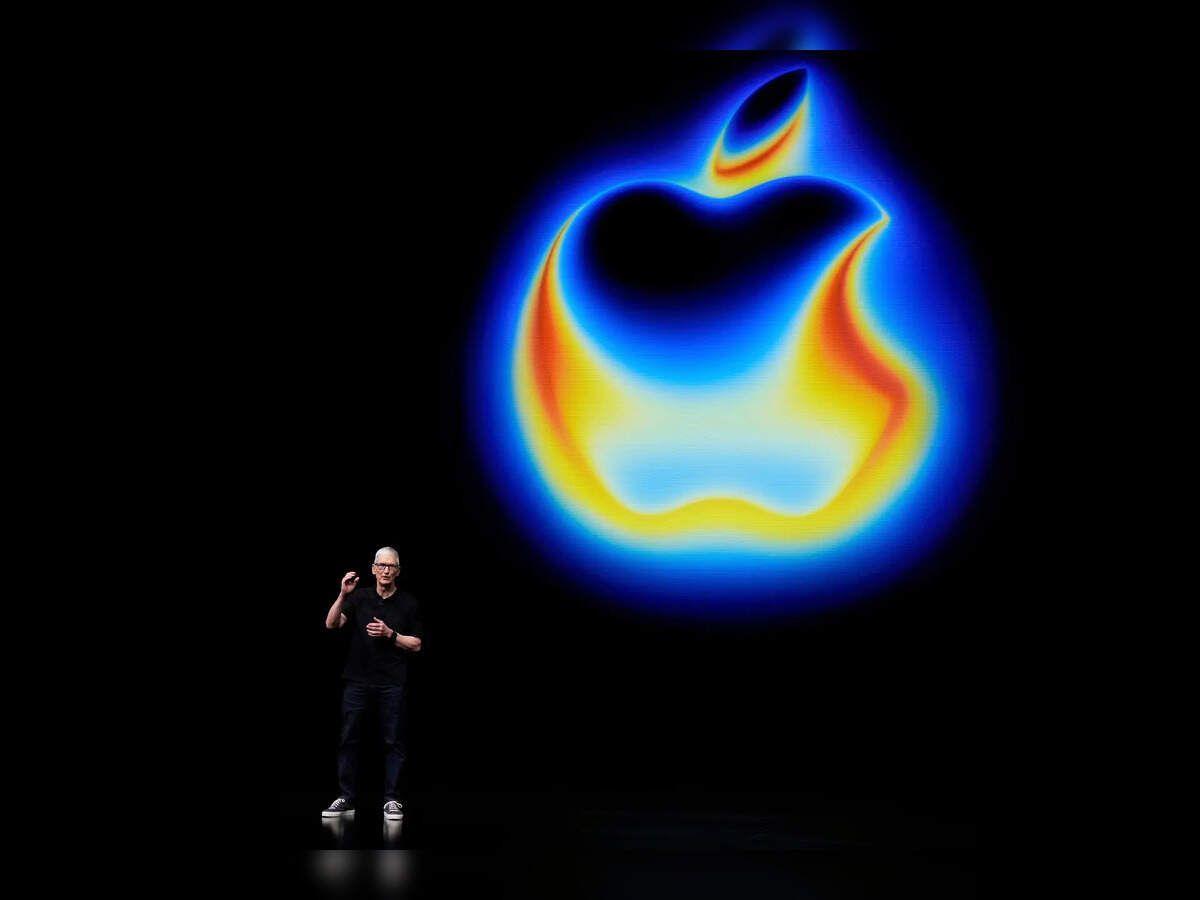
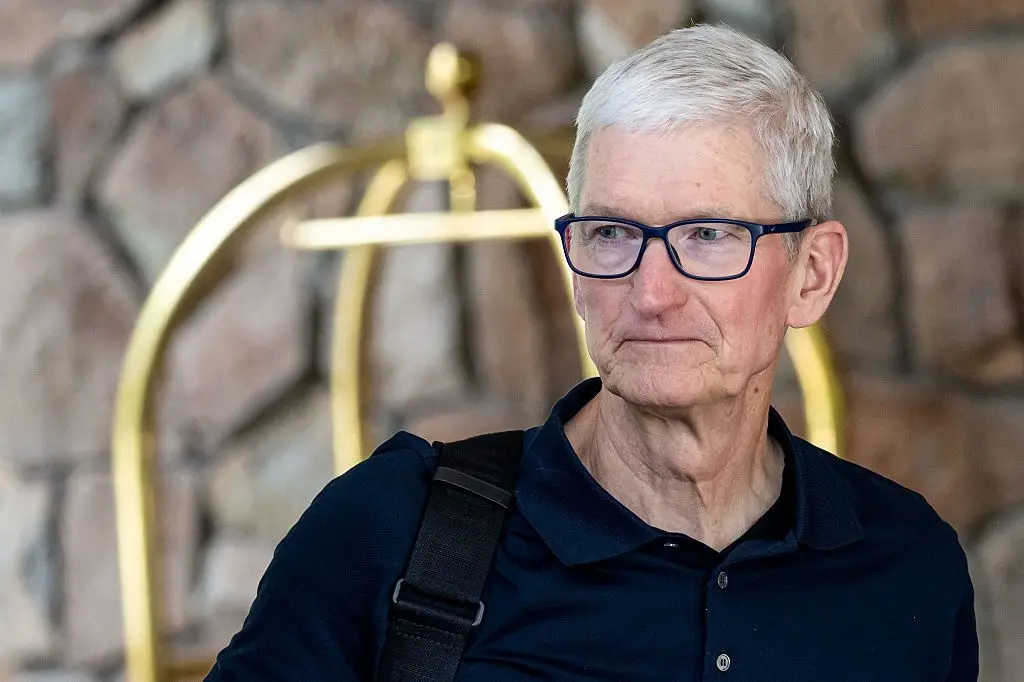
Apple unveiled a significant overhaul of its digital assistant at the Worldwide Developers Conference on Monday, introducing Siri AI as the company attempts to regain ground in the AI race after a rocky start. The announcement marked Tim Cook's final appearance as CEO at Apple's annual Worldwide Developers Conference before he steps down in September after 15 years at the helm, handing the reins to John Ternus
1
2
. Thousands of Apple employees and developers greeted Cook with a standing ovation as he took the stage for what analysts have dubbed the most high-stakes showcase in years2
4
.
Source: ET
The introduction of new AI features comes after Apple stumbled in its first attempt to deliver on AI promises made nearly two years ago. Apple Intelligence, released in October 2024, was widely considered a misstep due to feature delays and what was seen as over-promising on capabilities that were not ready for launch
4
. The much-anticipated upgrade to the Siri voice assistant failed to materialize despite earlier announcements, drawing a lawsuit from some US customers that the company settled earlier this year5
.The revamped version of its virtual assistant represents Apple's most significant AI push to date. Siri AI can now understand personal context, draw on real-time world knowledge and information stored on a user's device, and handle more natural conversations across multiple exchanges
3
4
. Users can customize how Siri sounds through new pacing and expressiveness controls while interacting with the assistant through voice or text3
.
Source: New York Post
Apple has moved Siri into a dedicated app while maintaining integration across its operating systems, positioning it to compete more directly with tools like OpenAI's ChatGPT and Anthropic's Claude
3
4
. The assistant also gains access to Visual Intelligence features, allowing it to identify locations and other details from images stored on a user's device3
. Senior analyst Gadjo Sevilla anticipates that an upgraded, agentic version of Siri capable of managing conversations and tasks across iPhones, Macs, and iPads could become as ubiquitous as features like AirDrop and Handoff1
.Instead of building models entirely in-house, Apple hired Google to provide the AI capabilities for its new features, using a version of the search engine giant's Gemini model
5
. The company announced a second version of its Apple Foundation Models, capable of processing speech, text, and images, with Apple Intelligence features coordinating across them through a new system orchestrator4
. Google and Apple are already closely tied, with Google paying out tens of billions of dollars every year to be the default search engine on the iPhone's Safari web browser5
.Apple's software chief, Craig Federighi, took aim at Big Tech companies during the event, emphasizing the company's focus on privacy and user experience. "Some appear to be racing forward, seemingly pursuing AI for the sake of AI, without clear regard for the people, all of us, that it's ultimately meant to serve," Federighi said, adding that Apple's new Siri AI experience was designed with privacy in mind "at every step"
2
4
. He noted that by default, most AI providers retain personal interactions, leaving the onus on users to defend their privacy4
.Apple highlighted the scale of its upcoming software rollout, saying iOS 27 will support every iPhone model dating back to the iPhone 11, making it one of the broadest compatibility expansions in the platform's history
3
. Apple Intelligence is now reaching deeper into many of the company's most-used applications. Safari can monitor webpages and notify users when information changes, while Messages and Mail gain smarter contextual reply suggestions3
. Calendar can create events from conversational prompts, and the Home app can summarize camera activity and make footage easier to search3
.
Source: Interesting Engineering
The company also unveiled macOS Golden Gate as the next major release for Mac users, along with refinements to its Liquid Glass design language that allow users to adjust window transparency and tweak text labels and toolbars
3
4
. A beta version of Siri AI will be available later this year to supported devices set to English, although not in the EU. Apple stated that EU regulators did not accept any of the company's proposed solutions to bring Siri AI to the region while safely supporting other virtual assistants2
.Related Stories
As tech companies face increasing pressure worldwide on child safety, Apple announced a suite of changes to its trust and safety features. The company will expand its "ask" feature, enabling parents to control whom their children can speak with, requiring parental approval before they can converse with an unknown person
2
. Apple also said it will automatically censor any image sent to a known child's device if flagged by its system as potentially inappropriate for sexual or violent content2
. Parents will be able to create approved app lists for child accounts and manage access over time through new parental controls3
.Analysts have been putting pressure on Apple to deliver a clear strategy in the AI race. Gene Munster, managing partner at Deepwater Asset Management, called it the most important WWDC in the conference's 43-year history, arguing that if Apple delivers on the new Siri, the company's AI narrative could shift from follower to leader
4
. Morgan Stanley took a similar stance, calling WWDC 2026 a key catalyst for Apple stock, with the potential to reframe the company as an "AI winner"4
. Apple's stock rose around 2% at Monday's open but slid during the keynote4
.Ben Wood, chief analyst at FDM CCS Insight, said Apple had to address its shortcomings in AI, noting that the company must now prove its privacy-led, integration-first approach can translate into a meaningfully better everyday experience. "Whether it has succeeded or not will come down to user reaction when new capabilities are in their hands," Wood added
2
. Despite the company's lack of a competitive AI offering until now, Apple shares have largely defied gravity over the past two years, with the stock up about 15% this year and iPhone sales growing by double digits in just about every country where it does business in the first quarter5
.Summarized by
Navi
[3]
[5]
1
Technology

2
Technology

3
Policy and Regulation