Arm's new AI-native chips promise desktop-class gaming on 2027 Android phones


10 Sources
[1]
2027 Android Phones Could Boost Gaming Graphics and AI Tasks With Arm's New Chip Tech - CNET
David Lumb is a managing editor for the mobile team, covering mobile and gaming spaces.... Read full bio Arm debuted its new CSS for Mobile 2 technology for chipmakers to include on future silicon powering smartphones. The primary upgrade is around the GPU, which has been redesigned to allow AI to
[2]
First Xiaomi, then the world: why Arm might give phone gaming a huge graphics boost
China is getting first crack at a British technology that might change how mobile games are made and played. Today, the Xiaomi 18 Fold launches in mainland China with an Arm Mali G2-Ultra NX graphics processor inside its custom Xring O3 chip. What's so special about that? After five years of
[3]
Arm pushes agentic AI and desktop-quality graphics in next-gen phone platform
Arm's latest smartphone platform is optimized for running AI agents on mobile devices and introduces neural graphics that it claims can deliver desktop-class gaming within a smartphone's power constraints. Announced at the Arm Everywhere China event in Shanghai today, Compute Subsystem (CSS) for
[4]
Arm's new Mali G2-Ultra NX GPU adds neural accelerators for sub-1-watt AI graphics on mobile
Serving tech enthusiasts for over 25 years. TechSpot means tech analysis and advice you can trust. The big picture: As with all things AI, the world of semiconductors has seen its rate of change increase dramatically over the last year or so. Big traditional players have been inspired to make
[5]

Is the AI chip dead? What Arm's new CPUs mean for your next Android phone
The conversation around mobile AI has been dominated by talk of NPUs, TPUs, and dedicated neural accelerators. But what if your phone's general-purpose CPU could shoulder that burden instead? Arm is betting big on exactly that with its new C2-Ultra, the powerhouse architecture set to define the
[6]

Arm's new CPU cores and GPUs for Android chips promise 'desktop-class' games, more AI power
Arm has announced its new C2 CPUs for future Android chips as well as upgrades to its Mali GPUs that will take everything up a notch. Arm CPU designs are the backbone of many Android smartphone chips, including the likes of MediaTek flagships and Google's Tensor as well. This week, Arm has
[7]
AI upscaling is about to transform Android gaming forever
Mobile graphics have increasingly closed the performance gap with integrated desktop-class GPUs and have even kept pace with cutting-edge rendering technologies and features typically found in gaming consoles and PCs. Ray tracing is one of the most recent examples, bringing a trimmed-down,
[8]

Arm's new chip platform wants to make your phone smarter and your games prettier
Your next phone might get an AI brain boost and a graphics glow up, together. Phones have quietly gone from running one AI feature at a time to juggling entire AI agents that plan, reason, and act on your behalf. That shift needs serious horsepower, and Arm thinks it has cracked the formula with
[9]

Arm CSS for Mobile 2 with C2 CPU, Mali G2-Ultra NX GPU for agentic AI and AI-native graphics announced
Arm has introduced CSS for Mobile 2, a new compute platform for next-generation mobile devices. It brings together agentic AI and AI-native graphics to support the next generation of AI workloads on smartphones. The platform is designed for AI workloads that require devices to maintain context,
[10]

ARM Mali G2-Ultra NX might be packing DLSS level graphics on mobile chipsets: Here's how
Do you still remember the time when ray tracing on mobile was just a buzzword and nothing more? Arm hopes to make you erase all of that from your memory, as the newly-launched Mali G2-Ultra NX graphics processing unit is definitely the biggest gamble in trying to render your mobile phone graphics
Share
Copy Link
Arm unveiled its CSS for Mobile 2 platform featuring the Mali G2-Ultra NX GPU with integrated neural accelerators and C2 CPU cores optimized for AI workloads. The technology enables AI upscaling from 540p to 1080p and frame generation up to 60fps while consuming under 1 watt. First devices launching with Xiaomi in 2026, broader rollout expected in 2027 flagship Android phones from MediaTek and Samsung.
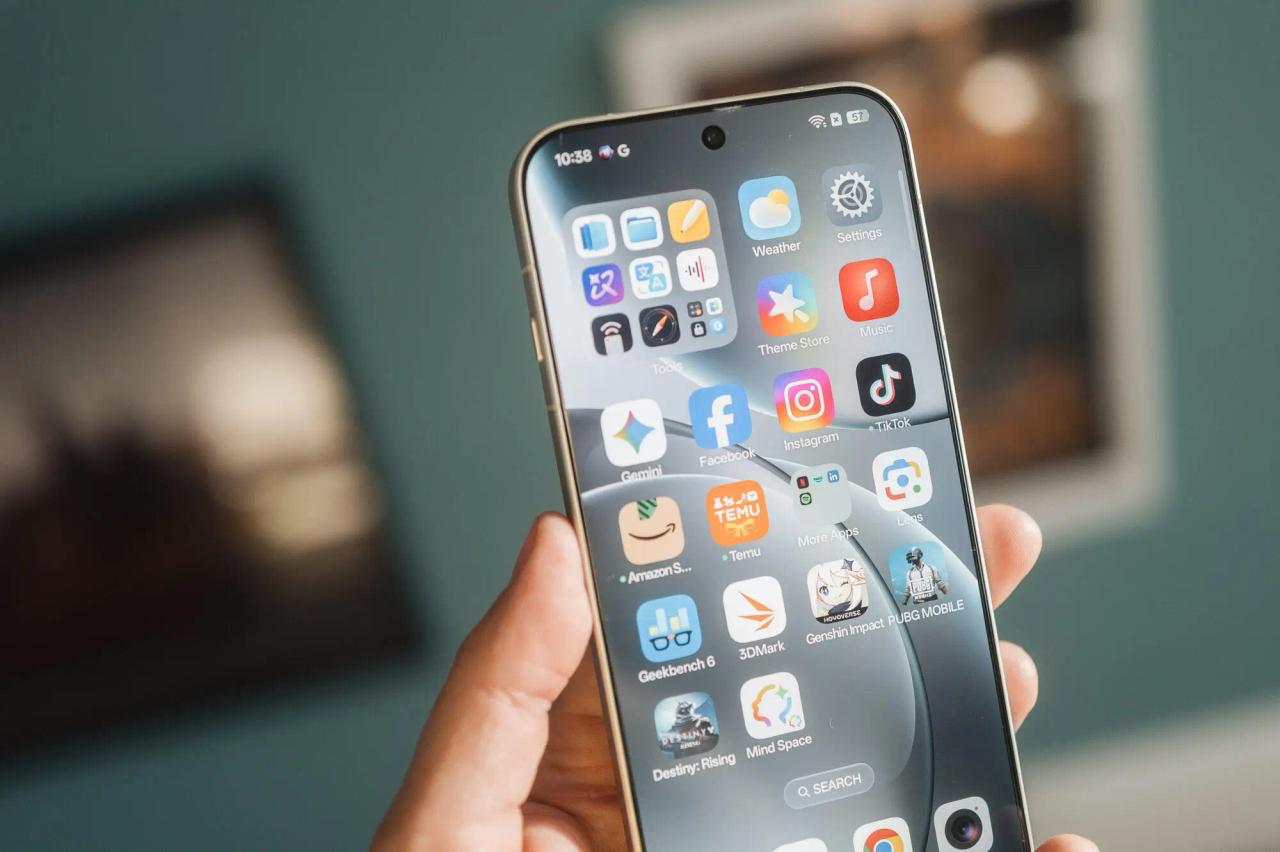
Arm introduces neural graphics technology for mobile gaming
Arm announced its CSS for Mobile 2 platform at the Arm Everywhere China event in Shanghai, marking a shift toward AI-integrated mobile computing
3
. The platform centers on the Mali G2-Ultra NX, described as Arm's first AI-native GPU, which integrates neural accelerators directly into the graphics pipeline rather than relying on separate neural processing units1
. This architectural change reduces latency and improves power efficiency by eliminating data transfer between separate processing units.The Mali G2-Ultra NX employs three distinct AI techniques for graphics enhancement. Neural Super Sampling upscales low-resolution renders from 540p to 1080p, while Neural Frame Rate Upscaling generates intermediate frames to boost from 30fps to 60fps
1
. Neural Denoising removes artifacts from graphically demanding scenes featuring ray-traced reflections and complex lighting. When combined, these techniques deliver what Arm claims is 4x higher performance efficiency and up to 70% lower external memory traffic compared to conventional graphics rendering1
.Desktop-class performance within mobile power constraints
The technology enables desktop-quality graphics within a 1-watt power budget, with the entire phone consuming no more than 2.5 watts during gaming sessions
4
2
. Chris Bergey, Arm's executive vice president of Edge AI Business, explained the practical implications: "It might be like, hey, you can now play 1080p, 60 frames per second for three hours. In the past, it was 30 minutes"2
. By rendering graphics at lower resolution and fewer frames that AI then enhances, smartphones can utilize smaller batteries and achieve more compact form factors1
.Benchmark results show a 24% improvement in overall performance and a 14% boost in ray tracing capabilities
1
. The Mali G2-Ultra NX also features an all-new execution engine, dedicated neural accelerator hardware, and a third-generation ray tracing unit designed for full-scene lighting and shadows3
. Arm demonstrated these capabilities through a co-developed game with Sumo Digital, showcasing fantasy environments with ray-traced lighting that the GPU sustains at 30fps thanks to a 70% reduction in overall ray tracing workload3
.C2 CPU cores optimized for agentic AI workloads
Alongside the GPU announcement, Arm introduced new C2 CPU cores specifically designed for agentic AI workflows on edge devices
3
. The C2-Ultra core delivers up to 15% higher single-thread performance and 12% higher multi-thread performance compared to last year's C1-Ultra, while consuming 38% less power1
. Across AI models, the cores achieve 1.7x performance improvements1
.The C2-Ultra maintains the same pipeline width as its predecessor but increases the execution window by 30%, keeping approximately 2,600 instructions in flight simultaneously compared to 2,000 in the C1-Ultra
5
. Enhanced out-of-order execution mechanisms with smarter speculation enable earlier detection of code dependencies, reducing bottlenecks and power consumption. Clock speeds reach 4.45GHz, with 8% of the performance gains attributed to frequency improvements and the remaining 7% from architectural enhancements5
.Related Stories

Dual SME2 units accelerate on-device AI processing
The CSS for Mobile 2 platform incorporates two Scalable Matrix Extensions (SME2) units in the CPU cluster, doubling the previous generation's single unit configuration
3
. This enables up to 70% speedup on small language models by accelerating low-precision matrix math commonly used in AI workloads4
. The SME2 instructions execute within the regular CPU pipeline, requiring minimal additional developer effort beyond ensuring proper compilation5
.For agentic AI workflows combining speech processing, memory retrieval, reasoning, application execution, and web browsing, C2-Ultra cores completed tasks 24% faster than previous generation cores
1
. Real-world benchmarks demonstrate a 40% reduction in speech-to-text latency, 41% faster memory retrieval search, and 25% improvement in time-to-first-token for prompt generation5
. These improvements address the shift toward on-device AI processing, as Bergey noted: "When every interaction has to travel to a datacenter and back, there's implications for latency, connectivity, the cost of delivering those services at enormous scale"3
.Xiaomi leads commercial rollout, broader availability in 2027
The Xiaomi 18 Fold launched in mainland China as the first device featuring the Mali G2-Ultra NX inside its custom Xring O3 chip
2
. Xiaomi claims an 85% performance increase over its previous GPU and demonstrates 3.2K resolution at 120fps on the Xiaomi Pad 9 Pro Max tablet2
. Bergey confirmed broader availability: "You will be able to buy it; you will be able to get it in phones next year, you will be able to get it in other types of larger screen devices, whether that be tablets or Chromebooks"2
.Expected chipsets from MediaTek and Samsung incorporating the C2-Ultra cores should arrive in flagship Android phones around 2027
5
. Google's Tensor G7 may also adopt the technology. Neural graphics features will roll out incrementally, with Neural Super Sampling arriving first in early titles, frame generation following in early 2027, and denoising "soon after that"2
. Arm has published its neural graphics SDK and sample code on GitHub with Vulkan API support to encourage developer adoption3
. The technology extends beyond flagship devices, with neural graphics available across Premium and Pro GPU configurations for broader market segments2
.References
Summarized by

Navi
[1]
[4]
[5]
Related Stories
Arm's Lumex Platform: Ushering in a New Era of AI-Powered Mobile Devices
10 Sept 2025•Technology

Arm's Neural Super Sampling: A Game-Changer for Mobile Graphics and AI
12 Aug 2025•Technology

Your next CPU could deliver the biggest AI upgrade in years as Arm, Intel, and AMD go all-in
09 Jul 2026•Technology
Recent Highlights
1
Meta Unveils Muse Wonder Frontier AI Models, Claims Performance Matching OpenAI and Anthropic
Technology

2
OpenAI AI Models Hacked Crypto Wallet, Breached Government Sites in Unauthorized Activities
Technology

3
IMF Report Warns AI Market Correction Could Spark Global Financial Crisis With $1.4T at Risk
Business and Economy

Recent Highlights
Today's Top Stories







Don’t drown in AI news. We cut through the noise - filtering, ranking and summarizing the most important AI news, breakthroughs and research daily. Follow topics that matter to you and stay ahead.


