AWS Kiro Crew Transforms AI Coding Agents Into Autonomous Engineering Teams Running 24/7


2 Sources
[1]
AWS's Kiro Crew aims to turn AI coding agents into autonomous engineering teams
The open-source orchestration offering could help enterprises automate long-running software engineering workflows, although governance and interoperability challenges remain, analysts say. AWS on Tuesday released Kiro Crew, an open-source orchestration platform designed to help enterprises move
[2]
AWS launches Kiro Crew, an autonomous agentic orchestrator for 24/7 code development
Amazon Web Services Inc. today launched Kiro Crew, an autonomous workspace that keeps artificial intelligence coding agents running all day and all night. The company said it developed Crew to allow developers to start a task, walk away and come back when something is worth administering. It tasks
Share
Copy Link
Amazon Web Services unveiled Kiro Crew, an open-source orchestration platform that enables AI coding agents to function as autonomous engineering teams. Unlike traditional coding assistants, Kiro Crew coordinates multiple agents to handle long-running software workflows, maintains context across sessions, and operates continuously whether developers are online or offline.
AWS Launches Open-Source Orchestration Platform for Autonomous Engineering
Amazon Web Services released AWS Kiro Crew
1
2
on Tuesday, marking a shift from interactive AI coding assistants to fully autonomous engineering teams. This open-source orchestration platform coordinates multiple AI coding agents to handle long-running software workflows that extend beyond single tasks or sessions. Rather than requiring constant developer supervision, the autonomous agentic orchestrator enables 24/7 code development by allowing teams to start tasks, step away, and return when intervention is needed. Darko Mesaros, distinguished developer advocate at AWS, described it as "a persistent, open-source development workspace for work that is bigger than a single task in a single session" that "turns AI coding agents into always-working, self-learning, autonomous teammates."1

Source: SiliconANGLE
How Kiro Crew Enables Continuous AI-Driven Software Engineering
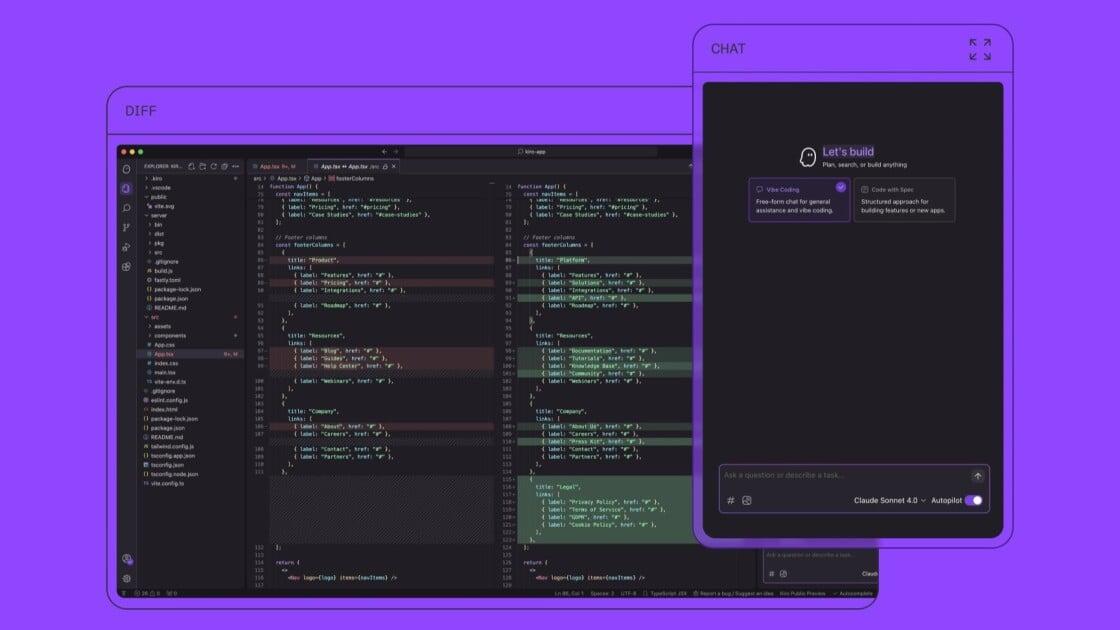
The persistent workspace handles incident investigation, PR monitoring, ticket triage, and automates software engineering tasks while developers are away from their keyboards. Built on the Kiro platform, Crew expands AWS's development environment by maintaining scope across multiple sessions rather than limiting work to individual tasks. The system tasks multiple agents and sub-agents on multi-step workflows, allowing developers to let them run unattended
2
. It manages recurring tasks that run on schedules, while a heartbeat monitoring system tracks progress until developer review is required. The platform integrates with developer tools and spans repositories, preserving project context across sessions to enable truly autonomous operations.
Source: InfoWorld
Self-Learning Capabilities and Persistent Memory Drive Adaptive Workflows
Kiro Crew's self-learning capabilities allow it to evolve based on developer preferences and past experiences. The system provides persistent memory of preferences, active-project context, and relevant history into new sessions, carrying corrections forward with every run
2
. If developers repeatedly request agents to code in particular ways—such as preferring certain functions over others—the agent ingrains that guidance for future work. When specific tools or MCP servers consistently fail on certain requests requiring reformatting, agents pass this information between sessions to avoid repeating mistakes. AWS emphasized that agentic memory remains visible and auditable, allowing developers to control what Crew carries forward and ensuring transparency in autonomous decision-making.Related Stories

Flexible Integration Across Chat Platforms and Developer Tools
Developers can interact with Kiro Crew through multiple interfaces beyond the dedicated app and web dashboard. The platform supports communication via Slack, Discord, and Telegram, enabling developers to continue work without staying in one place
2
. This means starting tasks in the Crew dashboard, then adjusting or adding work through Discord while away from the primary workspace. The Apps interface allows developers to bring their own tooling, giving individual processes purpose-built UI and structure by combining custom interfaces with agents, skills, schedules, and backend services. For teams using other harnesses and agentic orchestrators like OpenClaw and Hermes, Crew can incorporate their skills and configurations, allowing it to slot into existing developer toolsets rather than requiring complete replacement.Deployment Options and Community-Driven Extensibility
Kiro Crew runs locally or remotely on developer hardware, providing visibility, audit capabilities, and control over autonomous operations
2
. The macOS app is available for direct download or installation from the GitHub repository, with setup instructions also provided for Linux and Windows. Since the system is built on Kiro, it can read .kiro configuration out of the box, leveraging steering files, skills, and custom agents developers have already built as part of their coding environment. The core of Crew is extensible, allowing the community to build an ecosystem of Apps and integrations that expand functionality. This community-driven capability emerged among Amazon's own developers and will be preserved going forward, enabling the platform to evolve based on real-world usage patterns and developer needs across diverse engineering environments.References
Summarized by

Navi
Related Stories
AWS Launches Kiro: AI Coding Platform Exits Preview with Structured Development Approach
17 Nov 2025•Technology

AWS Kiro Powers Launch with Stripe, Figma, and Datadog to Fix AI Coding Assistant Bottleneck
04 Dec 2025•Technology

Amazon Launches Kiro: A New AI-Powered IDE to Revolutionize Software Development
15 Jul 2025•Technology
Recent Highlights
1
Microsoft and Nvidia Launch Surface Laptop Ultra: A $2,599 AI-Ready PC With RTX Spark Chip
Technology

2
Google Unveils Gemini 4 Argon AI Model, Restricts Access to Trusted Cyber Defenders
Technology
3
OpenAI Releases 722 AI-Generated Math Papers on GitHub, Igniting Fury Among Mathematicians
Science and Research

Recent Highlights
Today's Top Stories





Don’t drown in AI news. We cut through the noise - filtering, ranking and summarizing the most important AI news, breakthroughs and research daily. Follow topics that matter to you and stay ahead.


