Alibaba and Tencent lose $66 billion as investors question AI agent monetization strategy


11 Sources
[1]
Alibaba, Tencent Shed $66 Billion After AI Vision Falls Flat
The market's reaction reflects concerns that companies are not showing how AI is driving measurable revenue uplift, with analysts saying the key inflection will be when companies can demonstrate AI is driving revenue through cloud, advertising, or transaction conversion. Alibaba Group Holding Ltd.
[2]
Baidu joins China's OpenClaw frenzy with new AI agents
BEIJING, March 18 (Reuters) - Chinese tech giant Baidu (9888.HK), opens new tab on Tuesday unveiled a suite of artificial intelligence products, tapping growing domestic interest in OpenClaw, an open-source framework for agents that can perform complex tasks with less human input than
[3]
China Is Embracing OpenClaw a New A.I. Agent, and the Government Is Wary
In the span of a month, an artificial intelligence assistant called OpenClaw has come to embody both China's excitement and anxiety about what A.I. can do. Long lines stretched across Shenzhen, China's technology hub, as people sought help from engineers to install OpenClaw. Some local governments
[4]
Tencent's Sales Rise 13% in Boost for Broader AI Ambitions
Tencent's strong quarterly performance boosts its bid to capture a shift to AI agents and challenges the leadership of the world's biggest internet arena. Tencent Holdings Ltd. posted a 13% rise in quarterly revenue, underscoring solid momentum in its core gaming and advertising units while it
[5]
Tencent Seizes Momentum in China Agentic AI Race Against Alibaba
In China's hyper-competitive AI arena, Alibaba Group Holding Ltd. has outpaced Tencent Holdings Ltd. with the sheer speed of rollouts and user growth. But the latter firm is now seizing the initiative as agentic AI fever grips the country. Tencent in just the past week introduced several signature
[6]
Alibaba reveals OpenClaw app -- despite the Chinese government recently cracking down on the platform
OpenClaw requires extensive data access, creating potential avenues for cyberattacks * OpenClaw adoption continues growing despite warnings about potential security risks * Alibaba and Baidu release apps allowing anyone to deploy agentic AI agents * Municipalities provide subsidies for OpenClaw
[7]
Baidu Taps OpenClaw Smart Speakers to Fuel Agentic AI Paradigm
Baidu's edge lies in its vast existing cloud client base, including over 60% of China's state-owned enterprises that prioritize data security, which are expected to adopt other cloud-based services, including AI agents. Baidu Inc. is betting on the breakout success of OpenClaw to offset a decline
[8]

Tencent's annual results suggest AI is becoming a business lever, not just a technology bet
Tencent's latest annual results offer a clearer view of how the company wants the market to read its AI strategy: not as a side bet on standalone chatbots, but as a widening layer across businesses it already operates at scale. Over the past year, management has repeatedly signaled that AI is
[9]

Tencent seizes momentum in China's AI race against Alibaba - The Economic Times
Tencent in just the past week introduced several signature products aimed at tapping a national enthusiasm for AI agents like OpenClaw -- automated services that perform real-world tasks. They underscore an initial advantage for the WeChat operator: it's grouped China's entire universe of apps onto
[10]

Tencent shares slide as AI spending plans overshadow strong Q4 earnings By Investing.com
Investing.com-- Tencent Holdings (HK:0700) fell sharply in Hong Kong trade on Thursday after the company signaled it will cut its share buybacks to fund increased spending on its artificial intelligence ambitions. The messaging largely overshadowed stronger-than-expected fourth quarter earnings
[11]

Tencent Posts Earnings Beat as It Steps Up AI Effort --Update
Tencent Holdings maintained double-digit profit and revenue growth, ending 2025 on a high note as the Chinese tech giant ramped up its artificial-intelligence efforts to stay ahead amid relentless competition in China. The WeChat operator, China's largest company by market capitalization, said
Share
Copy Link
Chinese tech giants Alibaba and Tencent lost $66 billion in market value within 24 hours after failing to demonstrate clear paths to monetizing AI investments. Despite the OpenClaw-driven frenzy across China, investors remain cautious about rising AI spending without concrete revenue roadmaps, exposing tensions between ambitious AI development and immediate profitability demands.
Chinese Tech Giants Face Market Reckoning Over AI Monetization
Alibaba and Tencent collectively shed $66 billion in market value within roughly 24 hours, marking one of the most dramatic investor reactions to the China agentic AI race
1
. Tencent lost $43 billion on Thursday, while Alibaba's US-listed shares dropped $23 billion overnight, with Hong Kong stock falling as much as 6.4% in early Friday trading1
. The market's harsh judgment reflects growing anxiety about Chinese tech giants pouring resources into artificial intelligence development without demonstrating clear pathways to monetizing AI investments.Investors who had recently piled into these stocks, betting that OpenClaw-style AI agents would galvanize the industry, reversed course after disappointing earnings calls revealed no concrete plans for revenue generation
1
. Bloomberg Intelligence analyst Catherine Lim explained that investors aren't pushing back on AI spending itself, but rather the lack of near-term visibility on monetization. "The key inflection will be when companies can show that artificial intelligence is driving measurable revenue uplift, whether through cloud computing, advertising, or transaction conversion," Lim noted1
.OpenClaw Frenzy Drives Initial Enthusiasm
The market's dramatic about-face stems from a burst of exuberance earlier this month when Chinese consumers embraced OpenClaw, a viral agentic AI platform promising to automate mind-numbing tasks from managing email inboxes to arranging travel itineraries
1
. Long lines stretched across Shenzhen, China's technology hub, as people sought help from engineers to install OpenClaw3
.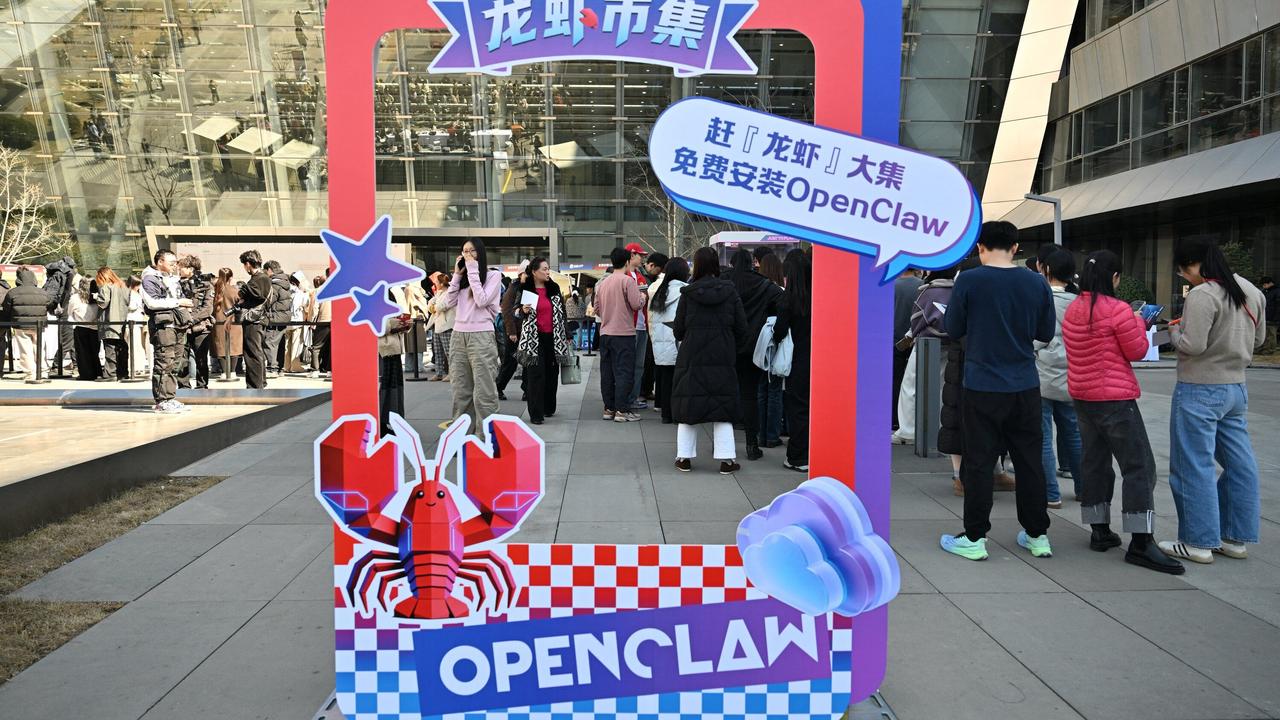
Source: NYT
Some local governments started offering subsidies, free computing, and discounted office rent to companies using OpenClaw to build new services
3
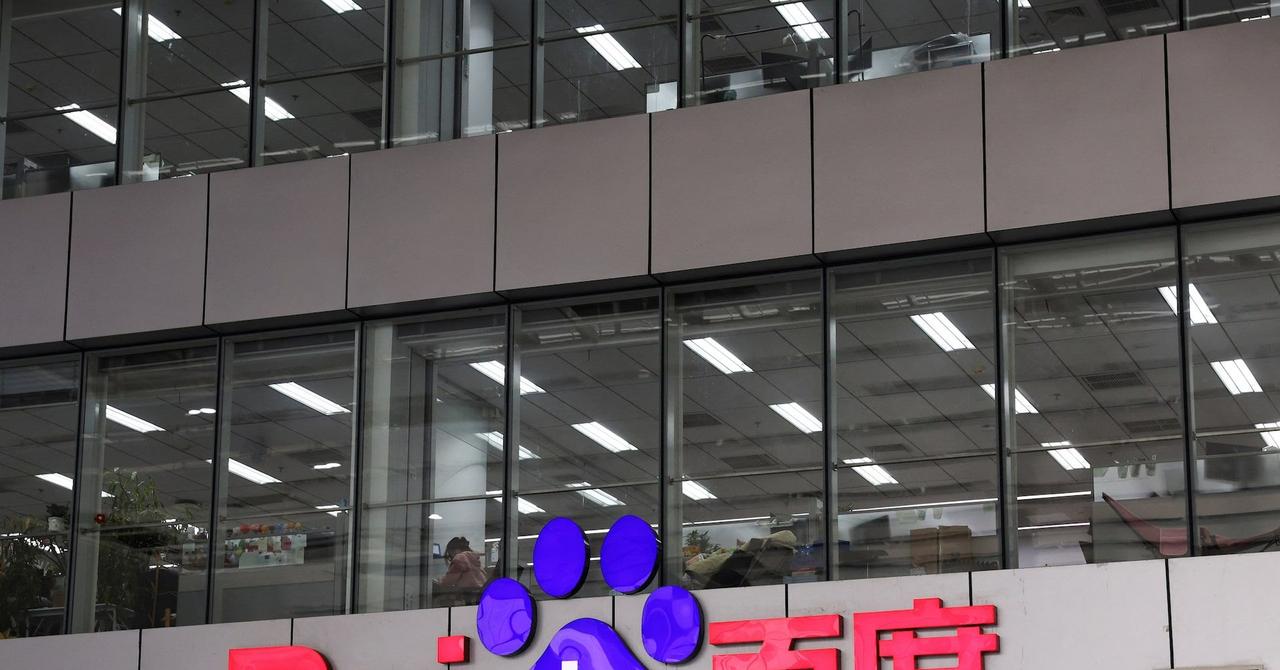
.Baidu joined the competitive AI chatbot landscape by unveiling a suite of agentic AI solutions, introducing what it called a family of "lobsters"—a popular nickname for AI agents built on the open-source framework
2
.
Source: Reuters
The company's ecosystem includes DuMate desktop assistant, RedClaw mobile platform, and DuClaw cloud service, designed to carry out multi-step tasks such as editing videos, creating presentations, and ordering coffee
2
. Baidu Executive Vice-President Shen Dou suggested the technology could become "an operating-system-level capability for a new era, unlocking almost all hardware and breaking down the barriers between devices"2
.Tencent's Strategic Advantage in Automating User Tasks
Tencent posted a 13% rise in quarterly revenue to 194.4 billion yuan ($28.3 billion), marking its fifth straight quarter of double-digit growth
4
. The company is working to integrate its own AI agent into WeChat, automating user tasks like hailing rides or booking restaurants, with the service potentially launching as soon as next month depending on computing constraints5
.Tencent's strength lies in WeChat's entrenched role across communication, payment, and fulfillment, providing access to user data and a universe of domestic apps that 1.4 billion users rely on
4
. Since releasing agentic AI services QClaw and WorkBuddy this month, Tencent gained about $30 billion of market value, more than any other Chinese firm4
. In a sign of renewed focus, founder Pony Ma has used his own WeChat feed to promote OpenClaw-inspired agentic tools4
.Related Stories

Alibaba's Ambitious AI Revenue Targets Face Skepticism
Alibaba declared AI revenue targets of $100 billion in cloud and AI revenue within five years, while pledging more than $53 billion of AI investment over several years
1
. The company launched an agentic AI service called Wukong for corporate clients and hiked prices for cloud and storage services by as much as 34%1
. However, Alibaba reported a 67% drop in quarterly net income, exacerbating investor concerns about rising costs amid a Chinese consumer downturn1
.Barclays Capital analysts expressed skepticism, stating they "share market concerns around the visibility for Alibaba to reach $100 billion annual cloud and AI revenue in five years," noting the market has "no room for anything less than perfect"
1
. Morgan Stanley slashed its target price on Tencent by 11% to HK$650, warning that "front-loaded AI investments will likely weigh on near-term margins, driving profit to grow more slowly than revenue in 2026"1
.China's Quest to Become an AI Superpower
Beijing has spent billions trying to turn China into an AI superpower and has identified the technology as a critical driver of economic growth
3
.
Source: Bloomberg
While AI spending by Chinese firms remains a fraction of the $650 billion that US hyperscalers like Meta Platforms and Amazon are spending this year alone, rising budgets coincide with compressed margins from the consumer downturn
1
.Alibaba's Qwen family of large language models rank alongside offerings from Anthropic and OpenAI on benchmarking leaderboards, triggering adoption in the open-source community
5
. However, the surprise departure of Junyang Lin, the top developer for Qwen models, raised questions about Alibaba's approach to AI development5
.Investor sentiment now hinges on when these companies can demonstrate that artificial intelligence translates into measurable revenue growth. Until Chinese tech giants provide concrete evidence of monetization success, markets will likely maintain their cautious stance, watching closely for signs that agentic AI solutions can deliver on their commercial promise while justifying the substantial investments required to compete in the global race for AI dominance.
References
Summarized by

Navi
Related Stories
Tencent's Q1 Revenue Soars as AI Investments Yield Results in Gaming and Advertising
14 May 2025•Business and Economy
Tencent Turns Down 30% Instant Profit on $53B AI Infrastructure to Build Own Models
12 Aug 2026•Business and Economy

Alibaba's AI Investments Boost Cloud Revenue Amid Overall Revenue Miss
27 Aug 2025•Technology
Recent Highlights
1
Meta Unveils Muse Wonder Frontier AI Models, Claims Performance Matching OpenAI and Anthropic
Technology

2
IMF Report Warns AI Market Correction Could Spark Global Financial Crisis With $1.4T at Risk
Business and Economy

3
Eight States Sue OpenAI Over ChatGPT Safety Concerns and Unlawful Collection of Children's Data
Policy and Regulation
Recent Highlights
Today's Top Stories











Don’t drown in AI news. We cut through the noise - filtering, ranking and summarizing the most important AI news, breakthroughs and research daily. Follow topics that matter to you and stay ahead.


