Huawei Unveils Ambitious AI Chip Roadmap, Challenging Nvidia's Dominance in China


26 Sources
[1]
Huawei announces new AI infrastructure as Nvidia gets locked out of China
Tech giant Huawei unveiled new AI infrastructure meant to help boost compute power and allow the company to better compete with rival chipmaker Nvidia. At a keynote at its Huawei Connect conference on Thursday, Shenzhen, China-based Huawei announced new SuperPoD Interconnect technology that can
[2]
Huawei reveals long-range Ascend chip roadmap -- three-year plan includes ambitious provision for in-house HBM with up to 1.6 TB/s bandwidth
Huawei's AI silicon roadmap promises in-house HBM and a future for Chinese compute beyond Nvidia. Huawei's AI silicon roadmap is no longer a state secret. Speaking at the Huawei Connect conference on September 18, rotating chairman Xu Zhijun outlined the company's first official long-range Ascend
[3]
Huawei lays out multi-year AI accelerator roadmap
On the same day that fellow Chinese giant Tencent says its overseas cloud clientele doubled Chinese tech giant Huawei has kicked off its annual "Connect" conference by laying out a plan to deliver increasingly powerful AI processors that look to have enough power that Middle Kingdom users won't
[4]
Key products in Huawei's AI chips and computing power roadmap
BEIJING, Sept 18 (Reuters) - China's Huawei (HWT.UL) has ended years of secrecy to detail its product roadmap for chips and computing power systems, discussing for the first time how it intends to challenge global industry leader Nvidia (NVDA.O), opens new tab. Here are some highlights from
[5]
Alibaba's AI chip goes head-to-head with Nvidia H20 in state-backed benchmark demo
A state TV broadcast puts Alibaba's PPU side-by-side with Nvidia's H20, but the claim rests entirely on optics. Alibaba's semiconductor unit, T-Head, has reportedly developed a new AI processor that it claims matches the performance of Nvidia's H20 -- the GPU built specifically for the Chinese
[6]

How Huawei plans to outperform global tech leaders with less powerful chips
BEIJING (AP) -- China's Huawei Technologies said Thursday that it would roll out the world's most powerful AI computing clusters over the next two years as it seeks to outperform global leaders despite relying on less powerful domestic semiconductors. China is racing to develop its own technology
[7]

Huawei touts world's most powerful AI chip cluster as Nvidia's China challenges mount
BEIJING -- Chinese telecommunications giant Huawei announced Thursday new computing systems for powering artificial intelligence with its in-house Ascend chips, as it steps up pressure on U.S. rival Nvidia. The company said it plans to launch its new "Atlas 950 SuperCluster" as soon as next
[8]
Huawei unveils chipmaking, computing power plans for the first time
SHANGHAI, Sept 18 (Reuters) - Huawei said on Thursday it would roll out four new iterations of its Ascend AI chip over the next three years, breaking years of secrecy to reveal its chipmaking progress and ambitions to compete against Nvidia (NVDA.O), opens new tab for the first time. The Chinese
[9]

Huawei unveils 'world's most powerful' AI cluster to rival Nvidia
Chinese tech giant Huawei is gearing up to launch four new iterations of its Ascend AI chip in the coming three years. In its announcement on Thursday at Huawei Connect in Shanghai, the company revealed the rollout timelines for each chip. Huawei aims to build a robust AI infrastructure to fuel
[10]

Huawei throws massive 1-million NPU gauntlet at Nvidia and AMD as it positions itself an alternative to US AI giants
Huawei has announced what it calls the, "world's most powerful SuperPoDs and superclusters". In AI nomenclature, a SuperPOD is a group of racks that work as a single unit integrating compute, network, software, storage and management. A supercluster is a group of superPODs. Given that Nvidia
[11]
Huawei's Atlas 950 supercomputing node to debut in Q4, media reports
SHANGHAI, Sept 18 (Reuters) - Huawei's Vice Chairman Eric Xu said on Thursday the company plans to launch the world's most powerful computing power node called the Atlas 950 in the fourth quarter of this year, local media China Star Market reported. Xu, who also serves as Huawei's rotating
[12]

Huawei reveals its Ascend AI chip plans, taking the fight to Nvidia with new superclusters | Fortune Asia
Huawei, the company most connected to China's drive for tech self-sufficiency, unveiled its AI chip plans on Thursday, laying down the product roadmap for a semiconductor division that's become increasingly important to both the company and to the country more broadly. On Thursday, Huawei rotating
[13]

Huawei unveils new computing tech as China seeks AI strength
Chinese tech juggernaut Huawei plans to launch powerful computing setups that allow chips to connect at high speeds, an executive said Thursday, as Beijing looks to bolster domestic AI prowess and reduce reliance on Western firms. Geopolitical tensions between China and the United States have
[14]

What do we know about Huawei's' most powerful' AI chip cluster?
Chinese telecommunications company Huawei says it has developed the world's 'most powerful' AI computing systems as it takes on US AI chip giant Nvidia. Chinese telecommunications company Huawei has announced a slew of new computing systems and artificial intelligence (AI) computing chips that it
[15]
Alibaba, Baidu begin using own chips to train AI models, The Information reports
Sept 11 (Reuters) - China's Alibaba (9988.HK), opens new tab and Baidu (9888.HK), opens new tab have started using internally designed chips to train their AI models, partly replacing those made by Nvidia (NVDA.O), opens new tab, The Information reported on Thursday, citing four people with direct
[16]

How Huawei plans to outperform global tech leaders with less powerful chips
BEIJING -- China's Huawei Technologies said Thursday that it would roll out the world's most powerful AI computing clusters over the next two years as it seeks to outperform global leaders despite relying on less powerful domestic semiconductors. China is racing to develop its own technology as
[17]

How Huawei plans to outperform global tech leaders with less powerful chips
BEIJING (AP) -- China's Huawei Technologies said Thursday that it would roll out the world's most powerful AI computing clusters over the next two years as it seeks to outperform global leaders despite relying on less powerful domestic semiconductors. China is racing to develop its own technology
[18]

How Huawei Plans to Outperform Global Tech Leaders With Less Powerful Chips
BEIJING (AP) -- China's Huawei Technologies said Thursday that it would roll out the world's most powerful AI computing clusters over the next two years as it seeks to outperform global leaders despite relying on less powerful domestic semiconductors. China is racing to develop its own technology
[19]

How Huawei plans to outperform global tech leaders with less powerful chips
China's Huawei Technologies said Thursday that it would roll out the world's most powerful AI computing clusters over the next two years as it seeks to outperform global leaders despite relying on less powerful domestic semiconductors. China is racing to develop its own technology as America
[20]

Huawei Unveils Next-Gen Atlas 950 & 960 SuperPoD AI Servers, Claiming to Surpass NVIDIA's Rubin Lineup
Huawei claims to be taking the competition in the rack-scale segment directly to NVIDIA's ground, as their latest announcement includes unveiling cutting-edge AI clusters. The Chinese AI firm has been at the forefront of competing with NVIDIA in China's AI market, particularly with rack-scale
[21]

Huawei unveils AI chip road map to challenge Nvidia's lead
Huawei Technologies unveiled new technology from memory chips to AI accelerators Thursday, outlining publicly for the first time its multiyear plan to challenge Nvidia's dominance in a growing market. The highlight of the company's presentation on Thursday were new SuperPod cluster designs that
[22]
Huawei Showcases Its 'Highly Competitive' AI Chip Roadmap; Ascend 950PR To Feature Self-Built HBM With Release Slated For Q1 2026
It seems like Huawei plans to ramp up the competition in the domestic markets through its next-gen AI chips, as it unveils an optimistic roadmap. Huawei is known to be one of the leading entities in China when it comes to introducing high-end 'homegrown' AI chips that are known to compete with the
[23]
Alibaba's AI Chip Reportedly Competes With NVIDIA's H20 & Is Already Being Used To Train AI Models; Competition in China is Growing For Team Green
Chinese Big Tech giants seem to be pushing towards adopting domestic computing solutions, as Alibaba's self-built Zhenwu chip is now claimed to feature H20 level performance. There has been a push towards pivoting away from the Western AI tech stack in China, part of which involves AI firms like
[24]

How Huawei plans to outperform global tech leaders with less powerful chips
BEIJING -- China's Huawei Technologies said Thursday that it would roll out the world's most powerful AI computing clusters over the next two years as it seeks to outperform global leaders despite relying on less powerful domestic semiconductors. China is racing to develop its own technology as
[25]

Key products in Huawei's AI chips and computing power roadmap
BEIJING (Reuters) -China's Huawei has ended years of secrecy to detail its product roadmap for chips and computing power systems, discussing for the first time how it intends to challenge global industry leader Nvidia. Here are some highlights from Huawei's presentation: ASCEND ARTIFICIAL
[26]
Huawei Unveils AI Chip Pipeline as Tech Rivalry Heats Up
Huawei Technologies plans to roll out more artificial-intelligence chips in the next three years, giving a rare glimpse into its ambitions to compete with Nvidia in China. The first will be a new generation of its Ascend chips, seen as a potential challenger to Nvidia's offerings in the country.
Share
Copy Link
Huawei announces new AI infrastructure and a multi-year roadmap for advanced AI chips, positioning itself as a domestic alternative to Nvidia in China's AI market. This move comes as China bans local tech companies from purchasing Nvidia hardware.
Huawei's AI Chip Challenge
Chinese tech giant Huawei unveiled an aggressive multi-year roadmap for its Ascend AI chips, aiming to displace Nvidia's dominance, particularly in China. This move follows recent bans on Chinese companies buying Nvidia hardware, creating a crucial domestic market opportunity
1
.
Source: Wccftech
New Ascend Chips with In-House HBM
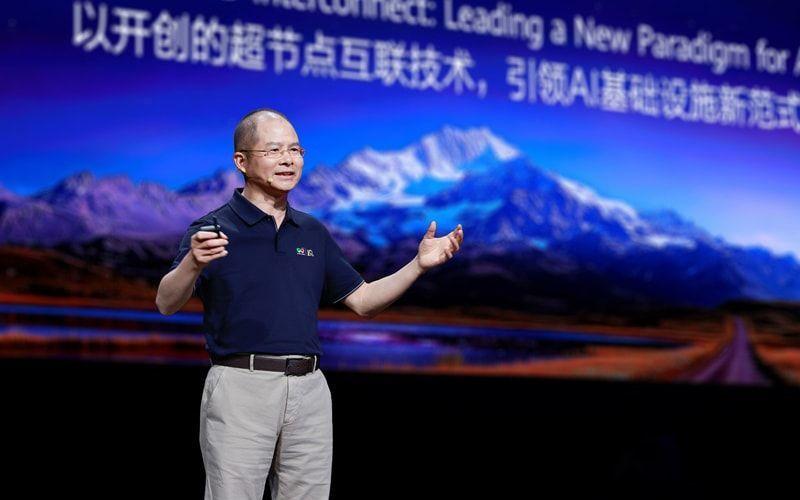
Huawei's chairman, Xu Zhijun, announced four new Ascend chip models through 2028: 950PR, 950DT (2026), 960, and 970 (2027-2028). A key innovation is Huawei's proprietary High Bandwidth Memory (HBM). The 950PR will have 128GB HBM (1.6 TB/s bandwidth), and the 950DT 144GB (4 TB/s), potentially disrupting the HBM market
2
4
.
Source: TechRadar
SuperPoD for Scalable AI
To boost AI compute power, Huawei introduced "SuperPoD" technology, capable of linking up to 15,488 AI chips. This includes Atlas 950 SuperPod (8,192 Ascend 950DT chips) and Atlas 960 SuperPod (up to 15,488 Ascend 960 chips), enhancing its AI infrastructure
1
4
.
Source: AP
Related Stories

Sanctions and Global Outlook
Despite ambitious plans, U.S. sanctions restrict Huawei's access to advanced chip manufacturing. Past accelerators also reportedly underperformed
2
3
. However, successful development could see Huawei's AI accelerators become globally available via Chinese cloud providers, intensifying competition. Success relies on matching Nvidia's performance in training efficiency and model throughput3
.References
Summarized by

Navi
[2]
[3]
Related Stories
Huawei's Ascend 910D AI Chip Challenges NVIDIA Amid US Export Restrictions
21 Apr 2025•Technology
Huawei Pulls Ascend 960 AI Chip Launch Forward by Three Quarters, Doubling Performance Targets
17 Sept 2026•Technology
Huawei's CloudMatrix 384: A Powerful Challenger to Nvidia's AI Dominance
26 Jul 2025•Technology
Recent Highlights



Recent Highlights
Today's Top Stories






Don’t drown in AI news. We cut through the noise - filtering, ranking and summarizing the most important AI news, breakthroughs and research daily. Follow topics that matter to you and stay ahead.


