Alibaba reveals Zhenwu M890 AI chip but admits struggling with production scale


8 Sources
[1]
Alibaba just admitted it's struggling to keep up with rival chipmakers and AI shops
Chinese tech giant Alibaba has revealed a new accelerator and accompanying rack-scale server rig without offering much detail about their performance - and also admitted it's only been able to make chips in trivial quantities. The new chip is called the Zhenwu M890, and comes from Alibaba's
[2]
Alibaba reveals more powerful Zhenwu AI chip, new LLM
CHONGQING, China -- Alibaba announced Wednesday its new artificial intelligence chip would be three times as powerful as its predecessor, as rival Nvidia struggles to get its advanced chips into China. The Zhenwu M890 delivers three times the performance of the current Zhenwu 810E, Alibaba said,
[3]
Alibaba unveils the Zhenwu M890 as China's NVIDIA alternative push hardens
T-Head's new GPU lands inside US export controls, a Trump-Xi summit on AI chips, and a Chinese domestic accelerator market, the company says, is already in scaled mass production. Alibaba's T-Head chip unit unveiled detailed specifications of the Zhenwu M890 on Wednesday, the company's latest
[4]
Alibaba unveils new AI chip as Nvidia access remains stalled
Beijing (AFP) - Tech giant Alibaba released on Wednesday a new artificial intelligence chip it said performed three times as well as its predecessor, showcasing growing domestic chipmaker prowess as US titan Nvidia struggles for access to China. Semiconductors have been at the centre of a fierce
[5]

Alibaba Takes Aim At Nvidia With New 3X Powerful AI Chip And Next-Gen LLM Model As China Tech War Heats U
The Zhenwu M890, Alibaba's latest AI chip, delivers triple the performance of its predecessor, the Zhenwu 810E. The new processor, designed to handle memory-intensive agentic AI workloads, boasts 144 GB of GPU memory and an interchip bandwidth of 800 GB per second, reported CNBC. At a conference
[6]

Alibaba Targets NVIDIA's Hopper With Zhenwu M890 AI Chip, Claiming 3x The H20 Performance, 144GB HBM3 & A Roadmap Through 2028
Alibaba has unveiled its latest AI chip, "Zhenwu M890" and AI LLM "Qwen3.7-Max", designed for Agentic AI workloads. As Agentic AI Rages On, Alibaba Rolls Out Its Own AI Chip & AI LLM: Meet Zhenwu M890 GPU & Qwen3.7-Max Model The Alibaba Zhenwu M890 is based on the company's in-house PPU (Parallel
[7]

Alibaba Launches Zhenwu M890 AI Chip to Boost China's Domestic Market
Alibaba has reached a huge technological milestone that shocked many as it announced a new artificial intelligence chip on Wednesday and said it delivers three times the performance of its predecessor. The chip, better known as the Zhenwu M890, also adds 144 GB of GPU memory and 800 GB per second
[8]

Alibaba Unveils New AI Chip, Upgrades AI Model
Alibaba has unveiled a new artificial intelligence chip as well as an update of its AI model, as the Chinese tech giant aggressively pursues its AI ambitions on multiple fronts. The Hangzhou-based company released a new chip, the Zhenwu M890, which delivers three times the performance of its
Share
Copy Link
Alibaba launched the Zhenwu M890 AI chip, claiming triple the performance of its predecessor, but disclosed it has only shipped 560,000 units total—a fraction of Nvidia's output. The announcement highlights China's push for semiconductor self-reliance amid US export restrictions, while exposing the production challenges Chinese chipmakers face without access to advanced manufacturing processes.
Alibaba Unveils Zhenwu M890 Amid China's Push for Chip Independence
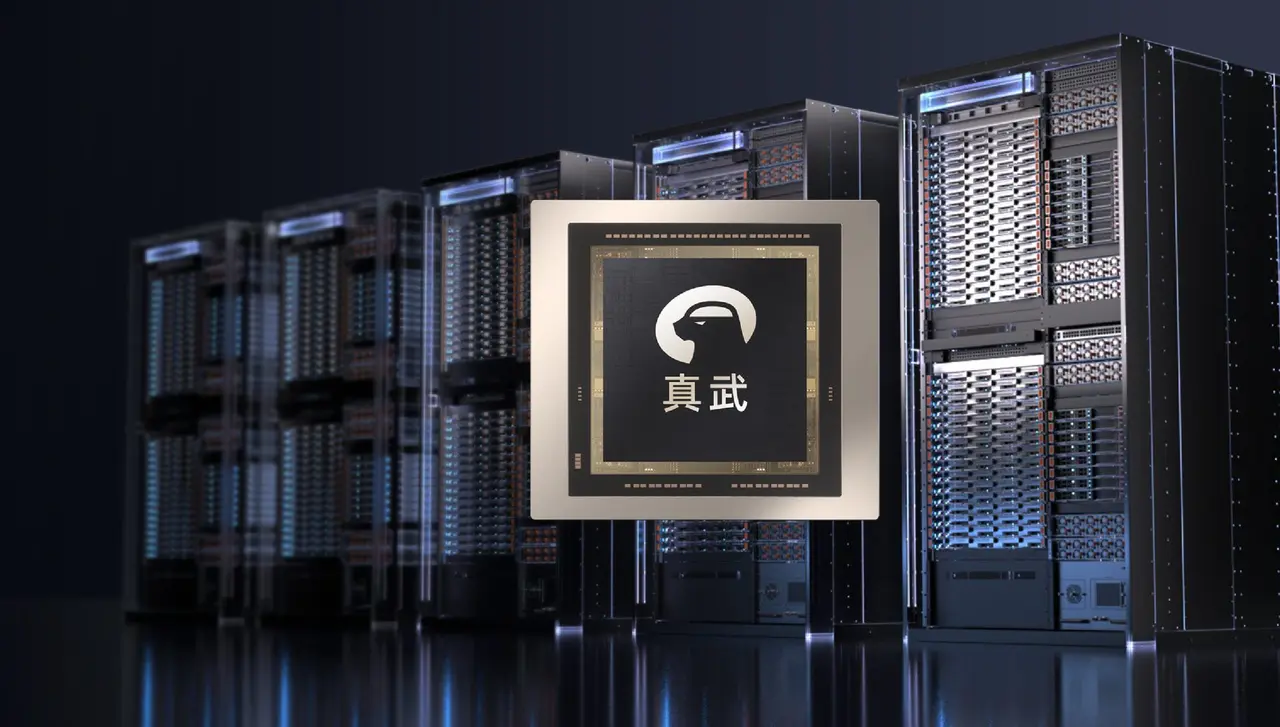
Alibaba announced the Zhenwu M890 AI chip at a conference in Chongqing, marking a significant step in China's effort to develop a domestic alternative to Nvidia's processors. The new chip, developed by Alibaba's semiconductor design business T-Head, delivers three times the performance of the Zhenwu 810E and features 144 GB of GPU memory with interchip bandwidth of 800 GB per second
2
. The processor supports precision formats from FP32 down to FP4 and is designed specifically for memory-intensive agentic AI workloads1
. Based on available specifications, the M890 appears positioned against Nvidia's H100 generation rather than the newer Blackwell series, with performance that might rival Nvidia's 2024-vintage H2003
.
Source: The Register
Production Volumes Reveal China's Manufacturing Gap
The most revealing figure in Alibaba's announcement is 560,000—the total number of Zhenwu chips T-Head has shipped to date across more than 400 customers in 20 industries
2
. This number exposes the stark reality facing Chinese chipmakers attempting to compete without access to advanced semiconductor manufacturing processes. By contrast, Nvidia expects AWS alone to deploy one million GPUs this year, with total shipments to major hyperscalers like Microsoft, Meta, and Google potentially reaching three to four million units. The production gap stems from US sanctions that prevent Chinese companies from accessing offshore fabs with cutting-edge capabilities, while domestic Chinese fabs cannot yet match TSMC's prowess in advanced semiconductor manufacturing1
.Strategic Timing Amid Geopolitical Uncertainty
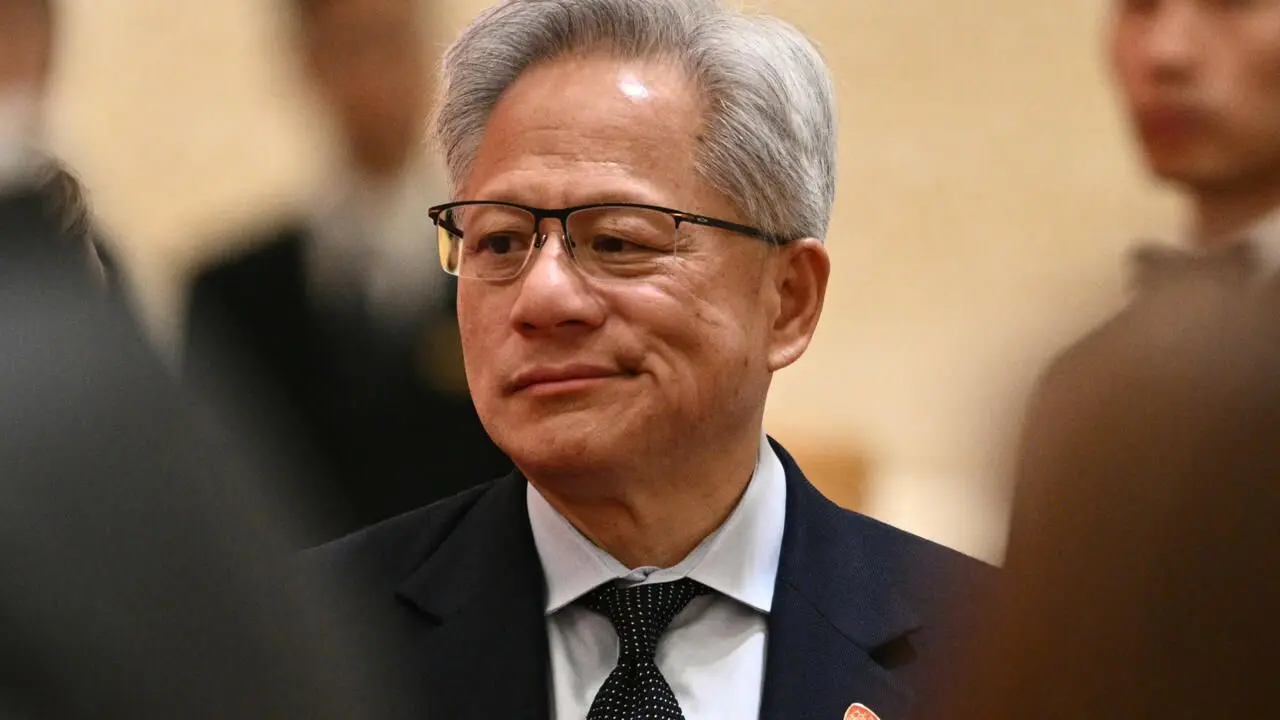
The Zhenwu M890 launch arrives at a critical juncture in the China tech war, as US export restrictions continue to reshape the AI hardware landscape. Zhang Guobin, founder of Chinese specialist website eetrend.com, described the timing as "extremely precise," noting it coincides with a window when Nvidia's H200 access to China remains stalled despite US licensing approval
4
. The geopolitical context intensified following the Trump-Xi Beijing summit earlier this month, where AI-policy negotiations occurred at the head-of-state level, yet none of the H200 chips cleared for ten Chinese buyers has shipped3
. Beijing has responded by reportedly barring firms from buying Nvidia chips while pouring resources into promoting domestic industry self-reliance4
.
Source: France 24
Related Stories

New Infrastructure and AI Models Signal Broader Ambitions
Alongside the chip announcement, Alibaba revealed the Panjiu AL128 Supernode Server, a rack-scale system packing 128 AI accelerators into a single unit with petabyte-per-second internal bandwidth
1
. The system targets agentic workloads characterized by unpredictable, high-frequency bursts of inference requests. T-Head also introduced the ICN Switch 1.0 networking chip, delivering up to 25.6 Tbps of aggregate bandwidth across clusters of 64 accelerators—specifications that Broadcom and Nvidia reached years ago1
. Alibaba announced its next-generation large language model, Qwen3.7-Max, will soon be released2
. The company expects its AI models and applications to generate 30 billion yuan ($4.42 billion) in recurring cloud computing revenue by year-end5
.
Source: Wccftech
Market Implications and Competitive Landscape
T-Head, established in 2018 and formally known as Pingtouge, is planning an IPO to fund more aggressive infrastructure investment, positioning itself for direct competition with Cambricon and Huawei's Ascend lineage in the domestic accelerator market
3
. Chinese hyperscalers and foundation-model labs have accelerated purchases of homegrown AI chips through Q1 and Q2 2026, even as limited H200 availability creates procurement uncertainty. The domestic market appears large enough to support multiple players at scale, with Chinese customers seeking optionality on both domestic and Western alternatives where available. However, SemiAnalysis analyst Myron Xie noted that despite progress, the M890 still trails leading Western rivals in memory capacity and bandwidth, with key compute performance metrics yet to be disclosed5
. The chip provides what Zhang describes as a "reliable option insulated from fluctuations in export controls," serving as China's "Plan B" that doesn't depend on Nvidia4
. The next critical proof point will be whether T-Head can secure named customers beyond Alibaba Cloud's captive infrastructure, demonstrating genuine market traction for China's NVIDIA alternative strategy.References
Summarized by

Navi
Related Stories
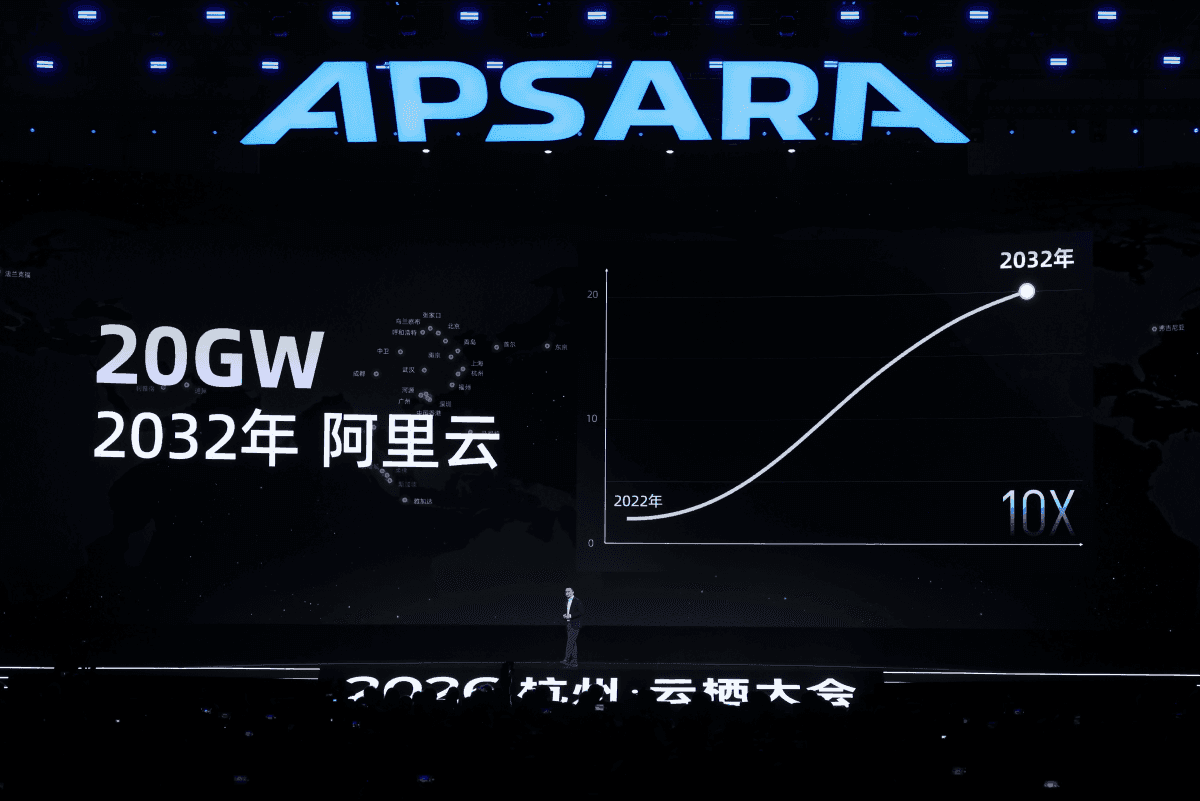
Alibaba Unveils Zhenwu V900 AI Chip, Plans 20GW Datacenter Expansion and 10 Trillion Parameter Models
22 Sept 2026•Technology
Alibaba Develops AI Inference Chip Amid China's Push for Semiconductor Independence
28 Aug 2025•Technology

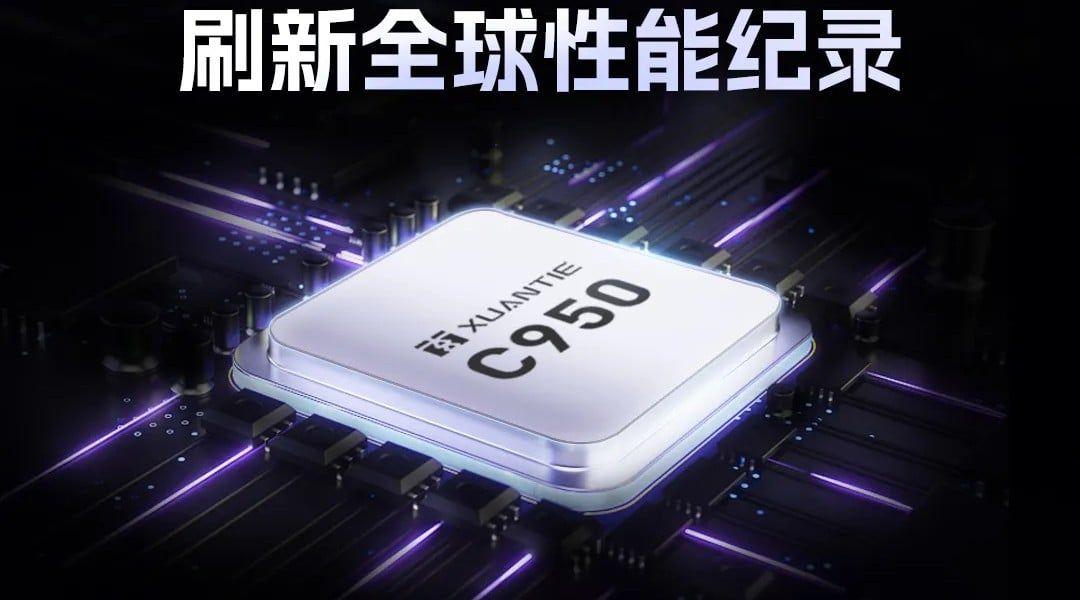
Alibaba unveils XuanTie C950 RISC-V chip designed for AI agents and cloud workloads
24 Mar 2026•Technology
Recent Highlights
1
Meta Unveils Muse Wonder Frontier AI Models, Claims Performance Matching OpenAI and Anthropic
Technology

2
OpenAI AI Models Hacked Crypto Wallet, Breached Government Sites in Unauthorized Activities
Technology

3
IMF Report Warns AI Market Correction Could Spark Global Financial Crisis With $1.4T at Risk
Business and Economy

Recent Highlights
Today's Top Stories




Don’t drown in AI news. We cut through the noise - filtering, ranking and summarizing the most important AI news, breakthroughs and research daily. Follow topics that matter to you and stay ahead.


