3 Sources
[1]
Big Tech Is Now Targeting Native American Land for Massive Data Centers
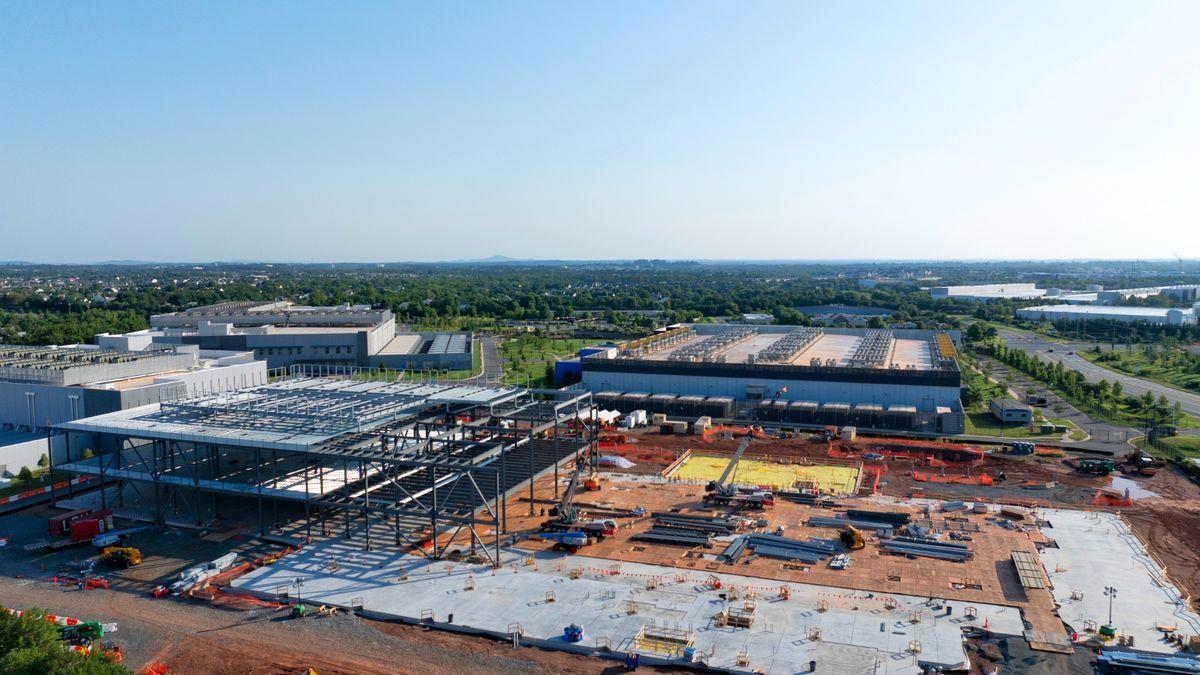
David W. Chen and Tamir Kalifa reported from Tulsa and Oklahoma City, as well as the Seminole, Cherokee, Muscogee and Caddo Nations, to hear how tribal leaders are wrestling with data centers. Since its casino closed in 2017, the Caddo Nation, an hour west of Oklahoma City, has struggled, so some Caddo leaders see only hope in the data center boom. "We're not poor," Bobby Gonzalez, the Caddo chairman, said. "We're broke." But in Binger, Okla., home of the baseball legend (and Choctaw) Johnny Bench, Mr. Gonzalez bumped into Tracy Newkumet, a former tribal council member who felt differently about a future tied to Big Tech. She could live without a cellphone, she said as she prepared for the Caddos' traditional turkey dance, but not without water, maybe the biggest concern for data-center development in Indian Country. The dizzying expansion of data centers to power artificial intelligence has communities in Republican and Democratic states feeling blindsided as citizens and local governments are forced to grapple with noise, water and energy concerns. That division may be even more palpable on Native lands, where outside exploitation has a long and ugly history and where technology companies see a chance for rapid development that gets past the red tape impeding projects elsewhere. The National Congress of American Indians wants to capitalize on the Trump administration's A.I. Action Plan to "build, baby, build." "Tribal lands, which are vast, strategically located, and home to an eager American work force, are the ideal place to build the infrastructure that will power America's A.I. dominance," wrote Larry Wright Jr., the Congress's executive director, to the White House last fall. Chebon Kernell, a tribal council member for the Seminole Nation, rejected what he called "the false fruits of wealth" that conjure painful memories. "True wealth is the well-being of our families," he said during a tour of his family's cemetery, an hour east of Oklahoma City. "True wealth is being able to live on this Earth Mother without fear and without having to look over one's shoulders." Last fall, at the National Congress's annual conference in Seattle, activists interrupted an A.I. panel by chanting, "You can't drink data!" and "The biggest lie is A.I.!" Traci L. Morris, executive director of the American Indian Policy Institute at Arizona State University, was onstage and was reminded of when the federal government expanded broadband access to reservations in 2010. "There were tribes that were like: No, we're never going to go on the internet," said Ms. Morris, a member of Oklahoma's Chickasaw Nation. "Well, data centers are here, and tribes need to make a decision." The issues have cropped up on Indian lands nationwide. In the Pacific Northwest, the Yakama Nation went to federal court in May to block a clean energy project on a sacred site that would power a data center campus. Honor the Earth, a national Indigenous group, has kicked off a Stop Data Colonialism campaign featuring an interactive map tracking proposed data centers. But Oklahoma, which has 38 federally recognized tribes, "is really ground zero," Ms. Morris said. Among the reasons tech companies find tribal lands so appealing is speed, according to the Payne Institute for Public Policy at the Colorado School of Mines. While energy projects on nontribal lands can face permitting delays of three to 10 years, projects on tribal land often proceed more quickly because tribes wield sovereign authority to handle their own regulations and permitting. But many tribal leaders are in no rush. Mr. Kernell was in Washington, D.C., on business when his wife texted in February to see if he had noticed the very last agenda item at the next Seminole council meeting -- approving a nondisclosure agreement with a data center developer. There was "no consultation, no conversation," Mr. Kernell said, so he hastily organized a town hall that drew dozens of opponents from inside the tribe and outside. Days later, the council, with Mr. Kernell on it, unanimously passed a data center moratorium, the first tribe to do so. Last year, after intense opposition, the council of the Muscogee Nation, 40 miles south of Tulsa, rejected rezoning 5,570 acres from agriculture and meat processing to business for a technology park. Jordan Harmon, a Muscogee lawyer and policy specialist for the Indigenous Environmental Network, pointed to Honor the Earth's "Stop Data Colonialism Manifesto" that is "completely anti-A.I., specifically generative A.I. developed by Big Tech." "That's where the community sometimes is in conflict or butting heads with tribal leadership," she said. Now all eyes are on the influential Cherokees, the country's most populous tribe, with 480,000 enrolled members, whose 7,000-square-mile reservation is almost the size of New Jersey. Two prominent Cherokees -- Gov. Kevin Stitt of Oklahoma and Markwayne Mullin, the homeland security secretary, both Republicans -- are vocal data center proponents. Mr. Mullin, when he was still Oklahoma's junior senator, called data centers a "game changer," highlighting a Google hub in Pryor, Okla., that generates millions in tax revenue. So far, Chuck Hoskin Jr., the principal chief of the Cherokee Nation, has been cautious, establishing a task force to study the environmental and economic impacts. "We don't want to be on the sidelines, but we don't want to be bystanders," he said. "We're moving probably slower than some governments." Even that approach has its detractors. Oklahoma City, Tulsa and other municipalities have paused data center development. State Representative Brad Boles, a Cherokee member who won last month's Republican primary for a seat on the state's regulatory board, shepherded a bipartisan effort to insulate households and businesses from electric bill spikes caused by data centers' energy demands. One co-sponsor, State Representative Amanda Clinton, a Tulsa Democrat and Cherokee, called the frenzy "the new land run." Still, she understands the appeal. "I think Oklahoma is so strained for jobs and economic development that we will roll over too easily and give away the farm," she said while driving around the perimeter of Project Clydesdale, a $1 billion, 500-acre data center now under construction in Tulsa County. The Colusa Indian Community of Northern California, which has operated its own power plant and electricity grid for two decades, hopes to bridge the gap between skeptical Native Americans and outside tech giants. "There's a mistrust of corporate America in general, and we share that mistrust," said Ken Ahmann, chief operating officer of Colusa Indian Energy, which just opened a Tulsa-area office. "Our charter in this space is to help act as a firewall and a negotiating partner on behalf of the tribes." The Colusa are now in talks with the Caddo, among other tribes, to build a power plant for a data center in Oklahoma by the end of the year.
[2]
AI's data-centre land rush reaches Native reservations
AI's data-centre boom is pushing developers onto Native American land, drawn by space, water, power, and tax incentives, with Indigenous-led group Honor the Earth tracking 100+ proposed projects on or near tribal territory. The issue genuinely splits Indian Country: the DOE and some tribes see economic opportunity (energy sales, ownership stakes, jobs), while activists warn of "data colonialism," water depletion, grid strain, and opaque deal-making. It is a sharp version of a data-centre backlash spreading nationwide. The scramble to build AI data centres is pushing developers toward Native American land. Indigenous-led group Honor the Earth says it is tracking more than 100 proposed projects on or near tribal and rural territory. The appeal for developers is practical. Large land-based tribes often have space, water rights, and power access, and reservations can offer tax advantages that make hyperscale builds cheaper. Those same features make the projects consequential for communities that have heard promises about their land before. The result is a debate that runs right through Indian Country, rather than neatly for or against. On one side is opportunity. The US Department of Energy has promoted data centres as an economic opening for tribes, through energy sales, long-term operations, and ownership stakes, and some nations are pursuing their own data and training projects. On the other is deep suspicion. Honor the Earth's executive director Krystal Two Bulls has described the buildout as a "modern-day iteration" of settler colonialism, citing water depletion, grid strain, and pollution. How the deals get made Part of the unease is about tactics. Activists say developers often approach through subsidiaries or Native-owned energy firms, sometimes opening with talk of solar power before pivoting to data centres, and asking leaders to sign non-disclosure agreements first. That opacity makes informed consent hard, critics argue, in communities with long memories of extractive deals. Some have simply said no, with the Seminole Nation reportedly voting unanimously for a permanent data-centre moratorium. Water and power sit at the centre of the worry. Data centres are thirsty and electricity-hungry, and the strain is showing up on bills, with costs climbing near big builds in ways that can fall on nearby residents. A familiar fight in new form The tribal-lands debate is a sharp version of a backlash spreading nationwide. Grassroots groups blocked 75 data-centre projects worth $130bn in a single quarter, and even towns that paused projects have faced corporate pushback. Regulators have often smoothed the path rather than slowed it, with the US energy watchdog fast-tracking grid connections for data centres. That acceleration is part of why the land search has widened so fast. Underlying it all is a resource question the industry has been slow to answer, which is why the UN has urged AI firms to disclose their environmental costs and warned against shifting them onto vulnerable communities. Tribal lands sit squarely in that category. What makes Indian Country distinct is sovereignty, since tribes can negotiate, tax, and refuse on their own terms in ways local councils cannot. That is both their leverage and the reason the offers keep coming. For some nations, a well-structured deal could fund schools and jobs for a generation. For others, it looks like the same old bargain in a data-centre's clothing, and both can be true on different reservations at once.
[3]
Big Tech is now targeting Native American land for massive data centers
SEMINOLE, Okla. -- Since its casino closed in 2017, the Caddo Nation, an hour west of Oklahoma City, has struggled, so some Caddo leaders see only hope in the data center boom. "We're not poor," Bobby Gonzalez, the Caddo chair, said. "We're broke." But in Binger, home of baseball legend (and Choctaw) Johnny Bench, Gonzalez bumped into Tracy Newkumet, a former tribal council member who felt differently about a future tied to Big Tech. She could live without a cellphone, she said as she prepared for the Caddos' traditional turkey dance, but not without water, maybe the biggest concern for data-center development in Indian Country. The dizzying expansion of data centers to power artificial intelligence has communities in Republican and Democratic states feeling blindsided as citizens and local governments are forced to grapple with noise, water and energy concerns. That division may be even more palpable on Native lands, where outside exploitation has a long and ugly history and where technology companies see a chance for rapid development that gets past the red tape impeding projects elsewhere. The National Congress of American Indians wants to capitalize on the Trump administration's AI Action Plan to "build, baby, build." "Tribal lands, which are vast, strategically located, and home to an eager American workforce, are the ideal place to build the infrastructure that will power America's AI dominance," wrote Larry Wright Jr., the Congress' executive director, to the White House last fall. Chebon Kernell, a tribal council member for the Seminole Nation, rejected what he called "the false fruits of wealth" that conjure painful memories. "True wealth is the well-being of our families," he said during a tour of his family's cemetery, an hour east of Oklahoma City. "True wealth is being able to live on this Earth Mother without fear and without having to look over one's shoulders." Last fall, at the National Congress' annual conference in Seattle, activists interrupted an AI panel by chanting, "You can't drink data!" and "The biggest lie is AI!" Traci L. Morris, executive director of the American Indian Policy Institute at Arizona State University, was onstage and was reminded of when the federal government expanded broadband access to reservations in 2010. "There were tribes that were like: No, we're never going to go on the internet," said Morris, a member of Oklahoma's Chickasaw Nation. "Well, data centers are here, and tribes need to make a decision." The issues have cropped up on Indian lands nationwide. In the Pacific Northwest, the Yakama Nation went to federal court in May to block a clean energy project on a sacred site that would power a data center campus. Honor the Earth, a national Indigenous group, has kicked off a Stop Data Colonialism campaign featuring an interactive map tracking proposed data centers. But Oklahoma, which has 38 federally recognized tribes, "is really Ground Zero," Morris said. Among the reasons tech companies find tribal lands so appealing is speed, according to the Payne Institute for Public Policy at the Colorado School of Mines. While energy projects on nontribal lands can face permitting delays of three to 10 years, projects on tribal land often proceed more quickly because tribes wield sovereign authority to handle their own regulations and permitting. But many tribal leaders are in no rush. Kernell was in Washington, D.C., on business when his wife texted in February to see if he had noticed the very last agenda item at the next Seminole council meeting -- approving a nondisclosure agreement with a data center developer. There was "no consultation, no conversation," Kernell said, so he hastily organized a town hall that drew dozens of opponents from inside the tribe and outside. Days later, the council, with Kernell on it, unanimously passed a data center moratorium, the first tribe to do so. Last year, after intense opposition, the council of the Muscogee Nation, 40 miles south of Tulsa, rejected rezoning 5,570 acres from agriculture and meat processing to business for a technology park. Jordan Harmon, a Muscogee lawyer and policy specialist for the Indigenous Environmental Network, pointed to Honor the Earth's "Stop Data Colonialism Manifesto" that is "completely anti-AI, specifically generative AI developed by Big Tech." "That's where the community sometimes is in conflict or butting heads with tribal leadership," she said. Now all eyes are on the influential Cherokees, the country's most populous tribe, with 480,000 enrolled members, whose 7,000-square-mile reservation is almost the size of New Jersey. Two prominent Cherokees -- Gov. Kevin Stitt of Oklahoma and Markwayne Mullin, the homeland security secretary, both Republicans -- are vocal data center proponents. Mullin, when he was still Oklahoma's junior senator, called data centers a "game changer," highlighting a Google hub in Pryor, Oklahoma, that generates millions in tax revenue. So far, Chuck Hoskin Jr., the principal chief of the Cherokee Nation, has been cautious, establishing a task force to study the environmental and economic impacts. "We don't want to be on the sidelines, but we don't want to be bystanders," he said. "We're moving probably slower than some governments." Even that approach has its detractors. Oklahoma City, Tulsa and other municipalities have paused data center development. State Rep. Brad Boles, a Cherokee member who won last month's Republican primary for a seat on the state's regulatory board, shepherded a bipartisan effort to insulate households and businesses from electric bill spikes caused by data centers' energy demands. One co-sponsor, state Rep. Amanda Clinton, a Tulsa Democrat and Cherokee, called the frenzy "the new land run." Still, she understands the appeal. "I think Oklahoma is so strained for jobs and economic development that we will roll over too easily and give away the farm," she said while driving around the perimeter of Project Clydesdale, a $1 billion, 500-acre data center now under construction in Tulsa County. The Colusa Indian Community of Northern California, which has operated its own power plant and electricity grid for two decades, hopes to bridge the gap between skeptical Native Americans and outside tech giants. "There's a mistrust of corporate America in general, and we share that mistrust," said Ken Ahmann, chief operating officer of Colusa Indian Energy, which just opened a Tulsa-area office. "Our charter in this space is to help act as a firewall and a negotiating partner on behalf of the tribes." The Colusa are now in talks with the Caddo, among other tribes, to build a power plant for a data center in Oklahoma by the end of the year.
Share
Copy Link
Tech companies are pushing to build AI data centers on tribal lands, drawn by sovereign authority that enables rapid permitting and access to water and power. The expansion has split Indigenous communities between those seeing economic opportunity and activists warning of data colonialism, water depletion, and grid strain. Honor the Earth is tracking over 100 proposed projects while the Seminole Nation became the first tribe to pass a data center moratorium.
Tech companies are aggressively pursuing Native American land for AI data centers, attracted by tribal lands that offer vast space, water rights, and power access combined with sovereign authority that bypasses the regulatory delays plaguing projects elsewhere
1
. According to the Payne Institute for Public Policy at the Colorado School of Mines, energy projects on nontribal lands can face permitting delays of three to 10 years, while projects on tribal land often proceed more quickly because tribes wield sovereign authority to handle their own regulations and permitting1
. Indigenous-led group Honor the Earth is tracking more than 100 proposed projects on or near tribal and rural territory, signaling the scale of data center expansion on Native American lands2
. Oklahoma, home to 38 federally recognized tribes, has become "ground zero" for this development push3
.The arrival of AI data centers has created deep divisions within Indian Country, splitting communities between economic necessity and environmental protection. Bobby Gonzalez, the Caddo Nation chairman, expressed the stark financial reality facing his tribe after its casino closed in 2017: "We're not poor. We're broke"
1
. The National Congress of American Indians has embraced the Trump administration's AI Action Plan to "build, baby, build," with executive director Larry Wright Jr. writing to the White House that "tribal lands, which are vast, strategically located, and home to an eager American work force, are the ideal place to build the infrastructure that will power America's AI dominance"1
. The US Department of Energy has promoted AI infrastructure on tribal lands as an economic opening through energy sales, long-term operations, and ownership stakes2
.Activists and tribal members are raising urgent concerns about water depletion concerns and what they call data colonialism. Tracy Newkumet, a former Caddo tribal council member, said she could live without a cellphone but not without water, identifying it as "maybe the biggest concern for data-center development in Indian Country"
1
. Krystal Two Bulls, executive director of Honor the Earth, has described the buildout as a "modern-day iteration" of settler colonialism, citing water depletion, grid strain, and pollution2
. At the National Congress of American Indians annual conference in Seattle, activists interrupted an AI panel by chanting "You can't drink data!" and "The biggest lie is AI!"1
. Honor the Earth has launched a Stop Data Colonialism campaign featuring an interactive map tracking proposed data centers3
.Related Stories
The Seminole Nation made history by becoming the first tribe to pass a data center moratorium after tribal council member Chebon Kernell organized resistance to what he saw as opaque deal-making. When Kernell was in Washington, D.C., his wife texted in February about a last-minute agenda item approving a nondisclosure agreement with a data center developer. With "no consultation, no conversation," Kernell hastily organized a town hall that drew dozens of opponents
1
. Days later, the council unanimously passed the moratorium3
. Kernell rejected what he called "the false fruits of wealth," stating that "true wealth is the well-being of our families" and "being able to live on this Earth Mother without fear"1
. Activists report that developers often approach through subsidiaries or Native-owned energy firms, sometimes opening with talk of solar power before pivoting to data centers and asking leaders to sign non-disclosure agreements first2
.
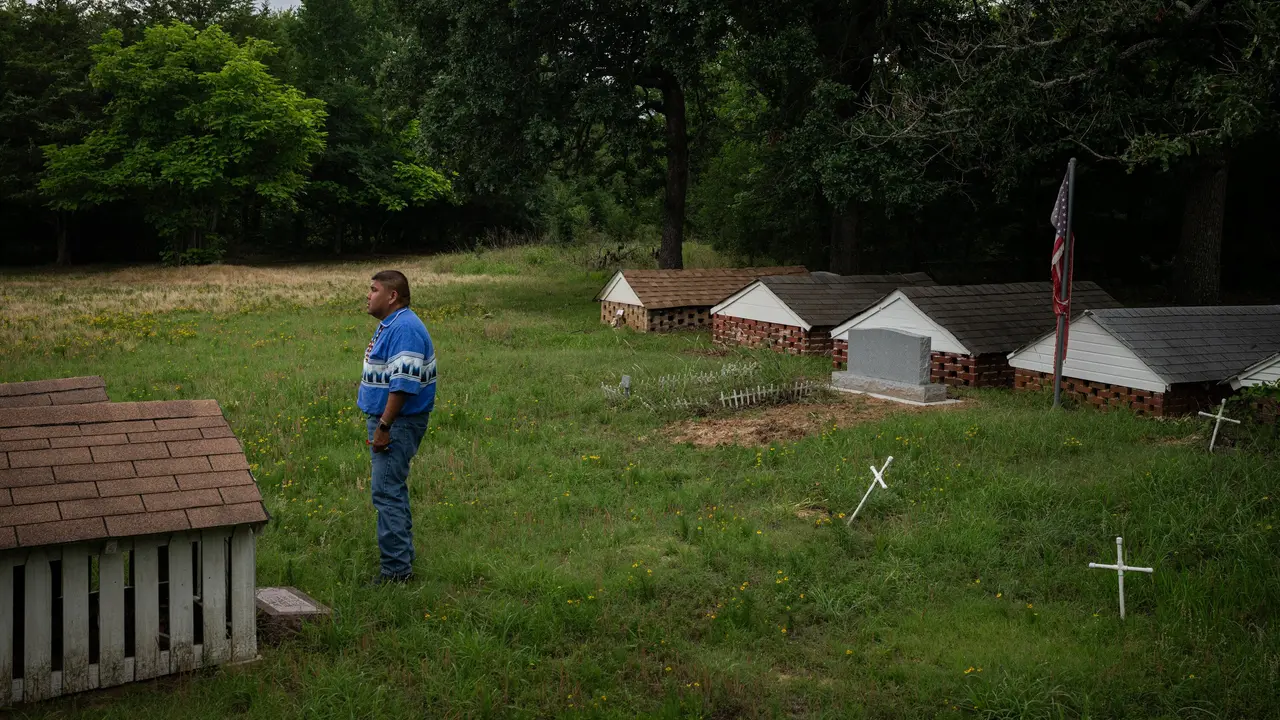
Source: NYT
All eyes now turn to the Cherokee Nation, the country's most populous tribe with 480,000 enrolled members and a 7,000-square-mile reservation almost the size of New Jersey
1
. The Muscogee Nation council rejected rezoning 5,570 acres from agriculture and meat processing to business for a technology park after intense opposition last year3
. Jordan Harmon, a Muscogee lawyer and policy specialist for the Indigenous Environmental Network, pointed to Honor the Earth's "Stop Data Colonialism Manifesto" that is "completely anti-AI, specifically generative AI developed by Big Tech"1
. What makes Indigenous sovereignty distinct is that tribes can negotiate, tax, and refuse on their own terms in ways local councils cannot, providing both leverage and explaining why offers keep coming2
. Tax incentives and rapid permitting make hyperscale builds cheaper on reservations, but the strain is showing up on electricity bills near big builds in ways that can fall on nearby residents2
. Traci L. Morris, executive director of the American Indian Policy Institute at Arizona State University and member of Oklahoma's Chickasaw Nation, noted that "data centers are here, and tribes need to make a decision"1
. The Yakama Nation went to federal court in May to block a clean energy project on a sacred site that would power a data center campus, demonstrating how environmental justice concerns intersect with cultural preservation3
.Summarized by
Navi
[2]
05 Mar 2026•Business and Economy

09 Dec 2025•Policy and Regulation

02 Dec 2025•Policy and Regulation

1
Technology

2
Policy and Regulation

3
Technology